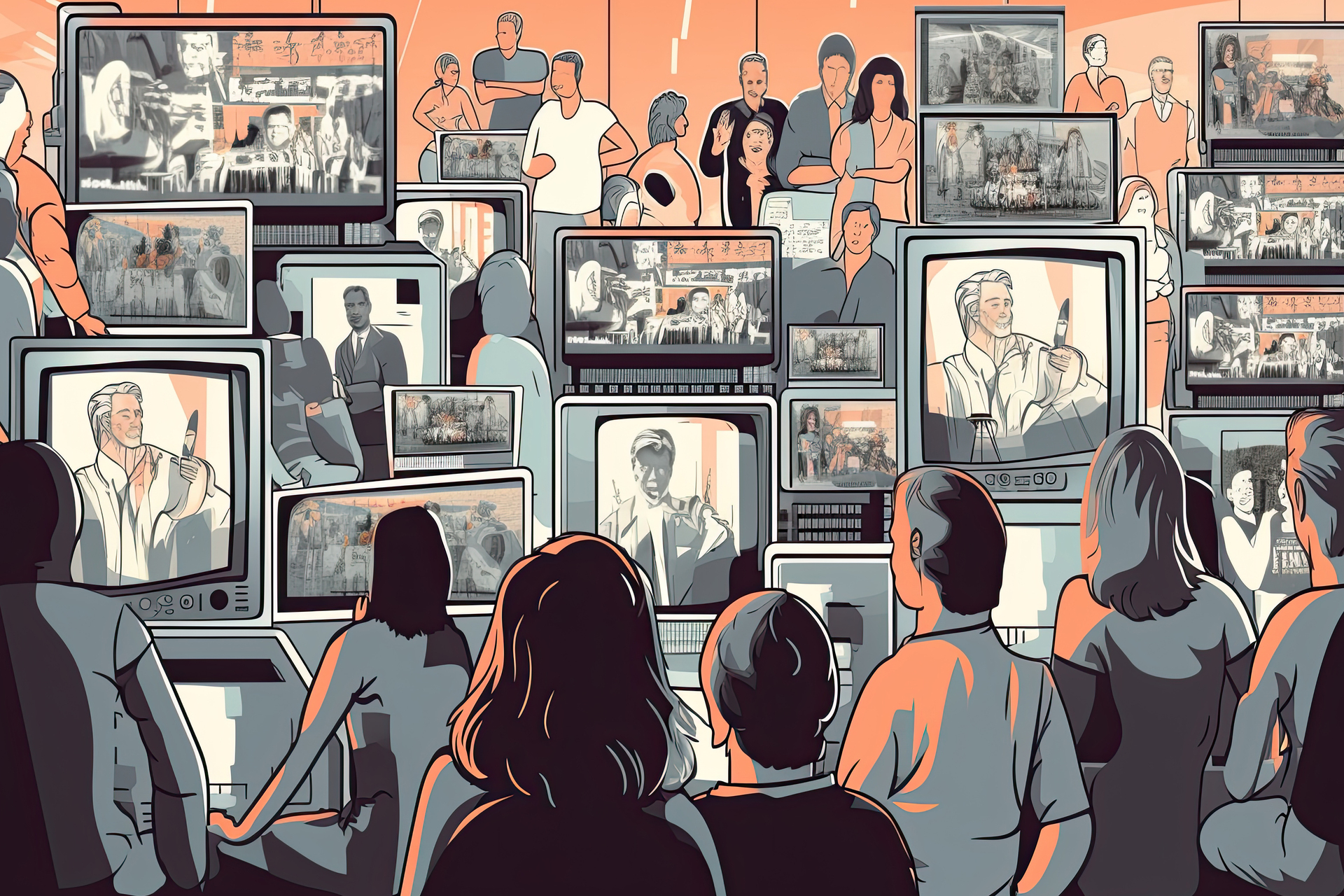
For many from diaspora communities, news coverage of their homelands or the lack of it is often a source of frustration and anger.
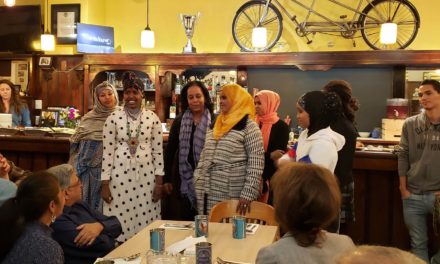
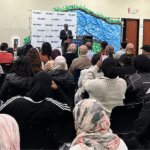
At the Muslim Women’s Coalition’s Diaspora Trauma Workshop last month, Munther Barakat, Psy.D., a clinical psychologist and director of Behavioral Health for Aurora Health Care, discussed the harm biased or neglectful media cause immigrant communities and suggested media literacy as an antidote.
How Western media gets it wrong
Barakat cited content analyses of Western media’s coverage of Gaza that showed an absence of the Palestinian perspective and an erasure of context.
“They don’t use the word ‘occupation’ or ‘blockade,’ he said. “They refuse to acknowledge a history before Oct. 7. It becomes the starting point, and the background isn’t considered.”
Barakat noted two keys to understanding how Western media misrepresents international news: framing and agenda-setting. Framing tells an audience how to think about a situation. It is the process of highlighting certain aspects of a reality and omitting others. Just as in photography, a journalist may zoom in on one example, excluding countless others, distorting the reality of the situation. Scholars use framing theory to explain how the selective presentation, emphasis and organization of information shape an audience’s interpretation and understanding of an issue.
Media framing frequently relies on and incorporates stereotypes, which reinforce societal prejudices, he said. “Not only in mainstream media, but also in the entertainment industry, if there’s an Arab or Muslim character, they’re always portrayed in a negative light,” Barakat noted. “Palestinians are almost always framed as the aggressors.”
Framing also influences journalists’ word choice, he added. For example, “the word ‘self-defense’ is specifically given to Israel and never used for the Palestinians and their resistance.”
For a detailed example of how U.S. media used a “war on terror” framework to downplay, obscure and repackage Israel’s campaign of extermination of the Palestinians, see media analyst Adam H. Johnson’s data-driven research in his 2026 book How to Sell a Genocide. (The Islamic Resource Center Book Club is currently discussing How to Sell a Genocide at its meeting at 7 p.m. Monday, Sept. 14.)
Agenda-setting, on the other hand, tells audiences what to think about. Through selection and placement, a news organization tells us a news event is important. For people from Sudan, where the world’s largest humanitarian and displacement crisis is underway, the absence of media attention is hurtful, Barakat said. U.S. media coverage of the Sudanese Civil War that began in April 2023 is widely described as abysmal and severely disproportionate to the scale of the humanitarian catastrophe.
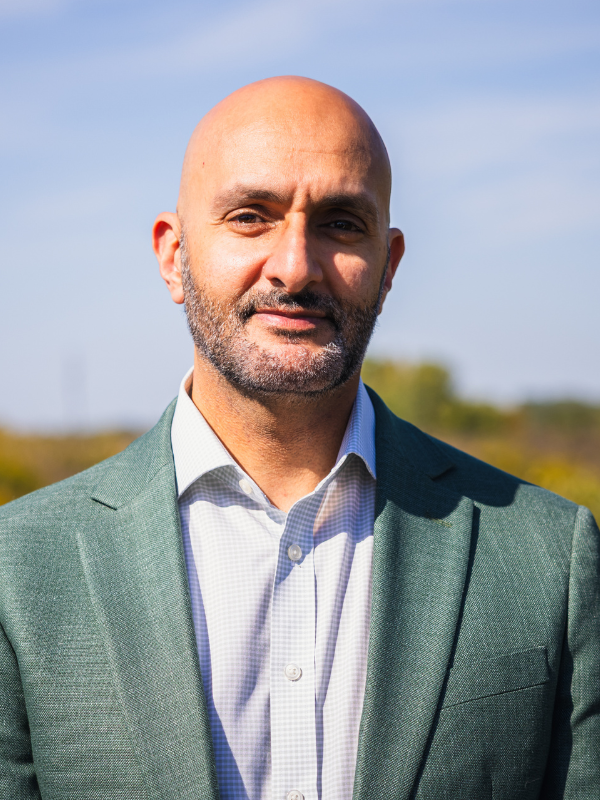
Munther Barakat, Psy.D., director of Behavioral Health, Aurora Health Care
Media distortions of reality cause harm
“Bias coverage and no coverage both impact diaspora communities in very negative ways, but different ways, psychologically,” Barakat said. “In bias coverage, misrepresentation is felt as a threat. Victims of bias coverage may experience chronic anger and moral injury. They become hypervigilant, checking the news and wanting to correct other people’s opinions. Or they experience social stigma, adding to the need to constantly correct the misrepresentations. There’s a chronic defensiveness of trying to defend your perspective because it is being displayed in a biased manner.
Moral injury is the lasting psychological, social and spiritual distress that occurs when a person commits, witnesses or fails to prevent an act that violates their core beliefs. When a member of a diaspora community watches their homeland being bombed, they are aware their taxes are funding the harm against their people, Barakat said. “We feel our behavior somehow contradicts our morals. There is a sense of shame and helplessness, difficulty in feeling joy or sometimes an over-identification with suffering.”
Neglectful media, on the other hand, make people feel invisible, Barakat said. “If I’m not being covered, am I important? If no one is talking about us, do we matter? Nobody is acknowledging their experiences. There’s a collective loss of worth. They feel abandoned; there’s a sense of despair.”
Another important impact of bias or neglectful news coverage is on U.S. policy and public opinion. As Johnson argues in How to Sell a Genocide, “the genocide could not have been sustained without the active, sustained complicity of the U.S. media.”
Media literacy is the antidote
Media-literate individuals understand that media is not a reflection of reality but is constructed from a certain point of view. Scholars have long emphasized the importance of media literacy in democracies. It not only enables us to be critical consumers of news, but also to engage as citizens more effectively.
“People need the ability to access, analyze and engage in critical thinking about the array of messages they receive and send in order to make informed decisions about the everyday issues they face regarding health, work, politics and leisure,” wrote Renee Hobbs, a leading U. S. scholar on media literacy.
In July, the European Parliament adopted a resolution on a new strategy for media literacy and digital learning, signaling awareness of the strong connection between media literacy and citizens’ engagement in democracy. Its purpose: to strengthen democracy.
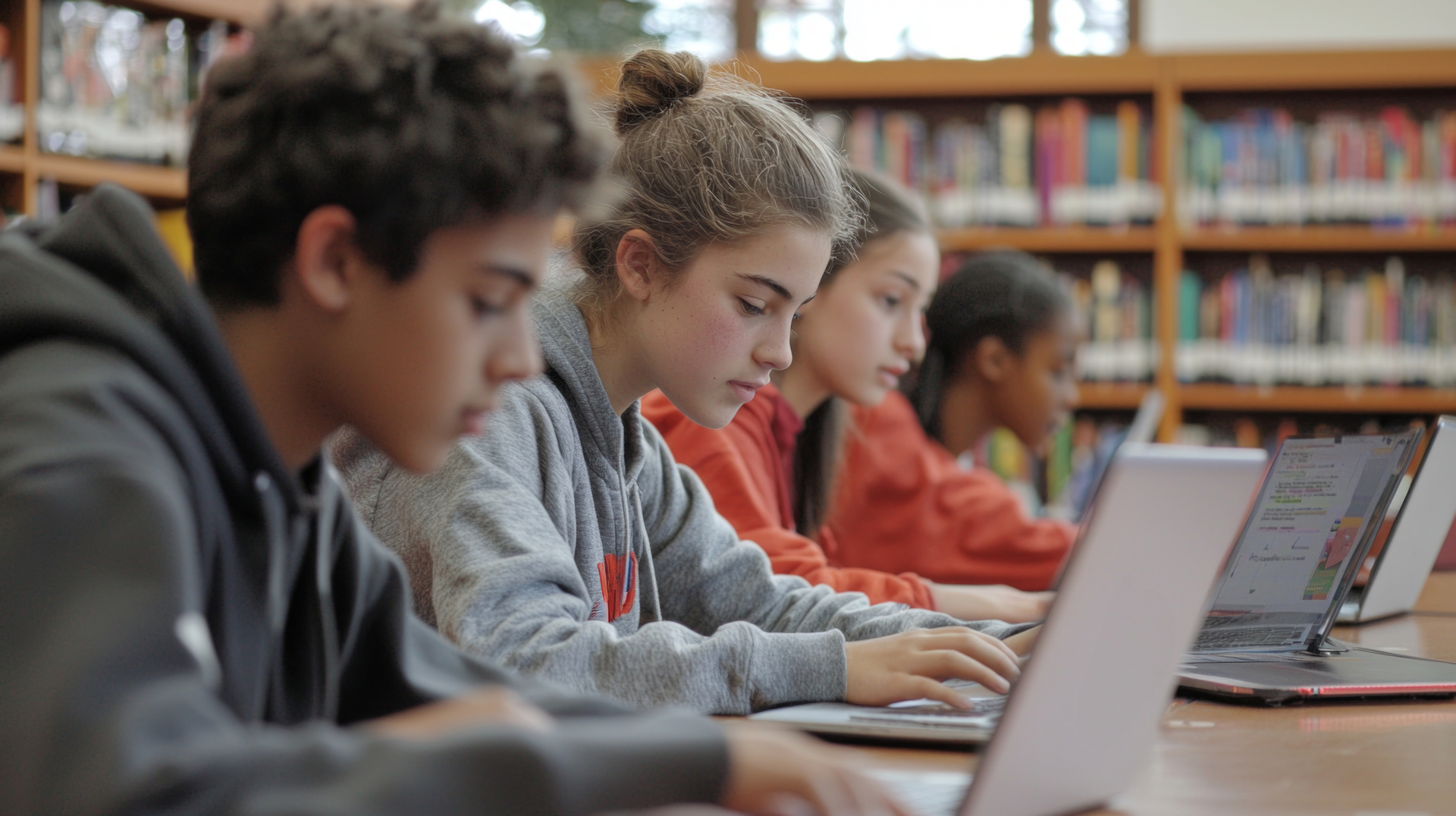
In 2025, Wisconsin’s Department of Public Instruction adopted Wisconsin Standards for Information Technology Literacy. “In today’s interconnected, digital world, information and technology literacy is not optional—it is essential,” the introduction to the Standards says. “We believe that information and technology literacy is foundational to lifelong learning, civic engagement, college and career readiness, and personal empowerment.”
“It’s something I think is extremely lacking in our society,” Barakat said. “We’re so easily influenced by media because of the lack of media literacy. Many of us are not asking enough questions when we’re consuming media.”
Barakat suggested we begin developing our media literacy by asking the following questions when we view, listen or read media:
- Who is the author of this message?
- What’s the history of their perspective?
- What’s their background?
- What techniques are being used to influence me?
- What is missing in this report?
- How might other people interpret these facts differently?
Because our stories matter
Wisconsin Muslim Journal reports on people, stories and experiences of Muslims across our state. As a nonprofit publication, we are committed to making this work available to everyone without a subscription or paywall.
Every story we publish is produced by professional journalists, photographers and editors committed to reporting on Wisconsin’s Muslim communities. Keeping this work going requires time, talent and resources.
If you value dedicated, fact-based coverage that documents Wisconsin Muslim history, please consider supporting us with a donation. Gifts of any size make a difference and help us continue reporting narratives that might otherwise go untold.
We are grateful for your readership.