Courtesy of Milo Productions
Time Hoppers: The Silk Road follows Abdullah, Aysha, Khalid and Layla in the year 2050. The children stumble on the ability to time travel and embark on a mission to save great men and women who built the foundations of modern science.
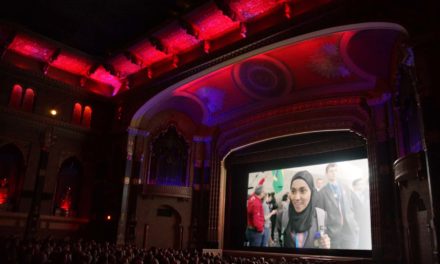
Time Hoppers: The Silk Road, the first Muslim-themed animated feature film to achieve nationwide theatrical release, will be in 15 Wisconsin cities next weekend, Feb. 7-8, and will also open in more than 600 theaters across the United States and Canada.
“This film is a historic milestone for our community,” Time Hoppers’ co-writer and director Flordeliza Dayrit told the Wisconsin Muslim Journal Monday. The Canadian Muslim is co-founder and chief operating officer of Muslim Kids TV, a leading children’s streaming platform for Muslim audiences. “We are looking for support from the Muslim community to tell the mainstream media that our stories matter.”
Time Hoppers: The Silk Road opens in the following Wisconsin cities next weekend: Appleton, Delafield, Fitchburg, Green Bay, La Crosse, Madison, Menomonee Falls, New Berlin, Oak Creek, Oshkosh, Sheboygan, Sturtevant, Sun Prairie, Waukesha and Wauwatosa.
Tickets are available here.
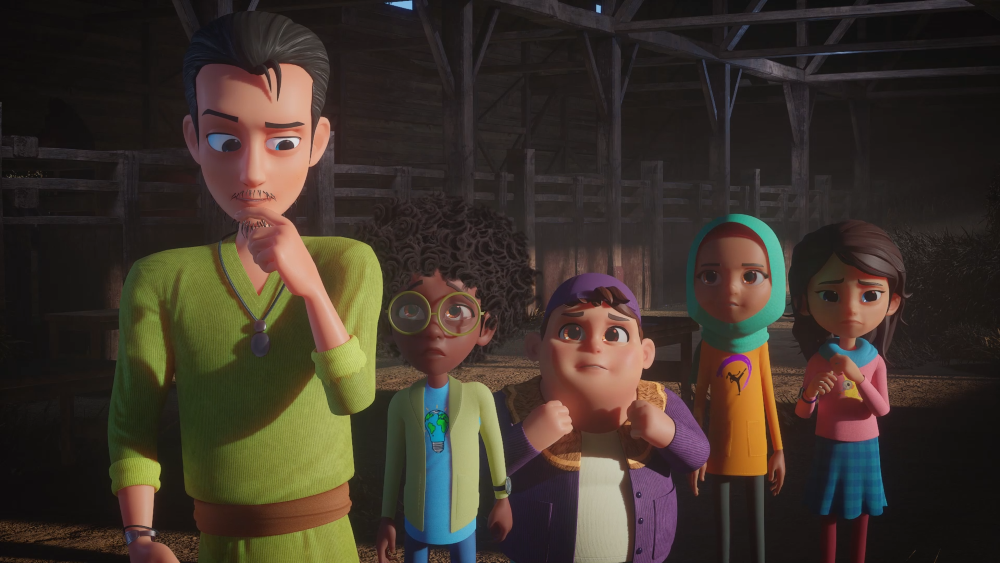
What’s special about Time Hoppers: The Silk Road?
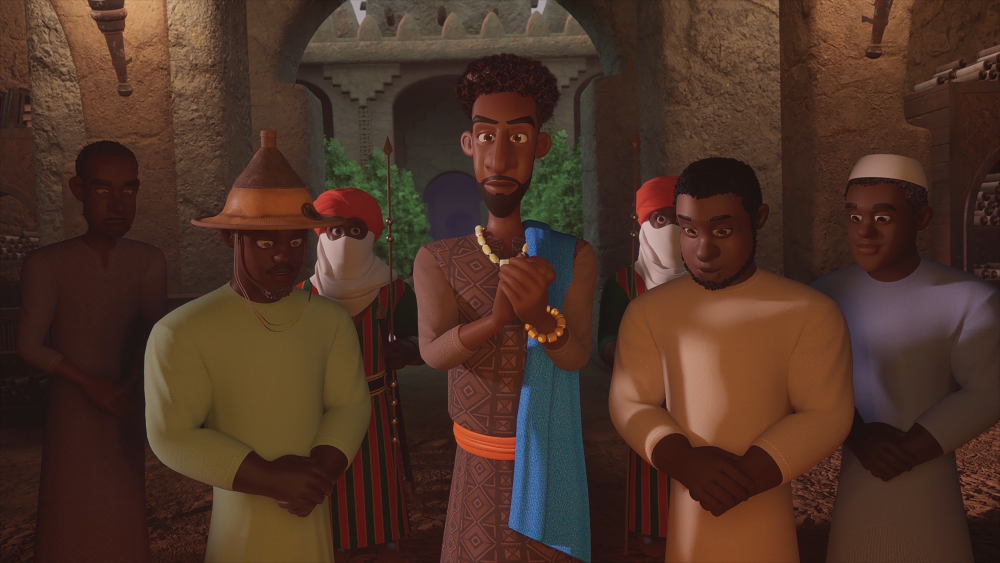
“The film honors the heritage of Muslim culture during the ‘Golden Age of Islam’ and will feature Muslim pioneers, including the ‘father of algebra Al-Khwarizmi, the ‘pioneer of optics Ibn Al-Haytham, astronomer Maryam Al-Astrolabi and Mansa Musa, patron of science, education and arts,” wrote Giana Levy in a Nov. 20 article in Variety, a leading American entertainment trade magazine.
The Golden Age of Islam, from the 7th to the 13th centuries CE, was a time when “scholars living in Baghdad translated Greek text and made scientific discoveries,” says a free lesson available online from Khan Academy.
“Additionally, voices of prominent Muslim-American academics and community members, including Omar Suleiman, Dalia Mogahed and Omar Regan (Rush Hour 2, Five Thirteen) are featured in the film,” Levy notes.
Two unique aspects of the film are the Muslim characters and the team that created the movie, Dayrit said. “The representation of Muslims, Arabs and Southeast Asians in children’s media is less than 1%,” she noted. “To break it down more specifically, Arabs are always side characters, not main characters, in mainstream children’s media, regardless of Arabs and Muslims being some of the highest taxpayers in the U.S. and Canada. I thought, ‘Well, that’s not fair. We have to do something about that.’
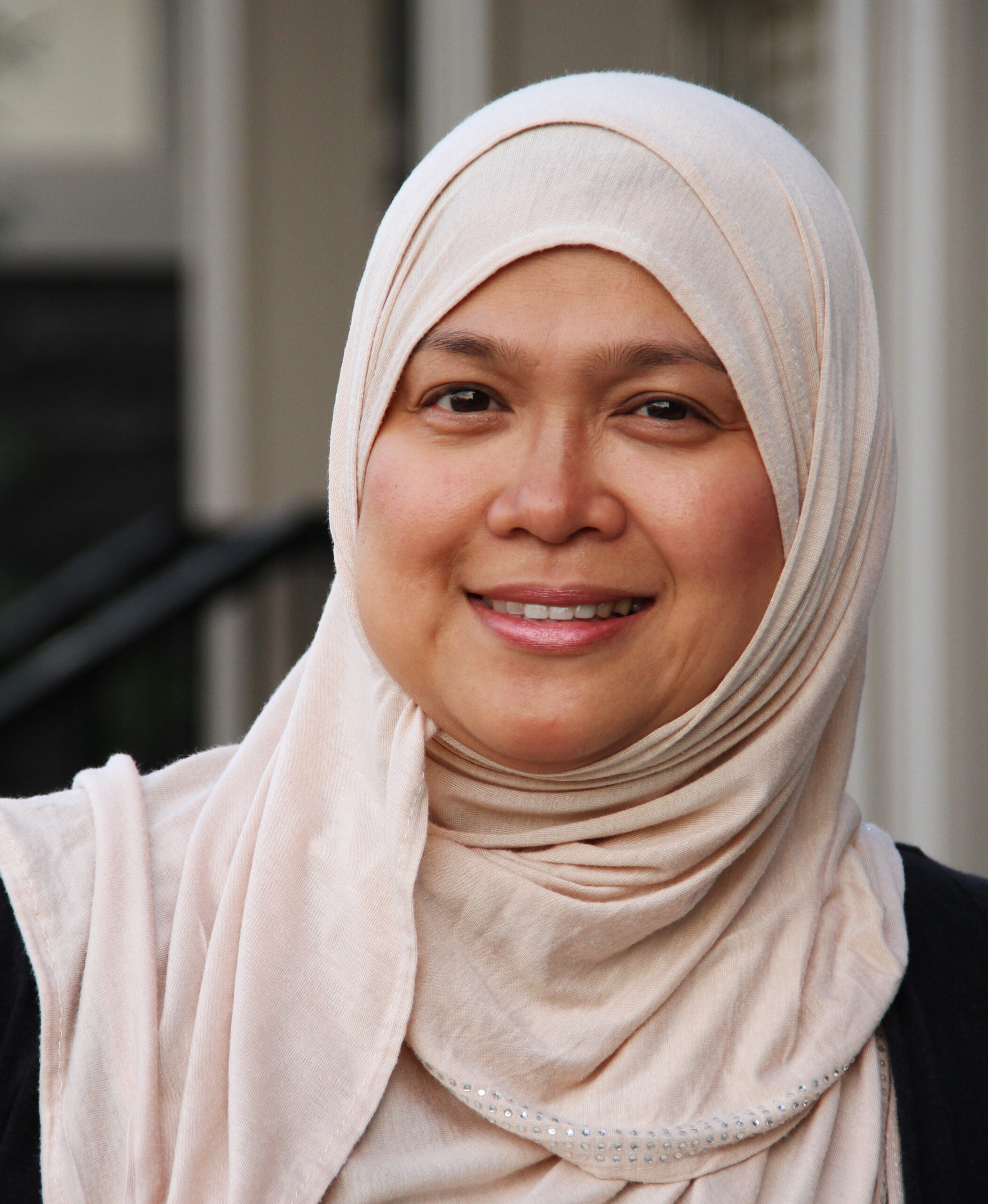
Flordeliza Dayrit, co-founder and chief operating officer of Muslim Kids TV
“That’s why Time Hoppers is not just for Muslims; it’s for everyone. We want this movie to be a celebration of who we are and our Muslim and Arab contributions to the world. These people were heroes.” The movie features people who laid the foundation for today’s modern world—for computers, space exploration, photography and more.
Having a diverse, predominately Muslim team to create the film made it representative, Dayrit said. “I didn’t want to write from just my perspective. We had a group of people from a lot of different places to consult and work with us to develop the movie. That’s important because kids from different backgrounds will see it. We want the characters to be very relatable.”
By bringing together a diverse team, they identified co-writer Sakinah Fakhri to work with Dayrit on the move and on the TV series being developed as well.
“Our goal was for this project to be a community effort,” Dayrit explained. “In fact, more than 90% of the people who worked on this project are Muslims.”
You might say curiosity created Time Hoppers: The Silk Road, which started with a game, now a movie and soon to become a TV series.
“I’ve always been curious,” Dayrit said.
As a 5th grader in the Philippines, where she was born, Dayrit came across a picture in her social studies book of a mosque with lots of shoes and slippers outside. “There was no explanation,” she recalled.
Born in a Catholic family, attending Catholic schools, “I never understood all those shoes,” she said. “That image stuck with me for a very long time. I wondered why they were there. What is this all about?
“Being a devout Christian Catholic, I was encouraged to learn about other religions. I really had the opportunity to learn about Islam in 12th grade.”
She was in a public school in Canada; her family moved to Canada when she was 15. Dayrit’s English teacher asked her students to pick one topic to research and write about for their whole senior year. She picked Islam.
At the end of the school year, when the students did presentations about all they learned, her teacher said to her afterwards, “I think one day you’re going to become a Muslim,” Dayrit said. “That struck me. I thought, ‘Really? I could do that?’”
A few weeks later, Dayrit went to a local masjid with the intention of learning more. The concept of Allah’s oneness resonated with her as did “the practicality” of the Qur’an, she said.
The Muslims she met were “so welcoming and warm,” Dayrit observed. “That was when I thought, ‘This is what I’ve been looking for in my life.’ It seemed like God guided me towards Him throughout this time.”
Dayrit married a Muslim man, also a revert (the Muslim term for a convert to Islam), with a background in media. With her own interest in education, she saw their professional paths as complementary. “We asked ourselves, ‘How can we use what we do to serve Allah?’”
After 9/11, the couple created a documentary series that aimed to break down stereotypes of Muslims through education, A New Life in a New Land.
“Then, when our children were born, we were looking for content in line with our values and culture,” Dayrit said. “We found a gap in the industry for children’s content.” She read a study that showed how little Muslims, Southeast Asians and particularly Arabs are represented in children’s media (less than 1%).
“That is when we started Muslim Kids TV (a streaming platform for Muslim families with videos, games and ebooks that launched in 2016). We wanted to give them a space where parents can feel safe and can trust the content. We curate values-based, educational and faith-based content from around the world, content we feel is going to contribute positively to kids mental, physical, spiritual and emotional development.
“We found there is not much faith-based programming so we had to do a lot of that content development. We are actually a production company (Milo Productions) first and can do 2D, 3C and live action.”
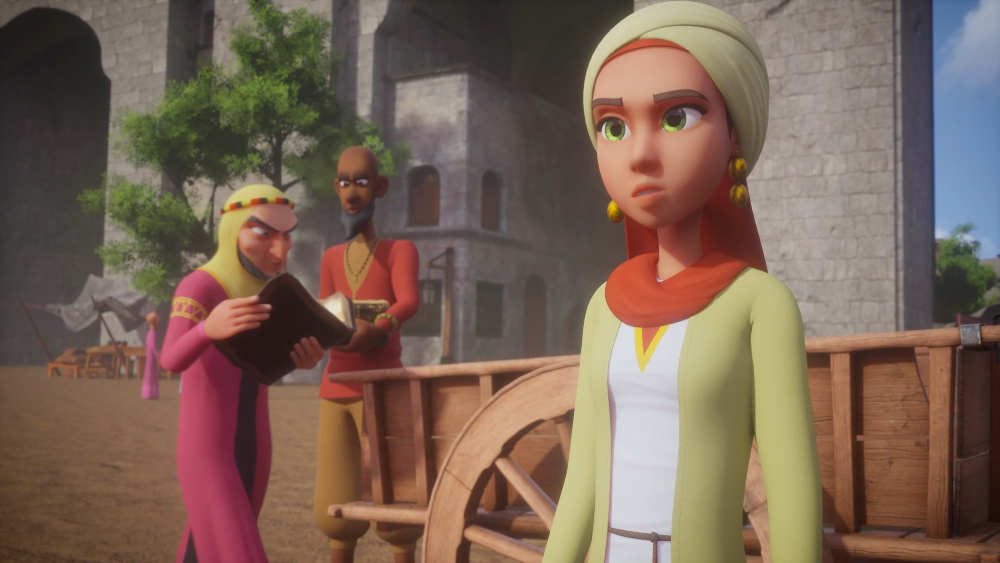
Exploring the Silk Road
When Dayrit learned about Islam’s Golden Age and the Silk Road, the ancient caravan routes across central Asia used for the silk and spice trade between East and West, she was fascinated.
How come no one is talking about this? she had wondered. She asked some Muslim friends from the region and they didn’t know about it. Some even told her, I don’t think it really existed. Dayrit began researching and soon was sure it did.
“What a fantastic story to tell!” she thought. She and her husband began thinking about how to make this story interesting for children. “We started coming up with characters and developed the concept of time hoppers. We found some funding for the game and were planning a TV series because there are so many people and places and stories on the Silk Road we wanted to showcase.”
Interest in Time Hoppers: The Silk Road has been strong since it was first announced in November. “I remember when we first met with Fathom Entertainment, the largest specialty event distributor in the U.S.” Dayrit recalled. “They said, ‘Don’t get your hopes up. You’re an indie film. You’re probably going to get less than 50 screens (for your opening release) maximum.
“Every week, they would ask us for more information for marketing. In the end, they told us, they thought they could get up to 450 screens. They confirmed the numbers at the end of December and it was 515. Today we are at 628.
“We did really well with ticket sales and people kept supporting it and buying tickets so they kept adding theaters. It was incredible!
“Our stories should be on the big screen,” Dayrit said. “We should be in the mainstream media. We want the public to know they should listen to and learn from our stories. We want our kids to know our stories.”