Photos courtesy of the Milwaukee Art Museum
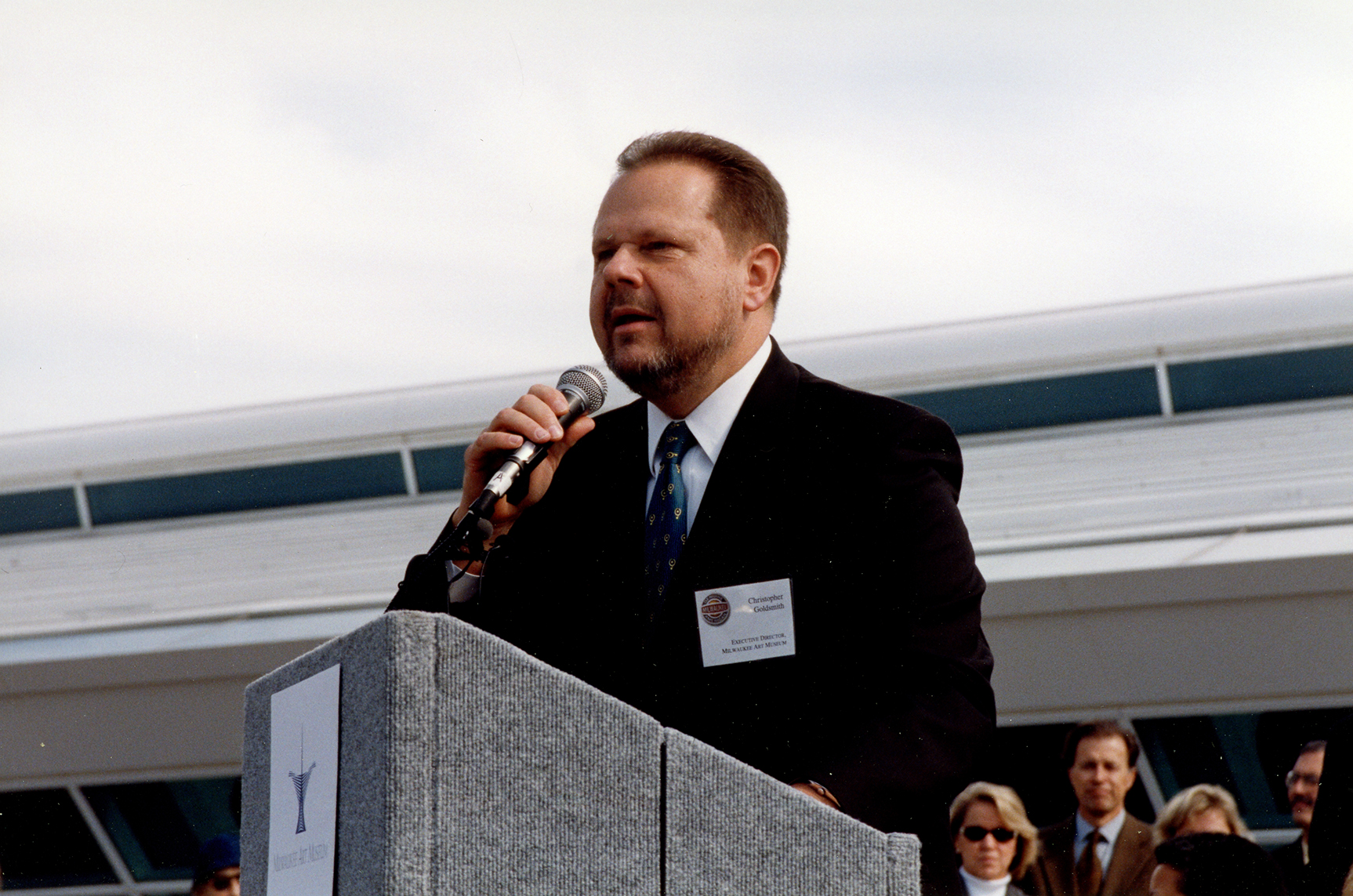
Milwaukee Art Museum executive director Muhammad Isa Sadlon (originally named Christopher C. Goldsmith) spoke at the grand opening of the Santiago Calatrava addition to the MAM in 2001. Sadlon served as the executive director of the Islamic Society of Milwaukee from 2006-2010 and has held other leadership positions in Islamic organizations in Milwaukee since.
(This article is part of a series that features families and individuals who played important roles in the history of Wisconsin’s Muslim community.)
People say Muhammad Isa Sadlon, executive director of the Islamic Society of Milwaukee from 2006 to 2010, proved to be the right person at the right time for the job. Now 79, he has stepped back to let a new generation take the lead, he said in an interview Wednesday with the Wisconsin Muslim Journal.
At the Islamic Society of Milwaukee-University, 2223 Kenwood Blvd., where he prays daily, Sadlon, joined by Will Perry, former executive director of the Milwaukee Islamic Dawah Center, met with WMJ and chatted about Sadlon’s experience as a long-time leader in Milwaukee’s Muslim community.
These days, the “soon-to-be” 80-year-old Sadlon talked about participating in prayers at the mosque on the edge of UWM’s campus, near his home, and about the strong, young leaders he sees rising in the community, “like Mohamed Camara,” the 33-year-old imam at the Dawah Center. Sadlon also recounted his own role in leading Milwaukee’s Muslim community during a turbulent time for Muslims in America.
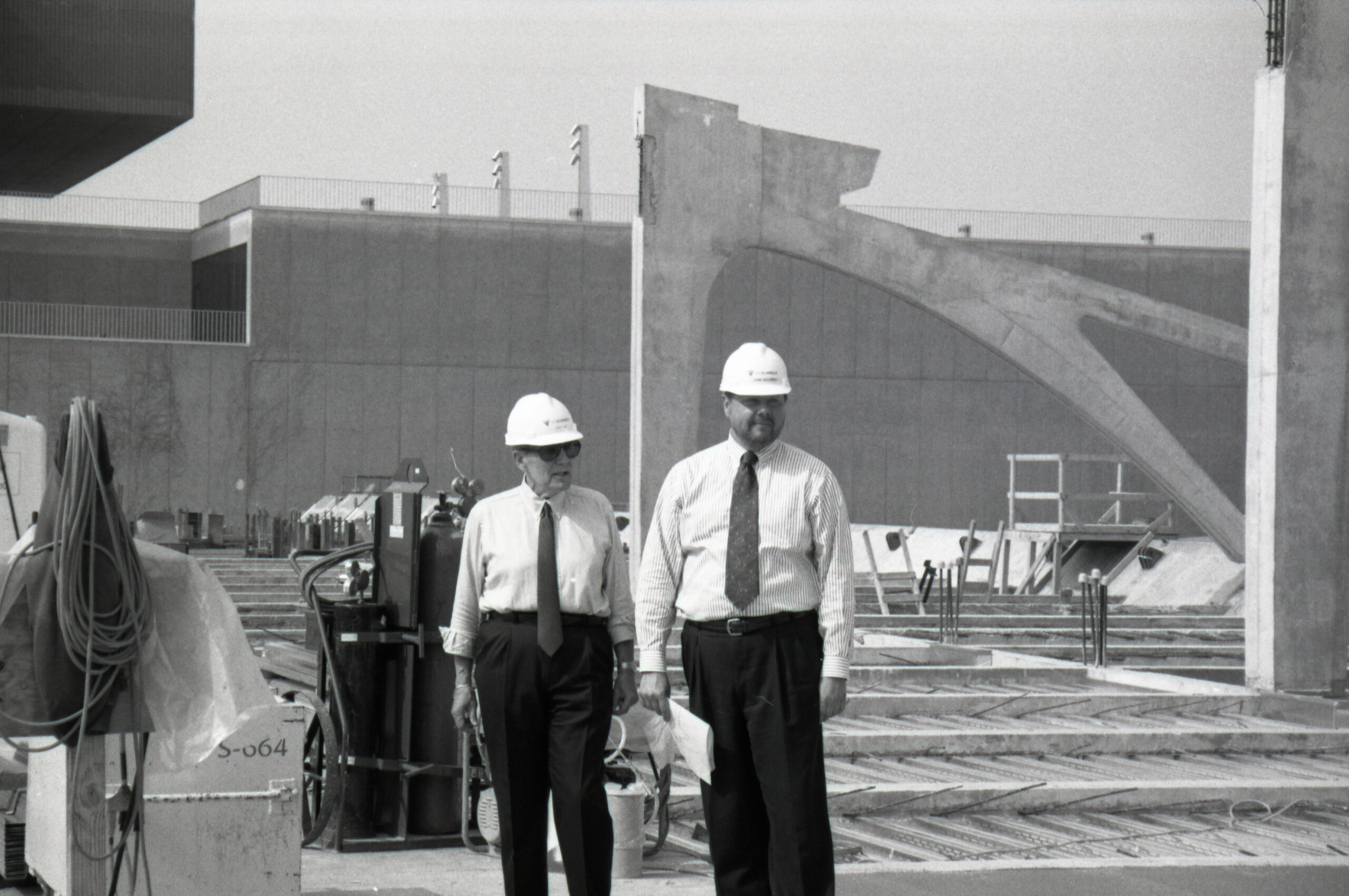
Photo credit: Anthony Petullo
(Right) Milwaukee Art Museum executive director Christopher C. Goldsmith (later named Muhammad Isa Sadlon) toured the construction of the Santiago Calatrava addition to the MAM in 1999. After converting to Islam in 1989, Sadlon played leading roles in Milwaukee’s growing Muslim community.
Stepping up
By the early 2000s, Milwaukee’s Muslim community had several thriving institutions, built on foundations established in the 1970s and 80s. In those decades, students in the Muslim Student Association at the University of Wisconsin-Milwaukee and Muslim families living in Milwaukee worked together to organize Friday prayers, create spaces for Muslims to gather and develop programs to educate their children.
In 1982, two of the early organizations joined forces to purchase a building and property on Milwaukee’s South Side. They built a mosque and formed the Islamic Society of Milwaukee. They opened Salam School in 1992, Wisconsin’s first full-time Islamic school. Throughout the 1990s, the ISM and Salam School continued to expand.
Meanwhile, Christopher Goldsmith, a prominent nonprofit leader in Milwaukee who was raised Catholic by “kind and loving” adoptive parents, heard about Islam from a friend. After learning more, he decided to become a Muslim in 1989. He eventually changed his name to Muhammad Isa Sadlon.
In his early experience as a Muslim, Sadlon told WMJ, “The quality of people I met was fabulous. Every direction I went, there were people of great wisdom and love and concern.”
Goldsmith had spent two decades at the helm of the Milwaukee Art Museum. As its young executive director, Goldsmith was in his 30s when he helped the MAM gain its first national accreditation in 1983 from the American Association of Museums. Later, Goldsmith was the key administrative leader responsible for overseeing Santiago Calatrava’s wing expansion, completed in 2001, which transformed the MAM into an international architectural destination.
Having a role in that iconic Milwaukee architectural project was a career milestone that is still celebrated. Beginning Aug. 27, the MAM is celebrating the 25th anniversary of the Calatrava work, the Quadracci Pavilion, “which transformed Milwaukee’s landscape – both physical and cultural,” the MAM website proclaims. Built to Inspire: The Quadracci Pavilion at 25 celebrates the Pavilion’s enduring legacy through a new installation featuring historic construction photography, an architectural model, original films, an audio guide” and more.
Sadlon stepped down from his post at the MAM in 2002.
Among many recognitions, Goldsmith was the Milwaukee Rotary Club’s 2001 Person of the Year and the recipient of the Milwaukee Press Club’s 2001 Headliner Award, an annual recognition honoring a prominent Wisconsin leader who makes notable impacts on the state.
In the wake of Sept. 11, 2001, Sadlon (Goldsmith) became more engaged with Milwaukee’s Muslim community and rose to several leadership positions, using his financial savvy and relationships with the Greater Milwaukee community in his new roles.
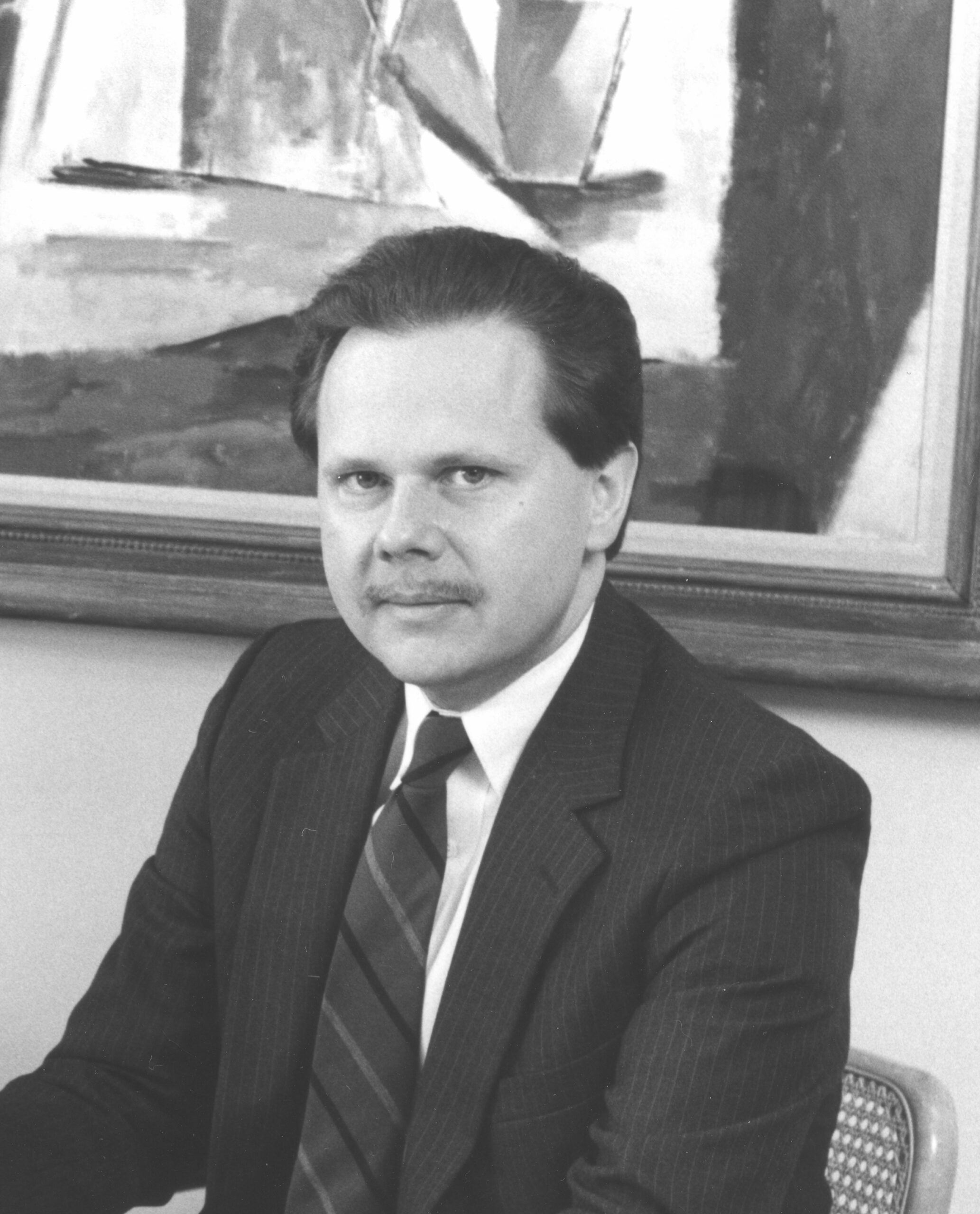
Christopher C. Goldsmith (photographed in 1986) spent more than two decades as director of the Milwaukee Art Museum. He converted to Islam in 1989 and changed his name to Muhammad Isa Sadlon.
As the executive director of the Islamic Society of Milwaukee from 2006 to 2010, Sadlon helped the organization achieve financial stability and acquire the site for the Salam School expansion. He also worked to build positive relationships between Milwaukee’s Muslim population and the Greater Milwaukee community.
During Sadlon’s tenure, the ISM faced the “good problem” of the Salam School’s success and growth. Established in 1992, Salam School expanded in 2001 but still did not have enough space to meet demand. In 2008, Sadlon led the ISM’s purchase of a 107,000-square-foot building on 11 acres near 8th Street and Layton Avenue, less than half a mile from ISM-Main at 13th Street and Layton Avenue. They converted 40,000 square feet to classrooms. It is now the home of the K-12 Salam School, now serving more than 1,400 students.
Sadlon also served on served as board chair at the Milwaukee Islamic Dawah Center, as finance chair and a trustee on the Masjid Al-Qur’an’s board of directors and as an advisor to Ma’ruf Milwaukee, a nonprofit established in 2008 by a group of young professionals “committed to enhancing the quality of life in Milwaukee’s disenfranchised and marginalized communities, advocating for social justice through … services to individuals, families and communities in need,” according to its mission statement.
Questions of identity
When the Milwaukee Rep produced Ayad Aktar’s Pulitzer Prize-winning play, Disgraced, in 2017, Sadlon participated in a post-production talkback panel. Disgraced is “a moving play that depicts a successful corporate lawyer painfully forced to consider why he has for so long camouflaged his Pakistani Muslim heritage,” says the Pulitzer Prize website.
Sadlon was the first to speak about the questions of identity the play raised. “My name is Muhammad Isa Sadlon. Some of you know me as Christopher Goldsmith. I was head of the Milwaukee Art Museum for many years. When somebody is introduced to me now as Muhammad, all of a sudden, the identity issue comes up. Who are you? We think we know who you are and you’re something else.”
“In the play, we see an interplay of identity and stereotypes, how people try to sort them out, how people make assumptions and how we are usually wrong in those assumptions,” he said.
As a fair-complexioned, blue-eyed man, Sadlon knew he didn’t look like a stereotypical Muslim. “I’ve served for five years as the head of the Islamic Society of Milwaukee, the largest Islamic organization in Wisconsin and one of the largest in the Midwest. I’m the only person who looks like me who’s active there.”
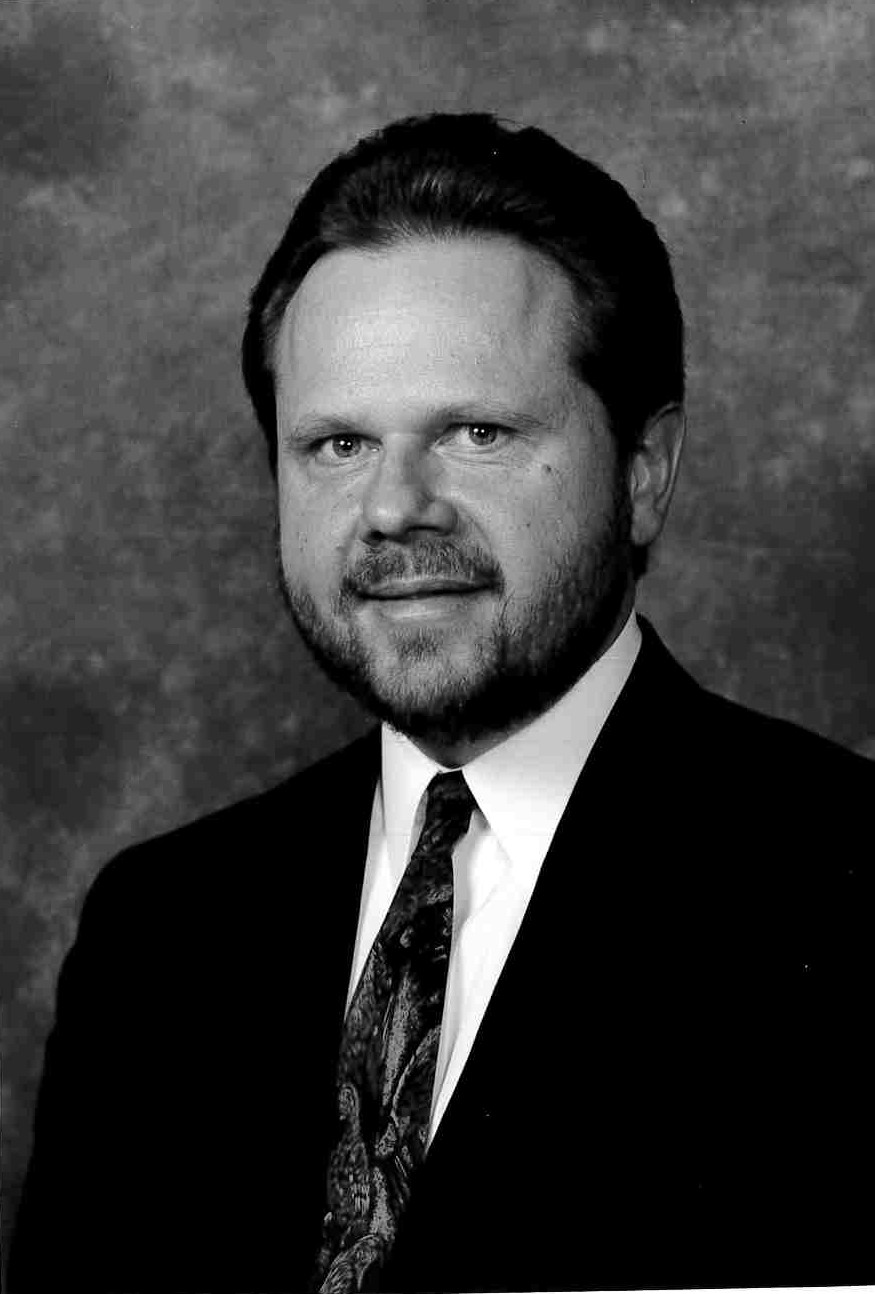
Photo courtesy of Rotary Club of Milwaukee
Muhammad Isa Sadlon joined the Milwaukee Rotary Club in 1982 and was a member until 2002. He was honored in 2001 as the Milwaukee Rotary Club’s Person of the Year.
Then he did what he often found himself doing, serving as a bridge between the Muslim community and the rest of Milwaukee. He explained who Milwaukee’s Muslims are to the audience.
“Most of the Muslims in Milwaukee came in the ’70s and ’80s,” he said. “People came as medical doctors, business people, some as refugees. And everybody, I think, initially thought that this was an interim step. They’d make some money and go back home.
“And, of course, the kids were born here. They became Milwaukeeans. They became Americans. And there was no going back home. And the parents’ dream of doing something else was conflicting with the children’s reality that this is their home.
“But those kids don’t look like most of the people here. Other people look at them as someone from someplace else, even though their self-identity is ‘someone from Milwaukee.’
“Right now, I’m the chairman of our central city mosque (the Milwaukee Islamic Dawah Center),” he noted. “Again, I am the only person who looks like this. Half our community is African American and the other half are Africans from the diaspora.”
Sadlon also offered some advice on how not to make wrong assumptions about Muslims. First, remember that Muslims are vilified and demonized in the media, so you know you are not getting a true picture. Second, look at Islam as Muslims do in order to understand it. “We look at our religion in its totality based on two things: first and foremost, we look at the Quran in its entirety. Do not take one soundbite out of context. This is what Islamophobes do. They don’t give context. They don’t give background. If you take a soundbite out of the Bible you run into the same problem.
“The second thing Muslims look at is how Prophet Muhammad applied the Quran in his life. What kind of life did he live? This is how we aspire to live.”
Sharing his knowledge
“I learned a lot from Br. Isa,” said long-time Dawah Center executive director Will Perry. “I knew about his success at the Milwaukee Art Museum,” Perry said. “I’d seen the work he’s done in the community and at ISM. I said to myself, ‘Ok, that’s my mentor right there!’ Now let’s get the ball rolling for the Dawah Center!”
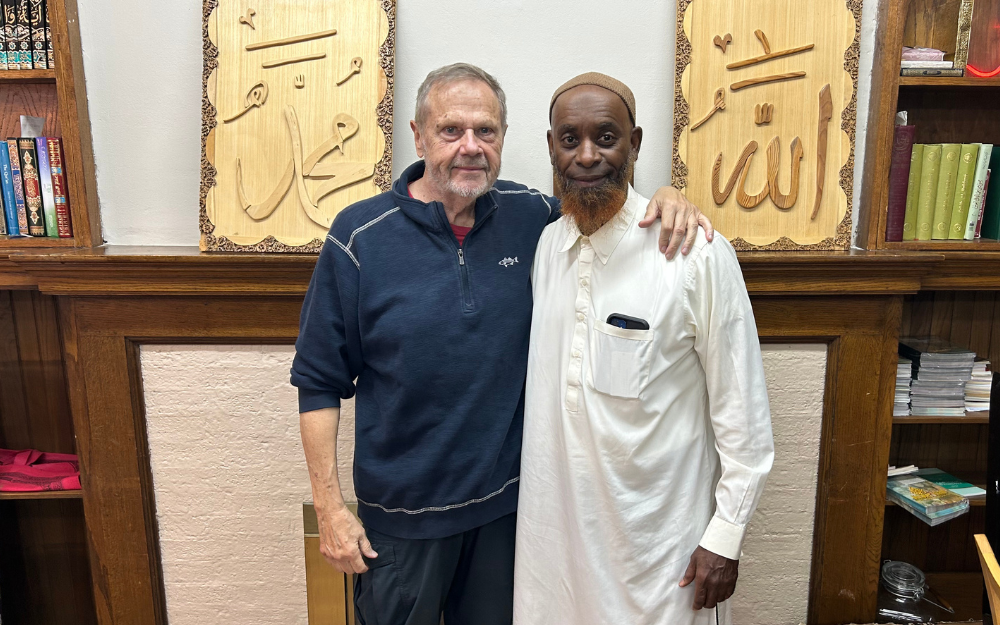
Photo by Sandra Whitehead
(Left to right:) Muhammad Isa Sadlon and Will Perry meet for prayer at the Islamic Society of Milwaukee – University.
What Perry learned from Sadlon was not to make fancy spreadsheets or hone in on targets with deep pockets. “What I did learn is that prayer is first and foremost. Next are relationships, to be a person people can trust. That takes time. You have to prove yourself. You are asking people to give up some of their money, something they’ve worked for.
“That’s what Brother Isa did for the Milwaukee Art Museum. How are you going to ask a person for $5 or $10 million? Who are you? That’s the first thing they want to know.
“It was the same thing at the ISM,” Perry said. “You want to raise $5 million dollars or $3 million dollars, whatever you need to put that building together. And then, again at the Dawah Center, when we needed to raise $500,000 or $300,000.
“I was reluctant to get out there and ask for money,” Perry admitted. “It took some pushing from Brother Isa and others. But I knew how important it was to our community.
“How do you get to that point where you can ask and receive? I learned from Brother Isa that the only way to do it is to first earn the trust of the community. Well, it took about 10 years. People need to see that the money coming in goes where it’s supposed to go.
“And, of course, it helped because they knew that I had Isa behind me.”