Photos courtesy of Zatoon Charcuterie
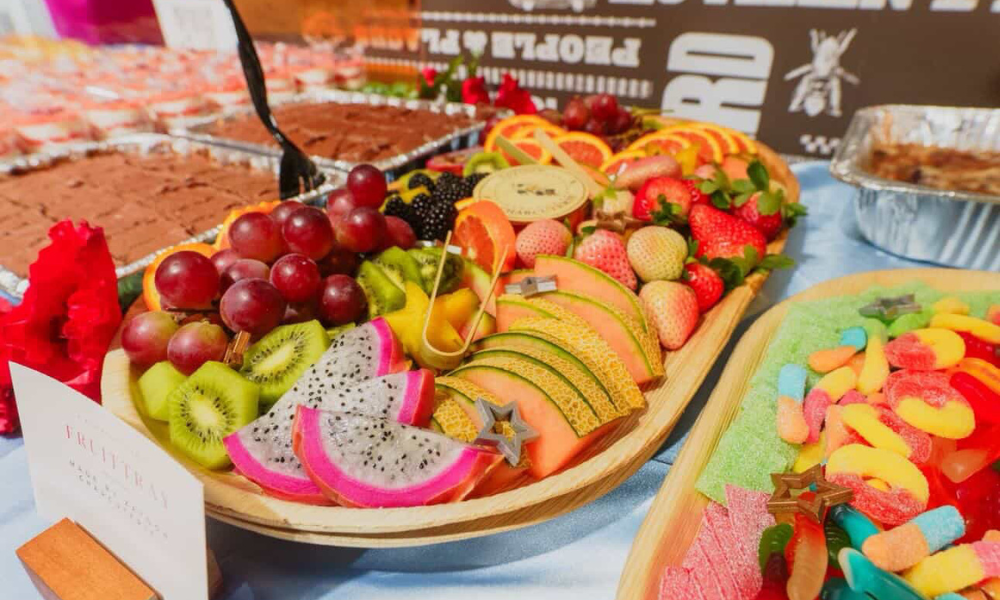
Zatoon Charcuterie’s halal meats and cheeses have become popular spreads in the Greater Milwaukee area.
A rising demand for halal charcuterie quickly changed one Milwaukee woman’s life.
Magida Jaber of Milwaukee, a busy young mother of two, enjoyed making charcuterie boards for family celebrations and friends’ parties. She saw it as her art form, a way of expressing her creativity.
“I really like art, but I don’t think I have the artistic hand for painting or drawing,” Jaber told the Wisconsin Muslim Journal. “I’m excited to find my art form.”
She also thought of it as a hobby.
“So, my husband says, ‘Since it’s something you like to do and you’re so good at it, why don’t you turn it into your passion project?’”
“You know what? This might be fun,” she thought. That was two and a half years ago.
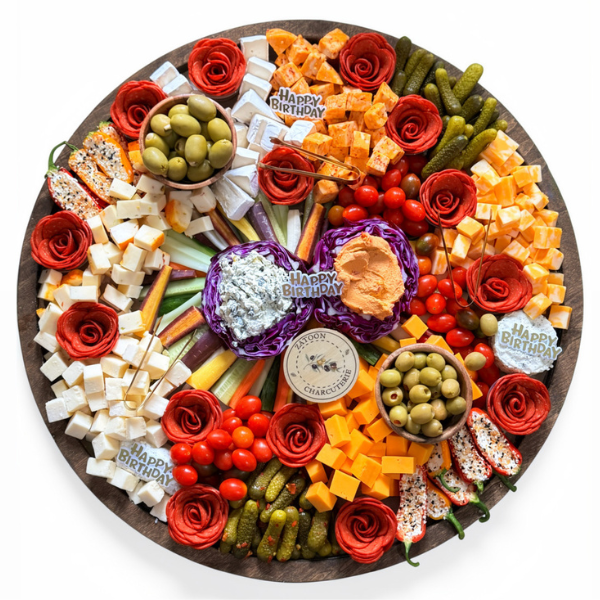
Today Jaber purchases “the best” halal charcuterie specialty meats from Michigan, combines them with halal Wisconsin cheeses and edible flowers, and delivers them to customers all over southeastern Wisconsin. She introduced Milwaukee’s first halal charcuterie cart, which is making a splash at festivals and events.
Jaber’s also become a businesswoman, naming her business “Zatoon Charcuterie.” She learned about pricing, branding and marketing, and is knee-deep in building a website to add to her social media presence. She’s developing distinctive packaging and expanding her menu.
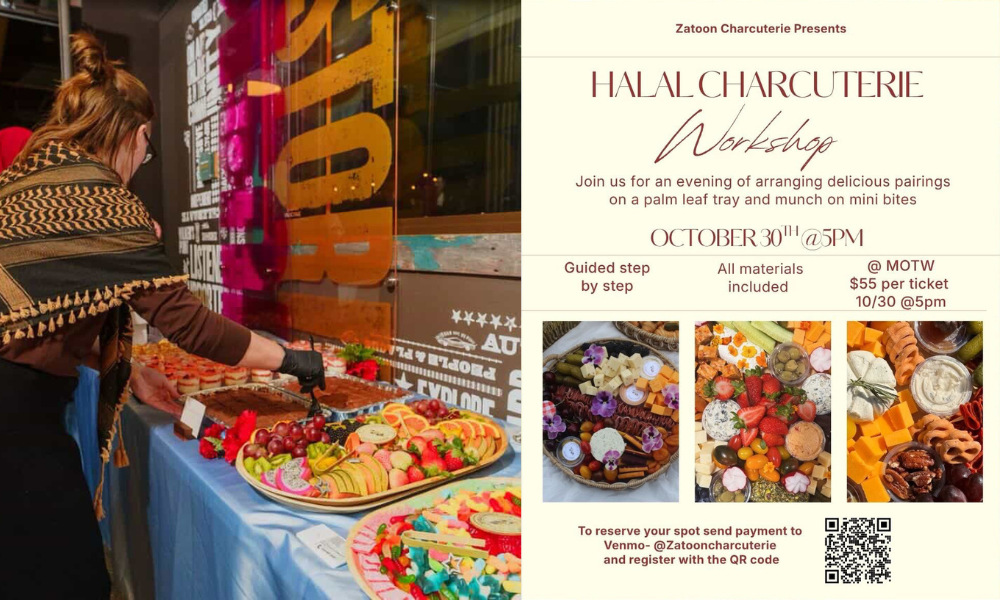
She is offering her first workshop this Friday: Halal Charcuterie Workshop, Oct. 30 at 5 p.m. at MOTW Coffee and Pastries, 2859 W. Rawson Ave., Franklin. Participants will be guided step by step to create their own charcuterie board.
Tickets are $55. All materials, including specialty halal meats and cheeses, are included. To reserve your spot, send your payment via Venmo to @Zatooncharcuterie and register here.
Milwaukee’s charcuterie gap
“Wisconsin is known for its cheese,” noted Food artist Muna Riyad Sharma of Bay View, a popular event stylist and producer, and owner of Bint Jamila’s Table. “For the longest time, we (Muslims) were not able to fully engage in that part of Wisconsin culture because we didn’t have halal options. Zatoon Charcuterie provided us a way to enjoy the cheese of our state and to enjoy this part of the Wisconsin experience.”
Sharma met Jaber through Instagram. “Whenever I see any Palestinian or Arab or Muslim women enter the food scene, I’m very interested in the work they’re doing and ways we can support each other,” Sharma said in an interview with WMJ. “We’re both young moms and we both have a passion for creating beautiful, delicious things that make you feel happy. We ended up following each other, connected, and eventually formed a friendship.”
When Zatoon Charcuterie appeared, “a lot of people were doing cheese platters and cheese boards, but no one was doing the true charcuterie experience,” Sharma said. “Halal cured meat is very difficult to come by. You can get some stuff at the markets, but the truly good stuff requires you to go to either Michigan or Illinois or to make it yourself. Magida was going to Michigan; she was going to Illinois. She was sourcing from different people out of state and no one else was doing that here in our community.
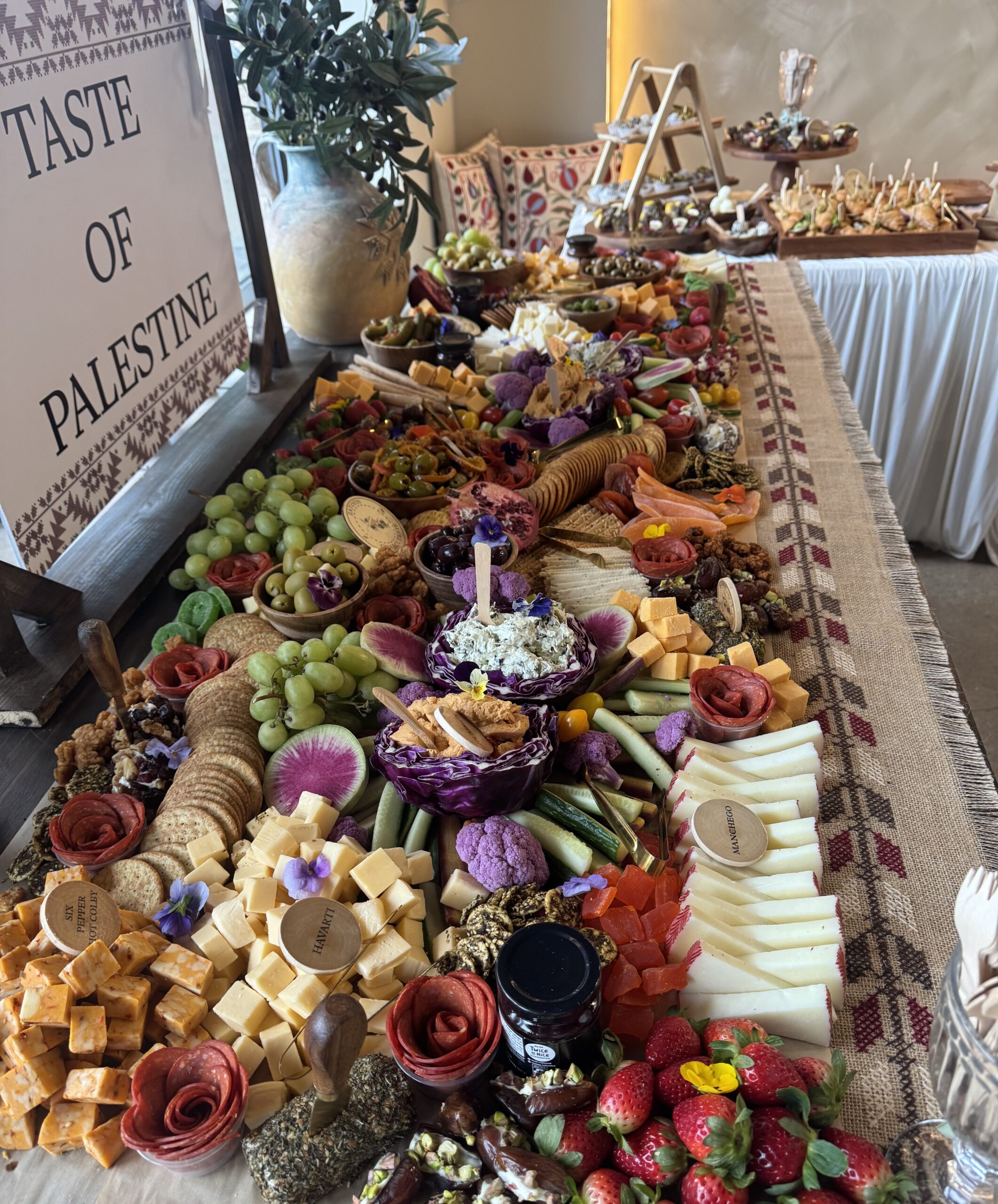
Zatoon Charcuterie created a spectacular grazing table for the opening of Safadi Coffee in Franklin.
“She also has a lot of knowledge about what she puts on her boards,” Sharma added. “That knowledge is something else we didn’t have in our community. I was fascinated by how much she knew and the time she invested in developing that knowledge. She’s not just selling pretty things; she has the best products on the boards she sells.
“She offered the first Halal charcuterie cart, which distinguished her business,” Sharma said. The Zatoon Charcuterie Cart started showing up at events everywhere—the Riverwest Blueberry Fest, Alverno University’s Inferno Night, Salam School events, Little Village Play Café Gather and Grow Market and Nadiana Art Gallery’s Eid Bazaar.
“But what is truly special about Zatoon Charcuterie is Magida herself,” Sharma said. “Her vision and her ability to engulf herself in whatever she’s doing is going to make her successful at whatever she does. Her passion, her love to try new things, her courage (she’s extremely bold)—when it comes down to it, it’s Magida that makes her business special.
“For a state that really loves cheese and cured meats, having her create something catered to our community is truly special.”
Taking care of business
WMJ interviewed Jaber about Zatoon Charcuterie, and her experience as an artist and business woman. Here are the highlights.
How would you describe your business?
“Essentially, it’s a charcuterie catering business. We also do other finger foods and pop-ups at events, where we offer build-your-own boxes. It brings a fun aspect I call ‘deconstructed appetizers.’
“The biggest thing that makes my business stand out compared to other charcuterie businesses is that the meat is halal. The pastrami, turkey, and all the meat is halal.”
Where do you make your boards?
“In a prep kitchen.”
Do you deliver?
Yes. We have a pretty wide radius. We have clients from Menomonee Falls and Mequon to Racine and Kenosha. I do the deliveries myself.
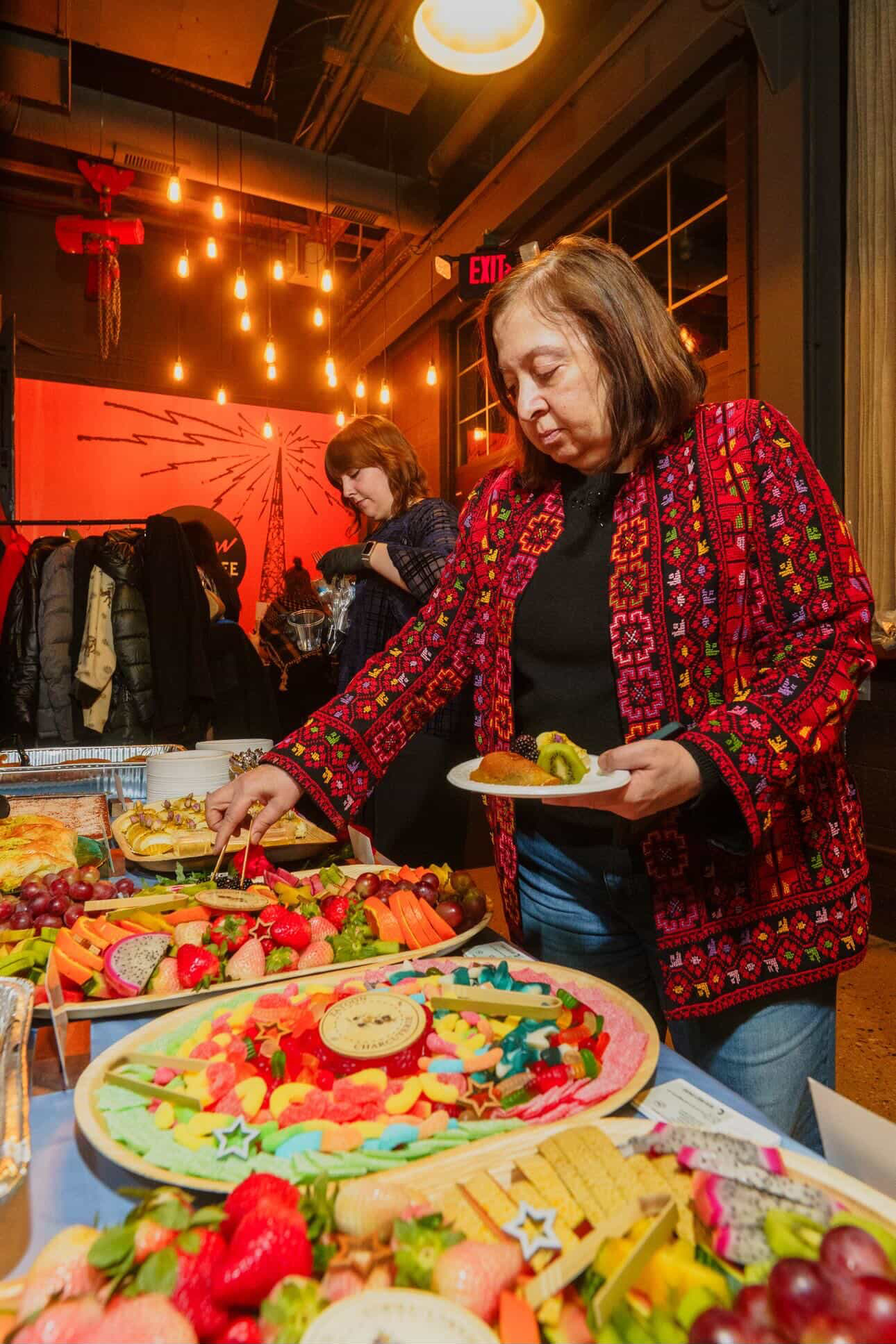
Ghada Hammouri tries Zatoon Charcuterie’s appetizers at an event held at Radio Milwaukee.
Where do you get halal cured meats?
“I source from a small family business in Michigan. At the workshop, I’ll share some local options I’ve found.
“I try to serve my community by offering inclusive options everyone can eat. So, the meats are not just halal, they are zabiha, which are slaughtered in a specific way. It was really important to me that if I was going to do something for my community, that it would be for all the community.”
“How did you learn to make beautiful charcuterie boards?
“It was a lot of trial and error, researching and watching videos and online tutorials. Pinterest is a big inspiration. I’ve fallen in love with the art of charcuterie.
“They say ‘You eat first with your eyes.’ That’s one of the main things I enjoy about creating the boards. I consider myself a perfectionist in that.
“I developed a sense of what I was doing by arranging boards for family members and friends. The meat is the main starter of a board. Usually, it flows down the middle and I build the board around it. Sometimes it’s in roses. It depends on the type of meat.”
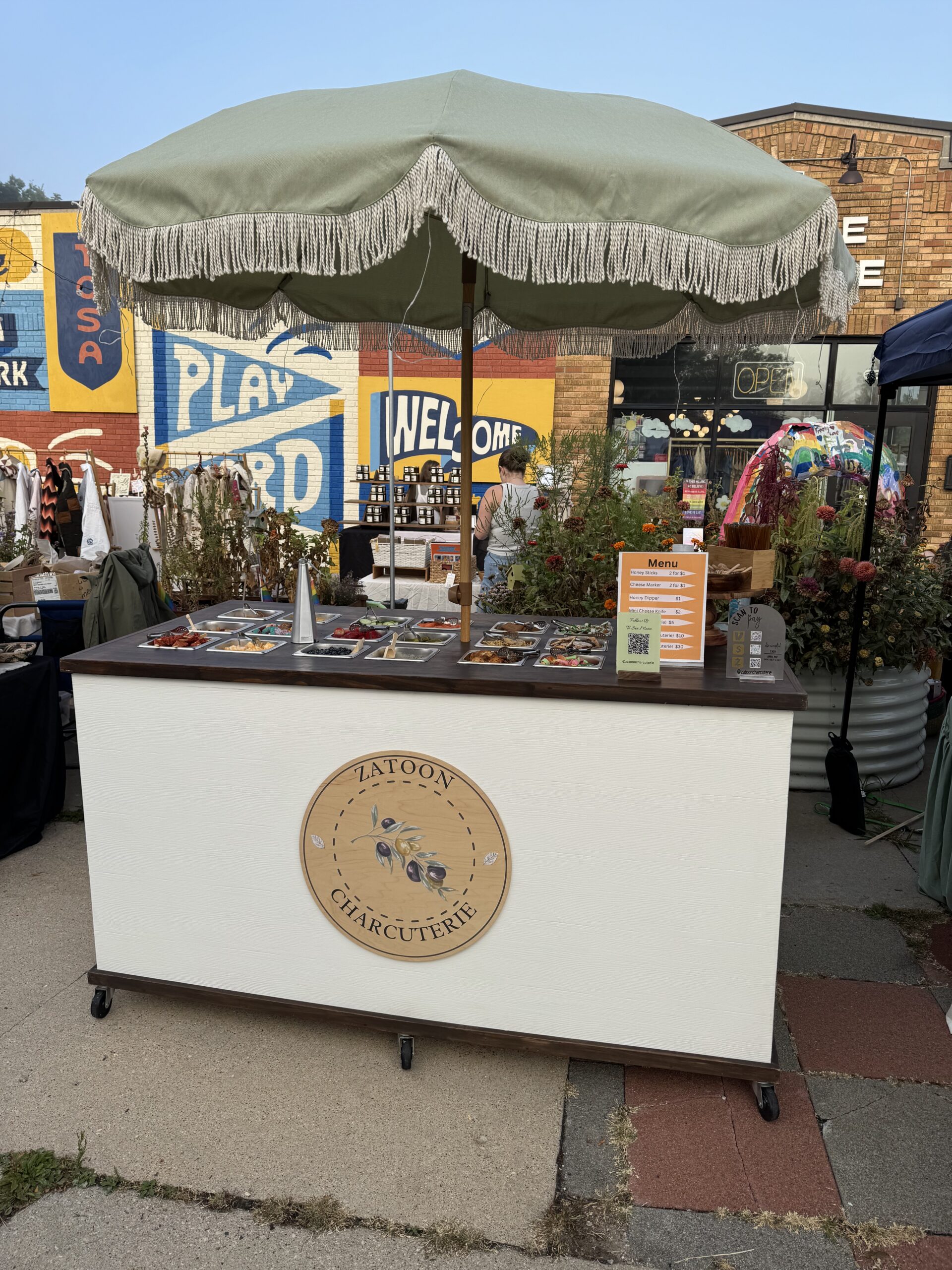
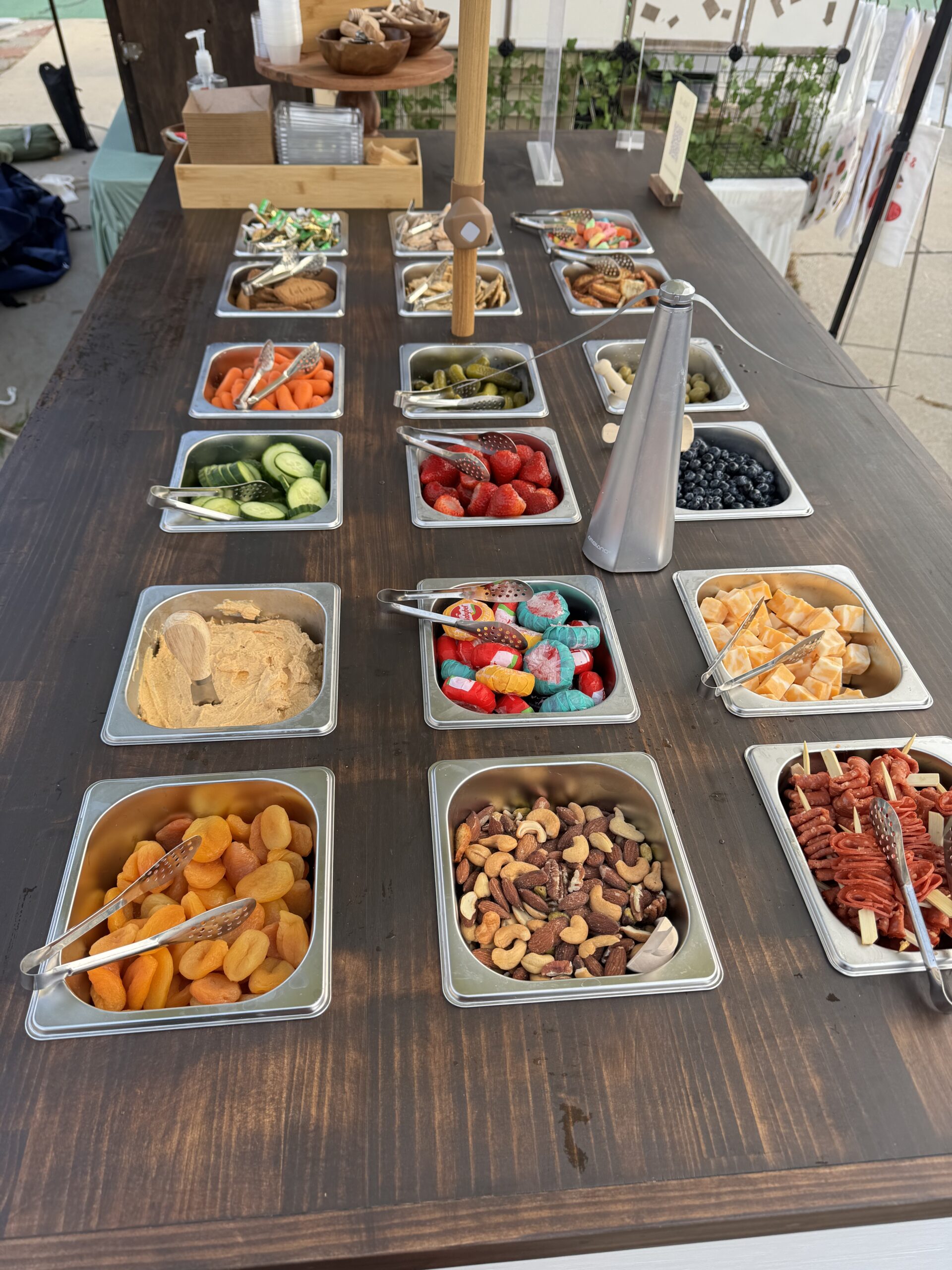
Zatoon Charcuterie’s cart is the first in the Milwaukee area to feature halal charcuterie.
What’s the most challenging part of making a beautiful charcuterie board?
“It’s always the vision. What does the client want and what am I able to provide?
“One thing we take seriously is allergies. Besides allergies, I always like to ask the client, ‘What do you not like?’ I always make boards inspired by what clients like—the meat, the cheeses, dips and fruits, vegetables, dried fruits.
“What is special about charcuterie boards is that you can pair flavors together that taste great, better than eating the same thing separately. Eating from a charcuterie board is an experience.”
What is the price range of your boards?
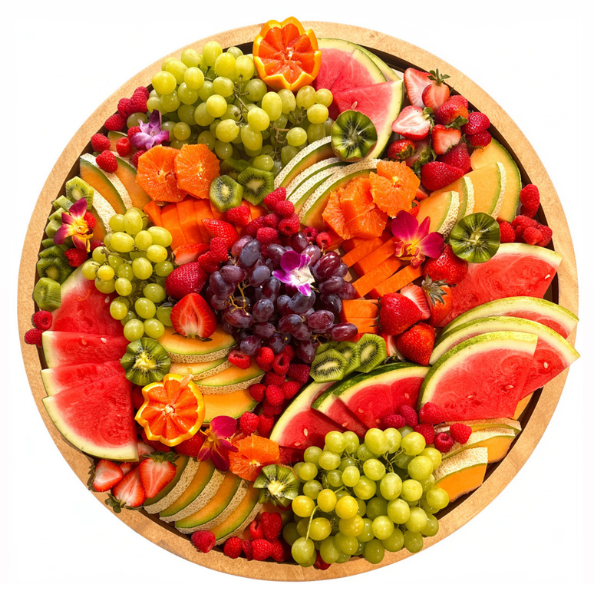
Prices start at $75. Sizes are medium, large and extra-large, and all come with crackers on the side. Our medium size is a 13-inch round board that serves four to six or eight people. Our large size is 12 inches X 22 inches and extra-large is 17 inches X 22 inches.
Your business has grown fast. What do you attribute it to?
“The Muslim community has been really supportive of my business. In the beginning, I was explaining the concept to people. Once they started seeing it and tasting it, they’d say, ‘This is really good!’
“I didn’t think I would make money; it would just be a fun thing. But it has really taken off. When I saw the demand, I was like, ‘Oh my God, people believe in me, so I should believe in myself.
“So far, I’m a one-woman show, although I do have a lot of support from my partner and family members.
“I’m hoping next year to hire some employees and eventually open a cute small shop where people can come make their own boards, and order boards and boxes for their parties.
What has been the hardest part of running a fast-growing business?
“Balance, balance, balance. I’m a mother with two toddlers. They are close in age, 3 and 5 now.
“I consider them my little employees. They come with me shopping and are with me when I’m prepping or sourcing. It’s quite cute to see they have a good understanding of my business.”
Because Our Stories Matter
Wisconsin Muslim Journal reports on people, stories and experiences of Muslims across our state. As a nonprofit publication, we are committed to making this work available to everyone without a subscription or paywall.
Every story we publish is produced by professional journalists, photographers and editors committed to reporting on Wisconsin’s Muslim communities. Keeping this work going requires time, talent and resources.
If you value dedicated, fact-based coverage that documents Wisconsin Muslim history, please consider supporting us with a donation. Gifts of any size make a difference and help us continue to report on narratives that might otherwise go untold.
We are grateful for your readership.