Photo courtesy of CAIR
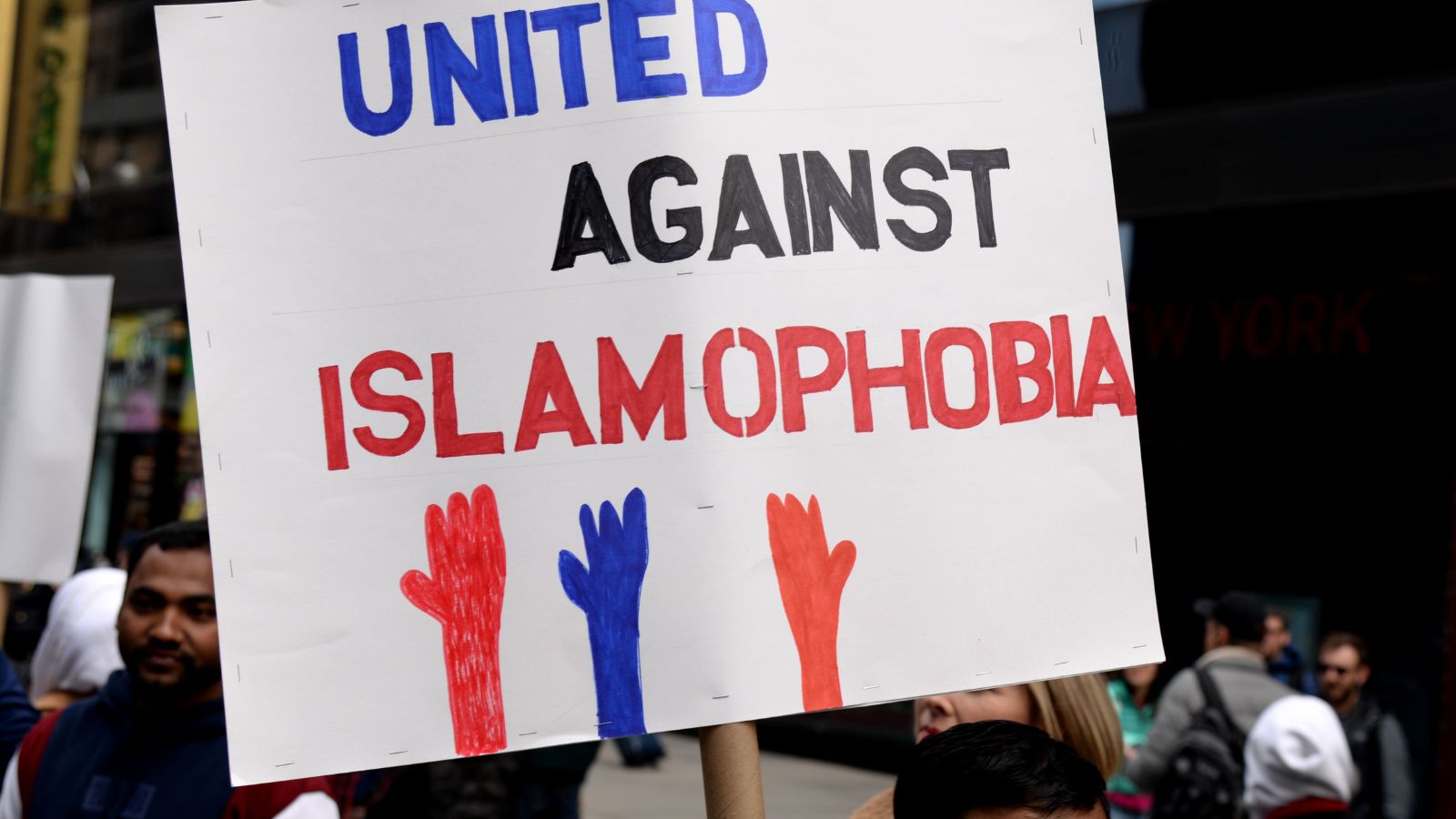
A 2026 study from Rutgers Law Center for Security, Race and Rights found Muslim Americans are effectively punished for engaging in one of the most fundamental democratic acts—running for office—because their participation triggers racialized and Islamophobic backlash.
While election-driven attacks on Muslim American candidates are nothing new, multiple new studies show the level Islamophobic rhetoric and harassment experienced today is unprecedented. At the same time, more Muslim Americans are organizing politically and seeking public office than ever before.
On Election Day, Wisconsin Muslim Journal takes a look at the research on Islamophobia in politics and discusses it with one of Wisconsin’s leading scholars on Islamophobia, Marquette University Professor Louise Cainkar, Ph.D.
An Islamophobic backlash
“Today, more than 255 Muslim Americans serve as elected officials nationwide, including four in the U.S. House of Representatives; yet rather than being embraced as engaged citizens, Muslim American political candidates are encountering overt hostility and exclusion,” says a new study from Rutgers Law School, Punished for Participating: Islamophobia in U.S. Electoral Politics. It documents how Islamophobia is operating as a systematic barrier to equal political participation.
The 2026 Rutgers study examined 31 cases from 2001-2026 of Muslim Americans running for public office. It showed they were often targeted with conspiracy theories alleging “Islamic infiltration” or “Sharia law” agendas, harassment and intimidation, and presumptions of antisemitism, often used to delegitimize candidates. The report found Muslim Americans are effectively punished for engaging in one of the most fundamental democratic acts—running for office—because their participation triggers racialized and Islamophobic backlash.
“When Muslims are penalized for participating in the electoral process, the harm reaches far beyond one religious minority—it undermines the foundational democratic principle that allows all Americans to participate equally and safely in public service,” the Rutgers report says.
According to the Council on American-Islamic Relations (CAIR) and CAIR Action’s 2026 directory, 255 Muslim elected officials serve across the United States. Ninety-eight are local council members; 63 are education officials, including school board members; 32 are state assembly members; 18 are judges; and 11 are mayors. Five Muslims currently serve in the U.S. House of Representatives: Ilhan Omar, Rashida Tlaib, Andre Carson, Lateefah Simon and Aisha Wahab. Fifteen serve in other elected positions.
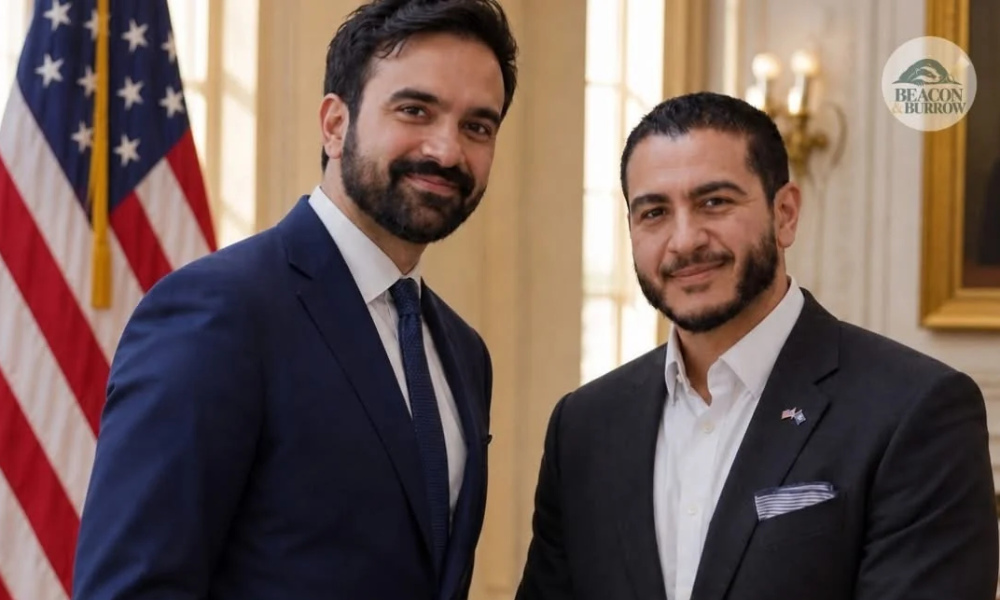
Photo courtesy of Beacon & Burrow
Muslims who engage in politics, like New York Mayor Zohran Mamdani and U.S. Senate candidate Abdul El-Sayed, have been labeled “jihadists” and “terrorists,” tropes from Islamophobic rhetoric used as political tools against them.
Congresswoman Omar has faced widely reported verbal attacks and personal smears from President Donald Trump and an Oct. 12 pre-dawn raid on her Washington, D.C.-home by the Department of Homeland Security. The Trump administration is reportedly attempting to build a criminal case to strip Omar of her citizenship and deport her that focuses on what it claims are false statements about her age in her 1995 immigration paperwork. (Her family fled Somalia as refugees during the country’s civil war. The investigation aims to prove she was 18, rather than 17 as her father indicated. At 18, Omar would have been responsible for filing her own papers.)
If U.S. Senate candidate Abdul El-Sayed, M.D., wins today in Michigan, he will be the first Muslim to serve in the U.S. Senate. The stakes are high and so is the Islamophobic backlash.
Following El-Sayed’s win in the primary, nearly one in three right-wing posts about him mention Islam, Muslims or Sharia law, an Aug. 23 Washington Post analysis shows. Hours after he won the Democratic nomination, “Sen. Tommy Tuberville (R-Alabama) called the man who could be the first Muslim senator a ‘TERRORIST’ and ‘RADICAL ISLAMIST’ on social media,” the Post reported. President Trump has repeatedly called El-Sayed a “jihadist,” a “terrorist sympathizer,” a “radical extremist” and a “Muslim Brotherhood guy,” all while questioning his loyalty to the nation. Congress would need to “get a special metal detector for Abdul,” Trump said.
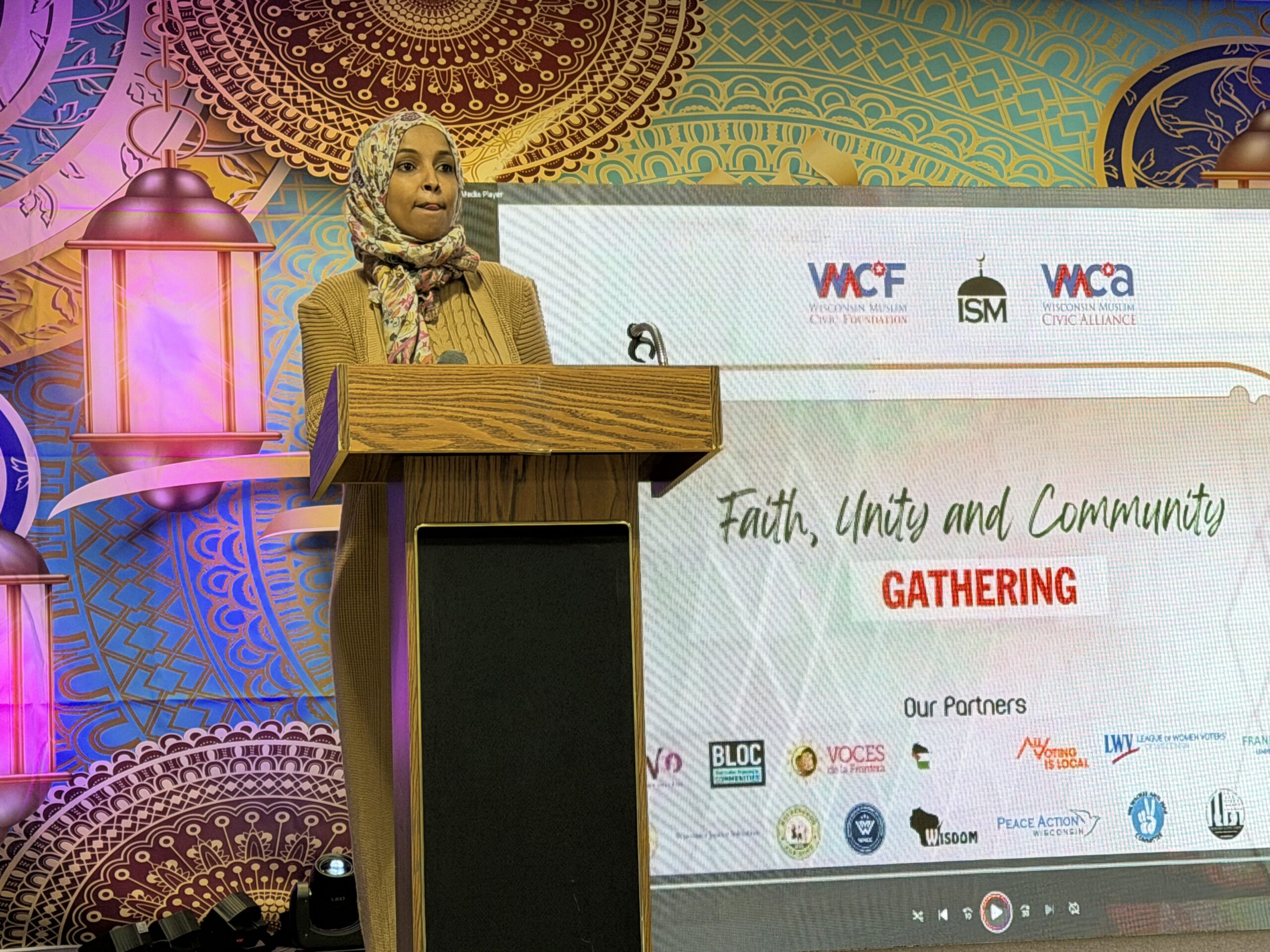
Rep. Ilhan Omar (D-Minnesota) served as the keynote speaker in February at the Faith, Unity and Community Rally held at the Islamic Society of Milwaukee Community Center.
A deep dive with Dr. Cainkar
Louise Cainkar, Ph.D., is a nationally recognized sociologist and leading scholar on the Arab American and Muslim American experience. “Dr. Cainkar studies the intersection of race, gender, public policy, national security and dominant ideologies, particularly as these impact the quality of life of Arab and Muslim Americans,” says her profile on the Marquette University website.
She is currently writing a chapter for The Rutledge International Handbook of Islamophobia, scheduled to be published in London next summer. Her chapter’s working title is “Islamophobia, Racism and White Supremacy.”
WMJ interviewed Cainkar yesterday. Here are the highlights:
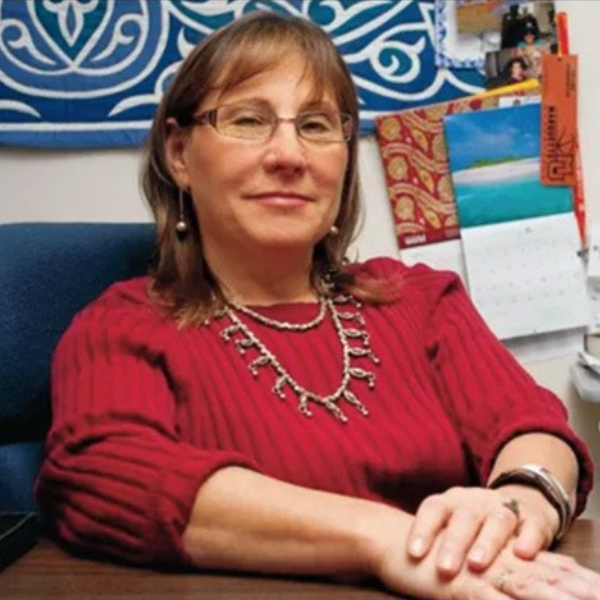
Marquette University Professor Louise Cainkar
What have you noticed about the use of Islamophobic rhetoric in these midterms?
We have Mamdani as the mayor of the largest city in America. And having Muslim representatives in the House is not insignificant. All these tactics were used against them.
But having a Muslim in the U.S. Senate is a change of profound proportions. That is why Abdul El-Sayed is taking all the weight of all the money being poured into campaigns against him.
Breaking into the top ranks of the U.S. government by popular vote as a Muslim is remarkable. He’s a threat to the established hierarchies of both parties because he’s got a new way of thinking.
Why does Islamophobia rise in election years?
It’s a useful tool to gain votes. It’s racism that would not be permitted against any other group. You wouldn’t see this level of racist attacks on Latinos or Asians or Hindus or any other group. But it is okay with Muslims.
Antisemitism and Islamophobia came on the ship (with Columbus). But Jews rose in corporate America, academia and political circles in the United States in the 1950s, ‘60s, ‘70s and ‘80s. We are in different times now.
One would think that Jews would be the biggest allies of Muslims against this kind of targeting, and many Jews are, but not the Jewish American establishment.
Why not?
The Jewish establishment has always rallied support for Israel by using racist, anti-Muslim and anti-Arab tropes. That’s how they covered up the dispossession of Palestinians. They use them to their benefit.
People are starting to question Israeli policies; they should start to question the Islamophobia that goes with it.
What other groups use Islamophobia as a political tool?
There’s a whole bunch of parties who benefit by using Islamophobia as a tool—Christian evangelicals and white supremacists, for example. They have a vision of the world that is hostile to Muslims, and they’re not particularly friendly to Jews either. Many different interest groups benefit from Islamophobia.
Yet, many Muslims are hopeful that the tide is turning. Do you think so?
The next piece I want to write will be about demography. The whole population of the United States has changed. White Christians are still the majority, but that’s shrinking.
Many in the new young generation of Americans come from countries that were colonized, that experienced war and the U.S. empire. They have a more critical lens on what the U.S. government is doing overseas. They have a more critical lens on population removal. They think differently from previous generations.
These immigration bars that are against over 90 countries right now are against black and brown people. It’s not just controlling what the population looks like in this country, it’s controlling how it thinks. The immigration bars are a way to stop this change, but I think it’s bound to change.
Is Islamophobia also impacting local elections?
Well, suburban America has the same demographic story. U.S. suburbs are places that historically were all white. They were the place where the upwardly mobile lived and that was historically white people.
But now we have a lot of immigrants who are highly educated. They’re doctors, they’re tech pros, they’re engineers, they’re professors. Half of the immigrants to this country are highly educated. When I ask my students who they imagine an immigrant is, they always think of a low-skilled person. But the fact, if you look at statistics, is that almost half are highly educated. That means they’re going to move to the suburbs.
The demographics of the suburbs are changing and the people in the suburbs don’t like change. It’s not just against Muslims, but anyone from the Global South. They just don’t like the change in culture, in the way people look, in the way people dress and the way people eat. What I think they are opposing is difference.
But Muslims are easy to pick on. The storylines are already available. The toolkit is available to be used by anybody who is discontent.
Because Our Stories Matter
Wisconsin Muslim Journal reports on people, stories and experiences of Muslims across our state. As a nonprofit publication, we are committed to making this work available to everyone without a subscription or paywall.
Every story we publish is produced by professional journalists, photographers and editors committed to reporting on Wisconsin’s Muslim communities. Keeping this work going requires time, talent and resources.
If you value dedicated, fact-based coverage that documents Wisconsin Muslim history, please consider supporting us with a donation. Gifts of any size make a difference and help us continue to report on narratives that might otherwise go untold.
We are grateful for your readership.