Photo by Cherrie Hanson
The Muslim Women’s Coalition family strengthening and domestic abuse prevention program, Our Peaceful Home,” has been operating for eight years to aid some of the most isolated victims of domestic abuse, as well as educate youth to break the cycle.
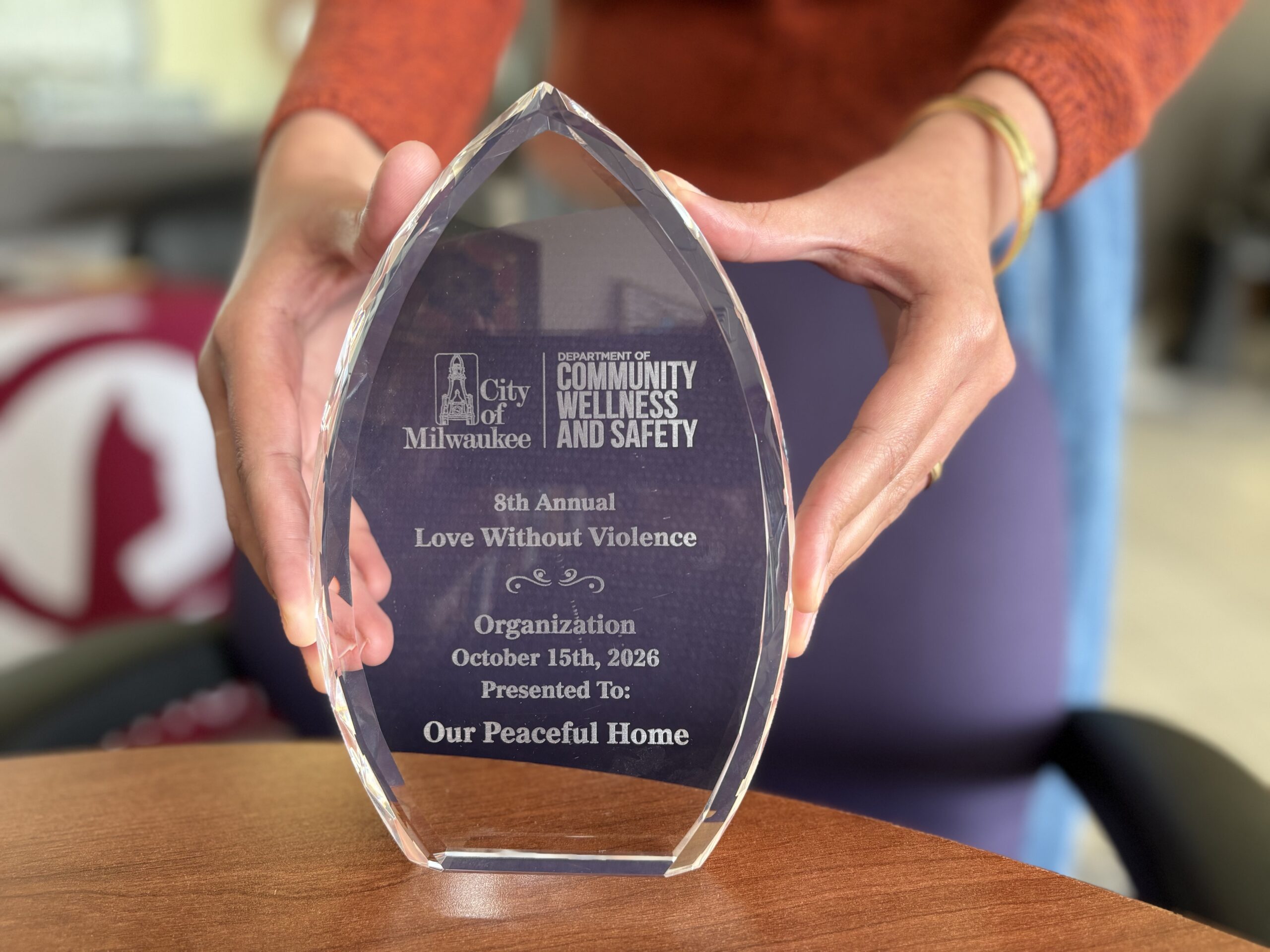
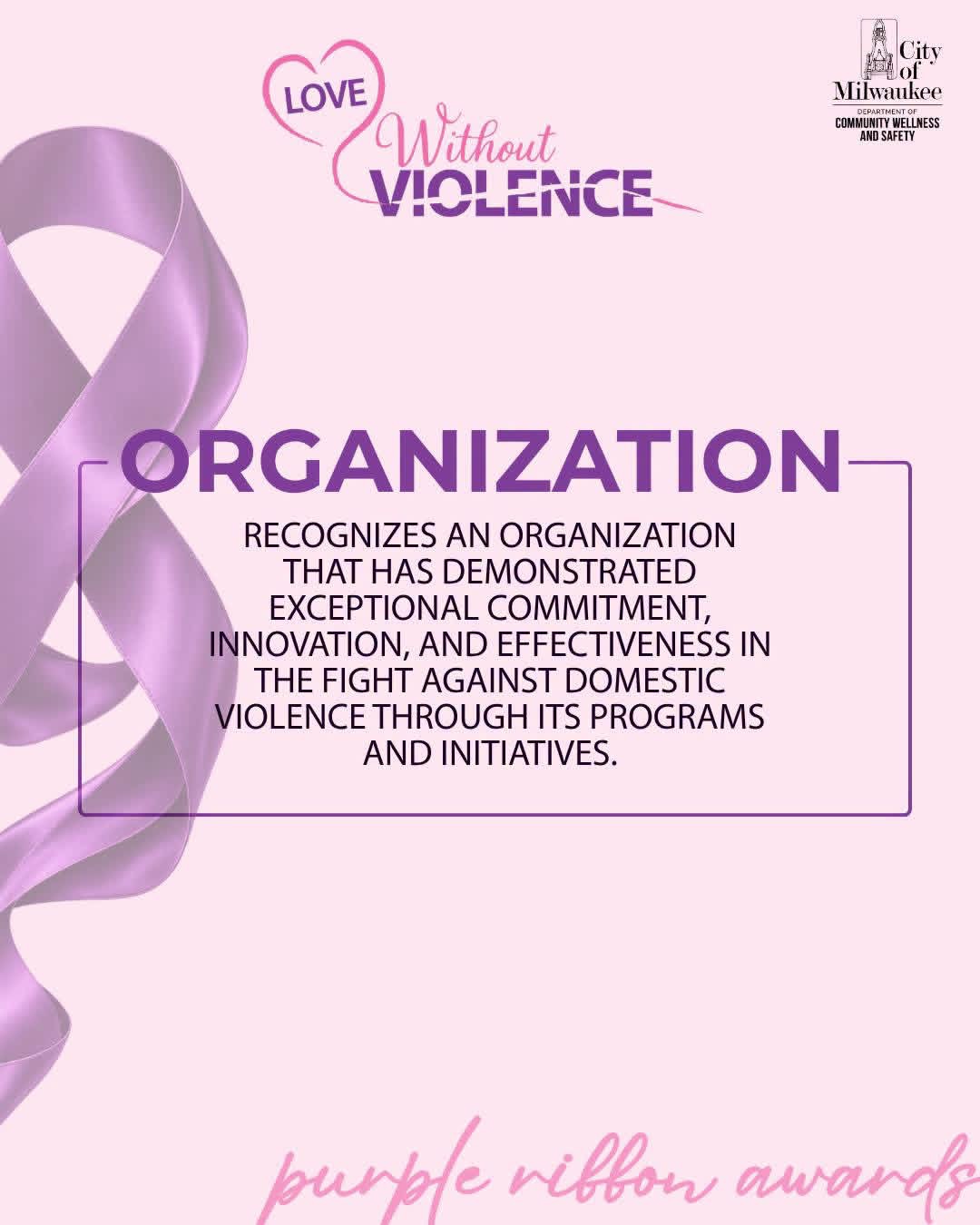
The Muslim Women’s Coalition’s culturally specific family-strengthening and domestic abuse prevention program, Our Peaceful Home, is the 2026 winner of Milwaukee’s prestigious Purple Ribbon Award, given to one organization annually in October, which is Domestic Violence Awareness Month.
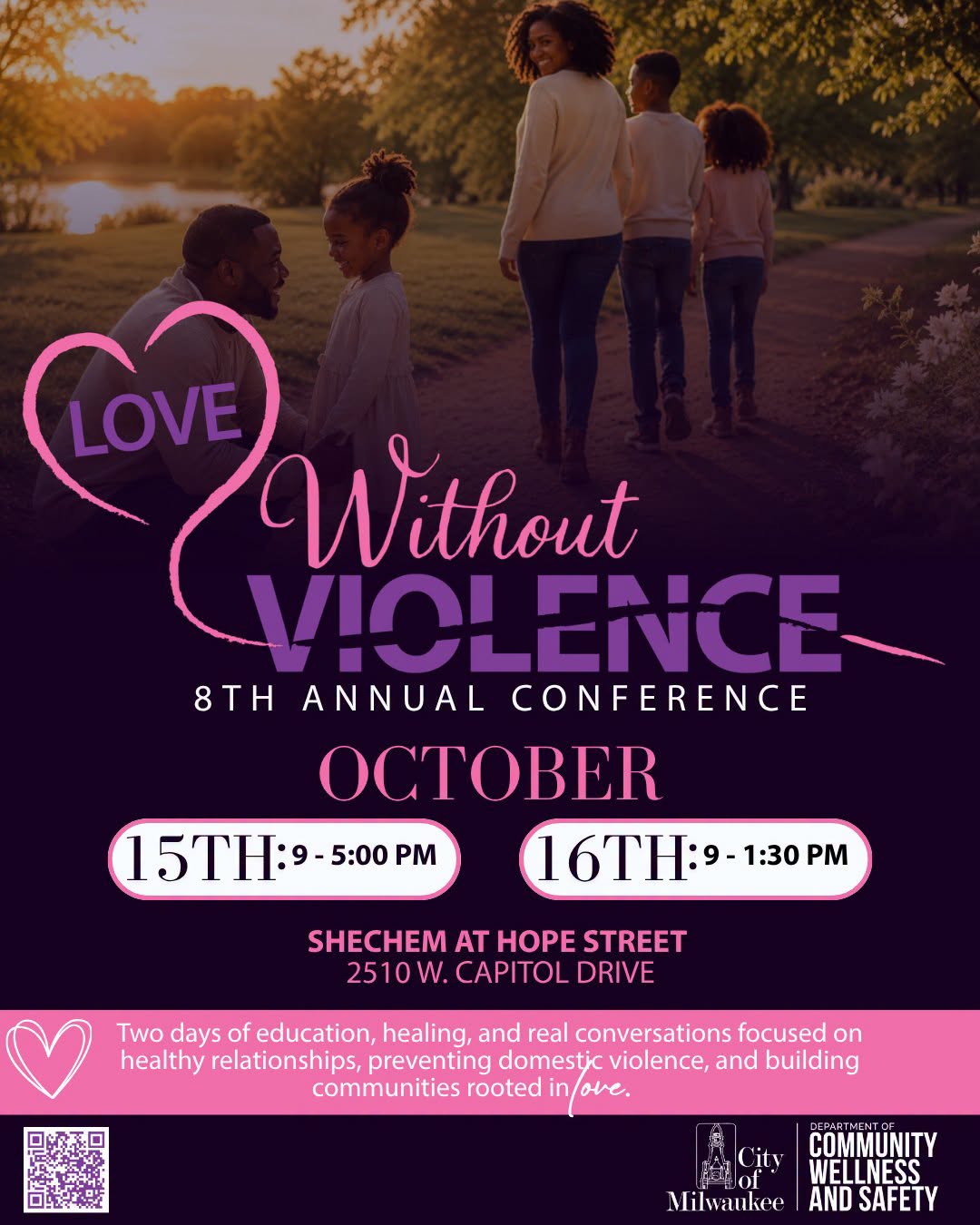
The City of Milwaukee’s Department of Community Wellness and Safety recognized OPH at its 8th annual Love Without Violence conference, Oct. 15-16. The award recognizes organizations that embody its mission of fostering relationships free from violence, supporting survivors and advancing community safety.
OPH joins a list of significant winners that includes Milwaukee County’s Domestic Violence High-Risk Team, led by Sojourner Family Peace Center; Fresh Start Learning Center; and the Milwaukee Police Department’s Sensitive Crimes Division.
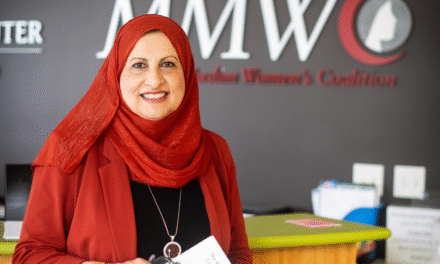
“We’re especially proud of this recognition,” said OPH founder and MWC’s executive director Janan Najeeb. “To be recognized for our consistently excellent work and our commitment to survivors and their families is really wonderful.”
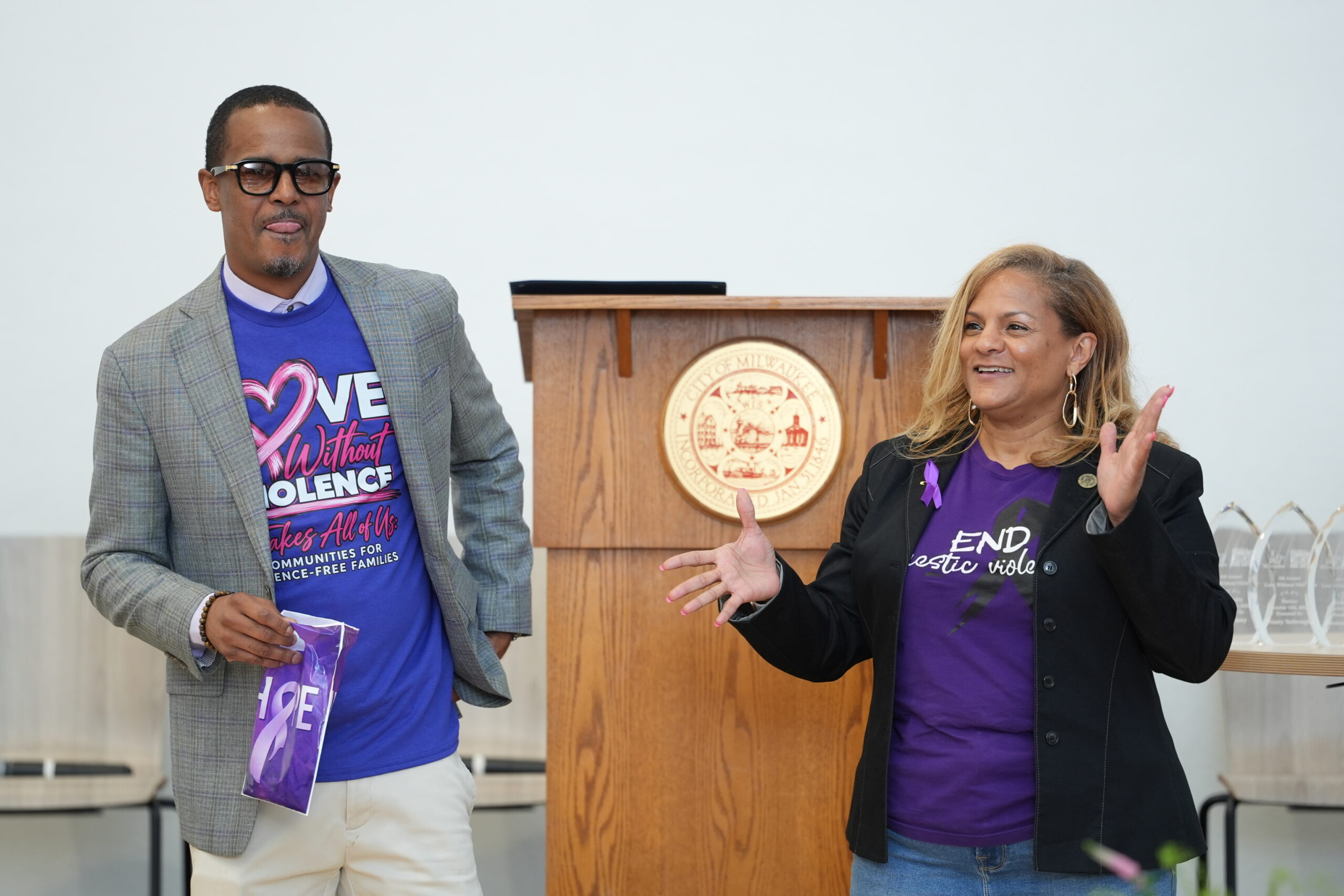
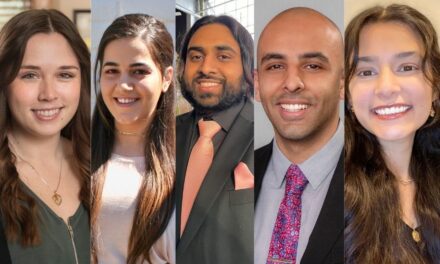
City of Milwaukee Community Program Strategist Quinn Taylor (left) and Office of Community Wellness and Safety Director Karin Tyler (right) organize the city’s Love Without Violence conference. Tyler founded the conference and the Purple Ribbon award in 2019.
OPH’s unique service
Before OPH was created eight years ago, “we kept getting calls from many other agencies, asking for help with language interpretation, cultural advice and other assistance,” Najeeb recalled. “Women who went into shelters struggled with language and because their dietary needs were not met.
“After a while, it was clear that we could help take care of clients from A to Z. Agencies like Asha Family Services and even individuals from the State of Wisconsin encouraged us to move forward and start our own program.
“Today referrals come to us from police departments, schools, imams of mosques, agencies and other organizations. All these different entities see us as successful and have confidence referring to us,” Najeeb added.
While OPH is open to anyone who seeks their services or is referred, the program has developed unique services to help communities facing language and knowledge barriers. “We have developed extensive services because the clients we work with may not know English, how to find resources or even how to get around this city,” Najeeb said. “Our clients are often people who don’t have family here. They’ve been isolated. They have many needs. That requires our advocates to really work hard to achieve successful outcomes for them.
“We serve people from many different cultural and faith backgrounds,” Najeeb noted. “But, because we have the cultural expertise, the vast majority of the people who are referred to us are from the Arab and Muslim community.”
One challenge in serving OPH’s particular client base is that many come from backgrounds where domestic abuse is considered a private matter that should be handled within the family. “The simple fact is that the suffering is not being resolved,” Najeeb said. “It’s often the women who are suffering have no one to lean on. Their rights are being abused. We are following the Islamic injunction of removing harm.”
OPH’s Dream Team
“We have the dream team,” Najeeb said. “They are very kind and compassionate, driven to see the clients, many with children, in safe situations. They work hard because they know they are helping individuals who have been suffering and many for a long time.”
“We have many languages represented,” she added.
“We are most proud of our ability to connect with people who are not familiar with the law here, do not know the resources, don’t speak English at all and face the stigma of being a victim of domestic violence, ” said OPH manager Samaa Ibrahim. “We are proud we have been able to connect with them, educate them about resources and regain trust in others.”
OPH has developed the language capabilities to serve groups from the Middle East, Africa and South East Asia, as well as Spanish and French speakers and others, she said. She highlighted the program’s success in working with the Rohingya community, whose language is spoken but not written, making it harder for them to use technical translation and communication tools.
Services for clients include: emergency hotel stays, connections to resources, transportation, consultation with an attorney and parenting classes, to name a few. “We provide services based on each situation,” Ibrahim explained.
OPH not only works with people who are facing domestic abuse, she said. “We visit schools and work to educate middle and high school students. Statistics show a cycle of abuse. People who experienced it when they were young are more likely to become abusers in the future. We want to break that cycle.”
Ibrahim, who has been in her position for one year, credits Najeeb’s vision and the work of her predecessor and team members for OPH’s success. “From the beginning, Sister Janan thought about the needs of the community and stepped up to help,” she said.
“I am so grateful to work with MWC on this program,” Ibrahim added. “This award is a big honor, but our real reward is seeing the impacts we have on our clients’ lives every day.”
Because Our Stories Matter
Wisconsin Muslim Journal reports on people, stories and experiences of Muslims across our state. As a nonprofit publication, we are committed to making this work available to everyone without a subscription or paywall.
Every story we publish is produced by professional journalists, photographers and editors committed to reporting on Wisconsin’s Muslim communities. Keeping this work going requires time, talent and resources.
If you value dedicated, fact-based coverage that documents Wisconsin Muslim history, please consider supporting us with a donation. Gifts of any size make a difference and help us continue to report on narratives that might otherwise go untold.
We are grateful for your readership.