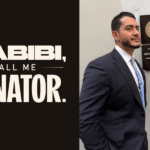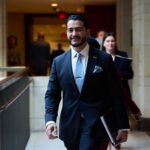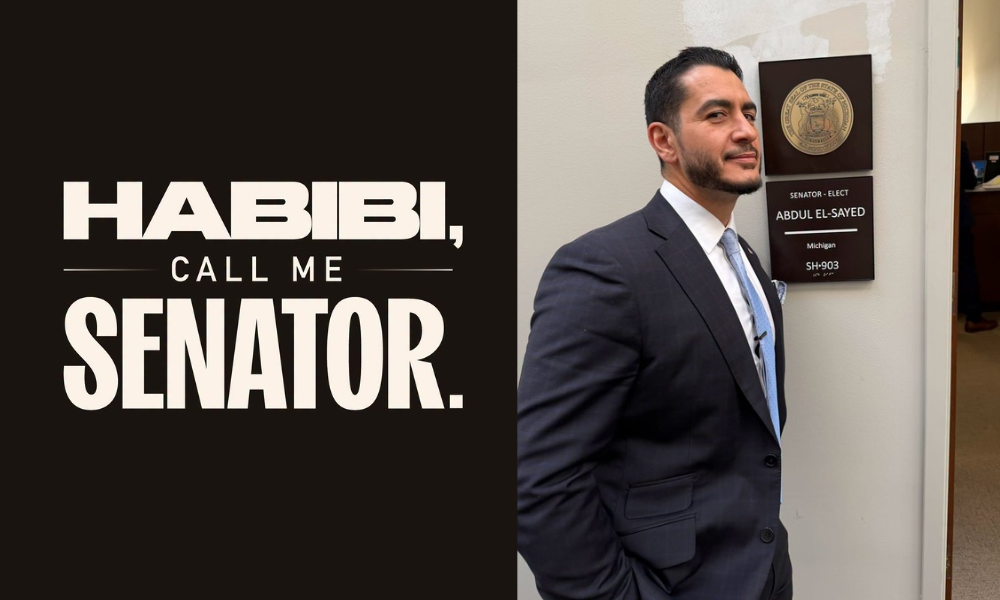
By using familiar Arabic expressions such as “habibi” in his public messages, Senator-elect Abdul El Sayed brings Arabic and Muslim language and culture into the public conversation.
“Up until right about now, you might have noticed I always say ‘inshallah,’ or ‘God willing,’ whenever the outcome of this race was mentioned. But today, tonight, we can turn that inshallah into alhamdulillah! For the right wing opps, that just means ‘praise be to God.’”
With that mix of English and Arabic, the first Muslim American elected to the U.S. Senate, Dr. Abdul El-Sayed, began his victory speech in the wee hours of Nov. 4. He defeated Trump-backed Republican candidate Mike Rogers in Michigan’s Senate race.
Dearborn Mayor Abdullah Hammoud told WDET, Detroit’s flagship NPR radio station, he was moved to tears, “when the senator-elect turned inshallah into alhamdulillah, hearing how many non-Arab and non-Muslims knew the term and knew what was coming, and they basically completed the sentence.”
Internet searches into these Arabic phrases surged. “What do they really mean?” they asked. And folks started dropping Arabic words into their English conversations.
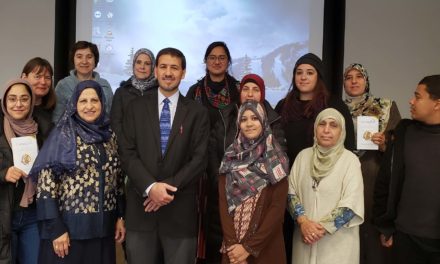
With Senator-elect Abdul El-Sayed commanding the spotlight, “the media is covering him and people are watching carefully. There’s a new focus on Arabic,” Omar Da san, Ph.D., an Arabic language Instructor at Milwaukee Area Technical College, told the Wisconsin Muslim Journal in a recent interview. Dr. Da San was also a featured speaker at MATC’s Arab Heritage Month celebration in April. “There’s no question, people are interested in Arabic these days.”
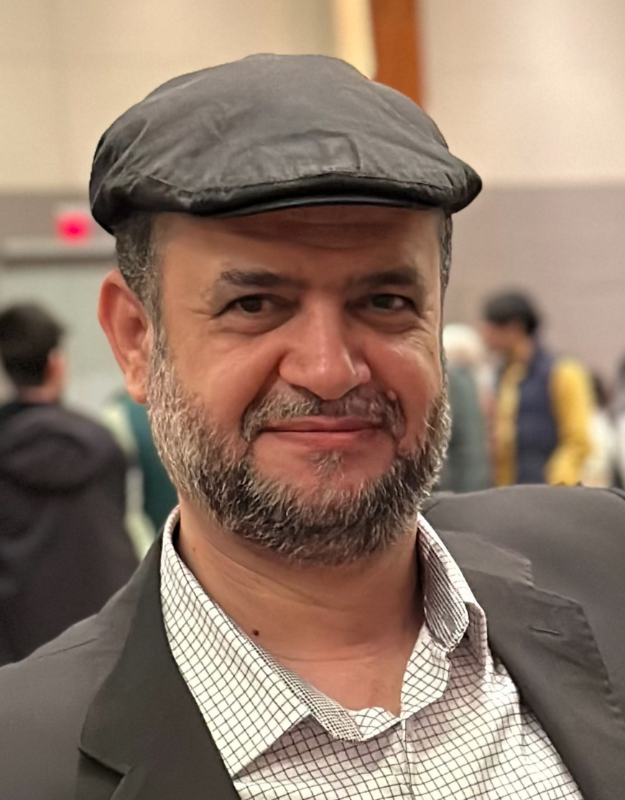
Omar Da san, Ph.D., MATC Arabic Language Instructor
What does he really mean?
During El-Sayed’s run for Senate, politicians, including President Donald Trump, and right-wing commentators called him “a terrorist” and “a jihadist.” In Islamophobic arguments, he was presented as “a danger to the American public.”
Rather than run from his Muslim identity, El-Sayed embraced it, occasionally punctuating his speeches with Arabic. He stepped on stage when his race was called and joyfully declared, “My name is Abdulrahman Mohamed El-Sayed, and I’m so proud and honored to stand before you as your senator elect.”
“When we heard the thunderous applause for his name and for ‘alhamdulillah,’ one of the most common yet sacred expressions in Islam, it felt as though a deeply entrenched stereotype about Islam and Muslims was being shattered, undermining the Islamophobia that had been used to stir fear and hatred in American politics,” wrote Robin Anderson, Ph.D., Professor Emerita of Media Studies at Fordham University, in an opinion piece in Aljazeera.
Habibi takes center stage
Later in his speech, El-Sayed playfully turned his attention to Vice President J.D. Vance and said, “J.D., habibi, there is this delicious irony in the fact that you are constitutionally obligated to swear me in in January. So, you know what that means? Wolverine 1, Buckeye 0.”
Long a staple in Arabic conversations and music, Habibi gained traction in American pop culture and among younger non-Arabic speaking audiences through global music and TikTok. It originates from the root “hubb,” which means love.
It literally means “my love” and is commonly used as a term of endearment for addressing friends and family. “It conveys affection, familiarity or gentle mockery. El-Sayed was playing with that last meaning, addressing a political adversary with the intimacy of an old friend,” noted Newsweek editor of subscriber content Anna Rahmanan.
Discovering treasure
What are they saying when using these phrases? What’s the real meaning? People want to know, Da San observed. When they look beyond the political banter into what these phrases mean, “it will enrich their understanding” of many things, in many ways, he said.
Arabic is rich, proclaimed Asma Masri, Ph.D., an MATC psychology instructor who studies the connections between language and thought. She spoke at MATC’s observance of Arab Heritage Month. “Arabic language is one of the richest languages on earth by comparisons. English has 600,000 words, French 150,000 words, Arabic, 12 million documented words. It’s a living archive of emotion, culture and human experience. It carries centuries of wisdom.
“Arabic vocabulary describes feelings other languages cannot,” she continued. “It does not simply describe the world, it deepens it. It offers a lens that reveals connection, meaning and beauty in places that we might otherwise overlook. To encounter Arabic is to encounter language that expands perception, enriches thought, and reminds the speaker that language is not just spoken, it is lived.”
“Arabic is one of the very old languages that is still alive today,” Dr. Da San added. “It’s the language of the Quran. More than 1.5 billion people recite and read Arabic. It is spoken by more than 420 million native speakers.” It played an important role in history, including preserving the knowledge of ancient scholars and transmitting it to Europe.
Arabic goes mainstream
While Senator-elect El-Sayed’s victory puts a spotlight on Arabic, the language is already catching on as more people get to know their Arab American neighbors. The Muslim Women’s Coalition’s three non-Arab, non-Muslim staff members—Cherrie Hanson, Jenny Wagner and Maria Flores say they find themselves using Arabic more and more, hearing it from colleagues.
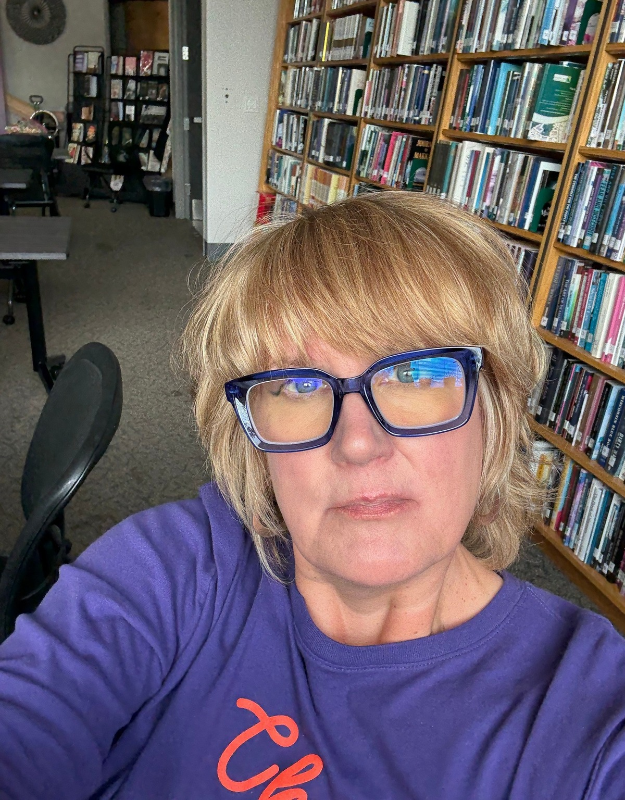
WMJ managing editor and MWC special projects manager Cherrie Hanson experiences daily opportunities at work for cultural exchange, language learning and new perspectives.
MWC operations manager Maria Flores’ introduction to Arabic came in 2011, when she attended Arabic classes at the IRC. “Getting accustomed to reading from right to left was not as hard as I thought it would be,” she said.
Flores also learned inshallah from a friend. “I use it occasionally,” she said.
“When I start each MWC Networking Brunch, I say, ‘Assalamu alaikum,’ peace be upon you,” said Cherrie Hanson, WMJ managing editor and MWC special projects manager. “I learned ‘tisbah ala khair’ from a friend. It translates to ‘good night’ but literally means ‘May you wake up in goodness or in well-being.’ There’s so much more meaning in it than just ‘good night.’
“What I love about Arabic is the poetic nature of one little bundle of words. It’s loving and God-centered,” Hanson added.
Islamic Resource Center librarian Jenny Wagner said she occasionally uses inshallah and mashallah (an expression meaning “as God wills,” commonly used to express joy, praise and gratitude). “I love the way those expressions express hopefulness and thankfulness in a positive way, giving credit where credit is due—to God.”
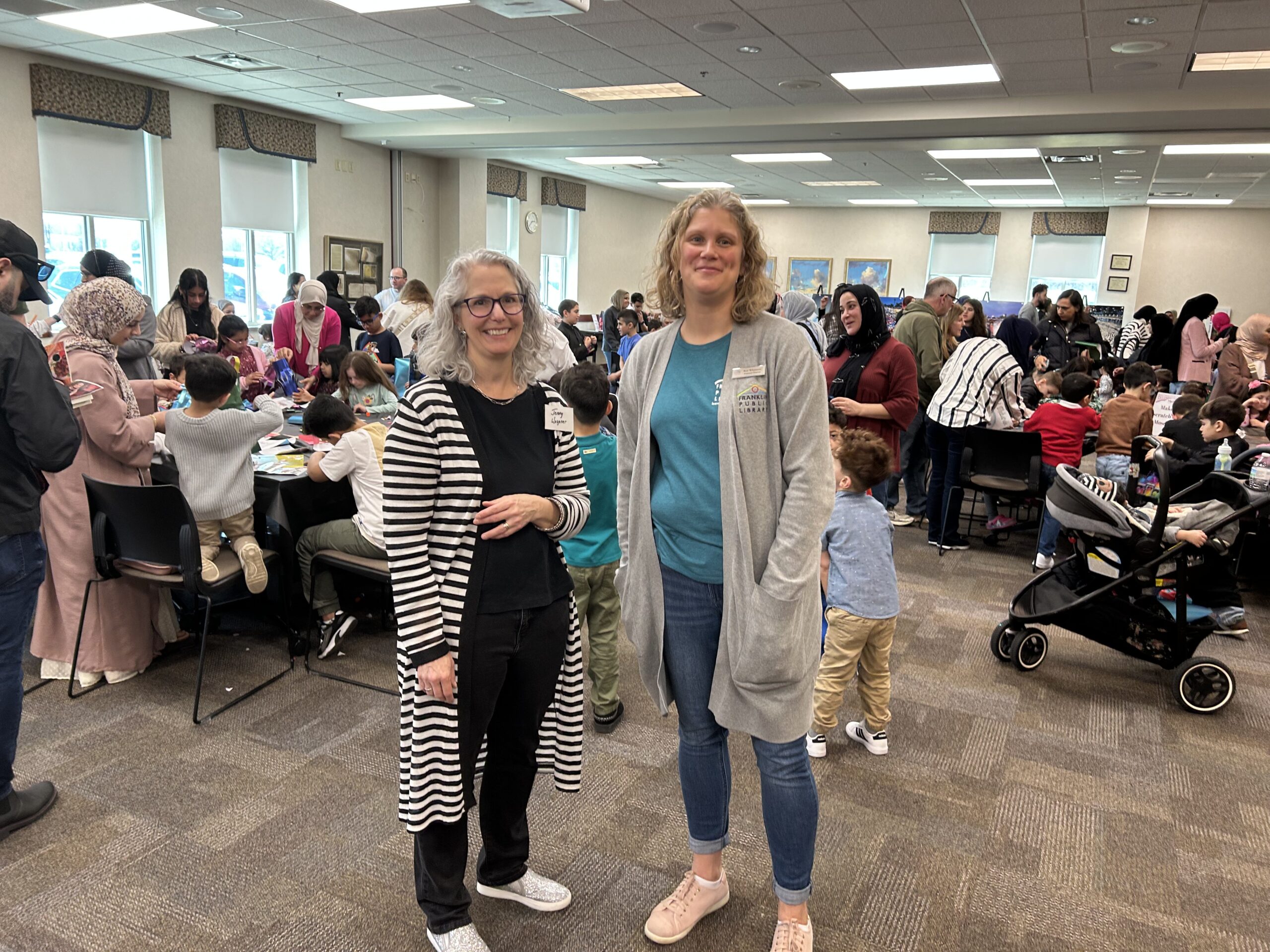
Jenny Wegener, Islamic Resource Center librarian (left) creates awareness of Islamic culture through community collaborations. She poses with Keri Whitmore, assistant director of Franklin Library at an Eid celebration in 2025.
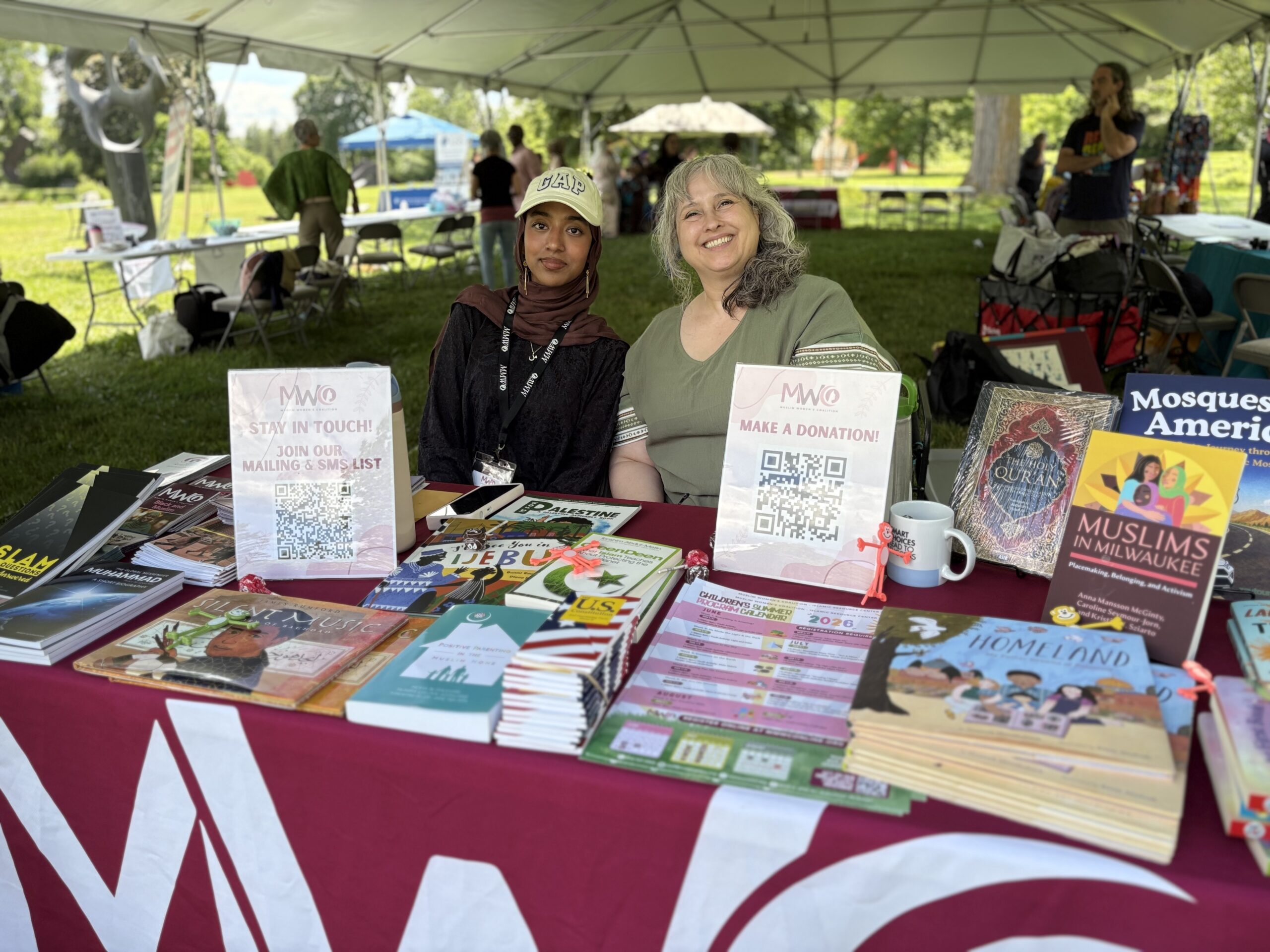
Photo by Cherrie Hanson
Muslim Women’s Coalition’s operations manager Maria Flores (right) and Ro-Suhana Hafiz, community program assistant provide information about the MWC at Lynden Sculpture Garden’s annual World Refugee Day.
Because Our Stories Matter
Wisconsin Muslim Journal reports on people, stories and experiences of Muslims across our state. As a nonprofit publication, we are committed to making this work available to everyone without a subscription or paywall.
Every story we publish is produced by professional journalists, photographers and editors committed to reporting on Wisconsin’s Muslim communities. Keeping this work going requires time, talent and resources.
If you value dedicated, fact-based coverage that documents Wisconsin Muslim history, please consider supporting us with a donation. Gifts of any size make a difference and help us continue to report on narratives that might otherwise go untold.
We are grateful for your readership.