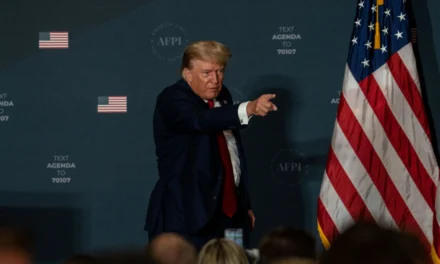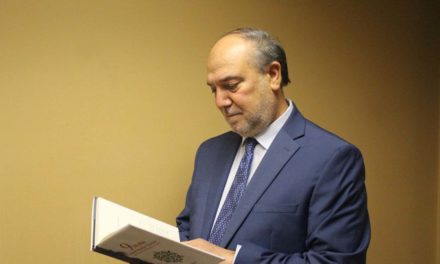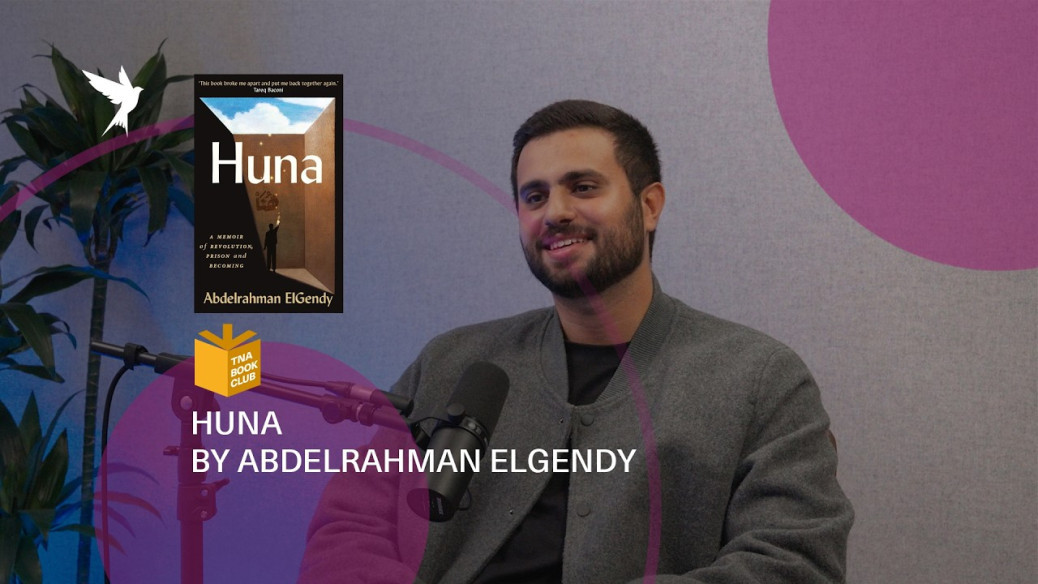
Abdelrahman el-Gendy was the National Book Award winner for the non-fiction category [The New Arab]
Egyptian author Abdelrahman el-Gendy was announced as the winner of the non-fiction prize at the National Book Awards for his memoir Huna in absentia, after he was denied a US visa to attend the ceremony.
His memoir delves into his six years behind bars as a political prisoner in Egypt.
Helen Thomaides, el-Gendy’s editor, accepted the award on his behalf at the ceremony and read out his statement.
“Years ago, in my prison cell in Egypt, I used to fantasize about writing a memoir,” the statement read.
“Today, that dream should’ve come full circle. But like so many of the circles ruptured in my life, it will remain unfinished, broken by an oppressive regime with a fascist ideology,” it continued.
On Wednesday, el-Gendy took to social media platform X to express his dismay at not being able to attend the event in person, but also his gratitude for the recognition of his memoir.
“I am heartbroken not to have been in this room today, but teared up as dear Omar El Akkad generously read from Huna on my behalf. i was then floored by the generosity and love my fellow finalists have shown me. i am held and held. Elhamdulellah,” he wrote.

Prior to reading an excerpt from the book, Omar el-Akkad called it a “disgrace” that el-Gendy was denied entry into the US. “He should be the one reading this,” he added.
Earlier this week, el-Gendy told The New Arab that he was not told why his US visa was denied, despite having his publisher pre-pay and pre-book all of his arrangements and possessing the correct paperwork and documentation.
He added that because the US never shares its reasons for denying a visa, he was left to speculate as to why he was denied entry.
“What has changed under this [Trump’s] administration is that it is now widely known and reported that visa applicants are being scrutinised specifically for public criticism of the US government and for their activism in support of Palestine,” he said.
In an article published by The New Yorker, he touched on how his criticisms of the US, Israel and authoritarian regimes had made him an open target, particularly as Immigration and Customs Enforcement (ICE) raids and arrests had become more frequent.
“My sense of risk escalated as I watched Rümeysa Öztürk, a Turkish national and Tufts Ph.D. student, get snatched off the street by ICE agents near her home, for co-authoring an op-ed relating to Gaza. I consulted lawyers who warned me that, given my public profile, my arrest was likely a matter of time,” he wrote.
El-Gendy, a writer and translator from Cairo, has become well-known for his essays that explore state violence, exile, and oppression. His writings have also touched on the relationship between the US and Egypt.
He has also been critical of Israel and its genocide in Gaza, where over 74,000 Palestinians have been killed.
Fellow finalists for the award ceremony stood in solidarity with el-Gendy, issuing a statement opposing what they called “the arbitrary and often deadly immigration policy of the Trump administration, which rejected el-Gendy’s visa application precisely because of his writing’s ability to challenge its power”.
Palestinian author Hannah Lillith Assadi also won the National Book Award for the fiction category for her book Paradiso 17. The book was partly inspired by the death of her father, as well as Israel’s genocide in Gaza.
The book covers the mental toll of exile and centres on the story of a Palestinian man who was forcibly expelled from his home during the Nakba of 1948, when more than 700,000 Palestinians were killed or expelled by Zionist militias.
“In the course of its writing, I have experienced deep personal grief and unimaginable collective grief. I have watched cancer ravage my father’s body and genocide ravage his people and their children. And perhaps this is the Palestinian story on this earth. So beautiful. So painful,” she said during her acceptance speech.
The judges commended what they called the book’s “elegant lyricism”.