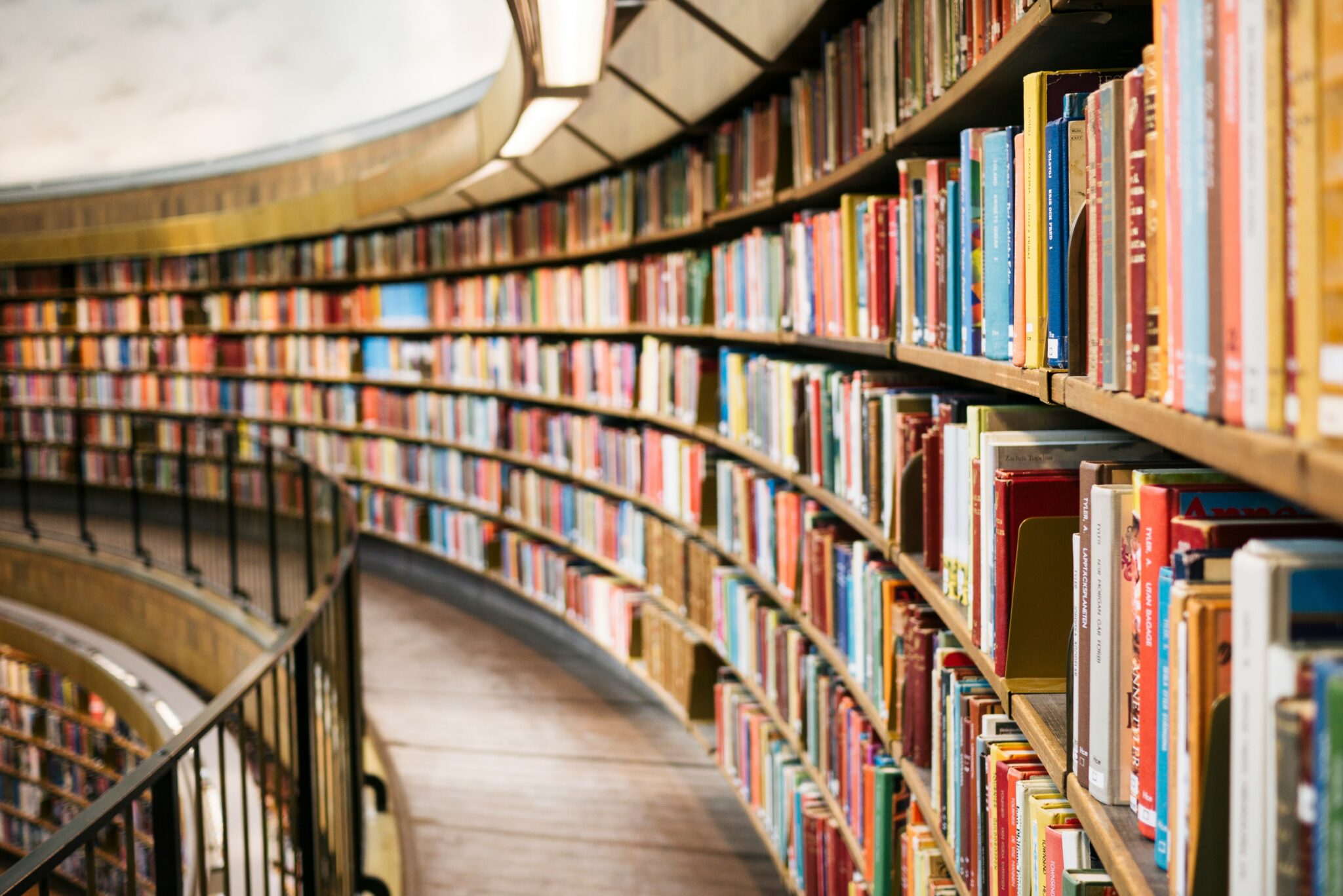
Approaching a new year often invites reflection, and books are the perfect companion for that type of introspection. From a collection of stories by Banu Mushtaq to profound essays about identity from N.S. Nuseibeh, there are plenty of new releases that will resonate with Muslim readers. Here are six books from Muslim authors that will make wonderful additions to your reading list before we ring in the new year.
1. Heart Lamp: Selected Stories by Banu Mushtaq (2025)
Banu Mushtaq is an Indian writer, activist, and lawyer from Karnataka, India. She was born into a Muslim family, and her work explores topics pertinent to women’s issues. She has published six collections of short stories, a collection of poetry, a novel, and essays but Heart Lamp is her first book to be translated into English. It follows the stories of Muslim women in India. These stories, written between 1990 to 2023, are a reflection of Mushtaq’s life focusing on women’s rights, patriarchal systems, and the fight against religious oppression.
Heart Lamp highlights the diverse experiences of Muslim women and sheds light on issues that resonate with them .
2. One Day, Everyone Will Have Always Been Against This by Omar El Akkad (2025)
One Day, Everyone Will Have Been Against This is a searing indictment of the western world’s innumerable illusions and contradictions about Israel and Palestine – especially after the ongoing bombardment on Gaza intensified in 2023. Through 10 interconnected essays, author Omar El Akkad criticizes Western powers for their complicity in the horrors inflicted upon the Palestinian people and asserts that the illusion of a so-called “rules-based world order” has never protected the vulnerable.
The book takes its title from El Akkad’s viral 2023 tweet that reads, “One day, when it’s safe, when there’s no personal downside to calling a thing what it is, when it’s too late to hold anyone accountable, everyone will have always been against this.” But beyond Palestine, this book also highlights the violence communities of color have faced under the boot of the West and serves as a broader call for readers to abandon apathy and embrace empathy. For Muslim readers, this book will resonate deeply and bring forth a shared experience that many across the world have faced for decades.
Omar El-Akkad is an Egyptian-Canadian journalist and award-winning author. He has reported from Afghanistan, Guantanamo Bay, and Egypt (during the Arab Spring) and has worked to shed light on the injustices of the world. His published work has received widespread critical acclaim.
3. Namesake: Reflections on a Warrior Woman by N.S. Nuseibeh (2024)
In this collection of essays, writer and researcher N.S. Nuseibeh explores culture, gender, and home through the character of Nusayba bint Ka’ab, a woman warrior who fought alongside the Prophet Muhammad (salla Allahu ‘alayhi wa sallam). Nusayba is Nuseibeh’s ancestor and namesake, through which she pulls her strength from and connects to her experiences as a Muslim woman. This book touches on the complexities of Muslim identity through a feminist lens while providing a deeply profound read.
N.S. Nuseibeh is an English-Palestinian writer born and raised in East Jerusalem. Her work explores identity, religion, and belonging.
4. Namesake: The Singular Life of Aria Patel by Samira Ahmed (2025)
Aria Patel is precise, calculated, and stable . When she realizes she can walk through parallel universes, her world is flipped upside down and she must find a way to get back home. In Namesake, Aria moves through a coming of age novel as she delves into themes such as grief, adolescence, and second chance romance.
This book aims to bring a sense of solace and visibility to young Muslims, a community that is often overlooked in mainstream literature.
Samira Ahmed is a Muslim author who is widely known for her young adult novels, works of fiction , and poetry. In her work, she writes about the Muslim experience often tackling of Islamophobia and bigotry.
5. The Hollow Half: A Memoir of Bodies and Borders by Sarah Aziza (2025)
In The Hollow Half, a memoir, Palestinian author Sarah Aziza traces the history of the violent displacement of her family and looks closely at how the essence of resilience and love in Palestine has carried on despite the hurdles her people have faced. Addressing topics such as displacement, belonging, and identity, this book will surely resonate with Muslim readers as body of work that bridges shared experiences.
Sarah Aziza is an award-winning Palestinian American writer and artist. Throughout her career, she lived and worked in various countries across the Middle East and North Africa including Saudi Arabia, Algeria, and Jordan. Her work has appeared in The Washington Post, The New Yorker, Harper’s Bazaar, and more.
6. Why Me? by Omar Suleiman (2025)
Author Omar Suleiman, Phd., is an Islamic scholar and civil rights activist and he often . He provides guidance for Muslims through his teachings and community work. In Why Me?, he explores the concept of hardship. Suleiman instructs that when hardship befalls us, we are often quick to react impulsively. We ask God, “Why me?” We believe that we are being punished for a misdeed we have previously carried out.
According to Sulieman, we will always jump to these conclusions so long as we lack tawakkul (trust in God). Based on his Ramadan series, Why Me? book covers questions regarding love, death, and the trials that a Muslim will face throughout their life. The book is a reminder to readers that everything is divinely planned, and that above all, patience is a virtue.
For those who find themselves asking “why am I here?” and “why is this happening?” This book will help provide insight and guidance to Muslims navigating the trials of life.
By Serene Madani





![15 Things You Didn’t Know About Makkah and the Ka’bah [Part 1]](https://wisconsinmuslimjournal.org/wp-content/uploads/2026/03/AdobeStock_87517185-scaled-e1774211732813-150x150.jpeg)