Photos by Cherrie Hanson
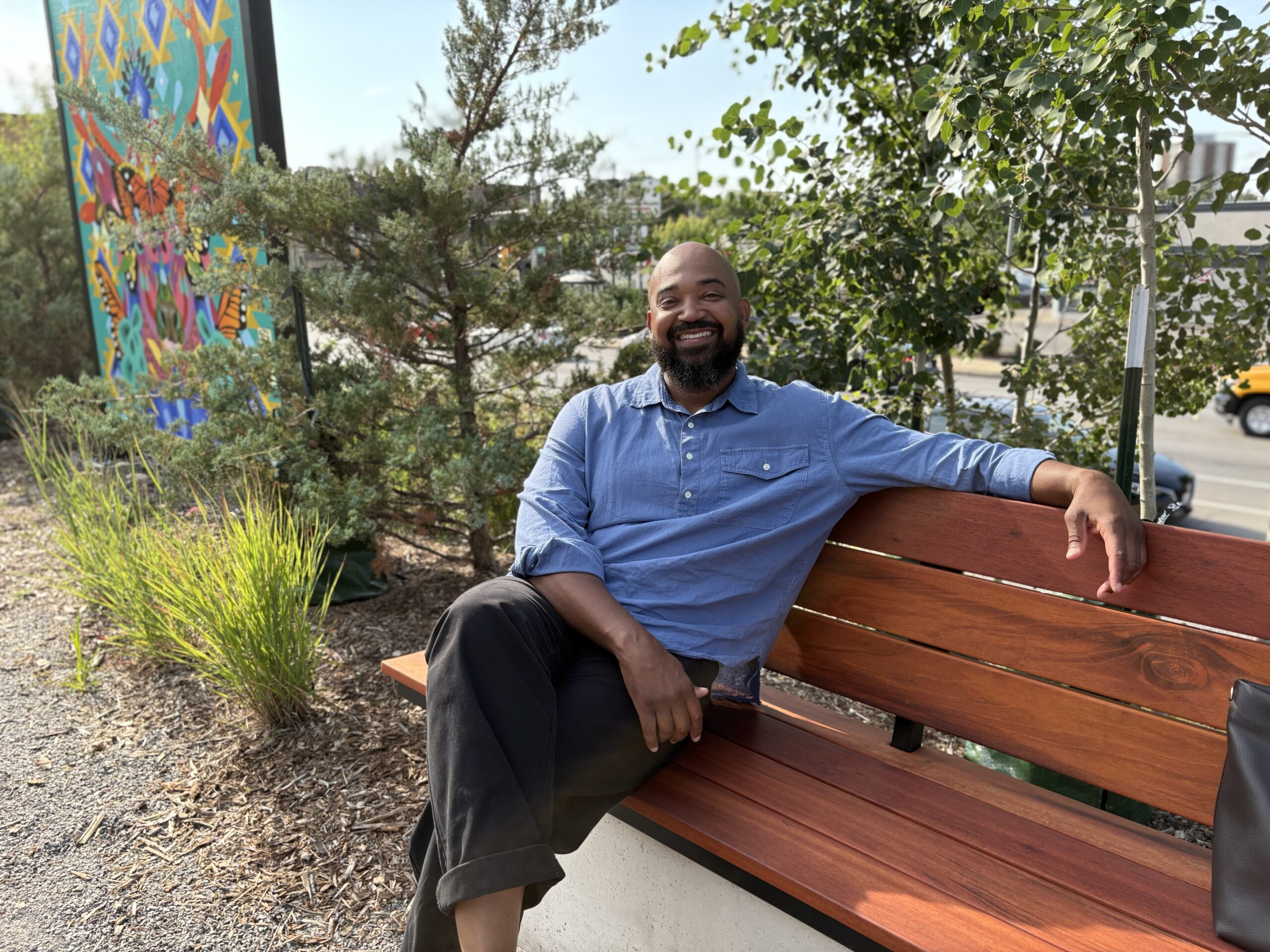
Derrick Cainion, of Art Intersection MKE, will give a presentation on his world-class outdoor gallery at the August 28 Muslim Women’s Coalition Networking Brunch.
“Inclusivity and representation are at the heart of our work. We strive for every installation and event to uplift diverse voices so that everyone is seen, heard and valued. We celebrate the beauty of our differences and our shared humanity.”
That is how Art Intersection MKE introduces itself on its website and its president and CEO Derrick Cainion believes there is no better place to celebrate and connect with others than in an art-filled urban oasis. At MWC’s August Networking Brunch, he will give a presentation on the space, located at 3542 W. Vliet Street in Milwaukee.
Open to the public, the MWC Networking Brunch, held the last Friday of each month, begins with socializing and a buffet provided by Taqwa’s Bakery & Restaurant followed by a lecture or workshop by a guest speaker. The topics and speakers selected are intended to appeal to a diverse audience, creating an opportunity to enhance interfaith and intercultural understanding. The fee is $15. Register here.
Inspired to make the city a better place
Cainion’s passion for the Art Intersection MKE space in the Washington Park neighborhood is palpable. Seated on a beautiful handmade bench overlooking the site’s bioswale, he discusses the evolution of the park from idea to reality with concepts that pop up faster than dandelions on a hot summer day.
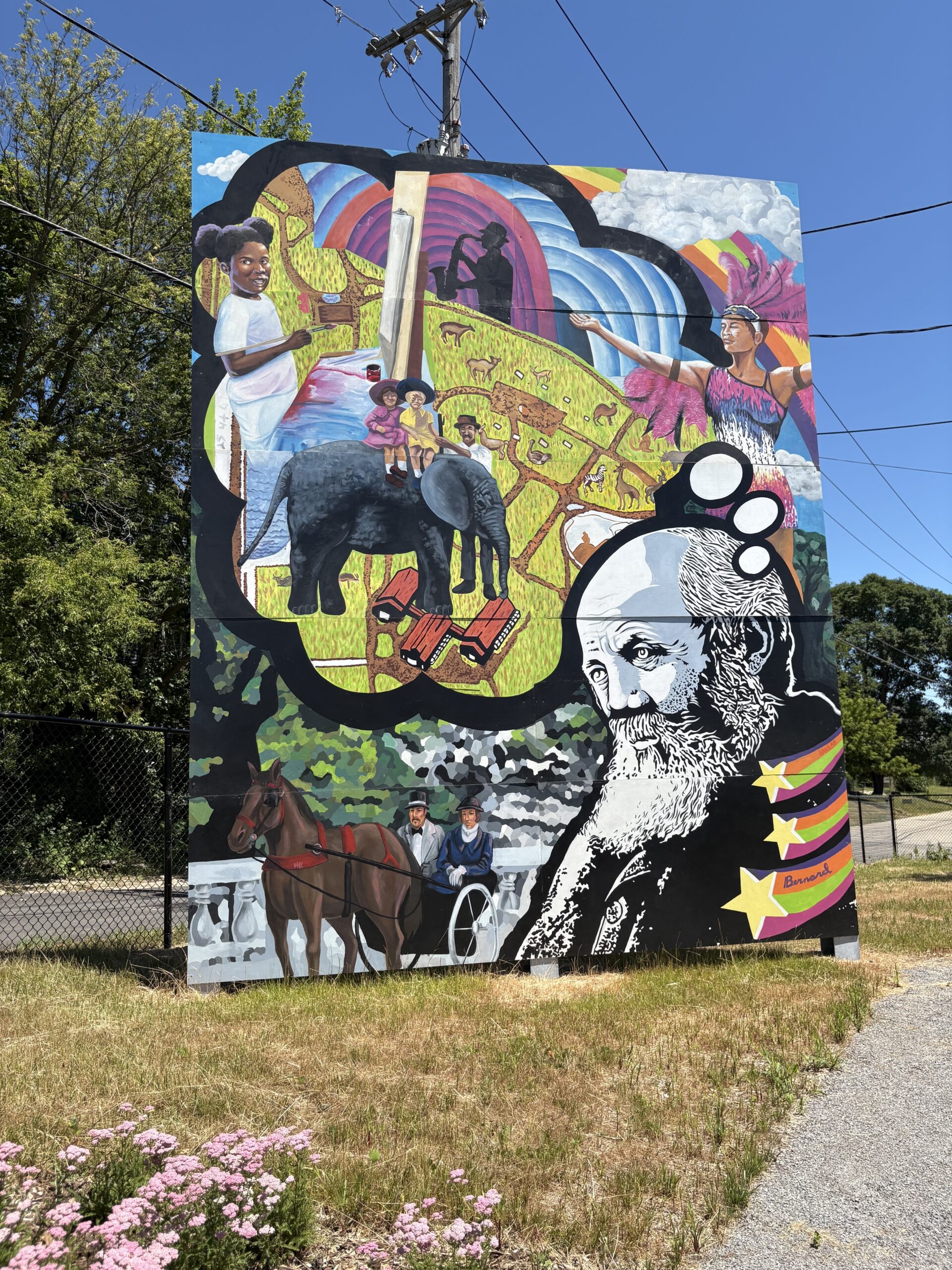
“Olmsted’s Vision” by Milwaukee-based artist, muralist, and educator, Brad Anthony Bernard honors Black leaders, explores themes of liberation and reflects collective pride.
Inspired by art installations and museums he experienced on his many work trips as a professional sign-language interpreter, Cainion wanted to bring that “free art” to Milwaukee and to underserved communities in particular. He also wanted to be with his then three-year-old son.
“The idea started six years ago during COVID. I was interpreting for a UW-Milwaukee art class, and I met with the professor after class and said I was thinking of having a sculpture garden,” said Cainion, who was born and raised in Milwaukee.
The idea took off from there. Cainion purchased the lots through Milwaukee’s $1 program of selling property tax foreclosure parcels and began networking and researching green infrastructure and contacting artists around the world.
“I was inspired by Bill Strickland’s Manchester Craftsmen’s Guild and Bidwell Training Center in Pittsburgh. He had the idea of elevating spaces for people who don’t have anything and to make them feel like they can have something—and how that elevates people. All of his concepts include handmade furniture, real plants and a water feature,” Cainion said.
Art Intersection combines elevating a long-neglected space as an open-air art gallery with a green infrastructure. The central element is a large bioretention cistern with concrete podiums for sculptures. When the pond fills with rainwater, the sculptures will appear to be floating.
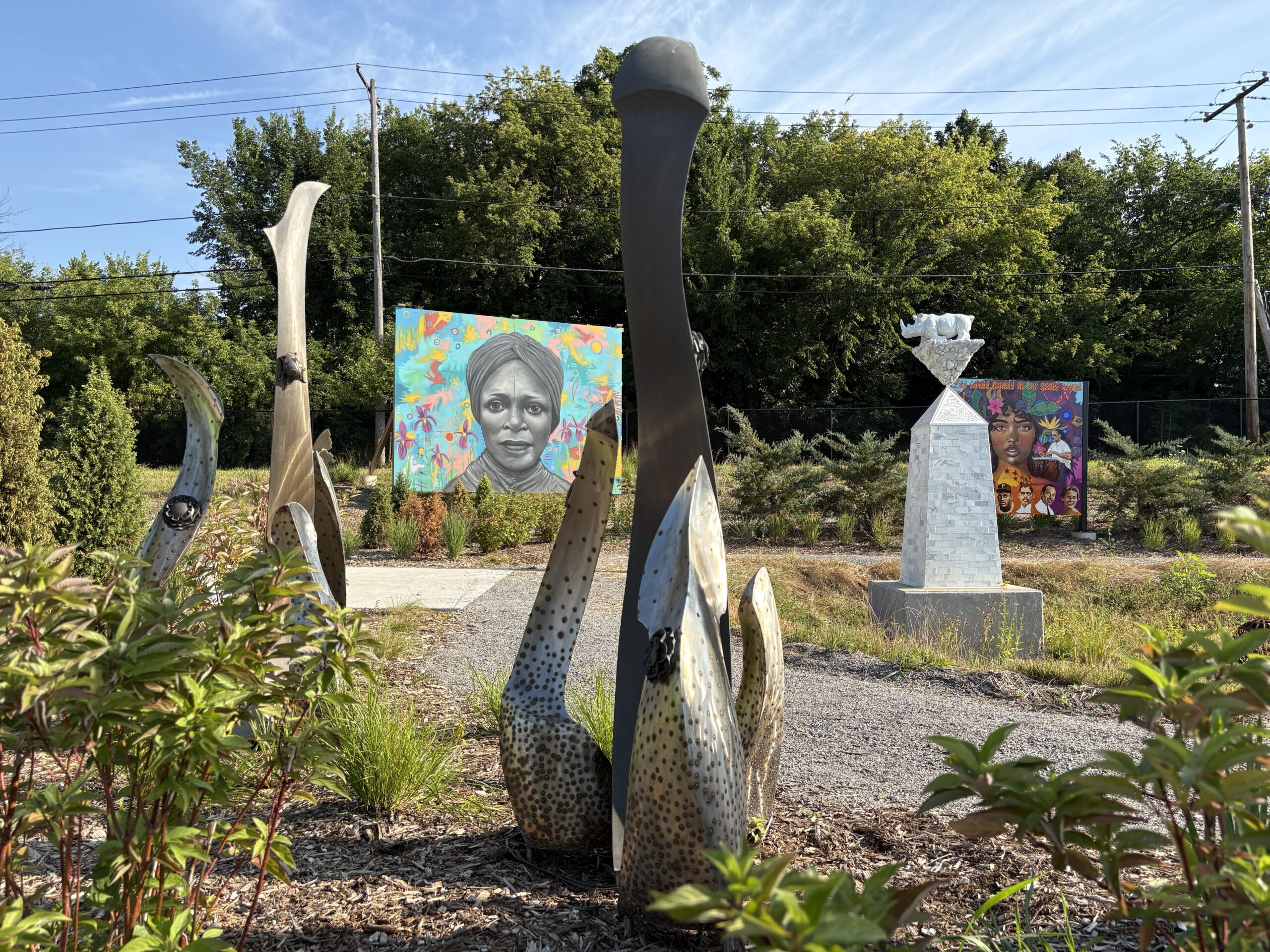
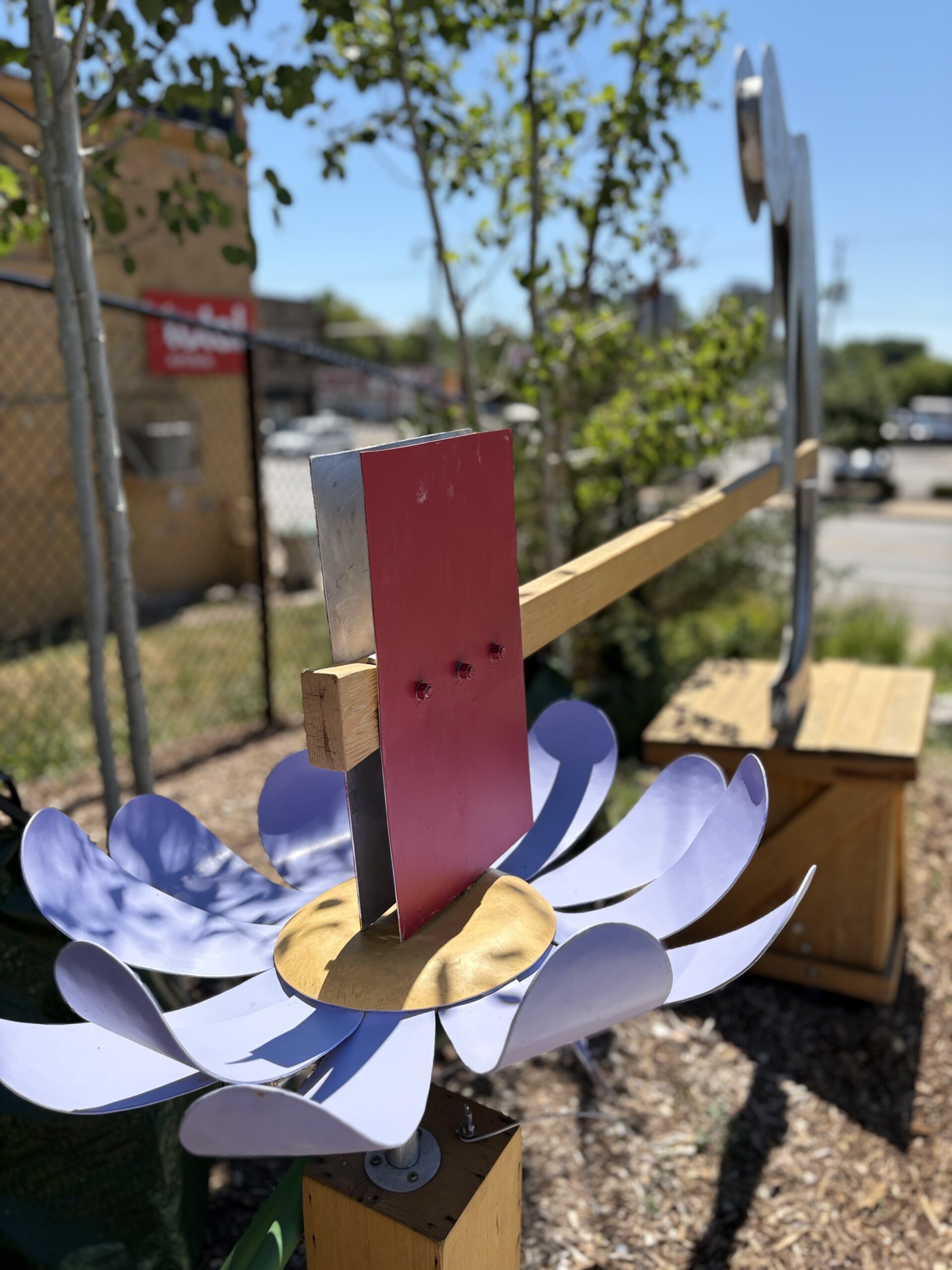
In the foreground, metalwork sensory sculptures by local artist, Jesse Meyer offer visitors an interactive, tactile experience. In the background, a mural by Daniel Wilson entitled “Mother Nature in Mother Hood” is a portrait of Cainion’s mother.
The bioswale, capable of retaining more than 68,000 gallons of stormwater, creates flood resilience to make the area less prone to damaging floods like the historic 1000-year storm last year that caused major destruction throughout the city. Drain in an adjacent public alley feeds into the bioretention pond and a rainwater basin at the site can collect about 7,750 gallons of water.
“This is all about collecting rainwater to stop it from going into our freshwater system,” Cainion said. “The cool thing is that the bioswale acts as a reflecting pool when it’s full of water, then as it recedes, it becomes a native plant garden with plants selected for their long roots, drought-resistance and marsh-resistance—plus they’re beautiful.”
Cainion collaborated with Greenprint Partners, of Chicago and the Milwaukee Metropolitan Sewerage District and was awarded a grant of more than $500,000 through the Fresh Coast Green Communities program to build the project. Cainion’s goal: to advance environmental justice and serve as a model for sustainable development throughout the city.
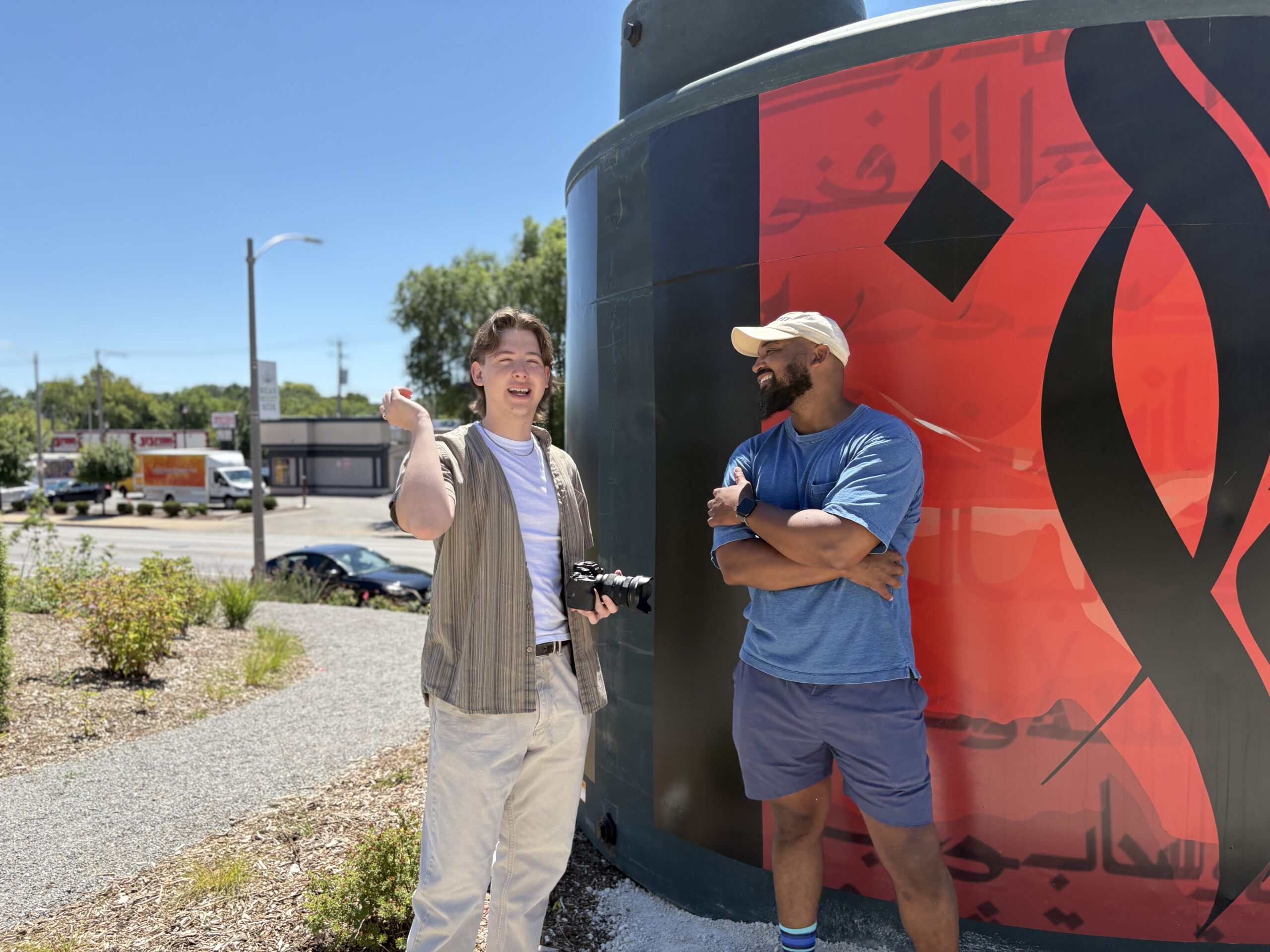
The visibility of the urban garden sparks the curiosity of passersby. Cainion is often onsite to welcome visitors and share the purpose and mission behind the property at 35th and West Vliet Street.
Art to explore and inspire
According to Cainion, art intersects with everything we do as human beings. That’s why the site’s green infrastructure is enveloped by sculptures, murals and interactive installations by artists from around the world. All the pieces tie into the story Cainion is telling at the space: history, community, identity and environment. Three or four new works will be installed by the beginning of next year and Cainion hopes to rotate the art every couple of years. He would also love to work with Sculpture MKE and the Milwaukee Art Museum to have temporary art installations in the park.
Current artists include Brad Anthony Bernard, Jaime Brown, Kimberly Burnett, Nova Czarnecki, Kala Hagopian, Rozalia Hernandez Singh, Karim Jabbari, Fred Kaems, John Kowalczyk, Keenan Lampe, Jesse Meyer, Mz Icar, Andre Saint Louis, Senkoe, Devona Stimpson, Daniel Wilson and Drew York.
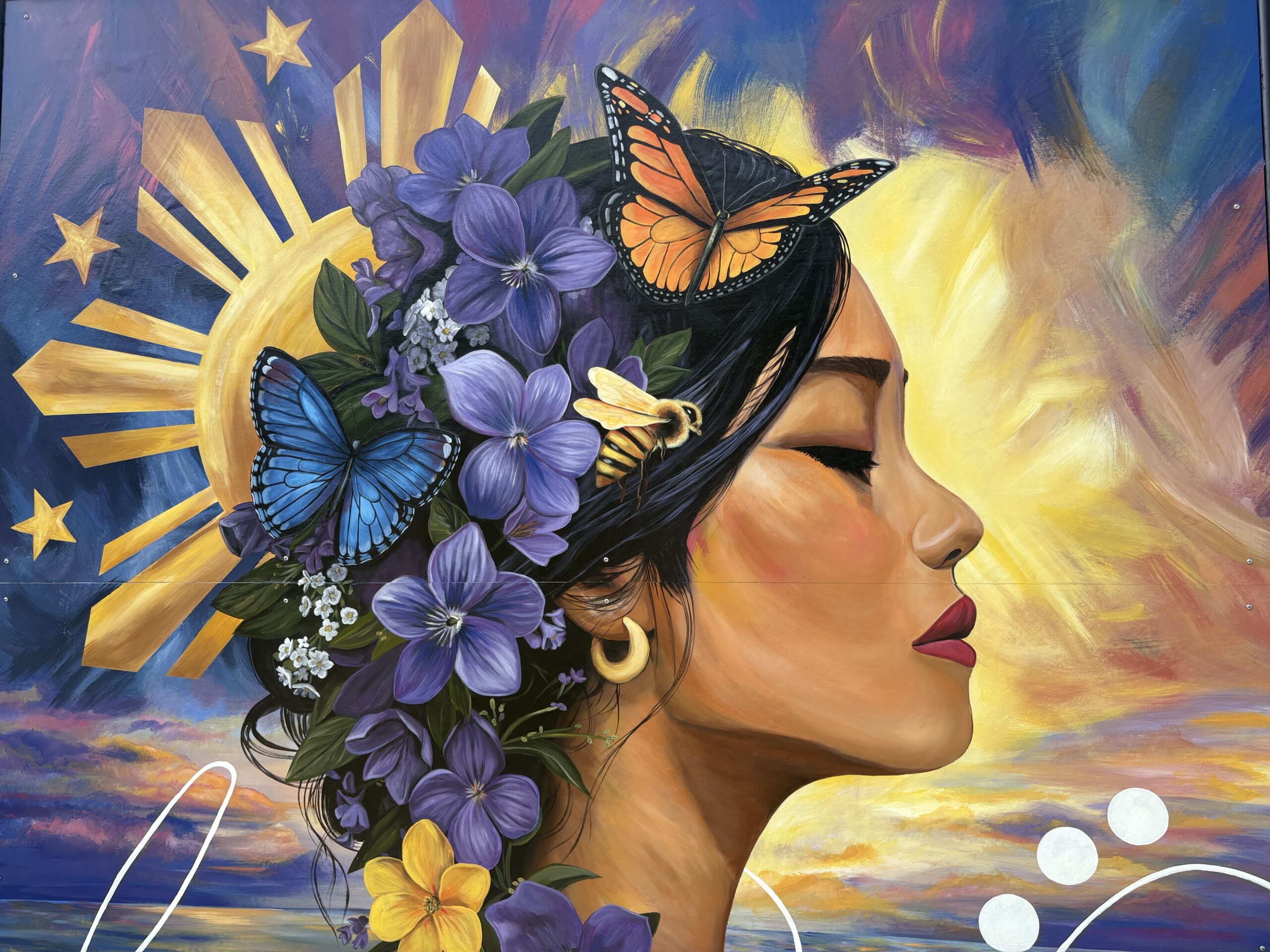
Devona Stimpson’s mural “Across Waters, We Bloomed” honors Filipino strength, freedom and pride, celebrating the courage to build new beginnings.
A place for community
Cainion created the space with the intention of bringing people together to connect with and through nature, art and each other.
“It’s a great place in the middle of the city of Milwaukee. We’re in the neighborhood where 95 percent of the people that live here are people of color. There are immigrants that live in this neighborhood. About half of the folks living in the neighborhood live below the poverty line. So, the idea of activating a space is really important. It helps with people’s mental health. It helps with perception of safety and walkability in the neighborhood,” said Cainion, who has held a variety of events at the site and in the vicinity.
Rain Run Flood Resilience with Run Black and Green, a group walk/run from the Art Intersection site to Washington Park and back, will be held this Saturday. It will feature community artmaking, artist and scientist talks and resources for neighborhood protection. Cainion has plans for future events including coffee popups and block parties with music and food trucks.
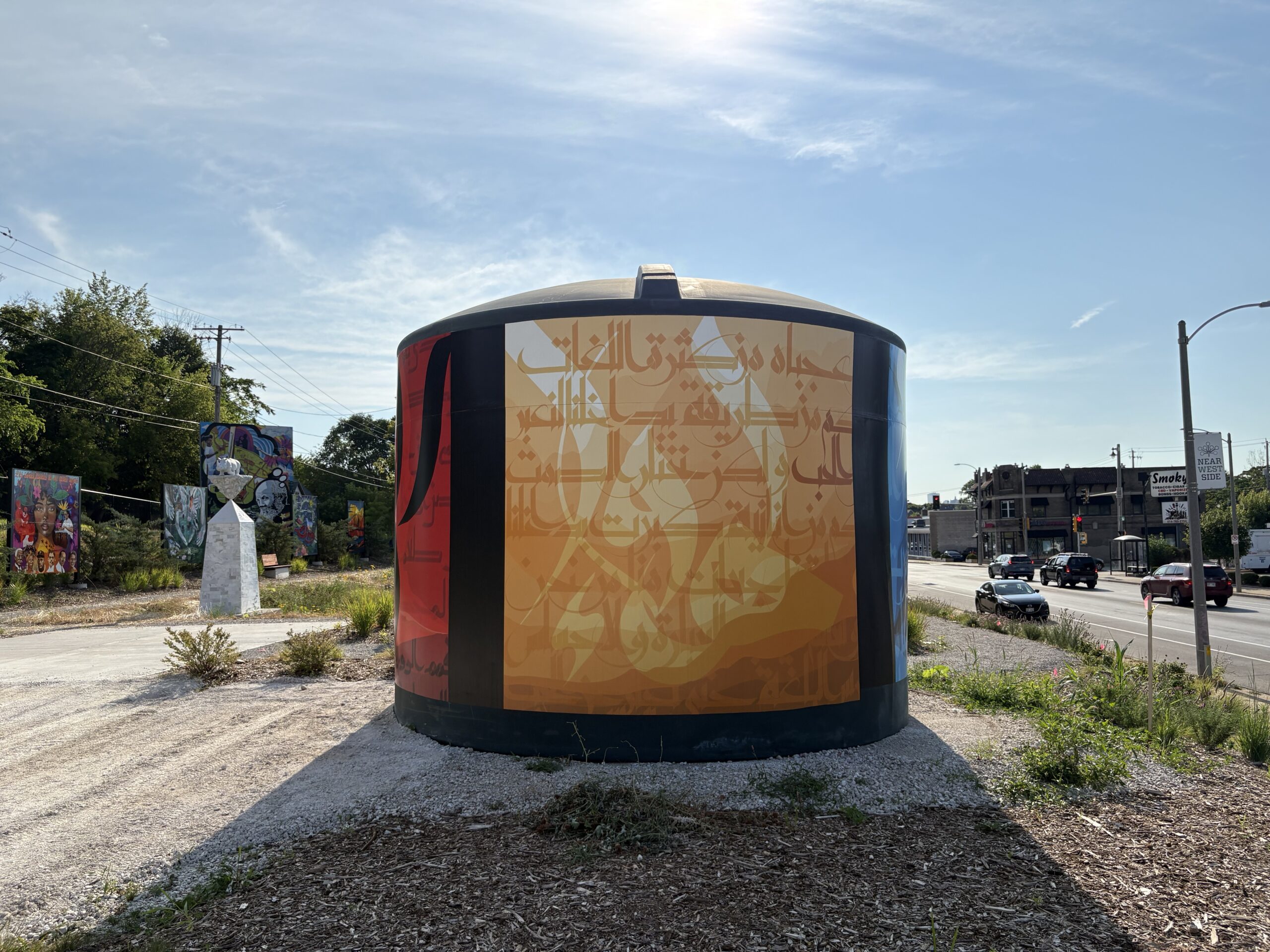
The mural on the rainwater harvesting cistern is a collaboration between husband and wife artists Karim Jabbari and Jaime Brown. “The Sacred Song of Life” inspired by a poem by Abu Alqassem Chebbi that features the elements earth, water, air and fire in Arabic script.
Next phases include shelter, power, plants
Cainion’s goal is for Art Intersection MKE to be a self-sustaining space that serves as a community resilience hub, where people can gather during a crisis like power outages after a storm. A 70-by-30-foot shelter will be built with a solar-panel roof capable of powering the entire space with a battery system able to hold up to 300 kW hours of power. Additional plans include a greenhouse for four-season growing, raised, accessible garden beds and planters with fruit trees—all irrigated by the rainwater cistern. Cainion hopes to have free, public, solar-power Wi-Fi through WaterMarks at the site and a house with shared space on the first level and residential space above is also in the plans.
“I’m turning the space I created into a self-sustaining space and looking at how we can develop thinking that is not just on the human side of things but focused on environmental justice and how to future-proof places and minimize costs,” Cainion said.
He sees the site in the Washington Park neighborhood as a paragon for the city and beyond.
“I believe this is the flagship and model for development that we could take to any underutilized space, not just in the city but in rural communities as well. The focus isn’t really the art. The focus is about community building. The focus is about being environmentally sustainable, how to mitigate cost and impact on the environment. That’s the key for all of us.”
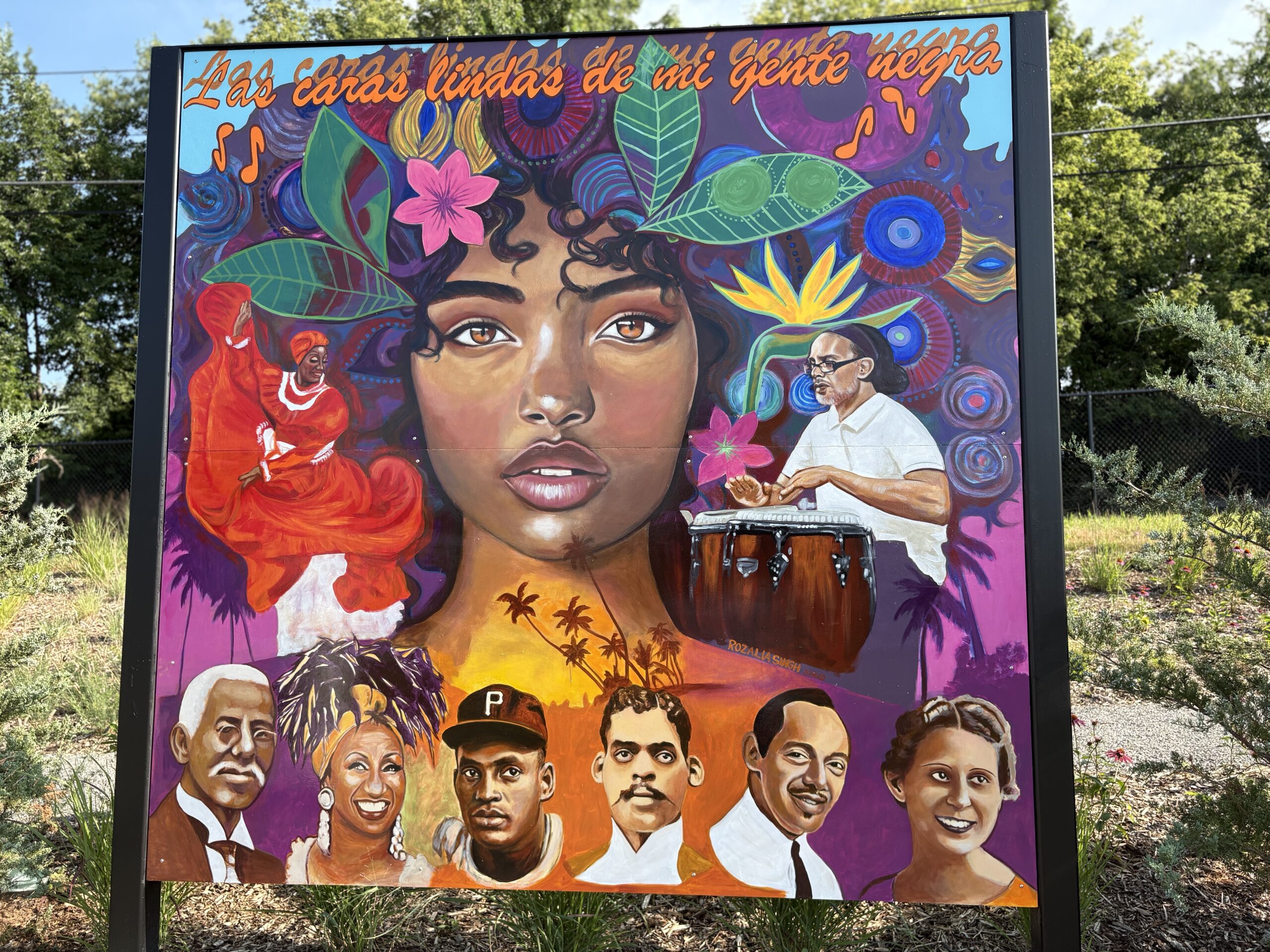
Rozalia Hernandez Singh’s mural “Las Caras Lindas de Mi Gente Negra” (The Beautiful Faces of My Black People) celebrates Black Latinos’ contributions to culture, history and community.
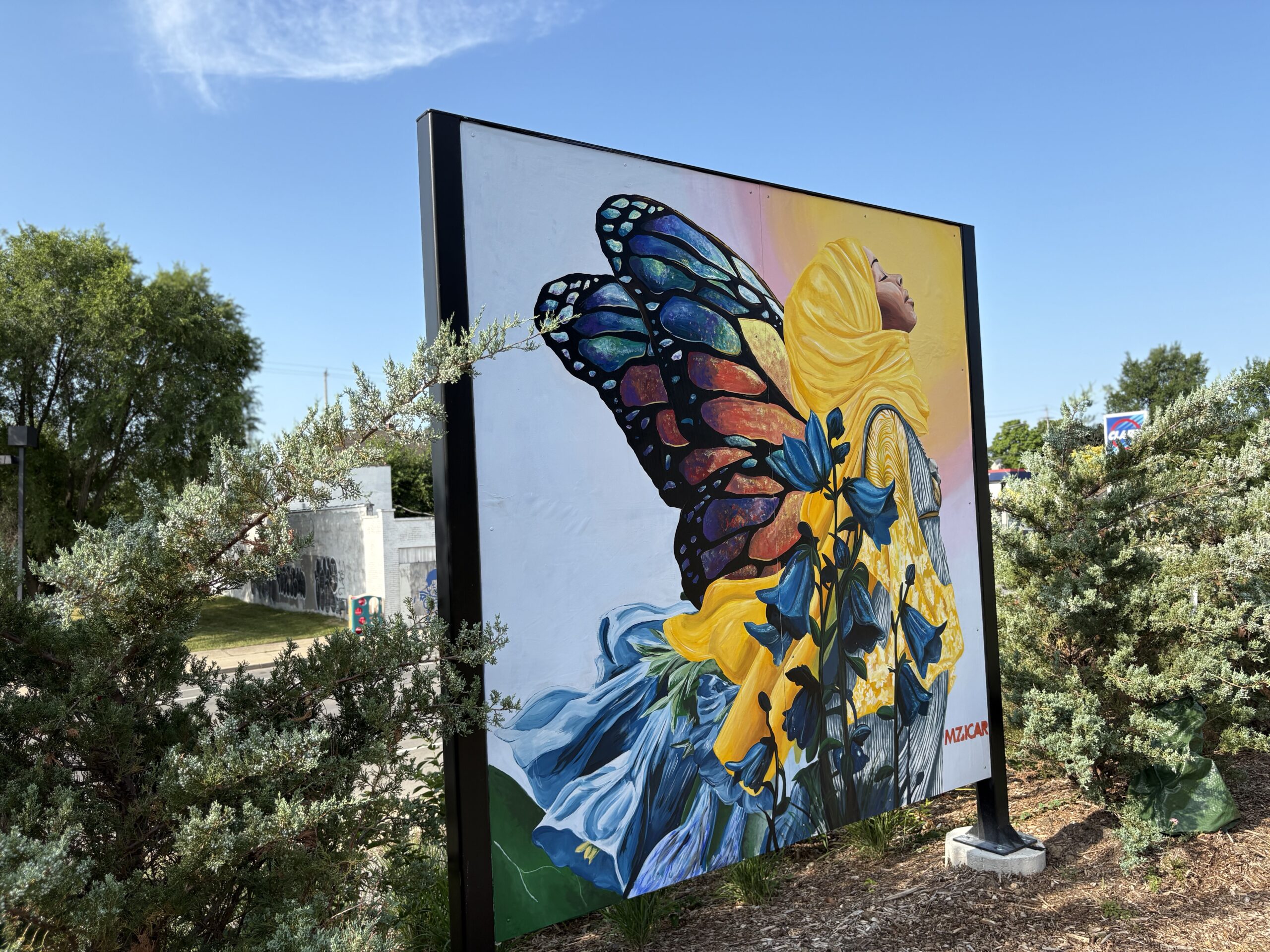
Mz. Icar, an anonymous art collective of primarily Black women, created “Blooming Forward” to celebrate growth, play, and exploration as essential parts of a thriving future, both personally and collectively.
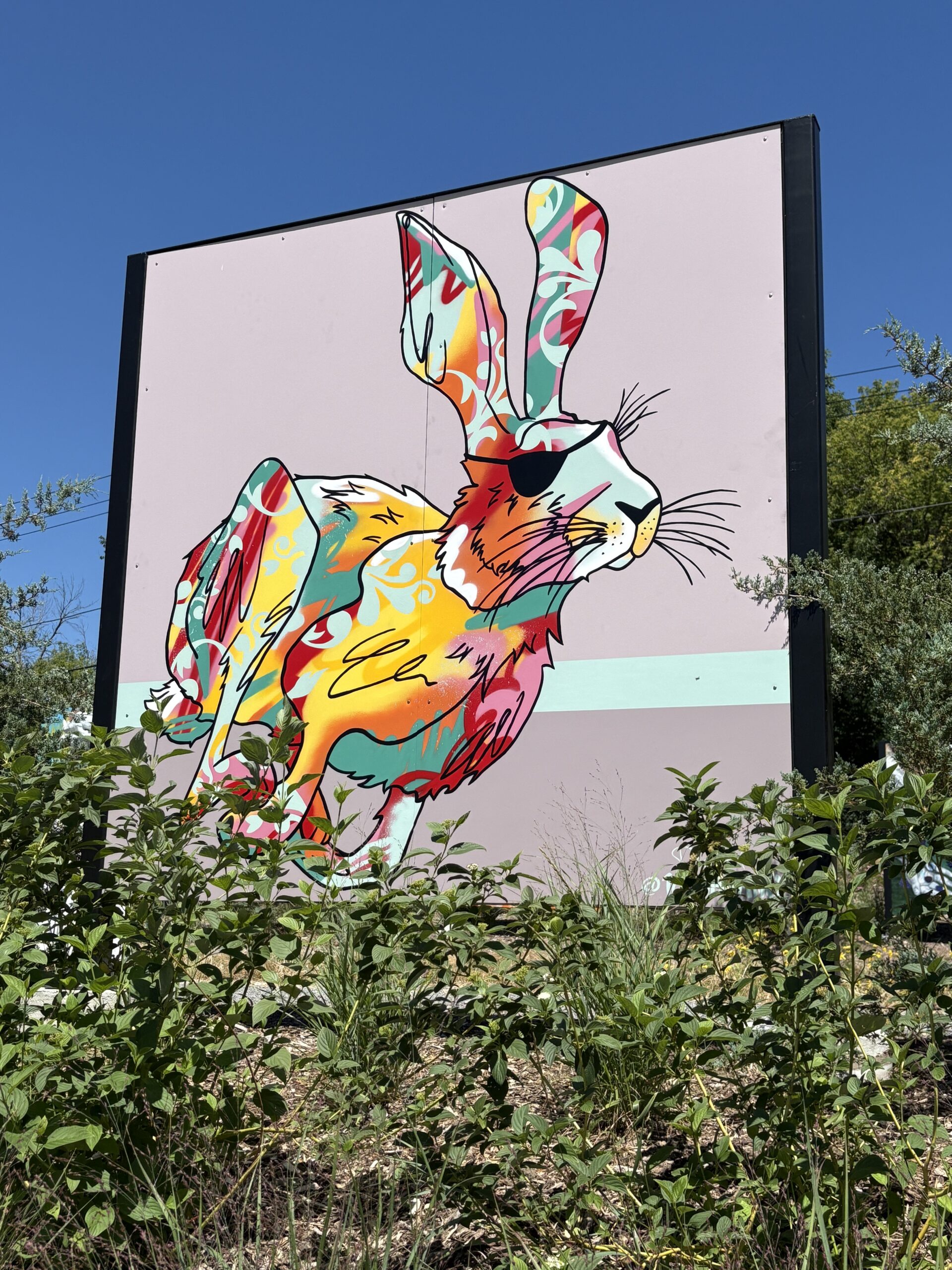
Drew York’s mural “Old Friend” is a variation on the Pirate Rabbit, a character that’s appeared in his work for over 20 years, symbolizing curiosity and the urge to leave your mark in life.
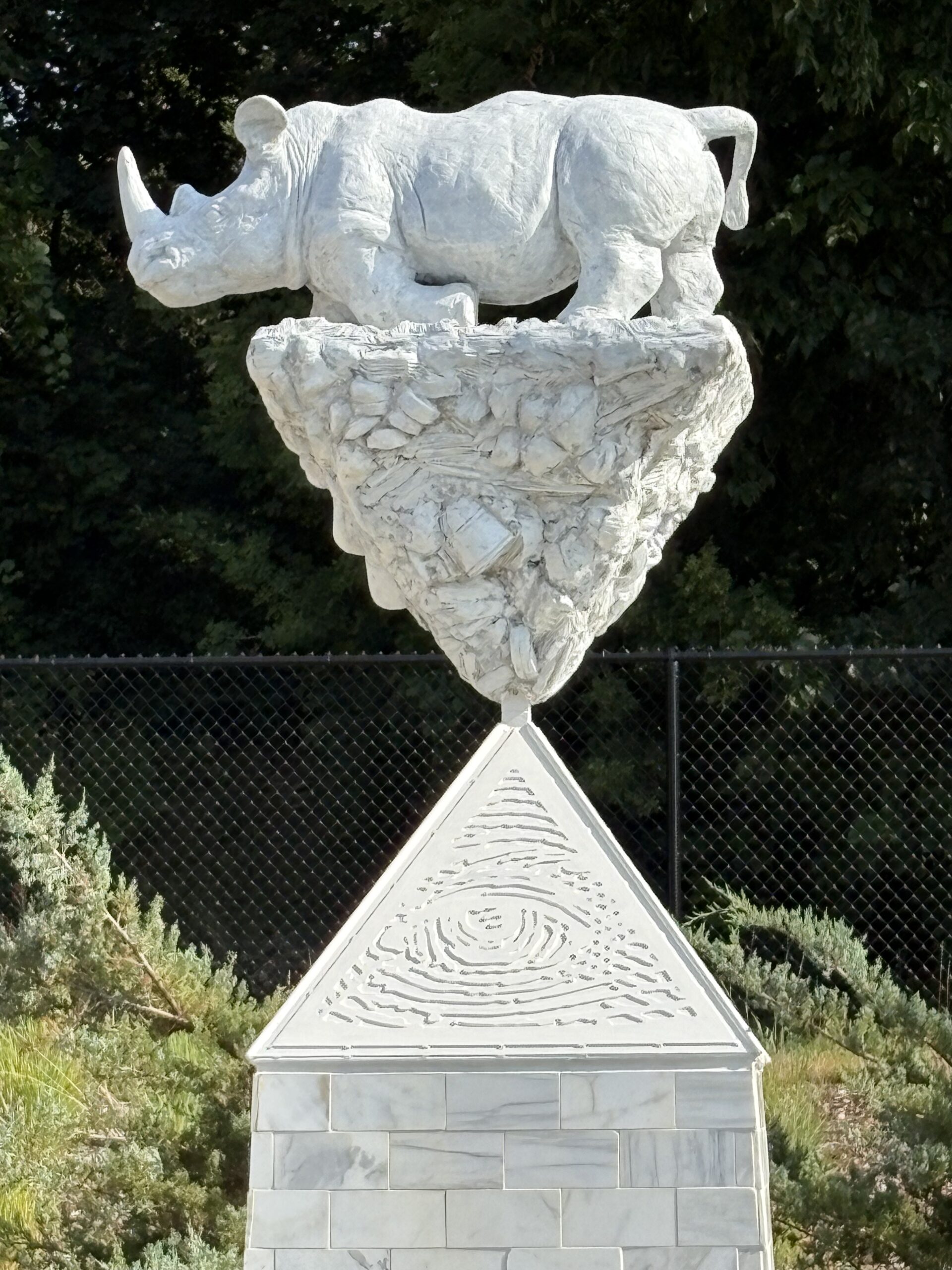
“Diminishing Returns” by Milwaukee-based artist Andre Saint Louis, who is known for his exceptional craftsmanship and community-centered approach to art.
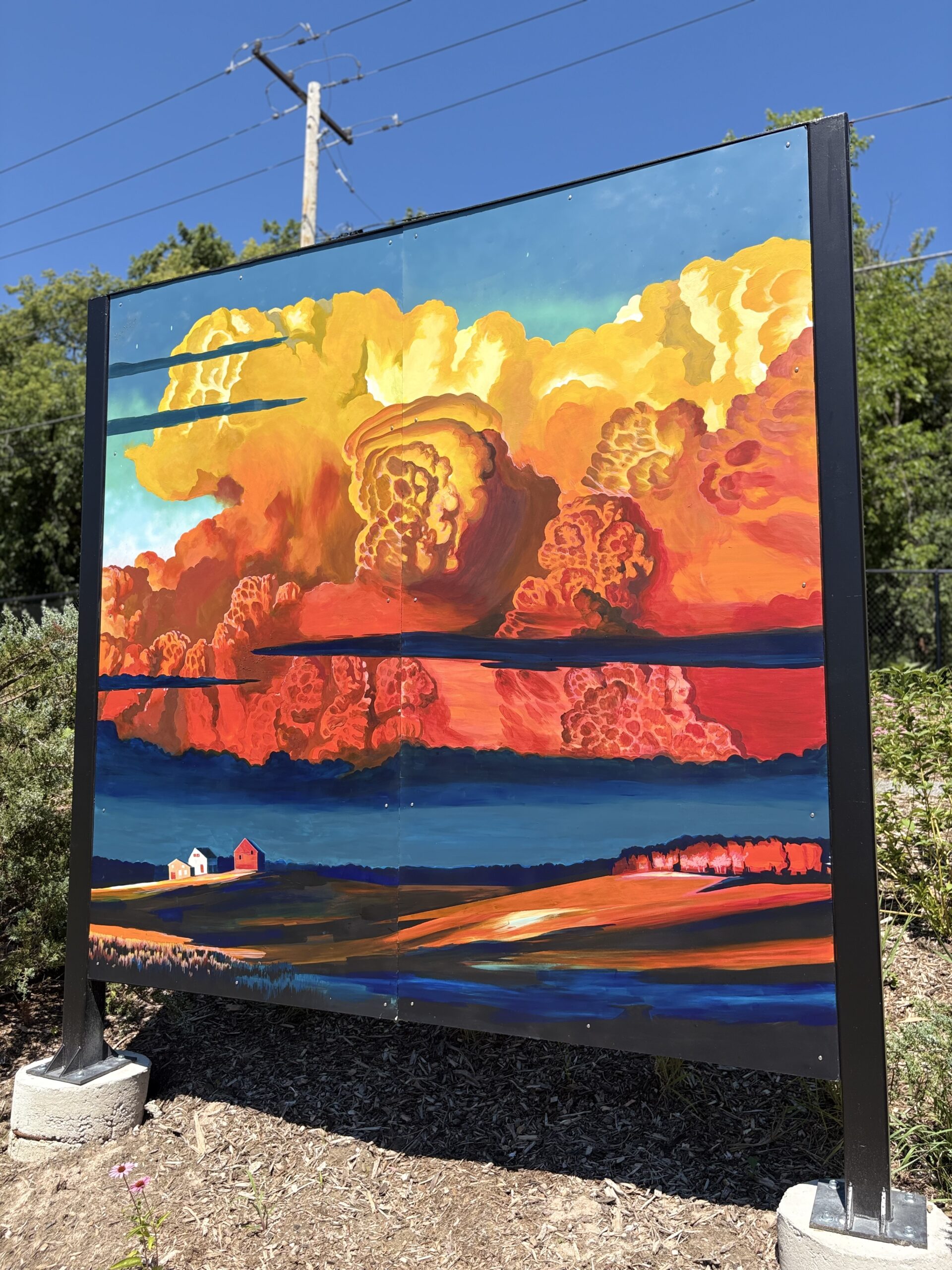
Kimberly Burnett’s mural “Wisconsin Farm Scene” is a cloudscape that highlights her connection to farming and nature. Burnett is a self‑taught artist and illustrator currently living and working in Milwaukee, WI.
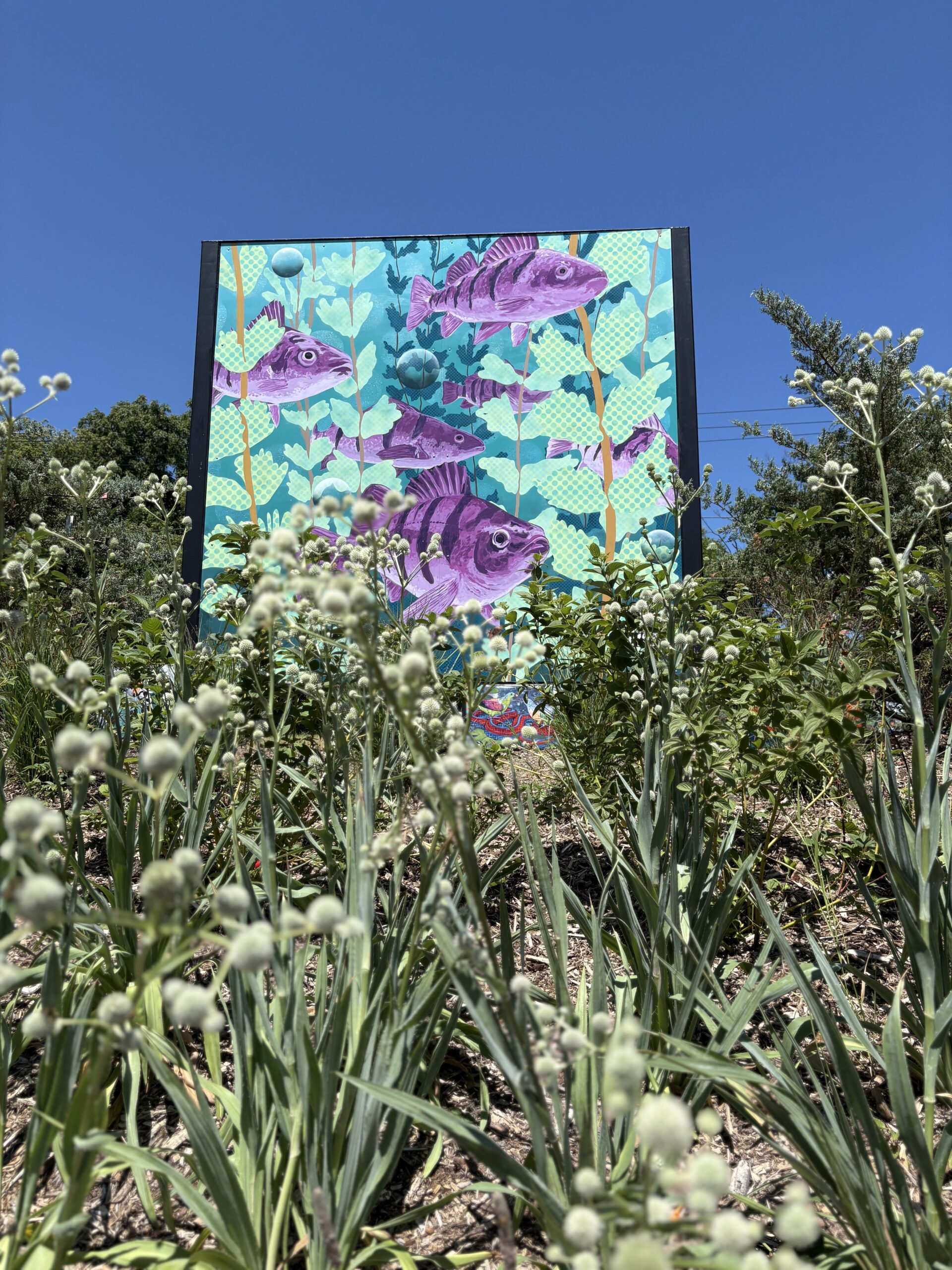
Local artist Fred Kaems’ mural “Purple Perch” is enveloped within the foliage to give the feeling of being in an aquarium or a lake.
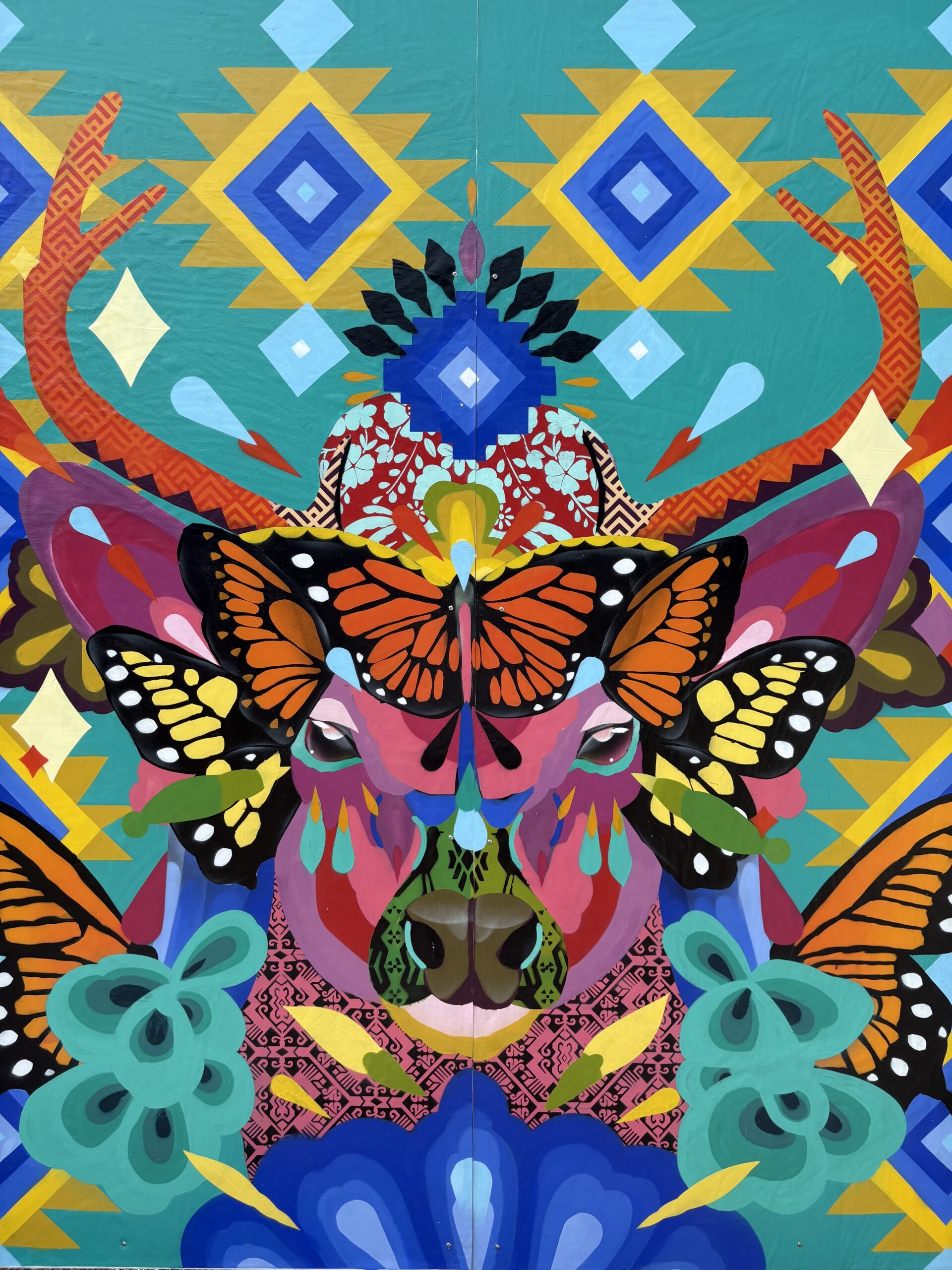
A section of Senkoe’s mural “Waawaashkeshi” (deer in Ojibwe) opens a doorway into a lucid, animal-dream realm where myth, memory, and the present moment form a chimeric Mexican identity.
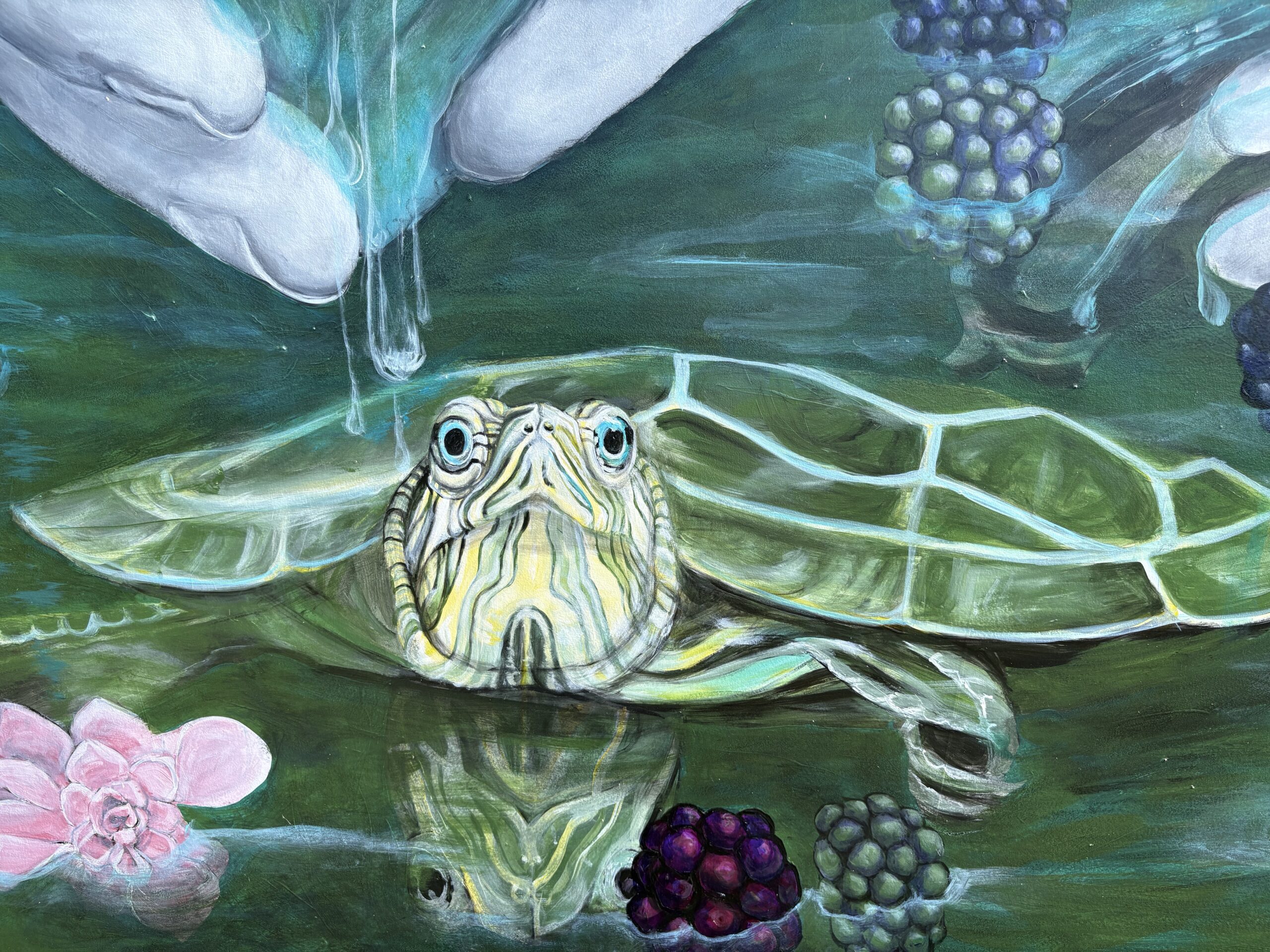
A section of “Our Royal Banquet” by Nova Czarnecki speaks to how all living things are bound together, spiritually and physically, and how each deserves love and care.
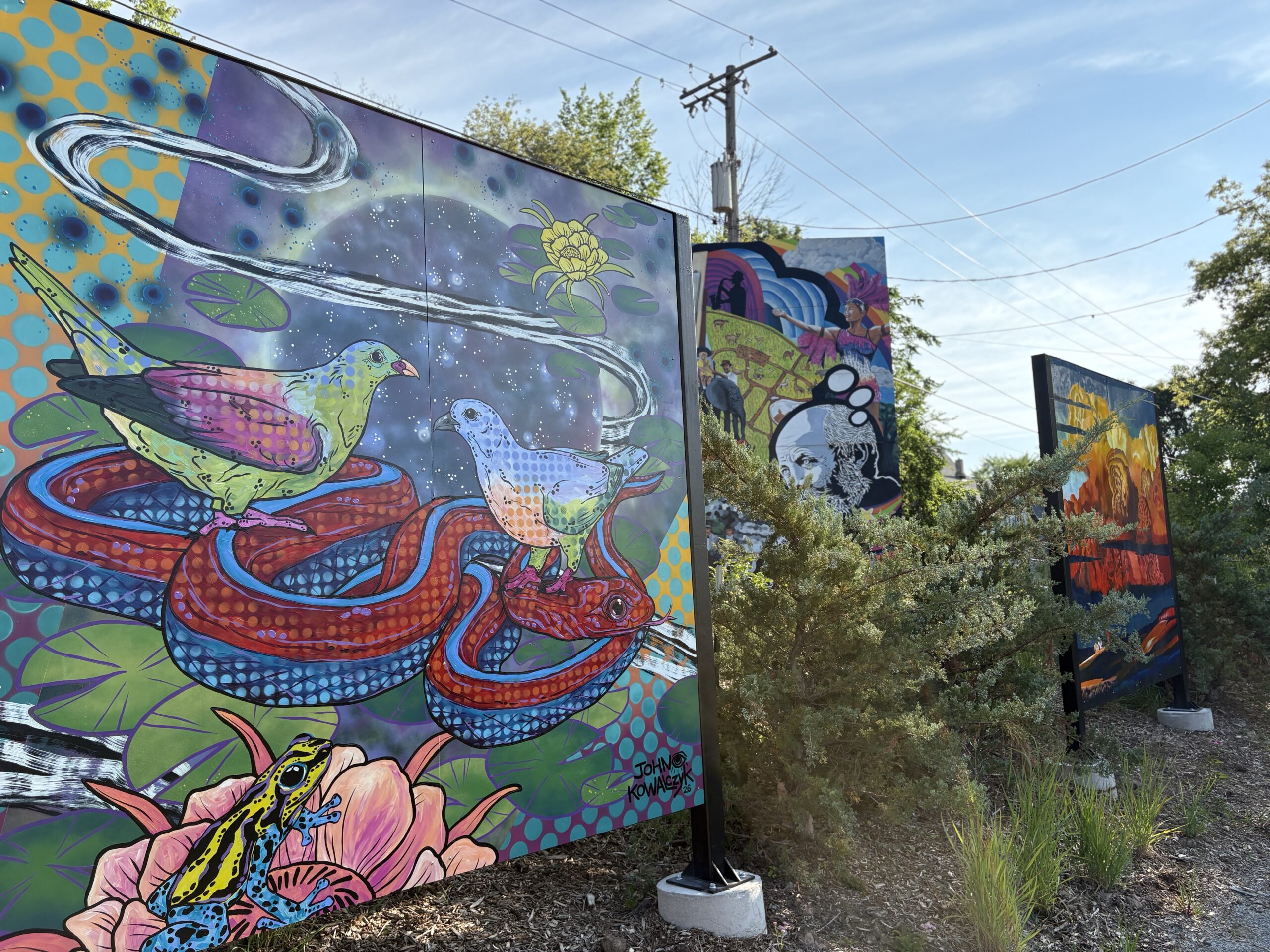
John Kowalczyk’s mural “A Tough Mind and A Tender Heart” (left) draws on Dr. Martin Luther King Jr.’s call to combine the toughness of the serpent with the softness of a dove, a message of relentless and empathetic pursuit of a better community.
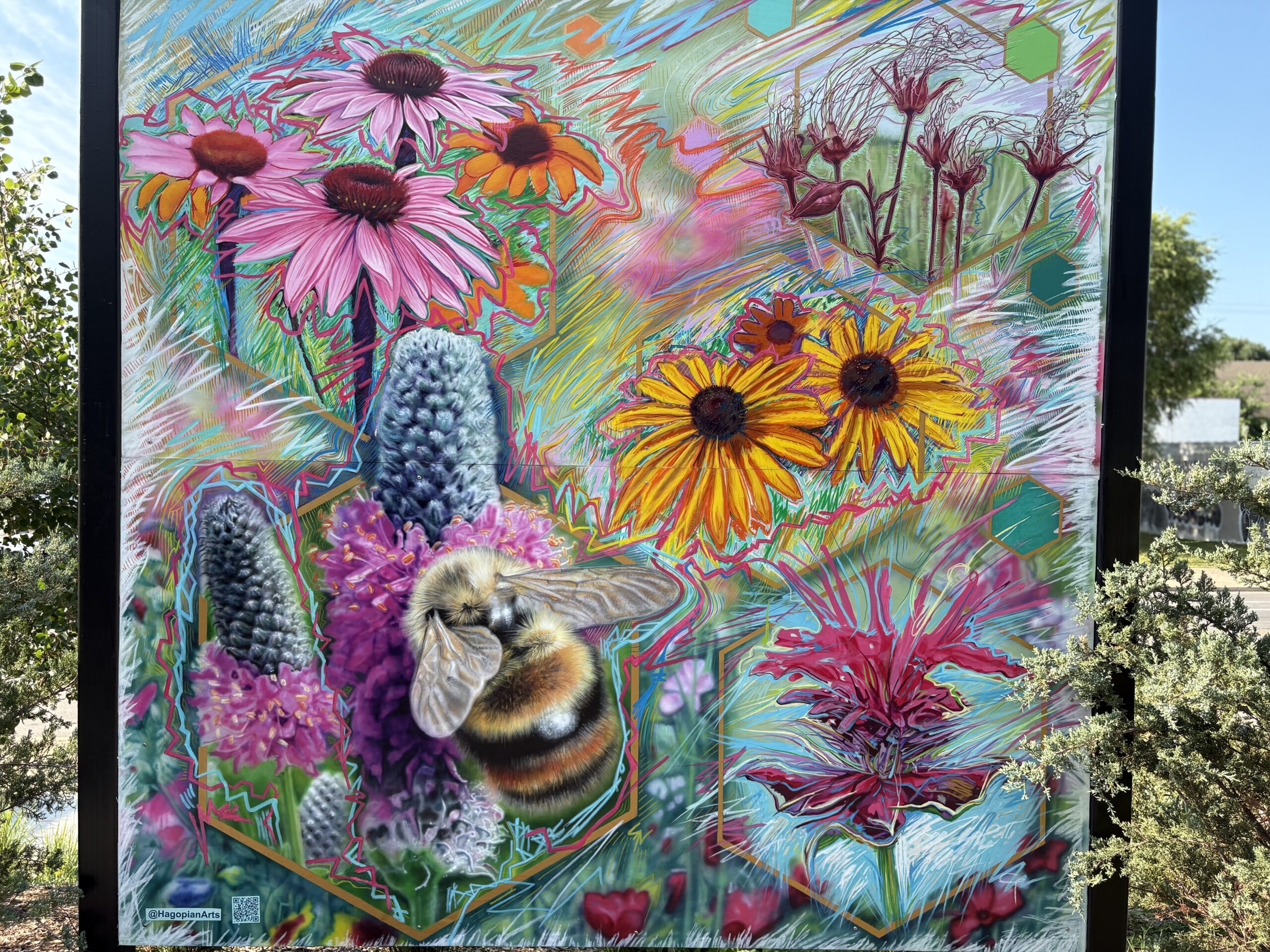
“Wild Medicine Eco Mural 24: MKE – Living Systems” by muralist Kala Hagopian features the endangered rusty patched bumblebee. Hagopian is the founder of Hagopian Arts LLC, a female-owned public art initiative in West Philadelphia.
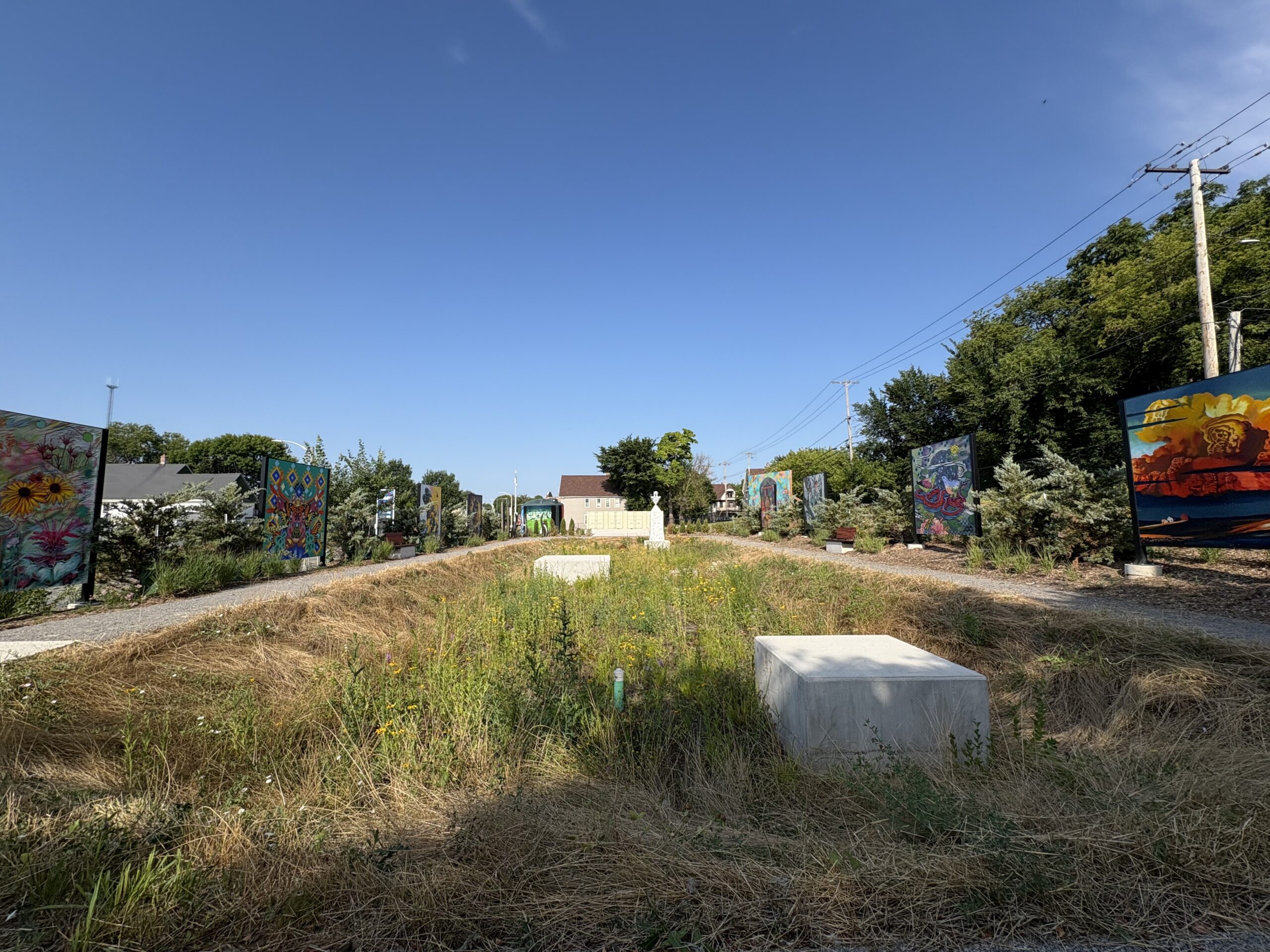
In the center of the gallery, an excavated bioretention basin flourishes with native, drought tolerant, pollinator friendly plants that will capture and treat stormwater. When the basin fills around three sculpture platforms, it will look like they are floating on water.