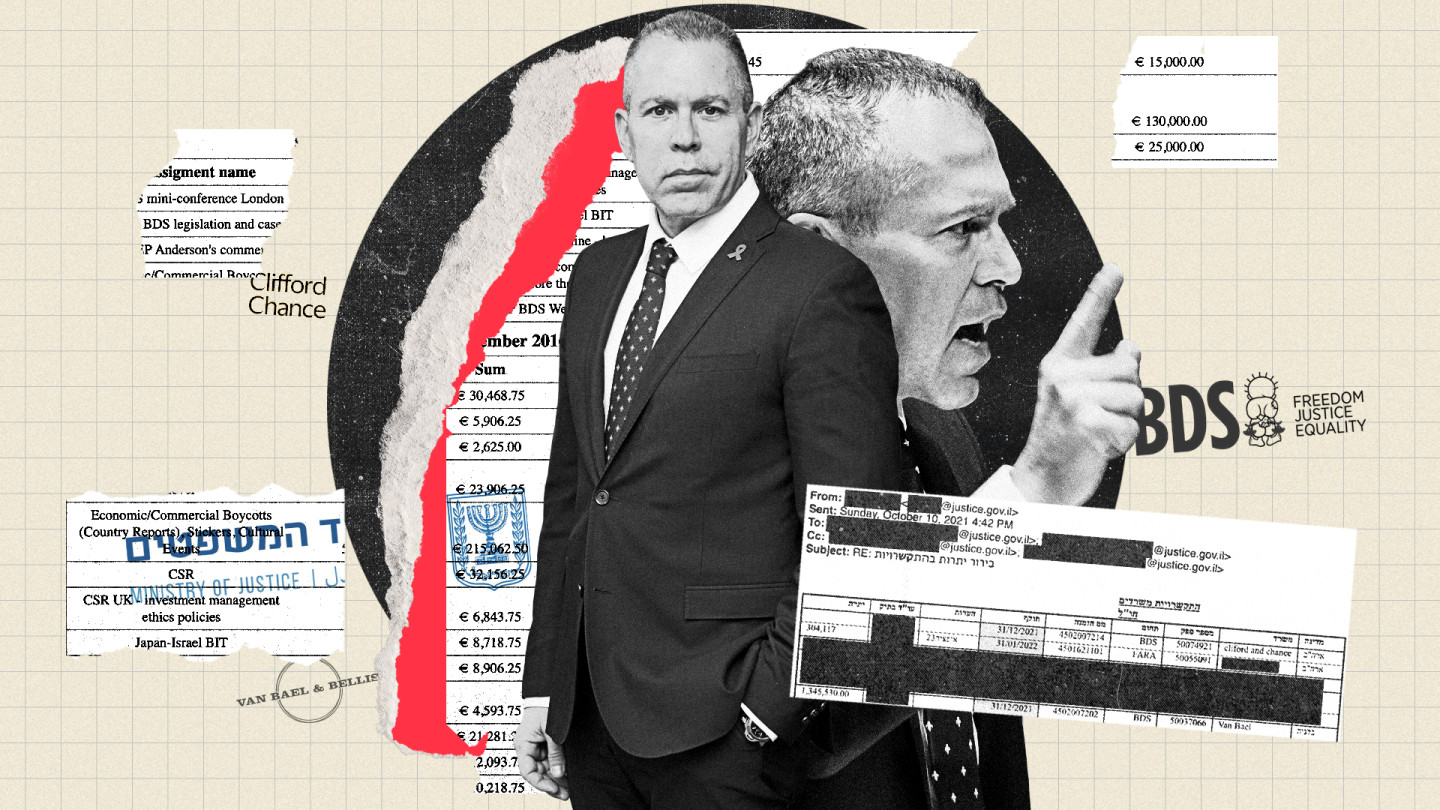
It is October 2020. Michelle Williams, then-partner at the prestigious British law firm Clifford Chance, has just scheduled an online call with representatives of the Israeli government for a confidential project.
Williams won’t be talking to Tel Aviv’s representatives alone: a total of seven partners and senior lawyers from Clifford Chance’s offices in London, Washington, and New York attend the call.
With this dazzling display of legal acumen, Clifford Chance hopes to convince the Israeli government that it is the firm best placed to support its lawfare programme against the anti-apartheid Boycott, Divestment and Sanctions (BDS) movement.
The covert programme, jointly funded by the Israeli ministries of justice and of strategic affairs since 2015, is “diplomatically extremely sensitive” in Israel. Its aim is to undermine the BDS movement worldwide using so-called legal warfare methods.
The interview call with Clifford Chance, which lasts about an hour and a half, will leave the Israeli officials impressed. After all, the firm is part of London’s “Magic Circle”, the City’s five most prestigious outfits.
Clifford Chance will ultimately be one of six entities interviewed for the anti-BDS project, scoring the highest among them. The Israeli officials will therefore recommend hiring the British law firm, especially when offered a discounted rate of 864$ per hour.
The interviewers will also select a second law firm, Brussels-based Van Bael & Bellis (VBB), at the more reasonable hourly rate of €375 ($445 at the time).
For the first time, The New Arab (TNA) is able to reveal the details of the hiring of the two firms, as well as the inner workings of Israel’s anti-BDS lawfare programme, thanks to leaked documents from the Israeli Ministry of Justice, which were published by the journalist collective Distributed Denial of Secrets in July 2024.
According to the leaked documents, the Israeli government first engaged Van Bael & Bellis in May 2016 to prepare advocacy material and legal opinions meant to criminalise pro-BDS activism outside Israel. Some of this material was used by Israel to lobby foreign governments and multinationals.
Between 2016 and 2019, VBB charged the Israeli government some €594,000 for its anti-BDS work. Of this sum, about €100,000 went to lawyers in countries where the Belgian firm lacked local know-how. In such cases, local lawyers would be subcontracted by the Israeli government and paid through VBB.
When the programme was renewed in 2020, Clifford Chance was added to the mix. In 2021, the two law firms were allocated a total budget of 4 million Israeli shekels (about $1.25 million) over five years for their work.
Israeli daily Haaretz first revealed the existence of this covert programme back in 2017, although it was not able to confirm the identity of the contracted law firms.
Unlike their engagements with other law firms, the Israeli Ministry of Justice mandated Van Bael & Bellis and Clifford Chance to keep confidential their role representing the Israeli government overseas. In both Canada and the UK, this secret Israeli programme may constitute a breach of recently approved foreign interference laws.
The New Arab contacted VBB and Clifford Chance, as well as the Israeli ministries of justice, of strategic affairs and of foreign affairs but received no comment in time for publication.
TNA also contacted the Israeli embassies in London, Belgium, Chile and Canada for comment. Again, no reply was received in time for publication.
First ‘assignments’
Shortly after being hired by Tel Aviv, Van Bael & Bellis’ first attended an anti-BDS “conference” organised by the Israeli embassy in London in May 2016, where challenges in fighting the movement were discussed.
According to an internal memo, the conference was attended by representatives from the Israeli ministries of foreign affairs, of strategic affairs, of justice and of the economy, “in addition to private lawyers from France and Italy”.
The goal of the event was to “present to the Belgian law firm […] the BDS phenomenon and the challenges it raises, in a direct manner and based on cases from the field and not in a theoretical manner”. Three VBB lawyers travelled to London to attend.
A few weeks later, the Israeli government set the law firm its first task: to develop a catalogue of legal opinions which could be used to counteract the BDS campaign in Europe.
“What are the limits placed on freedom of political speech, and is the right to such speech restricted by other rights, such as the right to trade?”, asked a memo sent to Van Bael & Bellis in June 2016. VBB was tasked with answering this question for the UK, the Netherlands, Spain, Germany, Ireland, Sweden, Denmark and France.
Van Bael & Bellis was also asked to provide more ad hoc legal opinions in response to events as they occurred.
For example, in June 2016, Van Bael & Bellis provided the Israeli government with potential options to pursue legal action against then-Member of European Parliament (MEP) Martina Anderson, in light of a comment she made where she described Israeli lobbyists in Brussels as “a rash”.
The legal opinion, prepared for the Israeli Ministry of Foreign Affairs, stated that a lawsuit could be brought for cause of hate speech. Alternatively, a request could be submitted to the president of the European Parliament (EP), with the aim of calling MEP Anderson to order.
One Brussels-based group did exactly that. The EU office of the pro-Israel advocacy group American Jewish Committee reportedly contacted the EP’s president to reprimand Anderson. The group did not respond to our email asking if they had done so at the behest of the Israeli government. TNA has seen no direct evidence that the Committee contacted the president on the basis of VBB’s advice, or that the pro-Israel advocacy group knew the advice had been prepared for the Israeli MFA.
Anderson told TNA that, neither the European Parliament president, nor the Israeli mission in Brussels, engaged with her directly on the matter.
“The fact that Israel spent thousands of euros attempting to intimidate and silence me only underlines the truth of what I was saying. If they believed such tactics would deter me, they fundamentally misunderstood who I am,” Anderson said.
“I am proud to have been a thorn in the side of the Israeli state and its extensive lobbying machine, which works relentlessly to undermine Palestinian voices and to justify the actions of a brutal and oppressive rogue state,” she added.
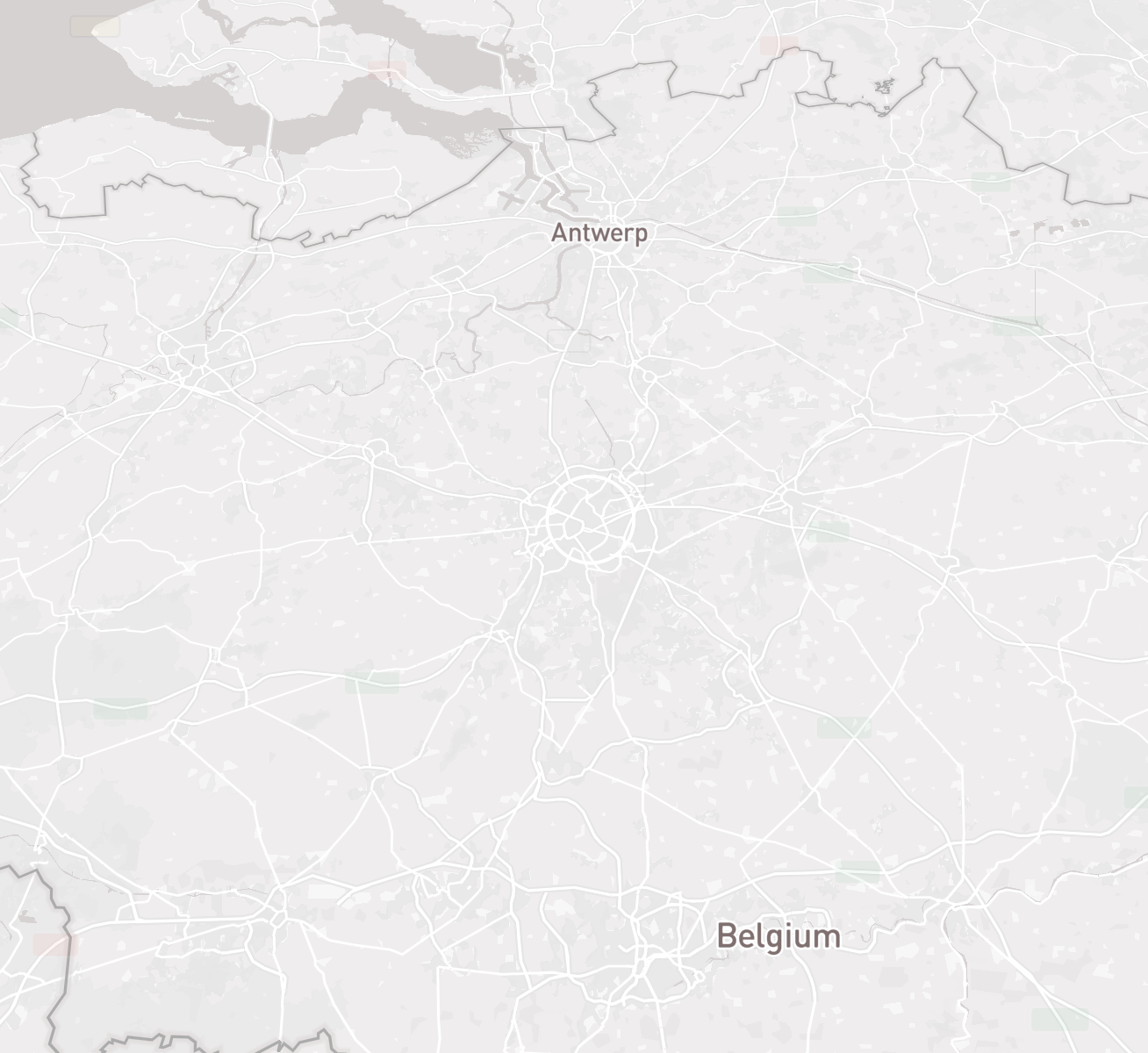
A screengrab from an October 2021 internal email of the Israeli Ministry of Justice, listing the remaining balance on the contracts with Clifford Chance and Van Bael & Bellis. Both contracts are listed under the category “BDS”. [DDoSecrets/redacted by TNA]
A new strategy
In August 2016, Van Bael & Bellis was called upon again when Belgian carrier Brussels Airlines stopped serving Israeli-made snacks on its Tel Aviv-Brussels flights.
At the time, Brussels Airlines claimed that it had stopped serving the snacks because they differed from what it had ordered from its supplier. Others suspected that the menu change was actually in response to a complaint made by a customer concerned by the fact that the product was reportedly sourced from a factory in the occupied West Bank.
As reported by Belgian daily Le Soir, Van Bael & Bellis supplied the Israeli ambassador in Belgium with the draft of a letter addressed to the airline, arguing that its decision could be unlawful under both Belgian and US law.
“Considering the commercial presence of Brussels Airlines in the United States of America, it would obviously be problematic for Brussels Airlines to be perceived by the U.S. authorities and consumers as participating in illegal boycott actions,” the letter said.
A legal memo, drafted by the Belgian law firm alongside the letter, had a more threatening tone. If Brussels Airline was pressured by BDS to drop the Israeli snack, the memo argued, “the airline could be considered as an adherent to this movement’s political ideas and actions, or even an accomplice.”
The memo also stated that Brussels Airlines’ decision was “inconsistent with U.S. policy”, which was committed not only to “take domestic action against BDS, but to also oppose BDS worldwide”.
Before long, the airline reversed the decision, due to what leaked Israeli government documents referred to as “diplomatic action by the ministry of Foreign Affairs”.
“We will continue to accept [these] products on board our flights especially given the positive role [of their manufacturer] in the community,” said Brussels Airlines in a statement to the Israeli ambassador.
Contacted by TNA, Brussels Airlines declined to comment on what it referred to as “10-year old statements and remarks”.
Meanwhile, the success of this intervention came to define the strategy of the anti-BDS lawfare programme from this point on.
Using “talking points” drafted by VBB, representatives of the Israeli government would engage with commercial entities to highlight the legal risks of complying with BDS demands. In the fall of 2016, this model would be used to fight pro-BDS campaigns in the UK.
In October 2016, Van Bael & Bellis was asked to draft a response to letters sent by a UK charity to the parent company of Ben & Jerry’s ice cream, Unilever. In it, VBB had to explain how a potential “capitulation” to the campaign against the sale of Unilever’s ice cream in Israeli settlements would be in violation of US, UK and international law.
One month later, another legal memo would be prepared ahead of a pro-BDS campaign against American IT multinational HP in the UK. The document contained potential criminal laws that could be used to prosecute activists engaged in singing anti-HP songs, organising anti-HP information sessions, or posting anti-HP stickers, signs or flyers.
To avoid sharing potentially inadequate legal advice, which could expose Israeli officials to unwanted risks, material from Van Bael & Bellis would be shared through Israeli missions abroad with a “third party (such as an NGO)” which would then pass it on to the lawfare targets.
By January 2017, VBB had racked up some €414,000 in fees (about $444,000 at the time) for more than 1,100 hours of work over eight months. This was later revised to €309,812.5 ($332,000).
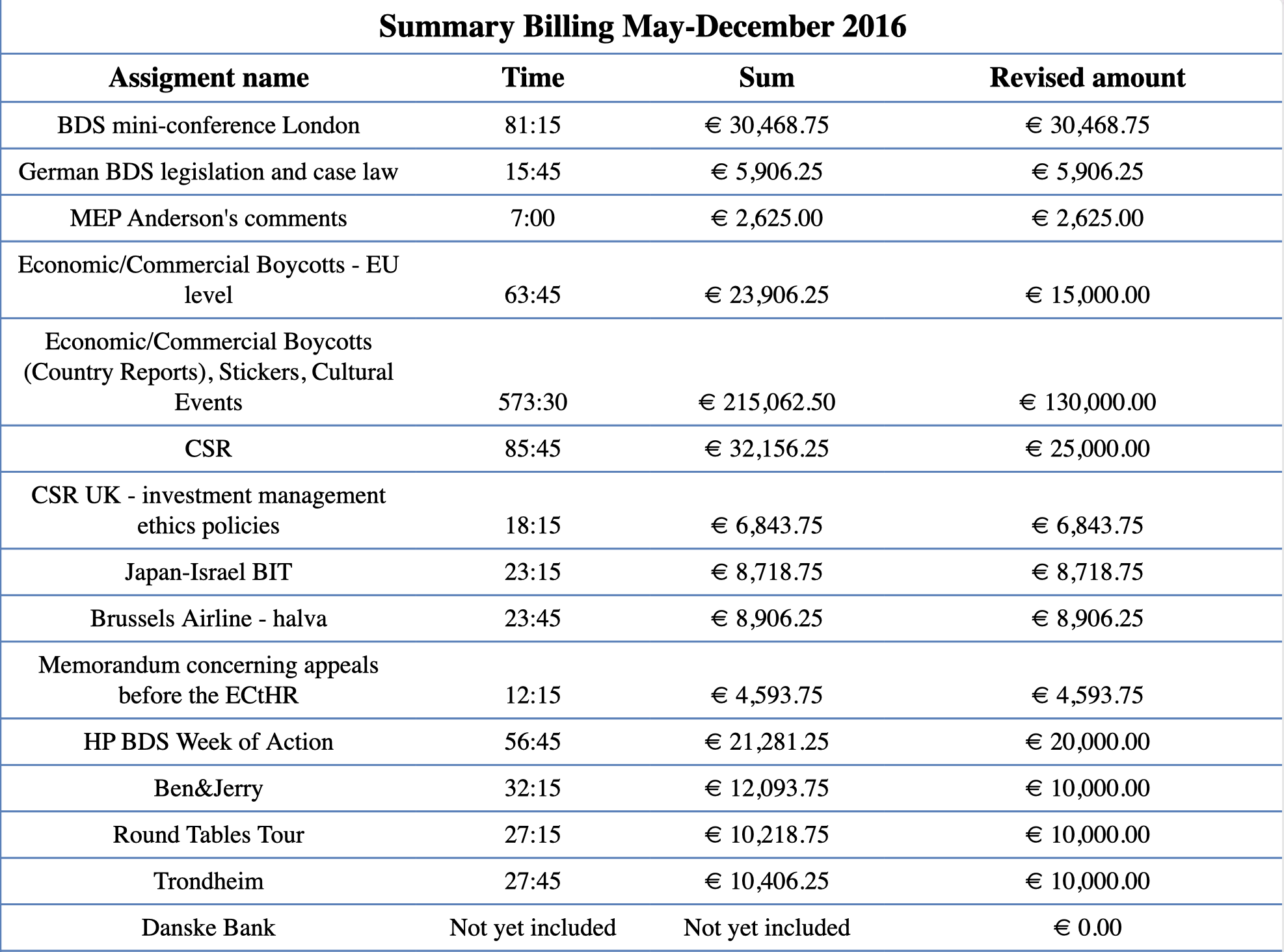
A screengrab of a presentation given in April 2017 by a senior official within the Israeli Ministry of Justice, listing some of the projects VBB was involved in between May and December 2016. [DDoSecrets]
Managing subcontractors
Going forward, VBB’s role became more involved in coordinating the work of locally-hired law firms, and acting as intermediary between them and the Israeli government – including for payments.
This model of subcontracting grew further once the second law firm, Clifford Chance (CC), was added to the mix. With the two law firms, the Israeli government was able to track developments from Ireland to Chile, and from Canada to New Zealand.
The work also became more involved in influencing the political processes in some of these countries.
As revealed by Irish online outlet The Ditch, in 2018, the Israeli government hired the Dublin law firm McCann FitzGerald to advise on the draft of a law that would ban trade with Israeli settlements in Ireland. McCann FitzGerald’s hiring was done through Van Bael & Bellis.
In February of the same year, senior diplomats of the Israeli embassy in Chile sought advice on how to counteract pro-BDS activism in the country, through Van Bael & Bellis.
The embassy officials wanted to explore legal means for limiting the work of the Chilean-Palestinian Interparliamentary Group within the Chilean Parliament, which it viewed as the source of “very strong lobby for the pro-Palestinian cause”.
Additionally, legal counsel was sought to identify disciplinary codes that could be used to limit the political activity of professional associations, such as the associations of journalists and of teachers.
Finally, Israeli officials asked for ways to force universities in Chile to organise Israel-related activities despite boycotts from its students. The summer prior, talks featuring a director of the Israel Antiquities Authority at two Chilean universities had been canceled after successful BDS campaigns by their student bodies.
The legal memo, prepared by a Chilean law firm and paid for through VBB, cost the Israeli government some $15,000.
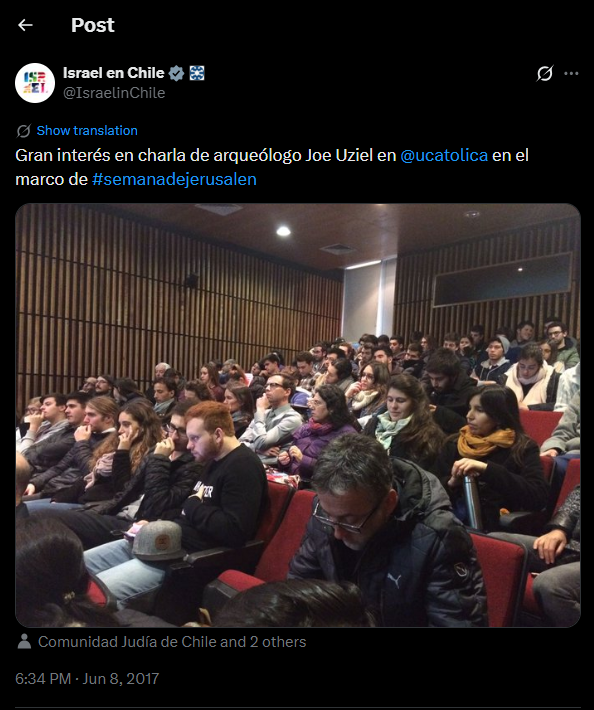
A social media post from the Israeli embassy in Chile, showcasing a talk by the Israel Antiquities Authority in Chile in June 2017. Similar talks at two Chilean universities were later cancelled under pressure from the BDS movement. [X/Israeli embassy in Chile/fair use]
‘A politically important issue’
The next year, in 2019, a law firm was hired to advise on a legal case against the Canadian government’s mislabelling of wines originating from illegal Israeli settlements.
The case – initiated by Jewish-Canadian journalist David Kattenburg – argued that wines produced in the West Bank and carrying “Products of Israel” labels violated Canada’s Food and Drugs Act.
Through Van Bael & Bellis, the Israeli government hired a Toronto law firm to support its advocacy efforts with the Canadian government after the court had ruled in favour of Kattenburg.
In August 2019, Israeli officials inquired about the chances of success of a potential appeal of the court’s decision. At the time, the Canadian government had not yet announced whether it intended to do so.
If the decision was not appealed, wrote the Toronto law firm, “it may be used by those involved with the BDS campaign in Canada and across the world”.
Indeed, in Europe, the Court of Justice was also trying to determine if the labels of wines from West Bank settlements were equally misleading to European consumers.
Appealing the decision in Canada would put it on hold, added the Canadian lawyers, which may dissuade the European court from relying on it for its own judgement.
As a consequence, and “in light of the political importance of the issue”, the Israeli Ministry of Foreign Affairs wrote to then-Canadian Foreign Minister Christya Freeland “requesting that she do everything in her power to ensure that Israel and its products are not negatively affected.”
The Canadian government launched an appeal of the ruling about a week later, but this was subsequently dismissed by Canada’s Court of Appeal in 2021.
A year later, the Canadian Food Inspection Agency – in charge of food labels – decided that the labelling of Israeli settlement wines as products of Israel was indeed false.
Lawyer Dimitri Lascaris, who represented Kattenburg in the proceedings, told TNA that he was unaware of the level of involvement of the Israeli government in the case.
“We knew that the Israeli embassy [in Canada] had communicated with the Canadian government,” said Lascaris. “But we had no idea that they had hired a law firm and that they were involved to the extent that you described,” he added.
TNA contacted the Canadian Ministry of Foreign Affairs, which referred us to the Canadian Food Inspection Agency instead. A spokesperson for the Agency told us that its “decision-making process is grounded in core values, including […] regulatory independence from external stakeholders.”
We also contacted former Canadian Foreign Minister Freeland for comment. No response was received in time for publication.
Divestment setbacks
One of Clifford Chance’s first assignments involved the decision of New Zealand’s Sovereign Wealth Fund to divest from five Israeli banks for their role in expanding Israeli settlements in the West Bank.
On 2 March 2021, the New Zealand Superannuation Fund – in charge of funding the country’s pension system – decided to drop its investments in the five banks because they reportedly financed the construction of projects in the unlawful settlements. The total value of the Fund’s investments in the banks at the time was NZ$6.5 million ($4.7 million).
Clifford Chance charged a total fee of $51,300 to investigate the circumstances of the decision. The fee included an amount paid to lawyers in New Zealand who were subcontracted through the British firm.
Later that year, two other divestment announcements would lead to an increased workload for the anti-BDS lawfare programme.
First, in June 2021, Norway’s municipal employees’ pension fund announced its divestment from 16 companies operating in the settlements. The next month, Ben & Jerry’s decided it would stop selling its ice cream in the occupied West Bank.
By August 2021, of the $1.25 million allocated for the five-year programme, some $145,000 had already been disbursed in just its first eight months.
In an internal memo drafted shortly after, the Israeli Ministry of Justice concluded that, in order to combat BDS more effectively, coordination between Van Bael & Bellis and Clifford Chance on the one hand, and Israeli embassies and pro-Israeli NGOs abroad on the other, had to improve.
According to the memo, this improved coordination was already happening in the UK. The pro-Israel advocacy group UK Lawyers for Israel (UKLFI) was about to publish an “opinion piece” criticising the New Zealand Fund’s divestment. It was also looking into ways to pressure Ben & Jerry’s parent company Unilever to override its subsidiary’s decision, culminating in the publication of a warning letter to Unilever in October 2021.
Jonathan Turner, Chief Executive of UKLFI, told The New Arab that he does not recall discussing UKLFI’s publications with any Israeli officials, but “I may possibly have mentioned it at some point”.
“We certainly did not prepare the piece in collaboration with any Israeli officials,” he added.
Referring to the warning letter to Unilever, Mr. Turner said that “I believe that our analysis was correct, the warning was well made, and if Unilever had adopted our suggestion, it would be a significantly more valuable company today.”
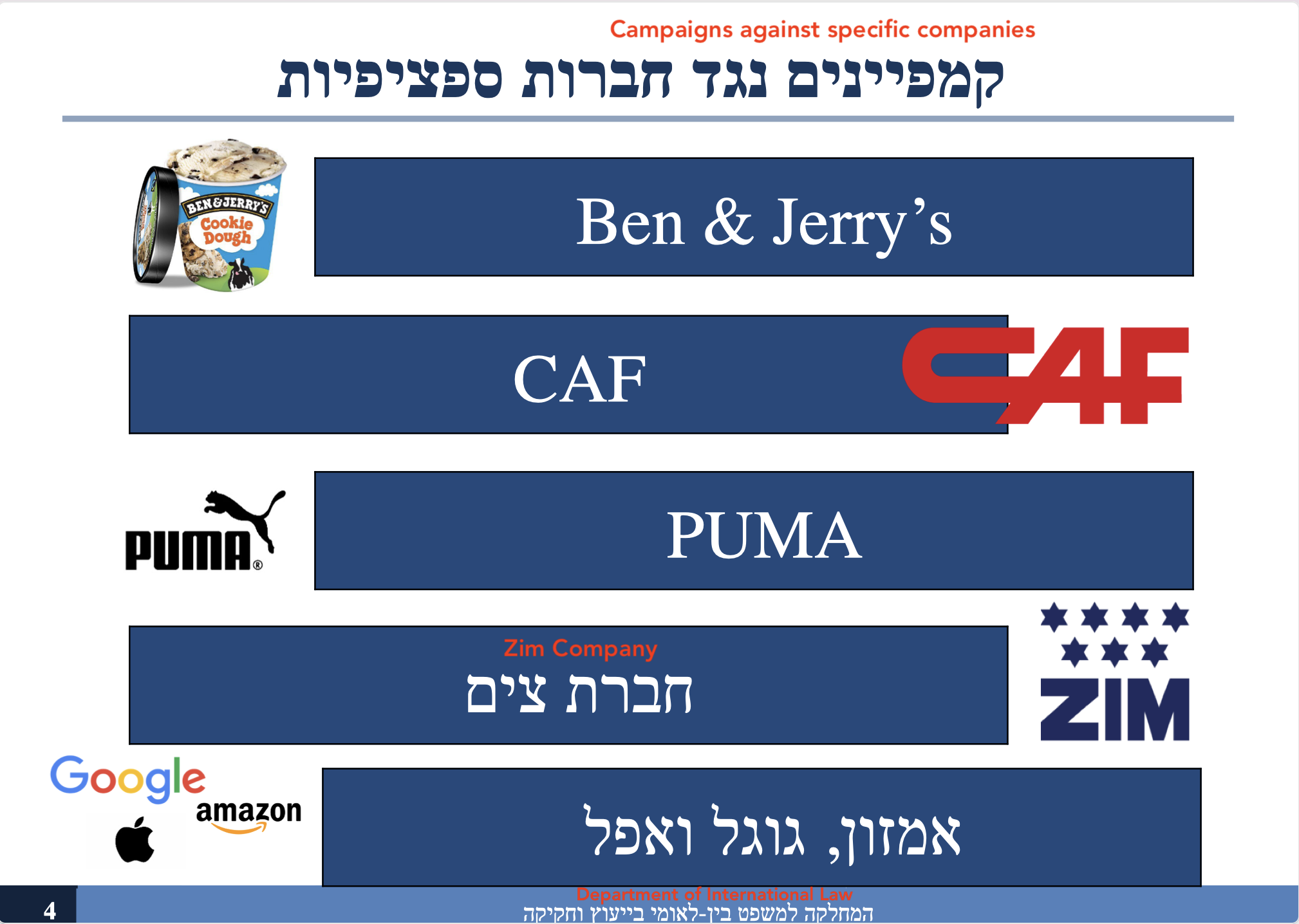
Slide from a presentation given in September 2021 by the Israeli Ministry of Justice in the aftermath of divestments in the same year. [DDoSecrets]
A legal foreign influence programme?
The leaked documents do not show whether the anti-BDS lawfare programme was renewed beyond its planned end in 2025.
However, if continued, the programme could expose Van Bael & Bellis and Clifford Chance to violations of newly introduced foreign influence laws in certain countries around the world.
In August 2024, The Guardian revealed how the Israeli government feared its anti-BDS advocacy efforts in the US could run afoul of the country’s Foreign Agents Registration Act (FARA).
The Act mandates individuals acting on behalf of a foreign government to publicly disclose the nature of their work in the US, including for attorney services provided outside the context of legal proceedings.
The UK and Canada have both recently passed similar legislation – respectively in 2023 and 2024 – that require entities to declare their work for foreign states. However, it is not clear if legal services – such as those provided by the two law firms – would fall under their scope.
Mutahir Ahmed, a former Crown Prosecutor, and a spokesperson for the pro-Palestine International Centre for Justice for Palestinians (ICJP), told TNA that the close coordination between the Israeli government and pro-Israel groups operating in the UK was “no secret”.
In his view, the goal of this close collaboration was “restricting public institutions and individuals from engaging in BDS and creating a chilling effect to shield Israel from valid criticism”.
“If UK authorities are serious about tackling undue foreign influence,” Ahmed said, “it must use its foreign influence legislation to tackle Israeli influence, including through the Foreign Influence Registration Scheme.”
Meanwhile, Canadian human rights lawyer James Yap told TNA that the most concerning aspect of the Israeli anti-BDS lawfare programme is its covert nature.
“Foreign states certainly have the right to appear before the courts of another state to litigate. For example, Israel could absolutely show up and intervene itself in the proceedings [in Canada]. And that, to me, is not foreign interference,” said Yap.
“That said,” Yap added, “here they seem to be working covertly, operating through other actors who are involved in a legal proceeding to conceal their own involvement.”
The Canadian lawyer said that, in his view, court proceedings “can be just as impactful as the legislative process”.
In fact, Yap’s organisation, the legal NGO Canadian Lawyers for International Human Rights (CLAIHR), is currently suing the Canadian government over its export of arms to Israel during the genocide in Gaza. Canada transferred some $13.8 million worth of weapons to Israel in 2024 alone.
“If a foreign state is actively working to influence the process of a Canadian court for its own interests, there’s a case that something like that ought to be out in the open. It goes to the root purpose of foreign interference legislation: exposing covert intervention by foreign states in domestic government processes,” Yap concluded.
Animated infographic: Ornaldo Gjergji
Fact-checking and copyediting:
TNA Investigative Researcher/Journalist Jonathan Cole.
Fact-checking of Hebrew-language material: Samah Watad
Commissioning, editing and supervision:
TNA Investigative Editor Andrea Glioti.