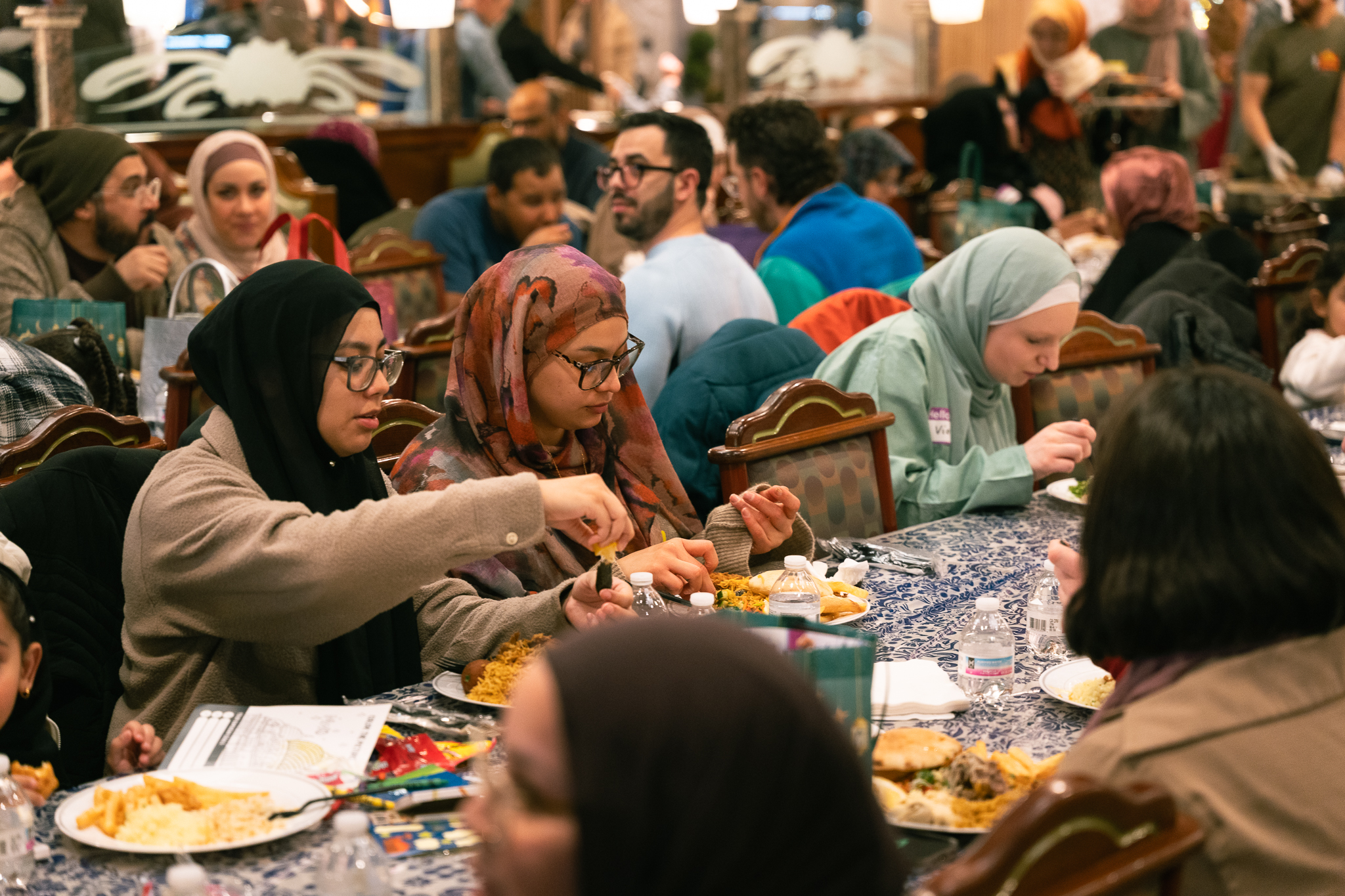
Photo by Yaseen Najeeb
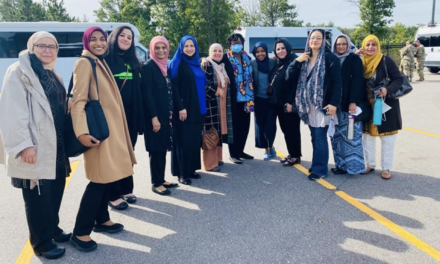
The annual Muslim Women’s Coalition Revert Iftar at Melrose Restaurant in Oak Creek, is a welcoming event for reverts and their families to connect with the Muslim community.
Like most faithful quests, Muslim reverts’ stories usually center on a search for two things: community and purpose. These deeply personal journeys often start with a gentle invitation from a friend or acquaintance. All these things are true for recent reverts Jayla Arias, Bren Hughes and Eric Cluth, who said the path has been challenging, exciting and oftentimes, overwhelming. Here are their stories.
A lifelong pursuit of faith
University of Wisconsin–Milwaukee student Jayla Arias has always been drawn to religion despite not being raised in a religious family.
“My family did not really practice a faith, but I have always been very religious, attending bible studies on my own and going to church. I even had my baptism set last year, just a couple of months before I reverted. But it just didn’t feel right. I started to learn about Islam, and I was kind of going back and forth and just really wanted some sort of sign that would tell me what to do,” Arias said. “It’s scary to leave a religion for a whole other religion that you really know nothing about; that is in Arabic and has all these different rules.”
Arias met a woman at work, a Muslim revert who, like herself, is Puerto Rican. Intrigued, Arias began to delve more deeply into Islam.
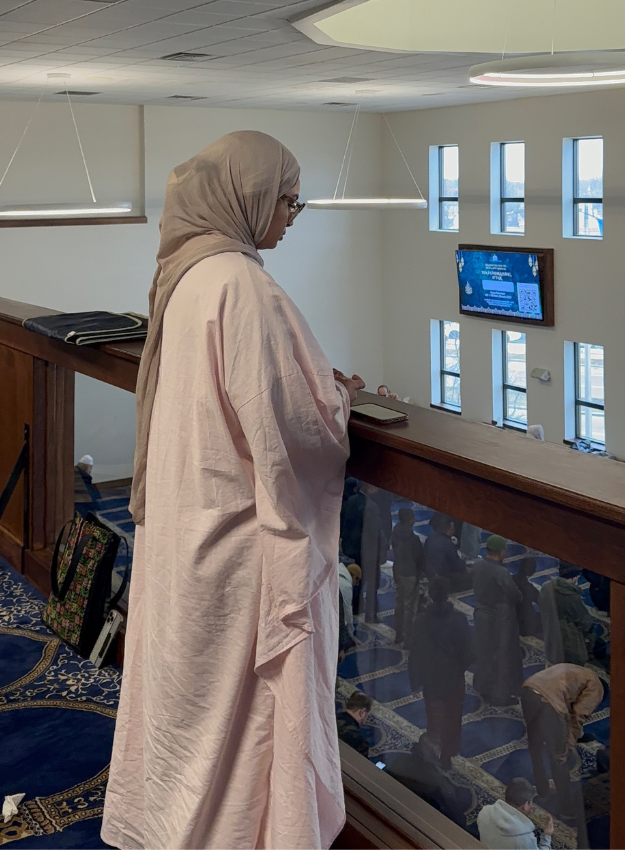
Jayla Arias marking her first Ramadan as a revert to Islam.
“I was guided to Islam by being introduced and becoming friends with the young ladies I met at work. And when I learned one of them was Puerto Rican, that’s probably what really opened me up to it, honestly. I agreed with the main pillars of Islam and slowly, my mind started to unwire from the prejudices that I had been built to believe, so last October, I accepted Islam—not knowing everything but based on the opening of my heart,” Arias said.
To prepare for Ramadan, Arias said she purchased a lot of food. She wakes early to eat a healthy meal, drink a lot of water and pray before going back to sleep for a little while.
“Then I wake up, pray again and I just go on with my day,” she said, adding that she uses an app to guide her though the daily schedule and spiritual routine. She finds the fasting relatively easy.
“The more challenging part is holding your tongue, not gossiping, not listening to music. If you get irritated, you have to be patient,” Arias said.
Arias found a very welcoming community in the Muslim Student Association (MSA) at UW-M as well as at Haraz Coffee House, on Locust and Oakland avenues where she works while being a full-time early childhood education student.
“I’m fortunate to have that community because not everyone has access to that. Sometimes I can feel a little lonely at the end of the day, but I know I have a community at school and at work.”
Although Arias said she has a long way to go in her journey, she is deeply committed and said she finds prayer to be the most meaningful aspect of her new faith.
“The first time that I put my forehead on the ground and submitted to God, I knew that this was right. I love the prayer and the way we do it. I love that everyone comes from different backgrounds and might speak different languages, but when you go to pray, everyone’s praying the same thing,” Arias said.
She also said being a Muslim woman makes her feel safe.
“One thing that really drew me to Islam is the way that women are protected in the religion. At first, I thought that all the rules made it harder on women, but honestly, it is freeing and actually makes it easier.
“It feels like protection. I put the hijab on really early on, but it also makes me feel protected and keeps me on a straight path. When I’m wearing it, I’m representing every time I walk outside. I’m representing even before I open my mouth. It 100 percent makes me feel powerful.” Arias said.
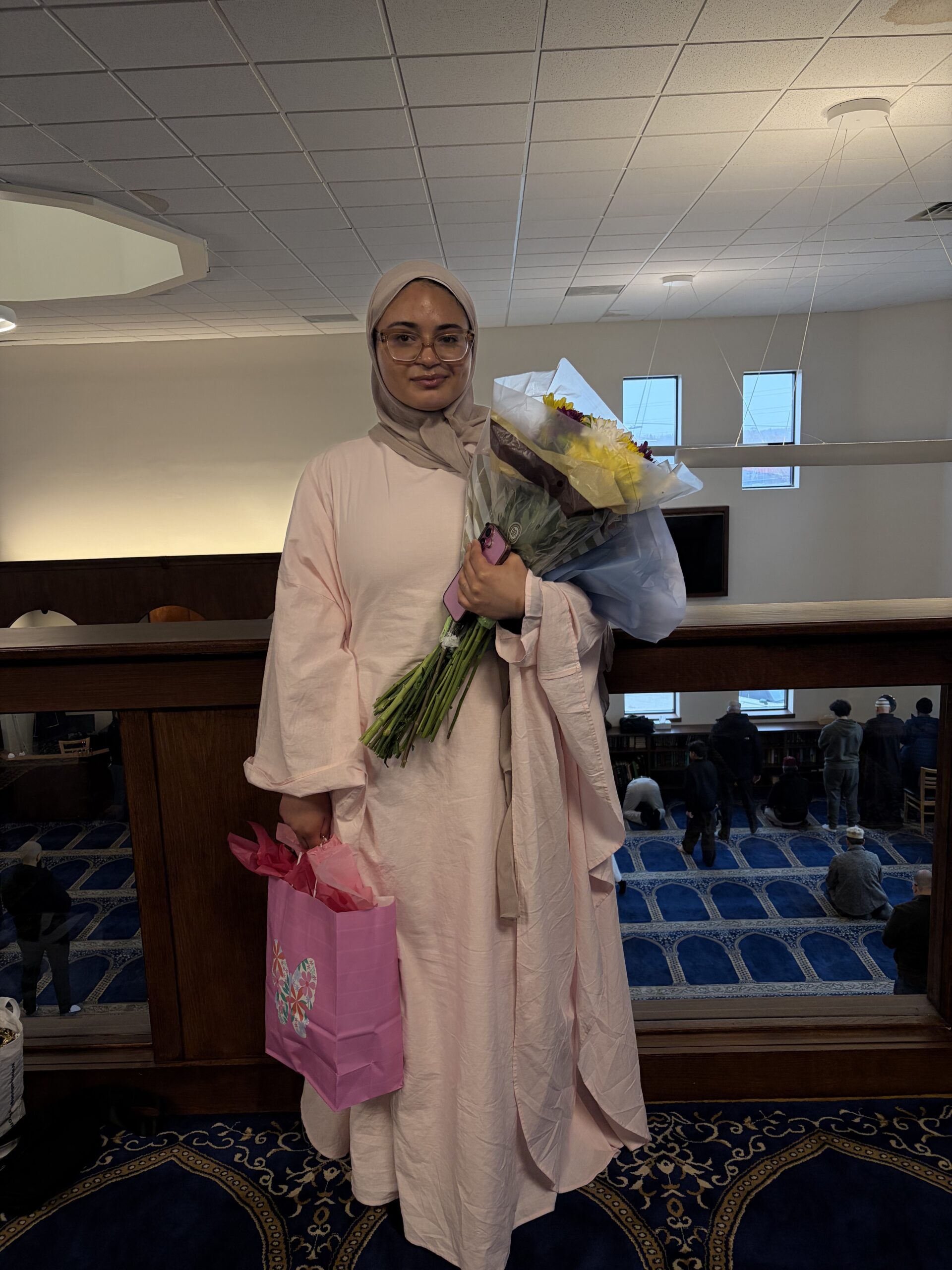
Jayla Arias on the day of her Shahadah, the first pillar (faith) of Islam, at the Islamic Society of Milwaukee mosque
A formidable, yet rewarding journey
During a vulnerable time, Bren Hughes found herself seeking meaning in her life.
“At first, I was enamored by the thought of hearing people discuss being Muslim, specifically a co-worker. He talked to me about it and I was just amazed at how something could fulfill someone so much. Then, when I moved away from my mom for the first time, I realized that it was really me on my own now. It was a vulnerable moment for me; that it’s just me and sometimes having just me isn’t enough. I also realized that having all these things in this life is not going to fulfill me for the rest of my life the way I would like it to,” Hughes said.
Hughes, a UW-Milwaukee student, believed Islam was the answer and set out to learn everything she could, which she said has been inspiring but overwhelming as well.
“There’s a lot of excitement immediately, coming into something that is a completely new thing for you, especially not growing up around the religion, but it’s also been overwhelming to say the least, because there’s so much to learn. And there’s a lot of yourself that you have to put into it. It’s a big commitment, and I do not regret making that commitment, but it is going to be a few years before I will feel truly confident in what I know about the religion and how I practice it. It’s a lot of trial and error for now,” said Hughes, who took her Shahada last fall.
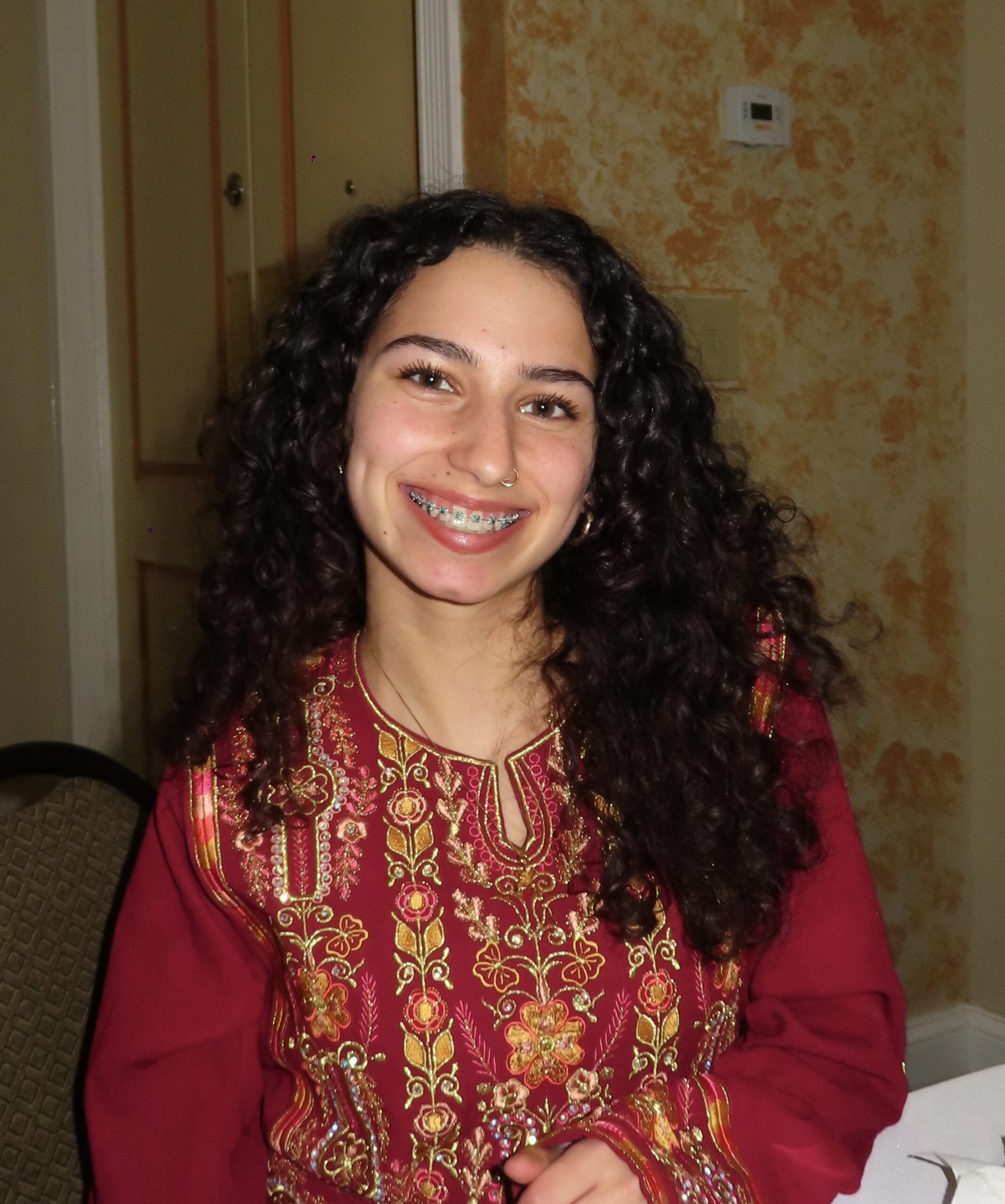
Bren Hughes, UW-Milwaukee student, experiencing her first Ramadan after reverting last fall.
How is her first Ramadan going?
“It really snuck up on me, so I didn’t really prepare for it and it’s been difficult. Not eating or drinking is the easy part. Keeping yourself regulated, not getting too upset about things, especially in a workplace. You can’t stop your life to observe Ramadan, unfortunately. But despite everything, it’s very rewarding at the end of the day and it makes up for all the challenges,” said Hughes, whose mom was raised Catholic but was open minded about religion. Her dad, who was not really present in her life, is Muslim.
Hughes, who said this quest is about self-betterment, has formed friendships with other Muslims and attends some social events.
“I kind of want to learn by myself, but I do ask for help when needed. Like for praying, I definitely ask for help. I really do give a lot of props to the Muslim girls in my community.” Grateful for that support and acceptance, Hughes said she hopes she can pay it forward.
“I wanted to share my story because I didn’t know anything at first, and now I’m just in love with the religion. I hope it gives other people a steppingstone to go into things that make them uncomfortable, whether it is religion or not,” Hughes said.
And to be accepting and nondiscriminatory.
“I feel that what a lot of the Western world doesn’t see with this religion is just how much it wants you to thrive in the world versus trying to put you down.”
A gradual, thoughtful journey to Islam
With brushes, paints and sketchbook in tow, it is immediately apparent that Eric Cluth is an artist. It becomes clear only minutes into a conversation with him that he is also a deep thinker. These days, he is thinking deeply about his faith.
Cluth, an engineer for a crane design company, wasn’t raised to be observant of any religion but to be respectful of all. For the last few years, he was a member of a non-denominational Christian church and felt part of its community with shared values and lifestyle choices. But there were some nagging doubts.
The questions, along with other complications, prompted him to leave the church. He began to frequent Qamaria Yemeni Coffee Co., a coffeehouse in Greenfield. He also picked up painting again, a passion he had put on the shelf for about eight years, rediscovering a lifelong talent and finding great solace in it. The community he found at the café and in local art circles helped him begin to surface from the feeling of loss and disillusionment that had been dragging him down. Still, something was missing.
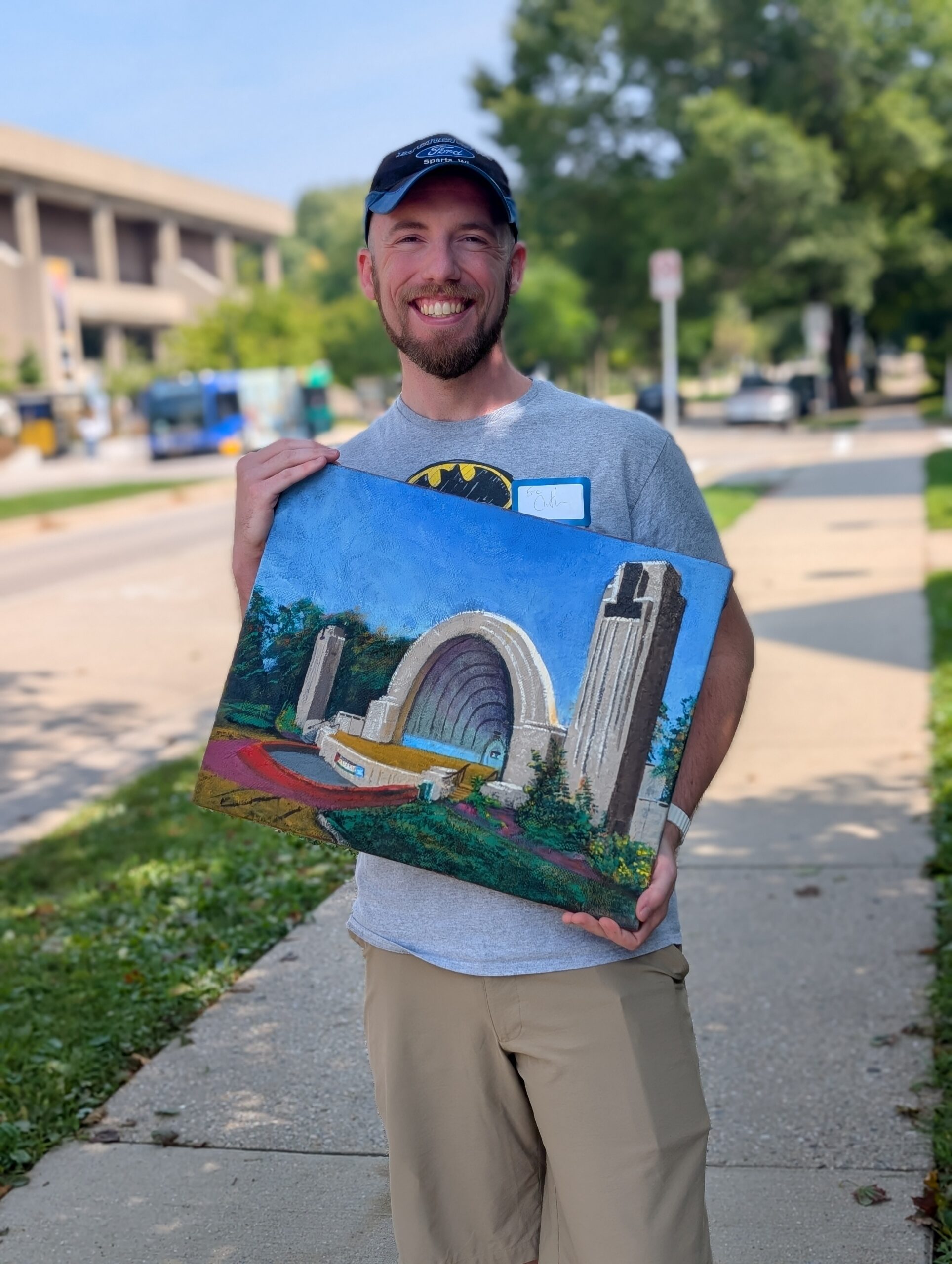
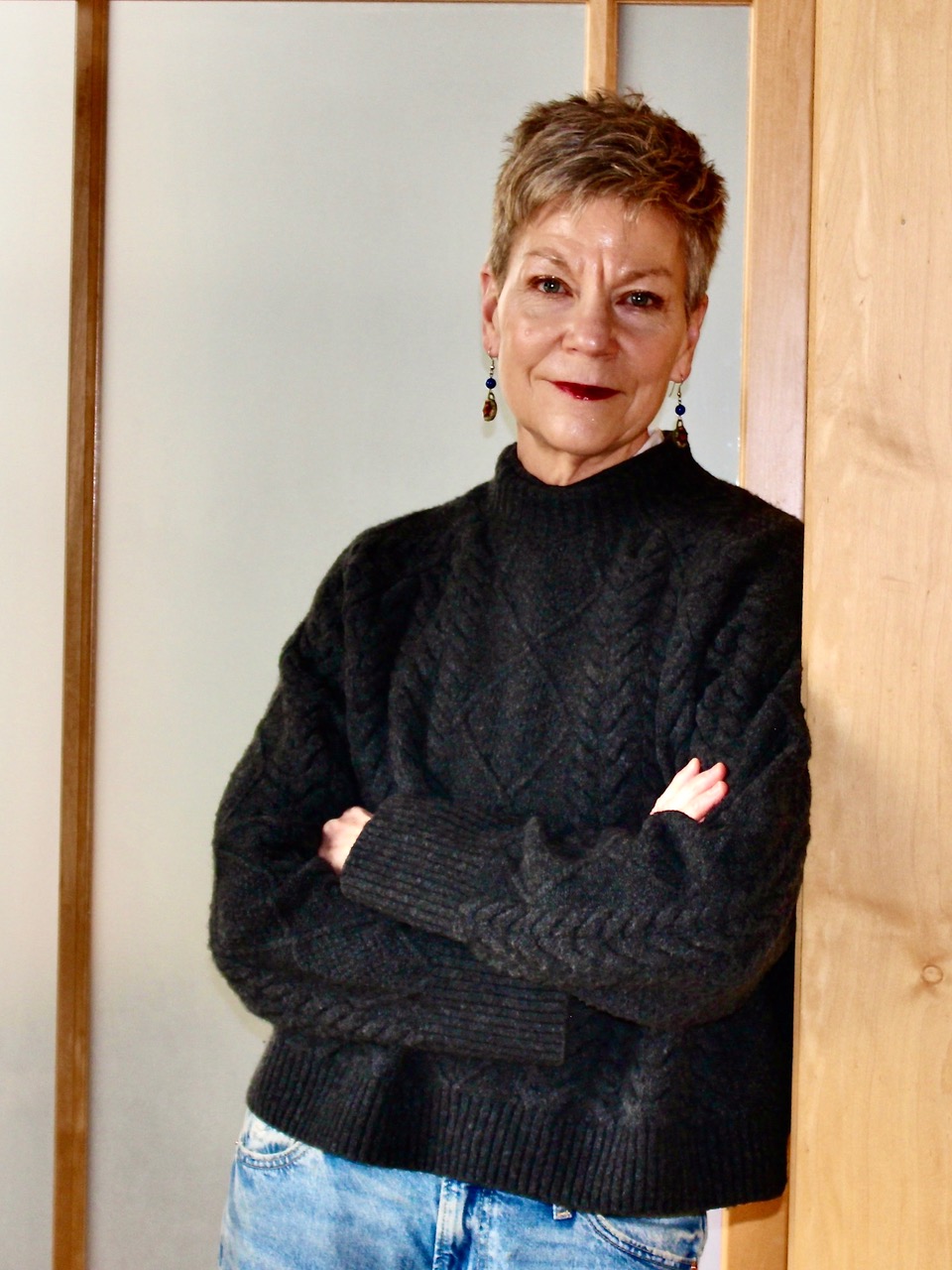
Artist Eric Cluth reverted last year after finding a faith congruent with his beliefs.
“I am meeting friends at art groups and I’m doing my day job and it’s all good, but I’m feeling like my entire life can’t just be this. As much as I love this, I want more than this,” Cluth said. He didn’t want to give up his faith, but it no longer seemed congruent with his beliefs.
“I didn’t realize how incompatible it was until someone handed me the Quran. And then I felt like a lot of things were lining up and it was hard to believe it was just an accident,” Cluth said.
“There are a lot of things I still need to learn, but I’ve learned about two important groups of things, which they say will either validate or invalidate you, and those are the six articles of faith and the Five Pillars of Islam. I’m trying to check all the boxes and I’m having no problem with any of the boxes that I saw.”
Cluth took his Shahada late last fall and his journey in faith continues as he experiences his first Ramadan. While he no longer finds fasting intimidating, it is still uncomfortable.
“And thank God for apps,” he said. “The most intimidating thing, frankly, is prayer every day.”
Cluth has worked out how to pray at work (he was the first employee at his 40-year-old company to submit a request for religious accommodations). He attended an iftar a week or so ago and hopes to go to a few more. There are many things he has accepted and adopted and some he’s still wrestling with.
“One of the things I’m struggling with most as a new revert is how much weight to give everything that I see and the rules that I hear because no one’s giving me a manual. I am looking forward to learning more about Islam and the culture and adopting it to my own. So far, it is fulfilling my expectations,” said Cluth, who is proceeding thoughtfully and carefully.
“I’ve learned who I can lean on and where I can go for information and to double-check everything I find. I have a lot going on, so the progress on my education as a Muslim is slow going.”