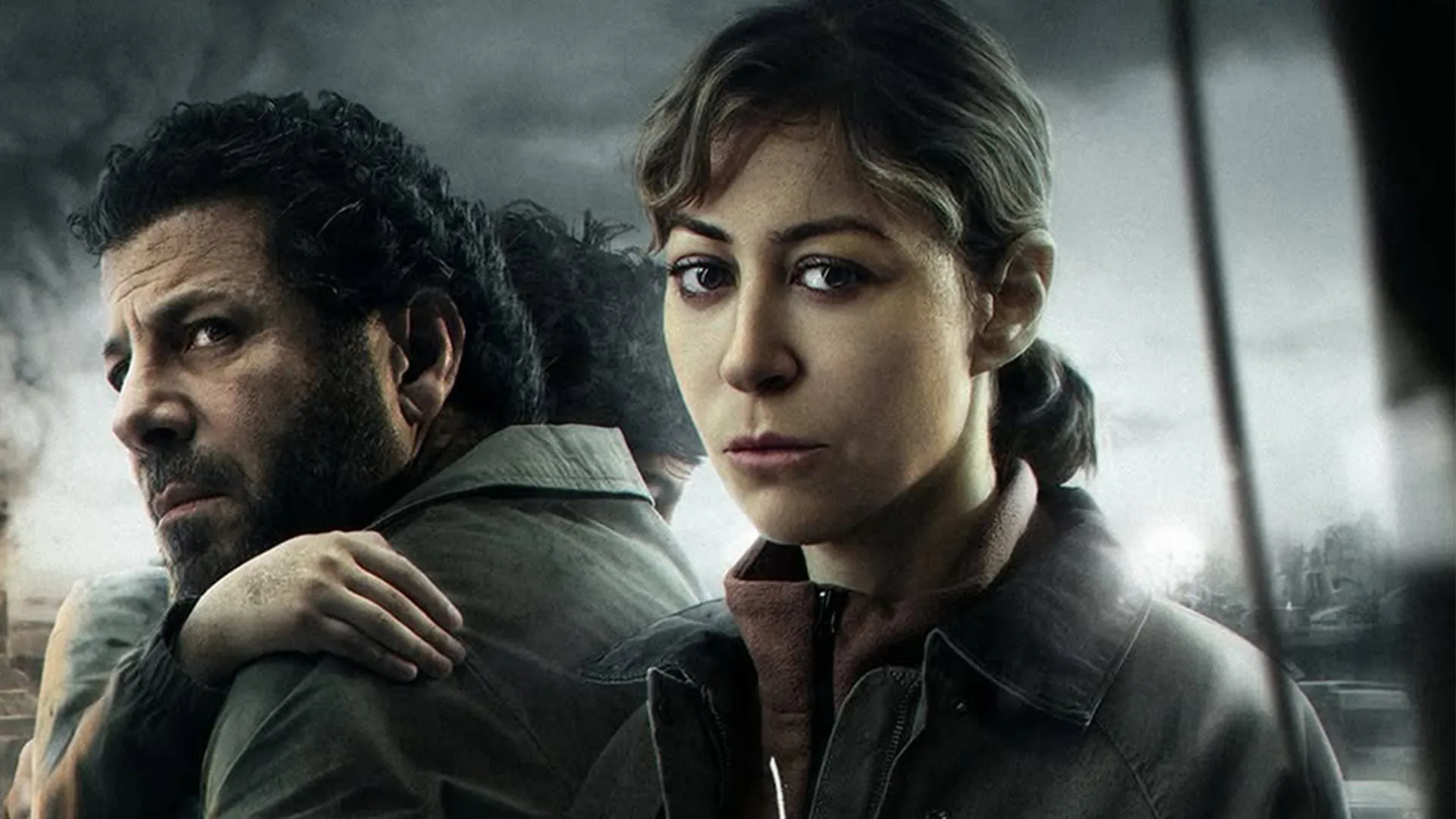
A TV series in Egypt, spotlighting Israeli war crimes in besieged Gaza, is making waves in the Arab country. But across the border, in Israel, it has caused a severe meltdown.
During the Ramadan season, Egypt — often dubbed the Hollywood of the Middle East — airs dozens of TV shows and series, outnumbering all Arab countries combined.
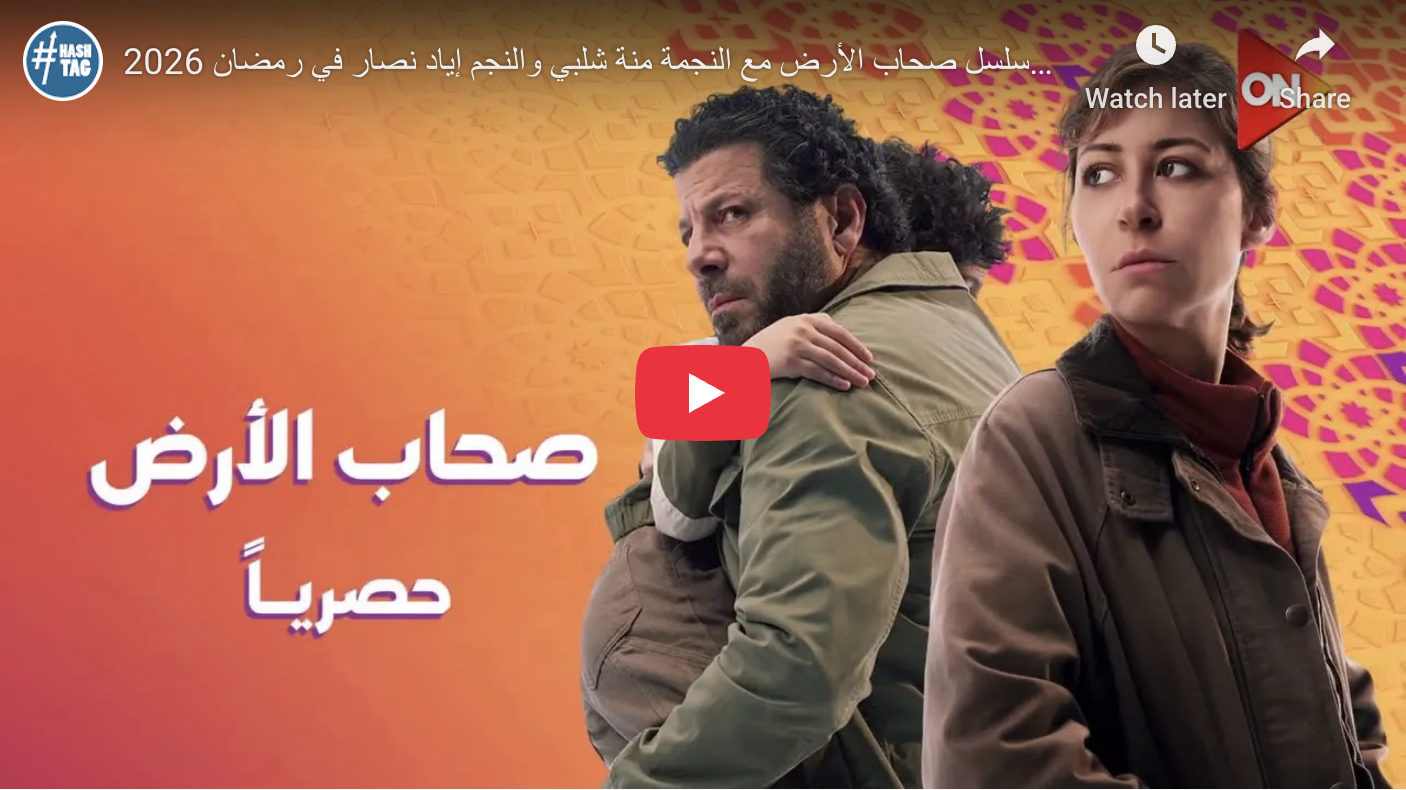
But this year a show, called People of the Land (Ashab Al-Ard), has taken the region by storm.
People of the Land centres around Dr Salma (Menna Shalaby), an Egyptian doctor who travels to Gaza during Israel’s genocide there with a medical convoy and later falls in love with Nasser (Eyad Nassar), a Palestinian man whose family was killed by the Israeli military.
They both try to survive and navigate life amid Israel’s relentless bombardment.
Although the main theme of the show is romance, the series heavily depicts the events of Gaza, which is what Arab fans saw as the main message.
A United Media Services production, the series has been airing daily during Ramadan on WATCH IT and various Egyptian TV channels.
‘Emotion before imagery’
Mahmoud Kamal, a 25-year-old PR specialist based in Cairo, tells TRT World that one of the strongest aspects of the series is how realistic it is, describing a scene of a medical convoy targeted by Israeli troops.
“What stood out to me is that the production did not attempt to soften or dramatise the events excessively to evoke sympathy. Instead, it aimed to depict the situation as realistically as possible, without embellishment or minimisation,” says Kamal.
“The events are depicted without distortion or exaggeration, making the work credible and trustworthy in the eyes of viewers, especially those who have experienced or closely followed the real events.”
Radwa, a freelance journalist in Egypt, tells TRT World that while watching the series, she felt as if she was actually watching the news from the enclave blockaded by Israel from land, sea and air.
“Overall, the series succeeded in conveying emotion before imagery. It captured the feeling of fear, loss, and the devastating reality of having no safe place,” she says.
“The performances were deeply authentic, and the attention to detail was both precise and painful: the bombardment, the prolonged electricity outages, the bureaucratic permits required just to travel to the West Bank, the overwhelmed doctors, the crowded hospitals, the wounded civilians. These were not dramatic exaggerations — they were lived realities.”
She adds the series resonated with Arabs due to anger, helplessness, and a desire for authentic representation.
“Egyptian and Arab audiences are emotionally connected to Palestine. The relationship is not merely political, geographic, or religious — it is one of shared history, shared blood, and extended families across borders,” she says.
Palestinians, Arabs hail the series
The Egyptian TV series has captivated Palestinians and Arabs from other countries alike, who are expressing pride and happiness with the series.
Despite making it a tough viewing, many persevered, promoting the series through word of mouth.
A Palestinian woman, visibly moved, expressed her desire to discuss the series, stating, “Can you see my eyes? I want to talk to you…although I feel like crying.”
“I couldn’t believe how real it feels,” she said. “You must watch it.”
One viewer admitted they struggled to watch 10 minutes without becoming emotional.
“I would love to thank our Egyptian brothers for this series and for trying to represent our suffering,” he said.
Ahram News Agency reviewing the series, says the show wasn’t just presenting drama, “but a humanitarian testimony that reassures that the land knows its people. And that just causes remain alive.”
It highlighted the symbolism behind the characters’ names. Salma, the Egyptian doctor, has a name derived from salam, which means “peace”. The Palestinian protagonist, Nasser, has a name meaning “victorious” in Arabic.
Egyptian film critic Mahmoud Mahdi lauded the show, awarding it a score of 8.5/10.
However, “Film Gamed” criticised the final episode’s rushed feel.
“The episode was poor in terms of events,” the YouTube reviewer said, adding that the episode ignored some of the characters’ backgrounds and plotlines.
Despite reservations about the ending, it was hailed as Ramadan’s best series, encouraging viewers to watch.
‘Political step’
In Israel, however, the series has caused a meltdown among media and official denialists.
Israel’s Channel 12 has dubbed the series a calculated political step, while Yedioth Ahronoth says the TV show has a large cast of Egyptian, Jordanian and Palestinian actors and is expected to draw tens of millions of views across the Arab world.
Ahronoth reported Adam Bakri, son of Mohammad Bakri (director of the pro-Palestine film “Jenin, Jenin”), features in the series.
Ella Waweya, an Israeli army spokesperson, stated the series distorts facts.
“‘People of the Land’ is not drama, it’s falsifying history,” she said on X recently.
Director of the series, Peter Mimi, responded to Waweya’s remarks, saying: “What falsifying are you talking about? The videos are right there!”
“Anyway, I went to great lengths to find an actress who looks like you,” he added, seemingly mocking her.
Radwa notes that Israel deeming the series as politically dangerous is understandable because they know this is not only a war on the ground, but a “battle of narratives.”
“Any artistic work that reinforces the Palestinian account of events and highlights the war challenges Israel’s official narrative, which becomes perceived as a threat because it shapes public opinion, and public opinion ultimately influences political discourse and policy,” she says.
“The concern is not about a television series in isolation; it is about the power of storytelling. When millions of viewers emotionally connect with a narrative that contradicts the Israeli version of events, it represents a form of soft power. And soft power, in conflicts of this scale, can be profoundly influential.”