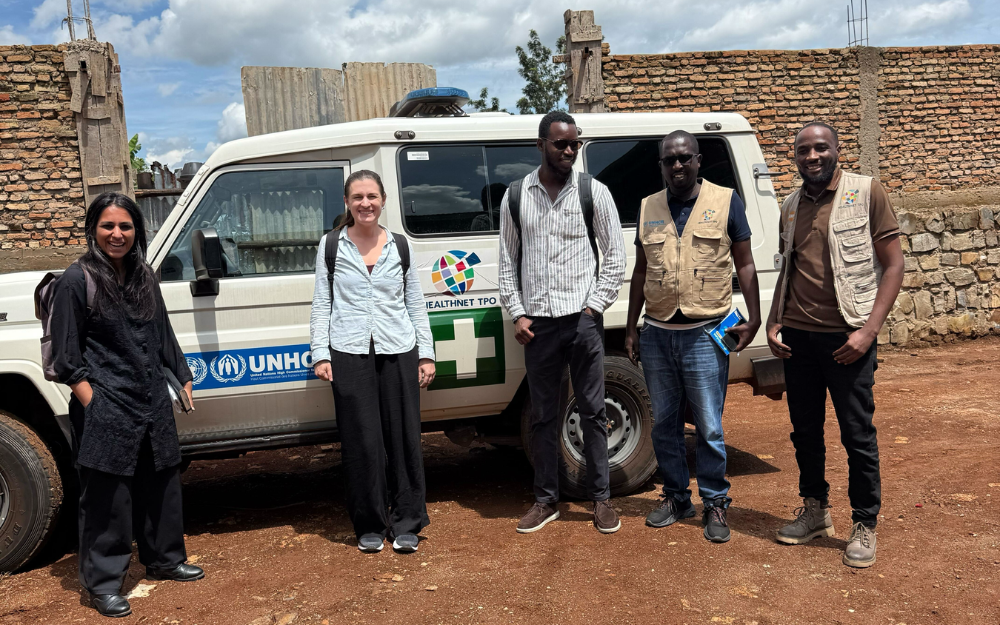
University of Wisconsin Assistant Professor Srishti Sardana (left) has just returned from Burundi, where she works with HealthNet TPO and others to bring mental health care to refugees from the Democratic Republic of Congo.
Srishti Sardana, Ph.D., an assistant professor of psychological and brain sciences at the University of Wisconsin-Milwaukee, collaborates with the Muslim Women’s Coalition on a program to serve refugee and immigrant girls as they adjust to their new lives in Milwaukee. And that’s just one tip of the iceberg.
A quick scan of Dr. Sardana’s professional profile reveals impressive academic credentials. She earned her doctorate degree in clinical psychology in 2023 at Columbia University, where she was selected commencement speaker for the Counseling & Clinical Psychology and Human Development departments at Teacher’s College, Columbia’s graduate school of education and psychology. She was a fellow at Duke University School of Medicine and worked at Johns Hopkins Bloomberg School of Public Health. She had trained as a medical health professional and a corrections officer in India before pursuing clinical psychology in the United States and becoming one of the few South Asian global mental health clinical scientists in the world.
At UWM, Sardana teaches psychology courses for graduate and undergraduate students and operates the mhSEVA Lab (mental health Scientific advancements and Empowerment initiatives of Vulnerable people Anywhere in the world). The lab partners with global agencies, governments and non-profit organizations, including the Muslim Women’s Coalition, to help design, deliver and disseminate mental health services to most-in-need and high-risk populations globally.
Sardana is also an adjunct faculty member at Columbia University and a visiting faculty member at Ashoka University in India, where every summer, she teaches short, intensive classes.
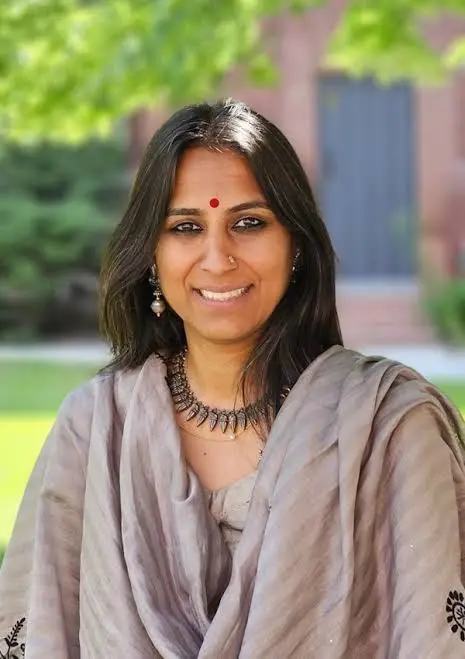
Srishti Meera Sardana, Ph.D., UWM assistant professor, Psychological and Brain Sciences
Her research reveals an interest in serving some of the most marginalized and vulnerable. Titles include: “Counseling interventions for suicide prevention in Africa,” “Factors explaining the will to live among rural and distressed family farmers,” “Mental health needs of sex trafficking survivors in New York City,” “Factors affecting mental health and well-being of asylum seekers and refugees in Germany,” and “Narratives of violence, pathology, and empowerment: Mental health needs assessment of home-based female sex workers in rural India.”
Columbia University Teacher’s College Magazine featured her in an article headlined Human Rights Focused Alumni You Should Know. It said her “dedication and passion” for her work “stems from a formative experience in her teens, living on the streets with sex workers (in India) and tutoring their children as part of volunteer projects.” Since then, her research has aimed “to build culturally appropriate and contextually valid mental health interventions for at-risk populations, including refugees, displaced and stateless people, genocide and trafficking survivors and sex workers.” While a graduate student, Sardana conducted the first systematic mental health evaluation of sex workers in India.
In another article about her work, Sardana’s mentor at Columbia University, Lena Verdeli, Ph.D., associate professor of psychology and education, said, “Srishti brings iron self-discipline, high intelligence, creativity, knowledge in psychosocial support, and a visceral understanding of different cultures. She is our rock.”
On her UWM bio page, Sardana wrote:
I seek to answer two questions in my research, clinical practice and teaching:
1) How do we build systems of care that meet the increasing mental health treatment gap in low- and middle-income countries as well as in high income countries with low mental health resources, and
2) To explore who, what, where, when and how do we collaborate and synergize in domestic and international regions to learn together and build efficient capacity in adaptation and delivery of evidence-based mental health and psychotherapy resources around the world.
Working to improve global mental health
When I contacted Dr. Sardana last week, she was just back from Burundi. “It’s a forgotten humanitarian emergency,” she said. “It’s at the edge of the Democratic Republic of Congo, where the DRC has been at war for a while.
“The DRC is also declared to be the most unsafe country in the world for women and girls because women and girls have been used as weapons of war. We don’t see that very often now. It used to be an old strategy of battle, but in the Congo, it’s very alive. The DRC is up on the mountains and right at the foothills of the mountains is Burundi, which is a small Francophone African country.
“One of the things we were doing was to establish the first coordinated effort for the mental health response for refugees who are coming in from Congo and resettling in Burundi quite rapidly. Burundi, being a low-income country, among the poorest countries in the world, has very little for its own people, and then to absorb about 200,000 refugees in a matter of a year has created a significant resource constraint.”
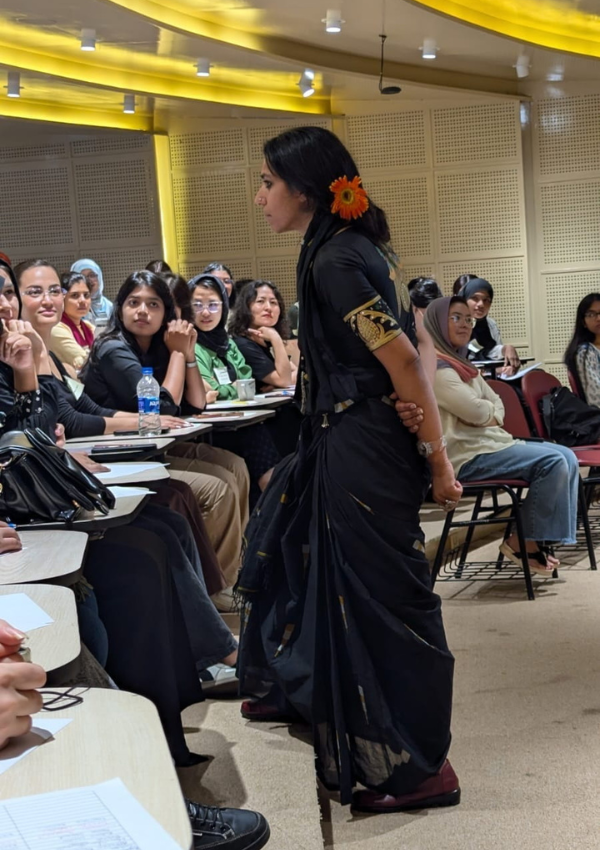
Dr. Sardana teaches graduate and undergraduate students at the University of Wisconsin-Milwaukee.
In her UWM lab, Sardana focuses on “providing evidence-based, mental health care for vulnerable people anywhere in the world.” As she explained, vulnerability is measured in different scales. It could be at the individual level, “like I’m being vulnerable in talking with you right now.” It could also be at the country level, “where people have a home one day and, overnight, they are forced to flee.” Also vulnerable are “rural elders living in Wisconsin without much social support and limited mobility, living with diseases and without proper access to care when they need it.
“I’m a global mental health scientist. I always say the globe includes the U.S. We often forget that. My work with the Muslim Women’s Coalition is testimony to focusing on global health in my own backyard.
“I’m best described as a humanitarian scientist or a humanitarian psychologist. My strengths, what I have done for 20 years now, since I was very young, is that I go where people are enduring conflict.
“Sometimes conflict is at a smaller level—domestic violence within our homes, like partner violence and violence against children. Violence and conflict also can be suicide and homicide. And then there’s violence at the country level where there’s displacement and war zones.”
Finding the opportunity that fits
Sardana was born and raised in a very small village in India. “It was an innocent and isolated part of the world. I didn’t learn to speak English until I was in sixth grade,” she recalled. “I grew up with my grandparents. When I ultimately moved to the city, there were very few options for girls. You would get married off pretty quickly. Child rearing and homemaking were very prominent roles.
“If you were lucky—you were good in your academics and you had a little bit of support at home—then you had to become a doctor or an engineer or an attorney. It was pretty fixed.”
Sardana studied medicine in India but became disenchanted with it when she noticed poor people could not access the best medical care. “I witnessed a type of poverty where the worth of human life is minimal. It really shaped my early thinking about what to do with myself.”
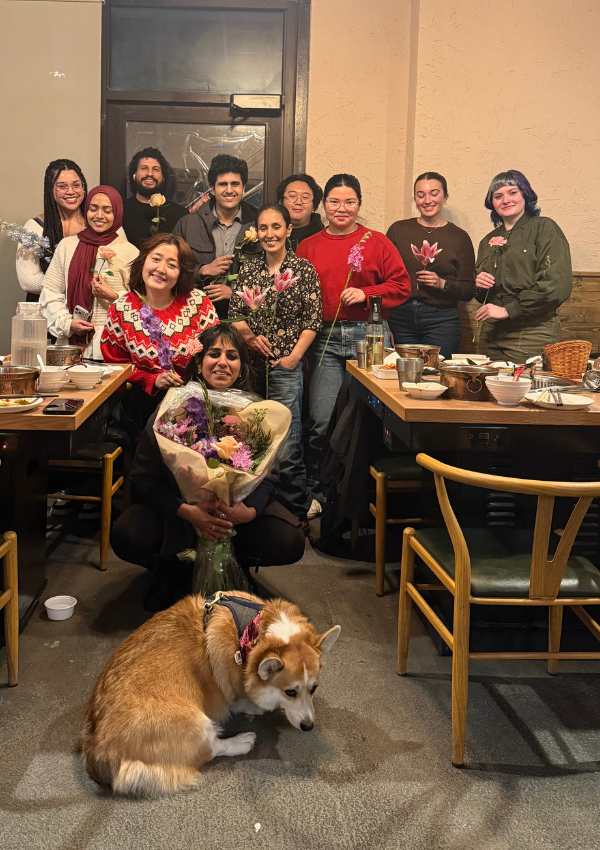
Dr. Sardana with the first cohort of mhSEVA Lab scholars
She won a scholarship and landed in New York at Columbia University, home of a World Health Organization-sponsored global health training program. “It’s one of the few universities in the U.S. where there is a concerted effort to train doctors, psychologists and other health professionals in doing global health work,” she explained. She enrolled in a clinical psychology program that aligned with her values.
Sardana trained with Verdeli, “a living legend in global health work,” she said. “She was among the first people to go to Geneva, to the WHO, and make a strong case for bringing evidence-based mental health care to low- and middle-income countries around the world. She’s also the co-developer of a highly cost-effective psychotherapy called ‘interpersonal psychotherapy, or IPT.’ The main tenet of IPT is that distress and disease are relational; when communities fall apart, there’s disease. That resonated with me and what I had seen in my previous life.”
From there, Sardana had the opportunity to train with some of the best global health institutes, including Columbia, Hopkins, Harvard and Duke Universities. Her work took her to Southeast Asia, the Middle East and North Africa. “Wherever there was war, I had the opportunity to train in caring for people in humanitarian emergencies,” she said. “I knew the closer I am to the people on the ground, the more useful I am.”
As she considered her next career move, she noticed “the trends of the refugee movements from North Africa and the Middle East to the U.S. and the opioid crisis and the homelessness crisis in the U.S. at the time, the people living in chronic poverty, the prevalence of domestic violence. I realized the same poverty and desperation across the world exists here at home, that it’s part of the global experience.
“I also noticed that even in the U.S., many people would want the opportunity for access to education. I started looking for universities that had some commitment to bringing students like me to a university setting, at least opening the first door. I saw the Midwest has been absorbing the highest number of Middle Eastern and North African refugees in the last decade, so I started looking here.”
When Sardana discovered at UWM over 65% of the students are first generation university students—refugees, immigrants and commuters, she decided, “this is the kind of student pool I want to teach. I have a dad in my lab who walks to campus and brings his son to lab meetings. These students are close to communities I deeply care about.”
She also found UWM’s Department of Psychological and Brain Sciences, with its combined psychology and neuroscience department, “has been doing work in disparity and poverty for years. They are very prolific. I met colleagues with values very similar to mine, and I loved Milwaukee. I felt I had found my home.”
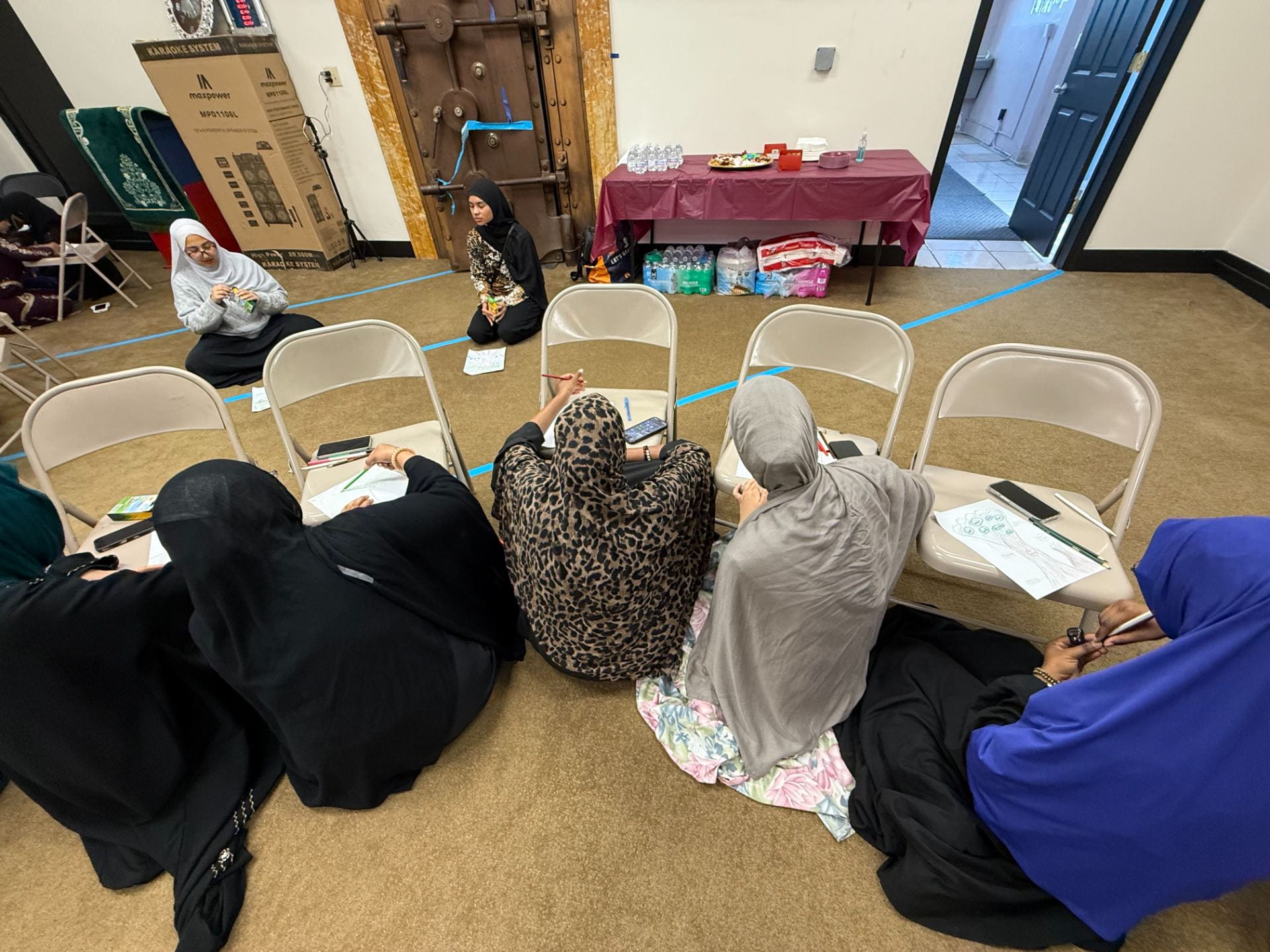
Dr. Sardana’s team held its first workshop for Rohingya adolescent girls with the Muslim Women’s Coalition in 2025.
As she considered her next career move, she noticed “the trends of the refugee movements from North Africa and the Middle East to the U.S., the opioid crisis and the homelessness crisis in the U.S. at the time, the people living in chronic poverty and the prevalence of domestic violence. I realized the same poverty and desperation across the world exists here at home. It’s part of the global experience.
“I also noticed that even in the U.S., many people would want the opportunity for access to education. I started looking for universities that had some commitment to bringing students like me to a university setting, at least opening the first door. I saw the Midwest has been absorbing the highest number of Middle Eastern and North African refugees in the last decade, so I started looking here.”
When Sardana discovered that at UWM over 65% of the students are first-generation university students—refugees, immigrants and commuters, she decided, “This is the kind of student pool I want to teach. I have a dad in my lab who walks to campus and brings his son to lab meetings. These students are close to communities I deeply care about.”
She also found UWM’s Department of Psychological and Brain Sciences, with its combined psychology and neuroscience department, “has been doing work in disparity and poverty for years. They are very prolific. I met colleagues with values very similar to mine, and I loved Milwaukee. I felt I had found my home.”
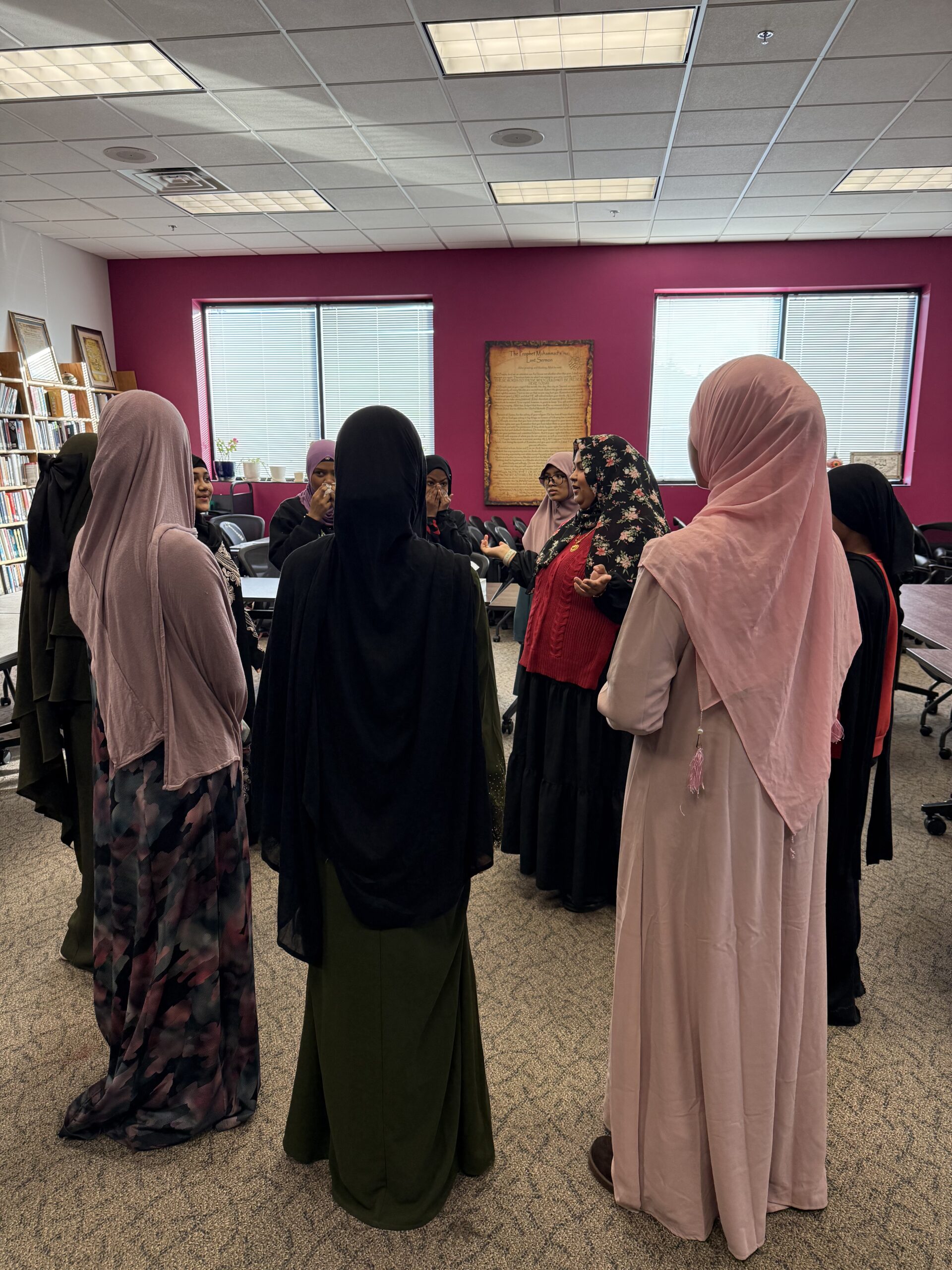
2026 Bloom Beyond Borders workshop with Muslim Women’s Coalition
Providing opportunities for others
In interviews with Dr. Sardana’s graduate and undergraduate students, WMJ heard appreciation for the many opportunities she opened up for them, the exceptional technical training she provided and, most of all, the personal interest she holds in the success and wellbeing of each of them individually.
Angele Paredes Montero, a first-year clinical psychology Ph.D. student, was completing her master’s degree at Columbia University when she first met Dr. Sardana. “She was the shining star doctoral student in the final stage of her program before leaving for an internship,” she recalled in an email to WMJ. “Even though I only worked under her mentorship for about two years, she trained me with remarkable rigor and exceptionally high standards. More importantly, she planted the seed that I belonged at the academic table.
“Dr. Sardana is a woman with a mission and will find a way, or a million ways, to get that mission accomplished,” she wrote. “She holds herself and her work to extraordinarily high standards, the kind that would feel unrealistic for almost anyone, and yet she consistently overdelivers without a single complaint.
“She challenges people to grow into levels that can sometimes feel scary or even unnecessary. With her, you are expected to pursue excellence, both personally and professionally. All her projects are trying to develop scientific knowledge with the people, not only within academic circles.”
Melina Hollis, senior from Waukesha double majoring in psychology and sociology, said working with Dr. Sardana has helped confirm her career path. “I knew I wanted to continue working in the field of psychology but I wasn’t sure what that would look like. I’ve decided to pursue clinical psychology. Seeing Dr. Sardana facilitate the Bloom Beyond Borders session was a big part of that. The narrative group therapy I observed doesn’t look like therapy. It just feels like an environment of care and connection.
“One of the most valuable things I’ve gotten from Dr. Sardana’s mentorship is experience in a multitude of contexts. I’ve had so many opportunities to do a variety of work.
“The world of academia can be extremely intimidating,” she continued. “The encouragement and the healthy environment she created makes me feel I have a place and I’m contributing meaningfully to it. It feels like it would be impossible for me not to flourish.”
Rafia Mahboob, a sophomore in public health and is also working on a certificate in healthcare informatics, also works in Dr. Sardana’s lab. Mahboob grew up in Dhaka, Bangladesh and came to the U.S. to start her bachelor’s degree in January 2025.
In her second semester, she contacted the UWM Office of Undergraduate Research and they suggested she reach out to Dr. Sardana. “Our interest in global health aligned,” she said. She began as a volunteer in Dr. Sardana’s lab. In Spring Semester 2026, Mahboob received the SURF (Support for Undergraduate Research Fellows).
As a research assistant, she is working on two projects: 1) A research review and data analysis on the mental health needs of low- and middle-income countries and 2) Bloom Beyond Borders with MWC.
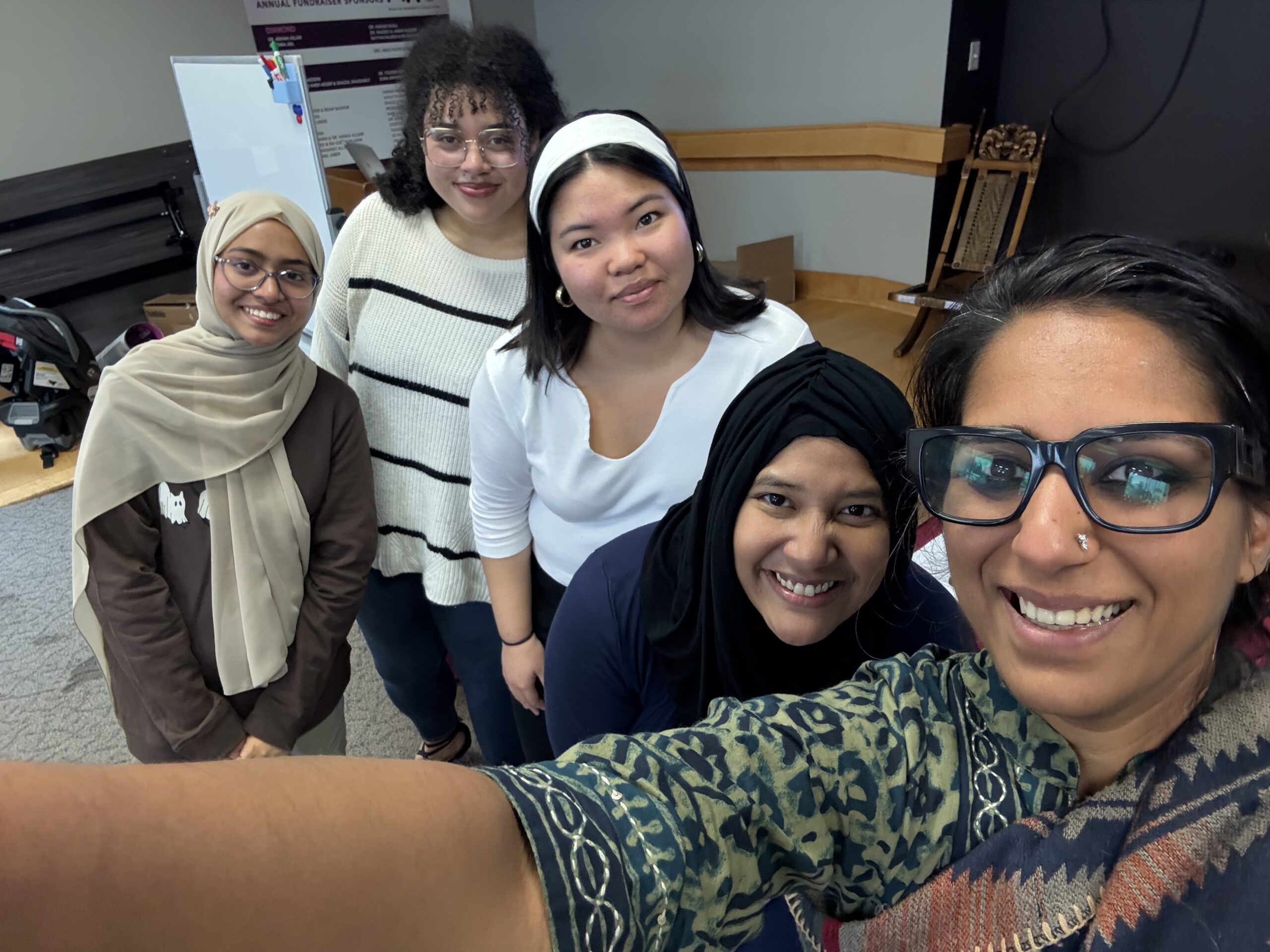
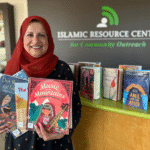
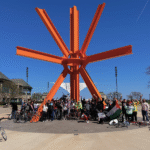
A group photo with Dr. Sardana (far right) at the 2026 Bloom Beyond Borders at the Islamic Resource Center in Greenfield
“I’m learning a lot—how to search different databases, how to screen articles, do data analysis, a lot of technical skills,” Mahboob said. “We also meet with Dr. Sardana and our teammates every week and talk. We learn a lot from each other. In the process, I’m learning professional skills, like how to communicate with team members and work in a professional environment.
“This is my first time working in research and Dr. Sardana is my first research mentor. I’ve learned how to do research posters, submit them and present them. We did one as a team for a conference at Duke University and I did one individually for the UWM Research Symposium.
“Dr. Sardana encouraged me every time, telling me, ‘You’ve got this.’ When I had to do my first presentation, I was really hesitant. She helped me a lot and so did all the lab members.
“She understands I have only been here a year, that this is a migration period for me. She lets me know I can share my struggles with her. She asks us if we are taking time off, getting rest. She cares about our wellbeing.”
When Mahboob went home to Bangladesh in January, Dr. Sardana contacted the Asian University of Women and arranged for Mahboob to visit the center there that collaborated with UWM on research, a project Mahboob had worked on her first semester. “It was a great opportunity to visit with them and meet the students in person,” she said.
These academic experiences are great opportunities for her, Mahboob said. “With Dr. Sardana, it’s not just about working for her. I know I’m doing something impactful.”