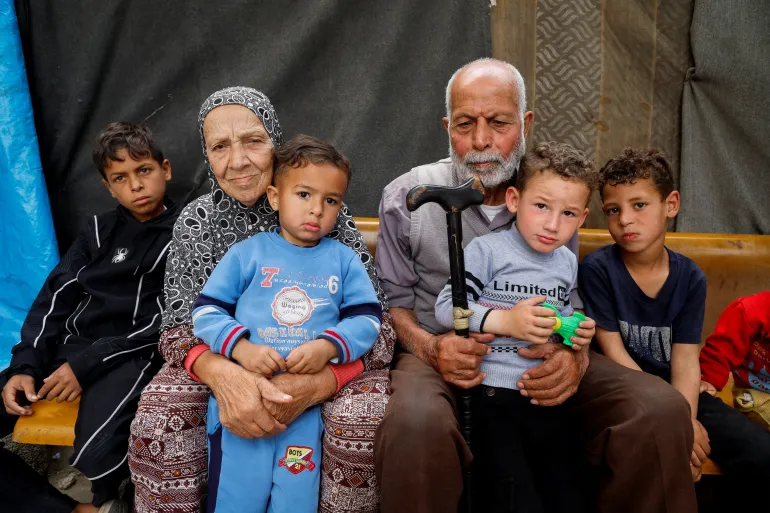
Displaced Palestinian Mustafa Al-Jazzar, 83, who fled his hometown during the 1948 Nakba, sits with his family and grandchildren at a camp for displaced people in Khan Younis in the southern Gaza Strip. [Hasseb Al Wazeer/Reuters]
Millions of Palestinians are marking the 78th anniversary of the Nakba – Arabic for “catastrophe” – a term that refers to the mass expulsion and flight of some 750,000 Palestinians from their homes during the 1948 war surrounding the creation of Israel.
Friday’s anniversary is the third Nakba commemoration since Israel’s genocidal war on Gaza began, and comes as more than two million people in the besieged enclave remain displaced and confined to a fraction of their territory.
More than six months after an October ceasefire, Gaza’s population is crammed into less than half of the 40km (25-mile) strip along the Mediterranean coast, hemmed in by an Israeli-controlled zone that encompasses the rest of the territory.
The Nakba refers to the systematic dispossession and displacement of Palestinians between 1947 and 1949, when Zionist paramilitary groups captured towns and villages in what became the state of Israel.
Historians estimate that about 750,000 Palestinians – roughly one-third of the population at the time – were forced from their homes, and more than 400 villages and urban neighbourhoods were depopulated or destroyed to make way for new Jewish immigrants.
Hundreds of thousands of those expelled and their descendants now live in refugee camps in the occupied West Bank, Gaza and across the region, including Jordan, Lebanon and Syria. Many still preserve keys, deeds and documents to homes in what is today Israel, passing them down through generations as symbols of their displacement and of a future return.
Palestinian refugees continue to demand the right to return to the towns and villages from which they or their relatives were forced out.
This “right of return”, enshrined in UN General Assembly Resolution 194, remains one of the core unresolved issues in the long-stalled negotiations between Israel and the Palestinians.
For many Palestinians, the ongoing war in Gaza and renewed displacement across the enclave underscore their belief that the Nakba is not a single historical event but a continuing process of dispossession.
As they mark the 78th anniversary, activists and survivors say their commemoration is both an act of remembrance and a reassertion of their demand for justice, return and self-determination.
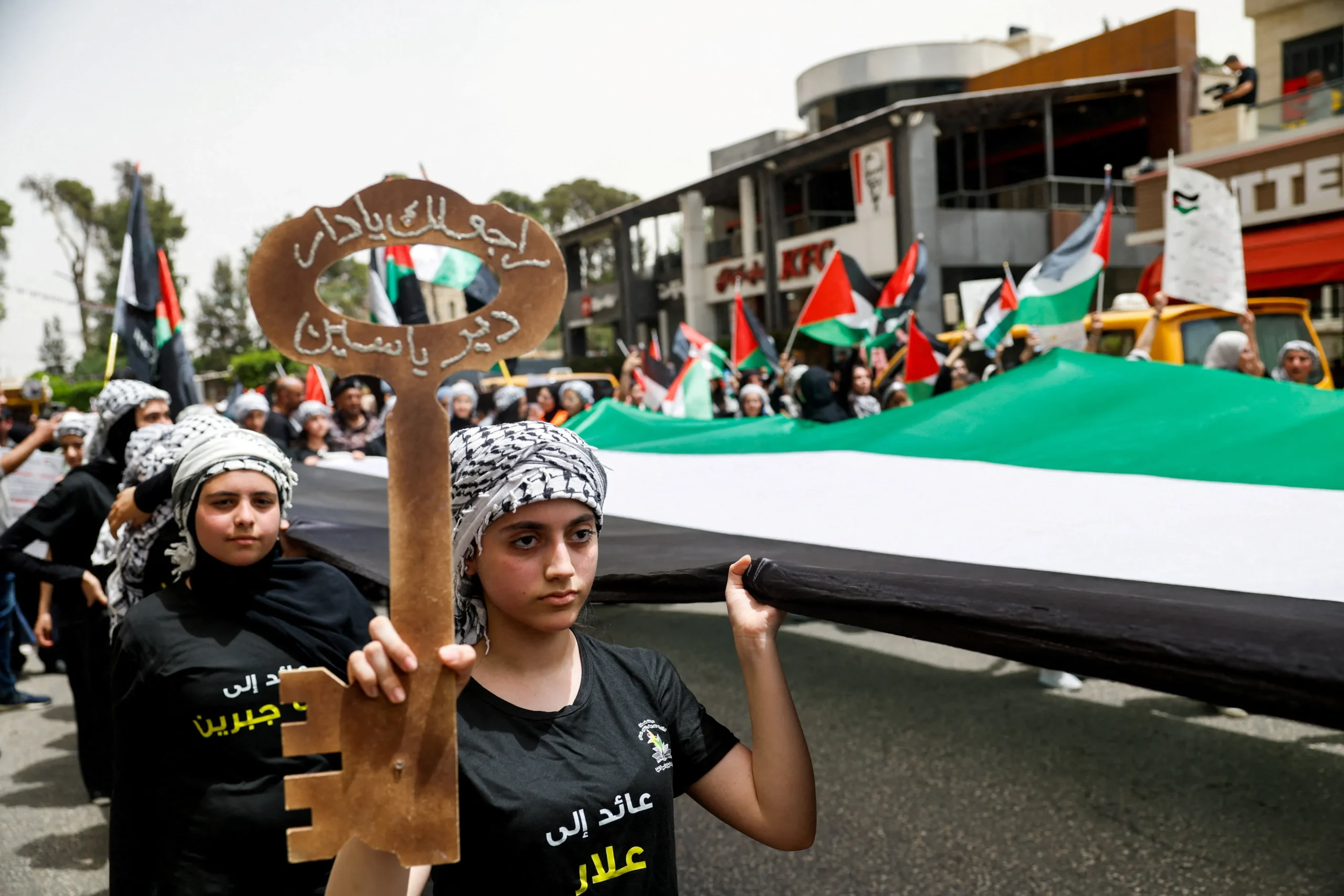
Palestinians carry a giant flag and symbolic representations of keys to homes that people were forced to leave as they rally to mark the 78th anniversary of the Nakba, in Ramallah, in the Israeli-occupied West Bank. [Mohammed Torokman/Reuters]
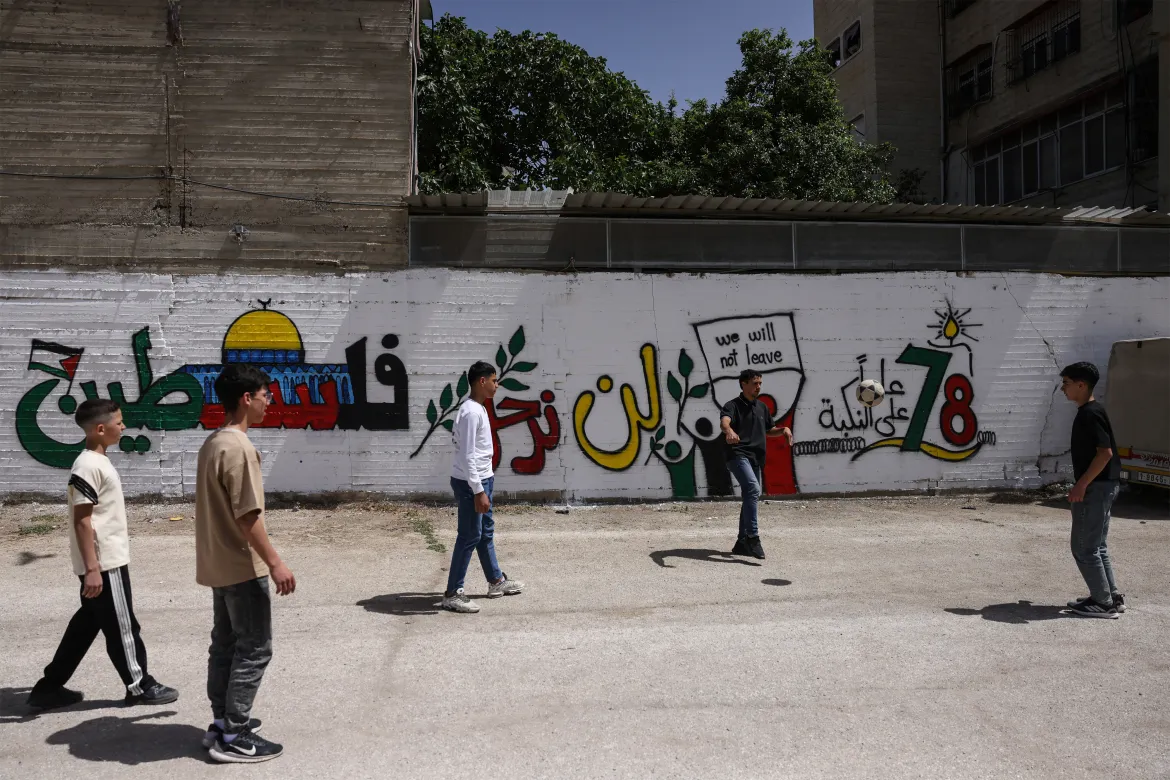
Palestinian youths play football in front of a mural marking the anniversary, in the Israeli-occupied West Bank city of Hebron. [Hazem Bader/AFP]
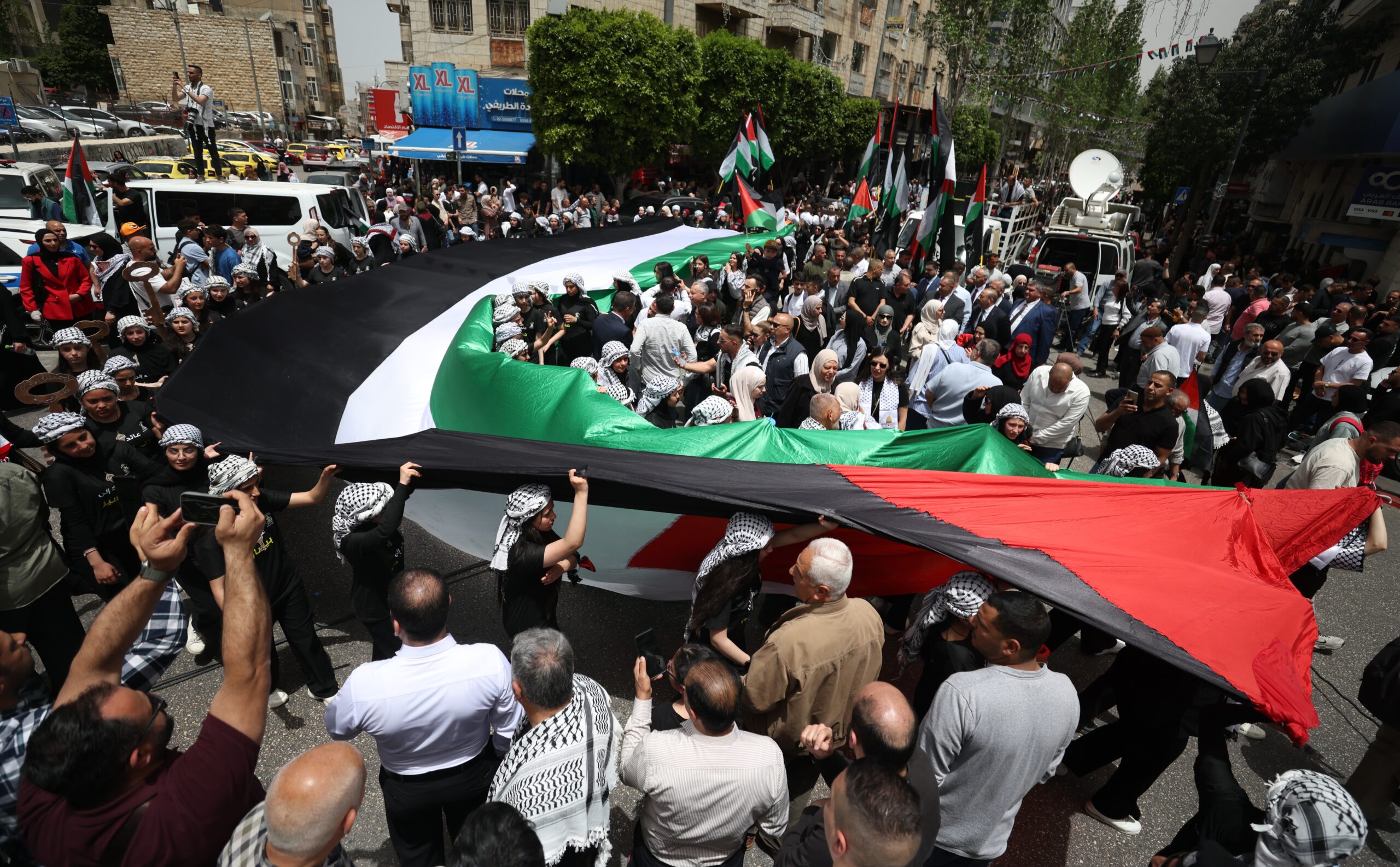
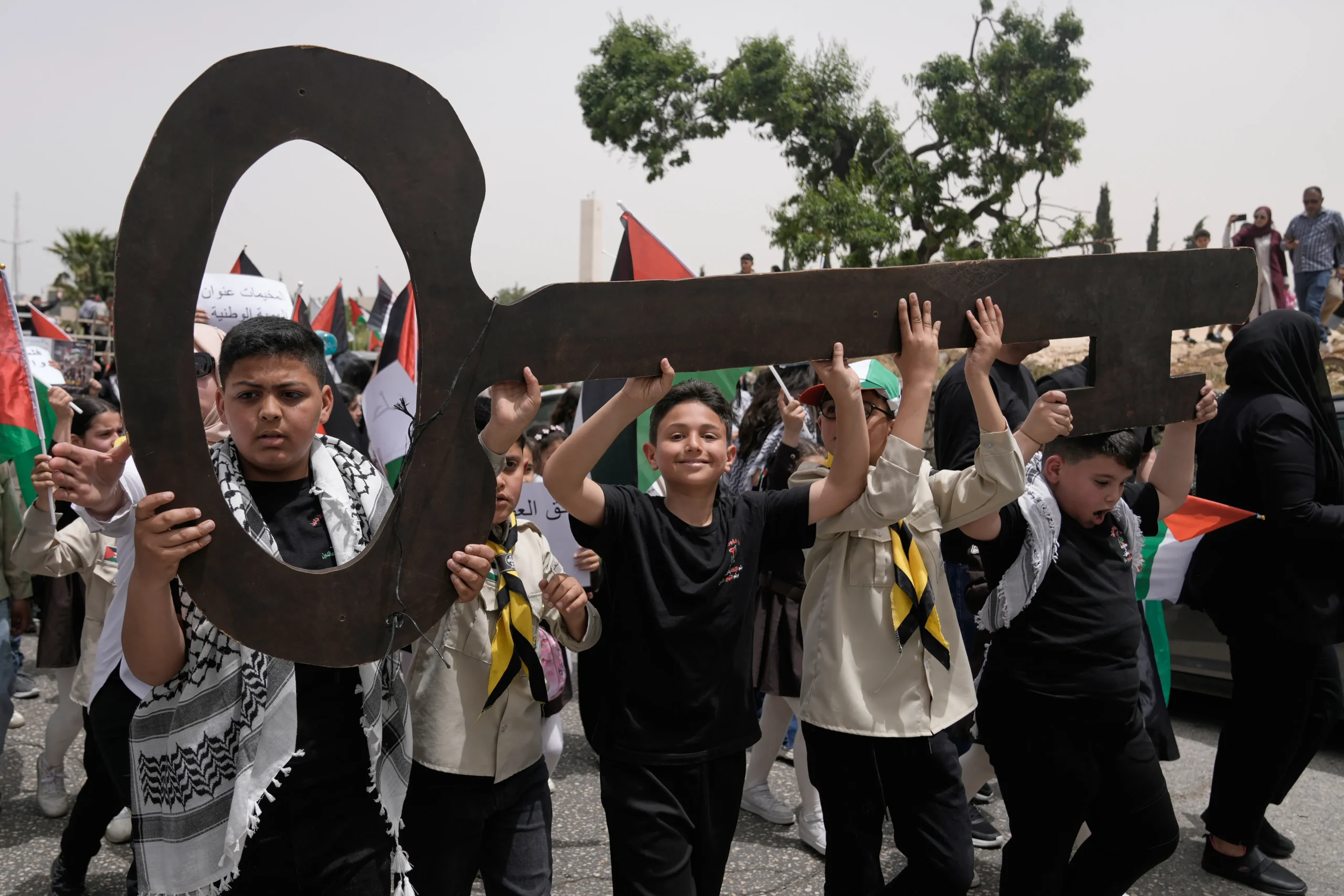
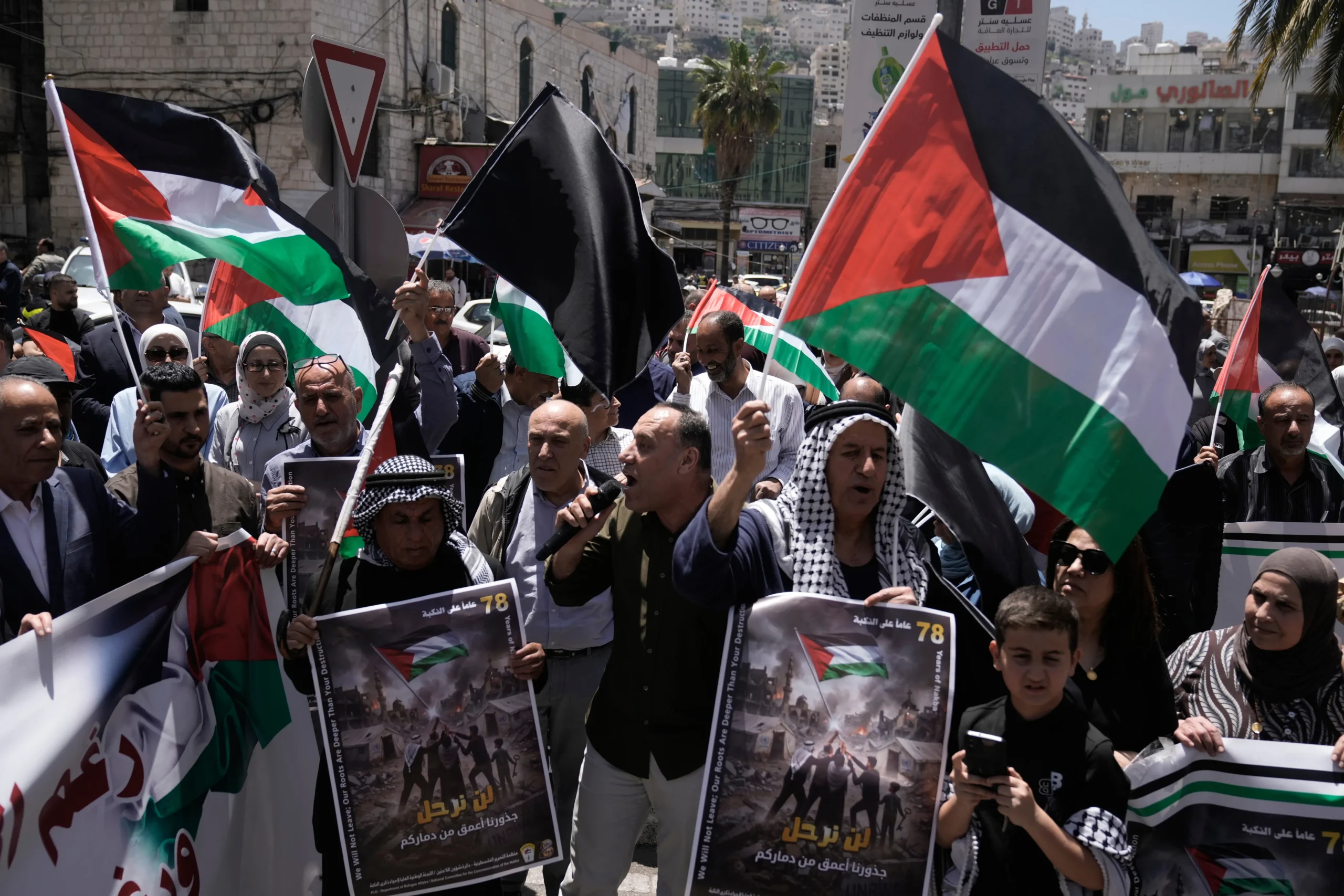
Between 1947 and 1949, Zionist military forces attacked major Palestinian cities and destroyed some 530 villages. About 15,000 Palestinians were killed in a series of mass atrocities, including dozens of massacres. [Majdi Mohammad/AP Photo]
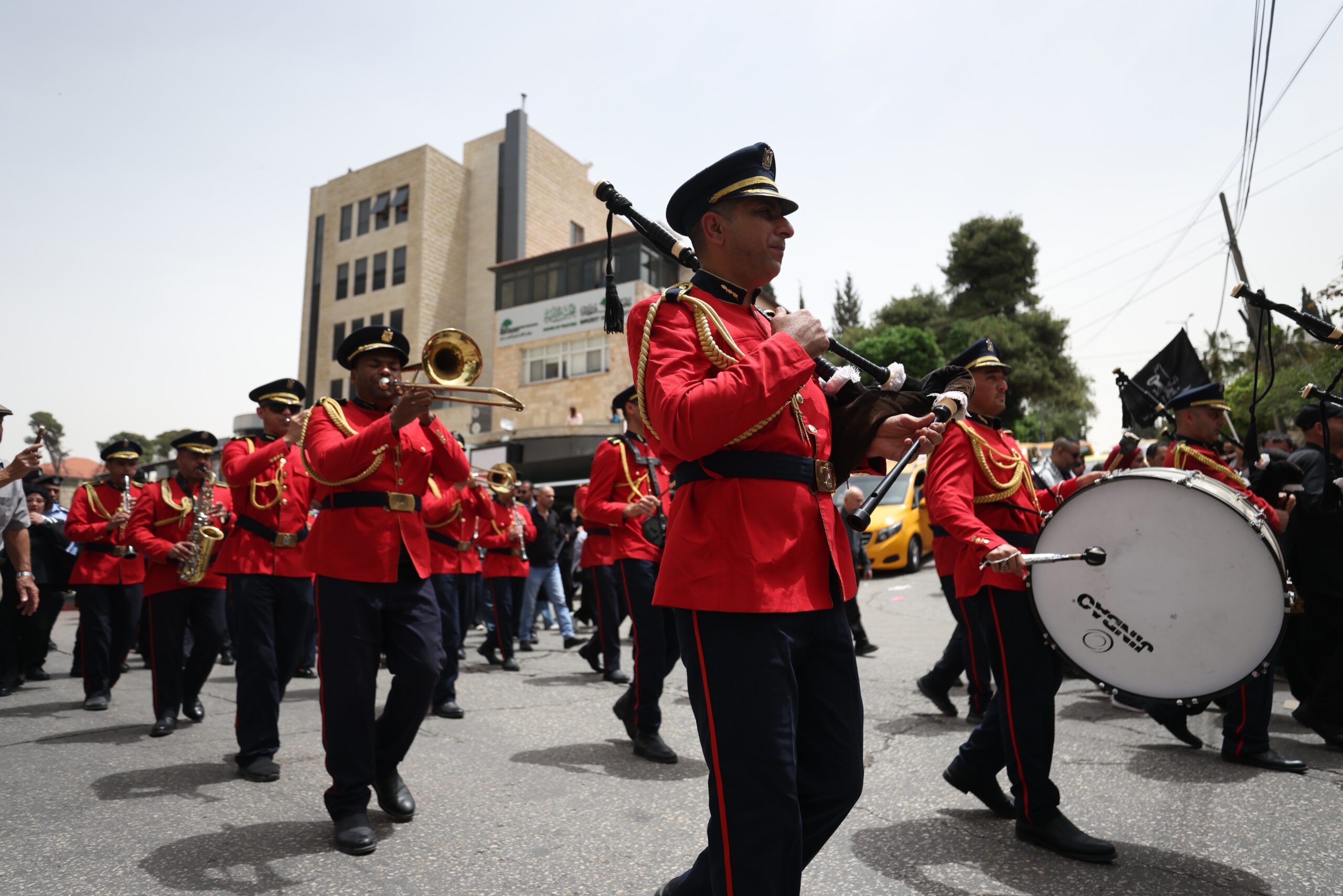
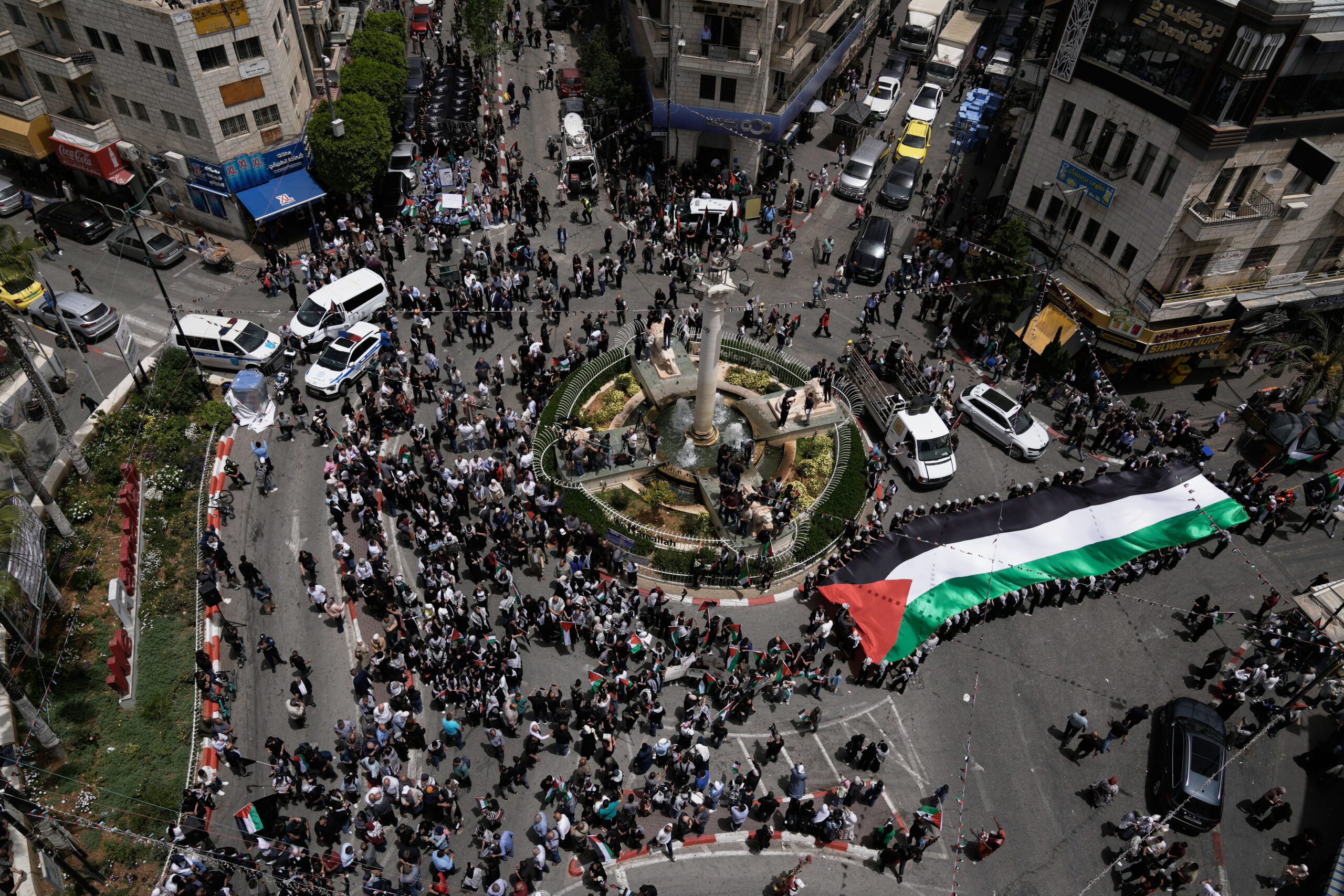
Demonstrators carry a large Palestinian flag during a rally in the West Bank city of Ramallah. [Majdi Mohammed/AP Photo]
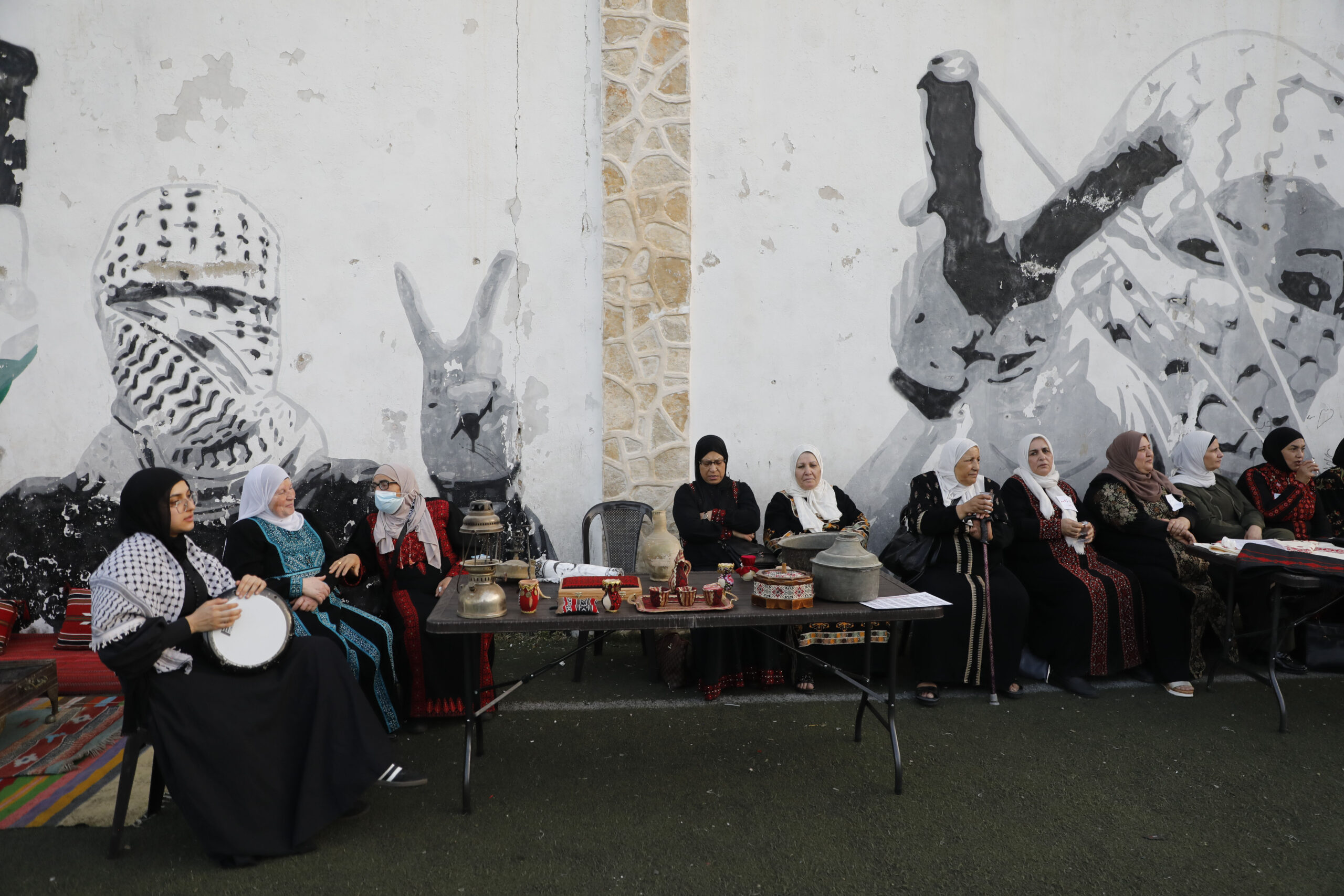
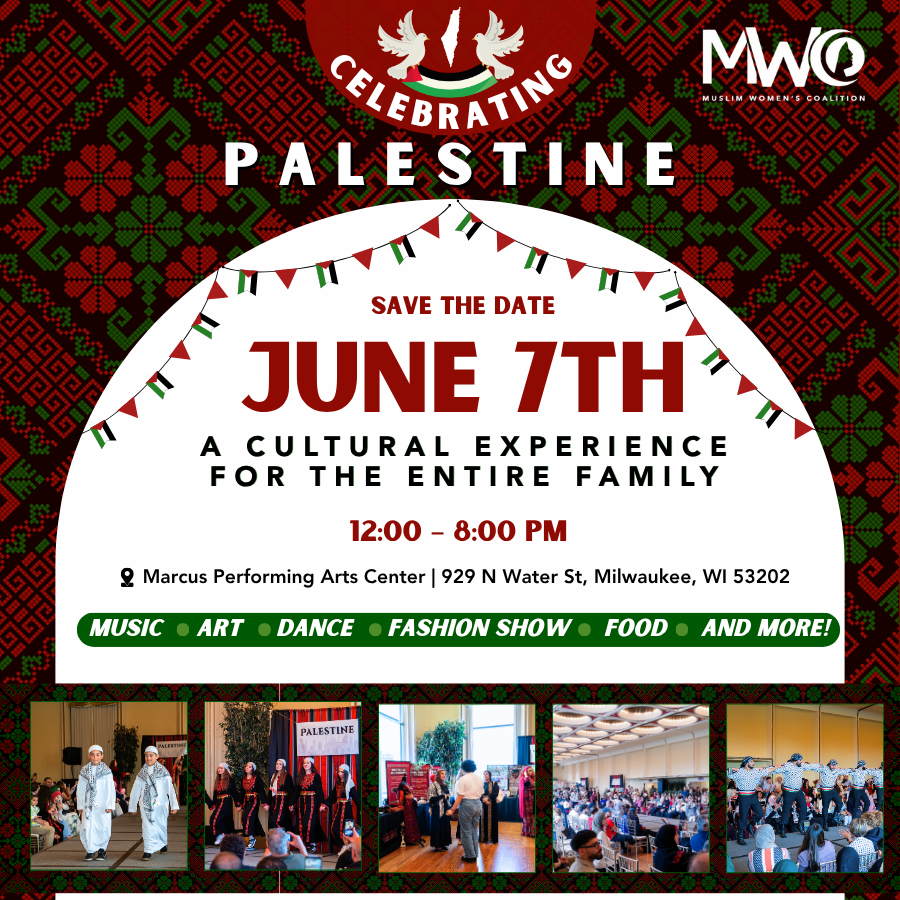
Palestinians take part in traditional shows, artistic performances and folk dances during an event marking the 78th anniversary of the Nakba in Bethlehem, West Bank. [Mamoun Wazwaz/Anadolu/Getty Images]
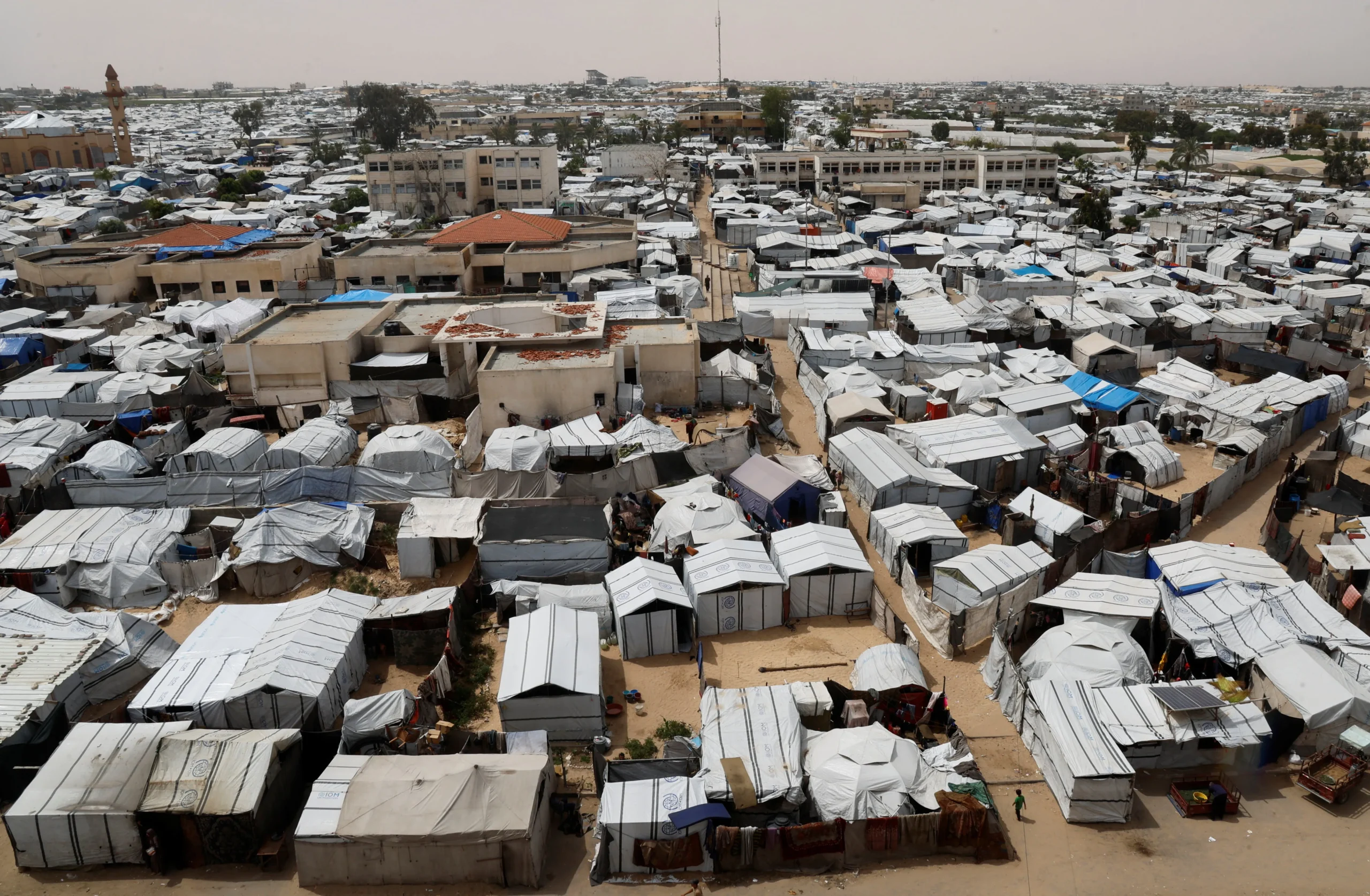
Displaced Palestinians shelter at a tent camp in Khan Younis in the southern Gaza Strip. More than 70 percent of Gaza’s residents are refugees, with about 1.5 million living in eight crowded camps across the territory. [Hasseb Al Wazeer/Reuters]
By Al Jazeera Staff, AP and Reuters