The state’s refugee community, local resettlement agencies and partner organizations were invited to the governor’s executive residence last week to celebrate the contributions of refugees.
The United Nations designated June “World Refugee Awareness Month,” a time to honor the resilience, courage and contributions of the tens of millions of displaced people around the world.
Yet, in 2026, big challenges face refugees and those who support their resettlement, including a near-total shutdown of refugee admissions, drastic cuts in federal funding for resettlement, and reduced aid worldwide.
The UN High Commissioner for Refugees recently warned that resettlement opportunities are shrinking at a time when humanitarian needs remain severe and millions of refugees continue to face uncertainty.
“In Wisconsin, international immigration has dropped sharply since President Donald Trump’s return to office, mirroring a national slowdown as visa issuances and border crossings decline,” Wisconsin Watch reported in March. At the same time, funding for refugee resettlement has declined sharply, resulting in layoffs in agencies and organizations serving refugees.
And refugees who are already here, waiting for approval of immigration status, and even those who have secured permanent residency status, feel less secure this year because of Immigration and Customs Enforcement operations, say those who work with refugee communities. They wait with anxiety about the outcomes of their immigration applications and are afraid to attend large gatherings or be out in public, fearful they may be picked up by ICE.
Even in these uncertain times, many in Wisconsin celebrate the state’s refugee community and eagerly develop new ways to support them, despite the obstacles.
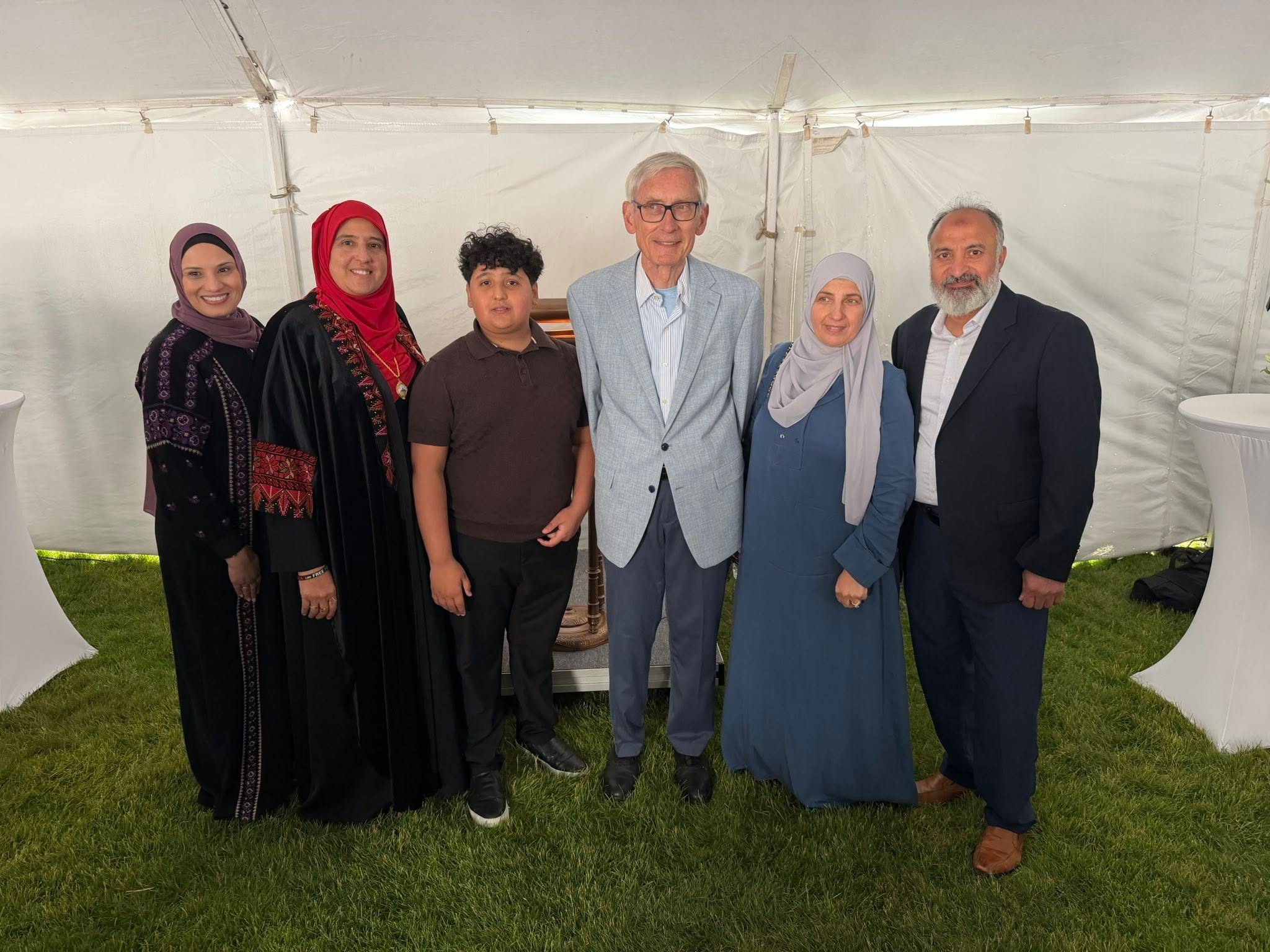
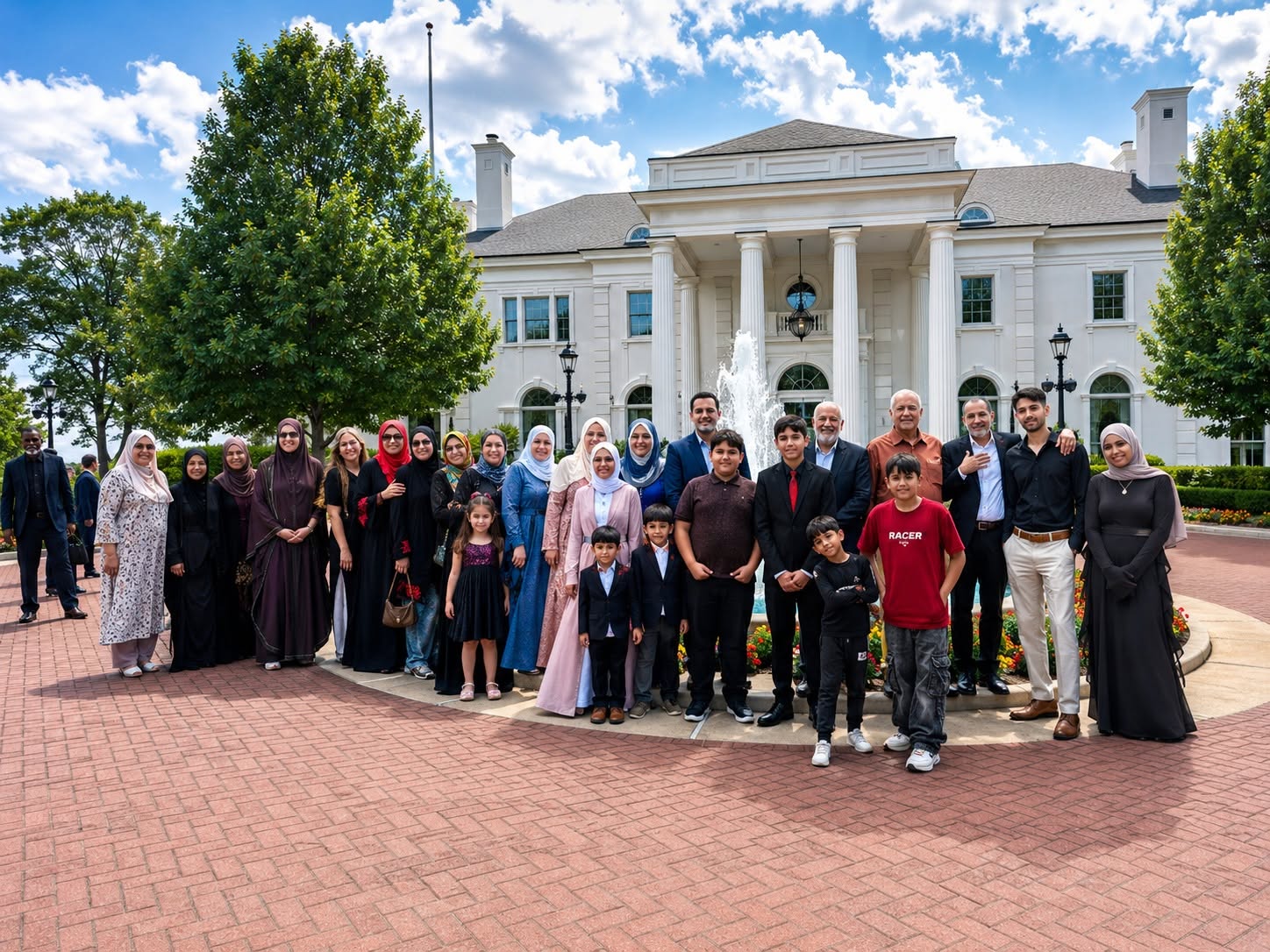
Hanan Relief Group celebrated the refugee community with Gov. Tony Evers (center), including interim director Sausan Naji, community outreach and logistics coordinator Helima Aichoune, her son Siraj Aichoune, board member Maysoun Ahmad and her husband Raed Ahmad.
Celebrating refugees’ positive impacts on Wisconsin
The success of Wisconsin’s refugee community is something to celebrate, Gov. Tony Evers told a group gathered at the executive residence in Madison last week. The governor and First Lady Kathy Evers hosted members of the state’s refugee community, local resettlement agencies and partner organizations to celebrate refugees’ contributions to Wisconsin’s diversity, culture and economy.
A population decline in the state has been thwarted largely because Wisconsin’s state government, along with many private organizations, works to create a welcoming environment for refugees and other immigrants. “International migration accounted for nearly half of Wisconsin’s overall population growth between fiscal years 2024 and 2025, and a similar share over the past decade,” according to an analysis by Wisconsin Watch, published in March.
The Wisconsin Department of Children and Families, in collaboration with other organizations, held World Refugee Day (June 20) celebrations around the state. They included: HOME’s World Refugee Day Celebration at Lynden Sculpture Garden in River Hills on Saturday, Open Doors for Refugees at Elver Park in Madison on Sunday and the World Refugee Day Event at the Milwaukee City Hall on Monday.
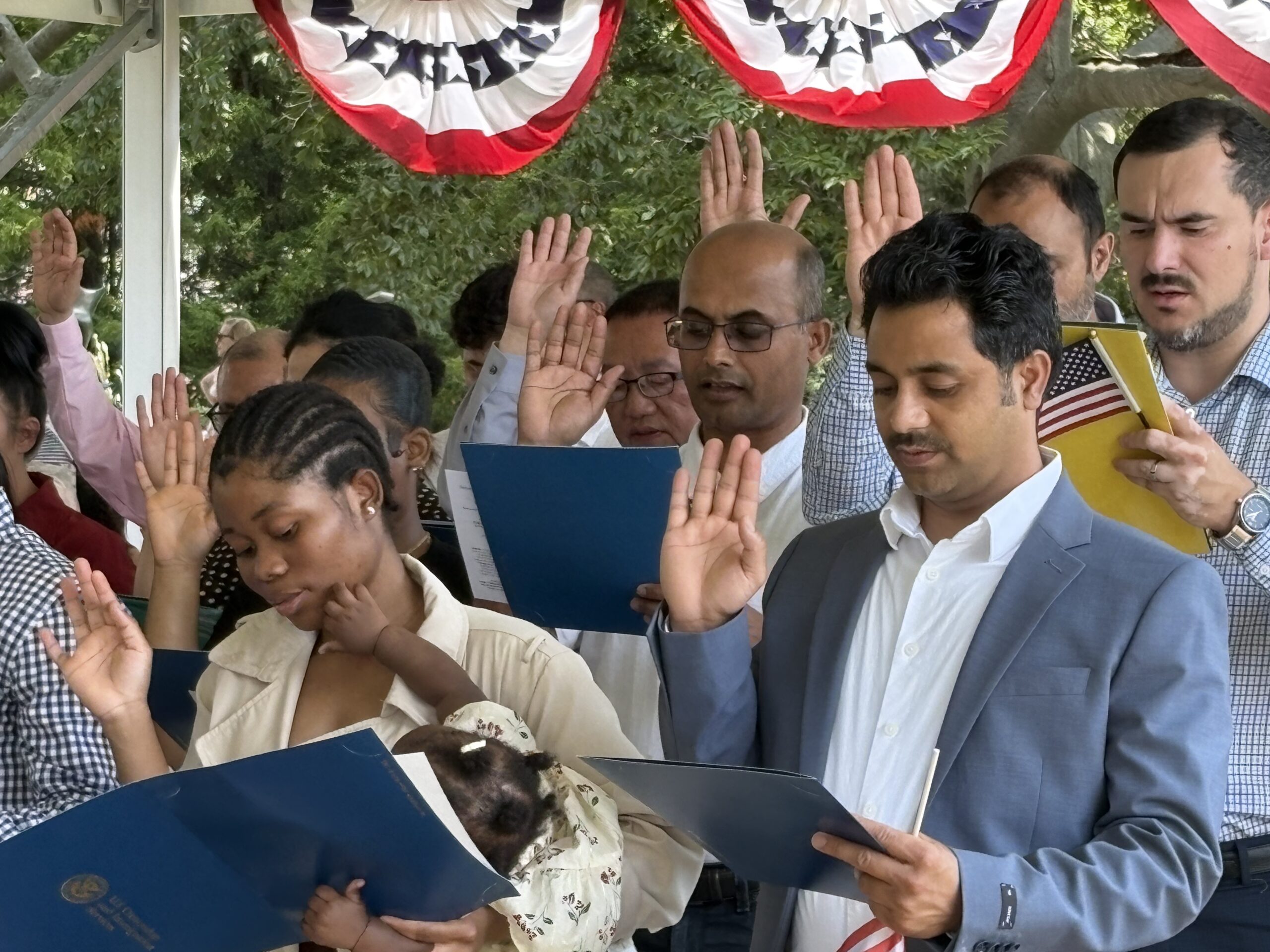
Photo by Cherrie Hanson
Fifty two new citizens were sworn in at a ceremony at Lynden Sculpture Garden in River Hills.
“For generations, Wisconsin has proudly welcomed folks and families from all over the globe and found ways to help families build a new life and make a home for themselves here,” Gov. Evers said Thursday in a written statement to the Wisconsin Muslim Journal. “Hosting the annual celebration of World Refugee Day has been an honor, and I am so proud to celebrate the collective work in making our state a more welcoming, inclusive place for all. This work is invaluable, and we’re a better state because of it.
“We know that Wisconsin’s vast and vibrant refugee community has shown immense courage, sacrifice and resilience in their journey to be here with us—and I believe we, as a state and as Wisconsinites, have a responsibility to make Wisconsin a more welcoming and inclusive place for anyone and everyone who wants to call our state home, and that includes calling out hate, xenophobia and bigotry when we see it.
“While some leaders in Washington, D.C. have used their platforms and power to do the opposite, I promise to continue supporting the success of our refugee community and the dedicated individuals who work to support folks and families every day—I will never stop keeping that promise.”
Joy against the odds
A joyful celebration of immigrant cultures, with music, art, storytelling and a citizenship swearing-in ceremony, took place at the eighth annual World Refugee Day celebration Saturday at Lynden Sculpture Garden in River Hills.
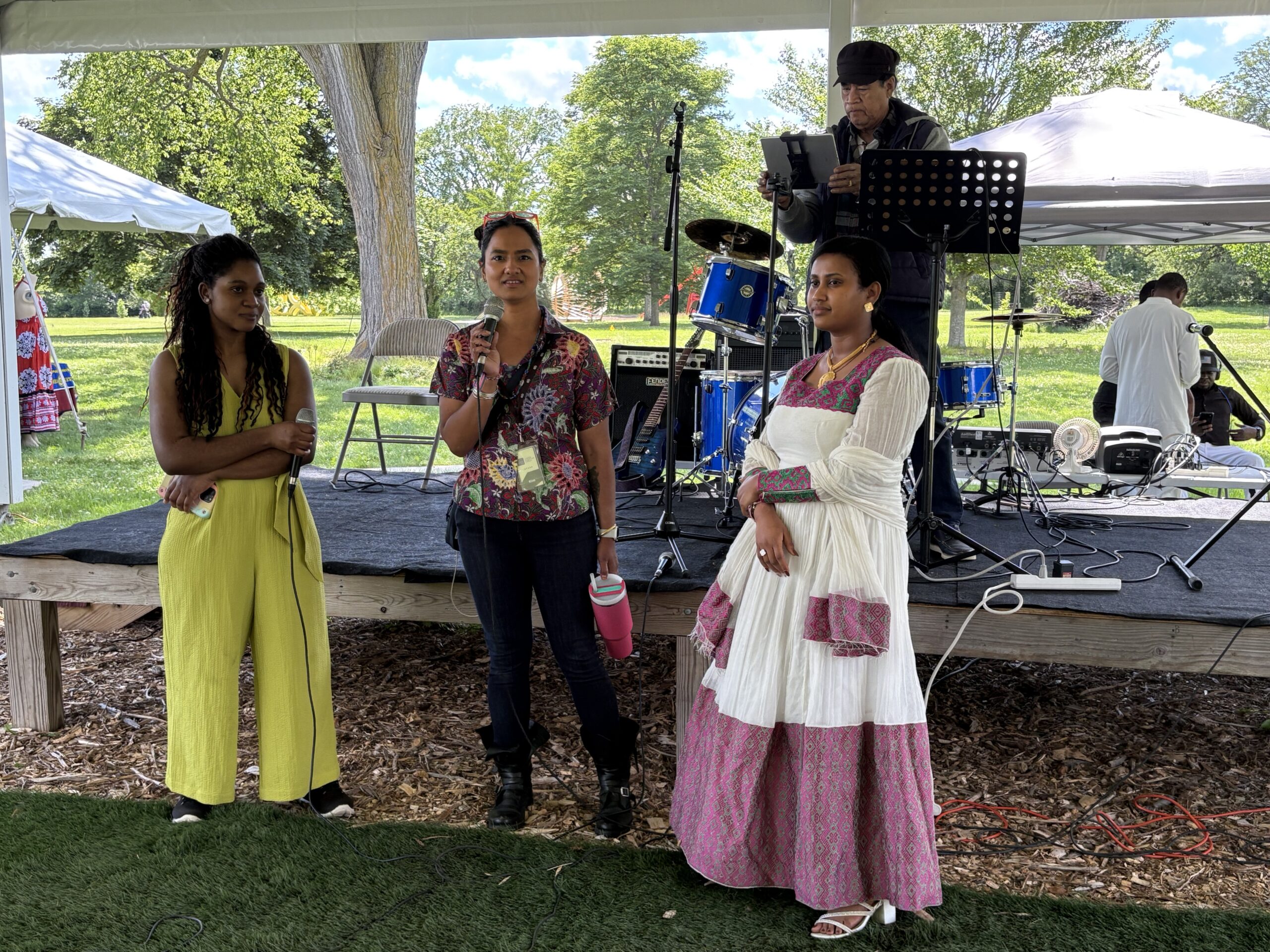
Photo by Cherrie Hanson
Kim Khaira (center), coordinator for Lynden’s HOME program, thanked participants in the 2026 World Refugee Day celebration Saturday at Lynden Sculpture Garden in River Hills.
HOME is the name given to Lynden Sculpture Garden’s work with refugee community leaders, community members, artists and allies, which began in 2019. “Lynden Sculpture Garden works at the intersection of art, nature and culture,” explained Kim Khaira, the HOME Program Coordinator and the Lynden Sculpture Garden’s community engagement specialist. “Bringing the HOME Program elevates and highlights refugee communities. And when we say ‘refugee communities,’ we are talking about not only new refugees, but also communities like the Hmong and Lao communities that have been here for a longer time, and the Eastern European communities who have been here even longer. When we talk about immigration stories, they have a long history and are an integral part of the fabric of American society.”
HOME’s year-round programs enrich the lives of the Milwaukee-area immigrant communities through art. “HOME is a full refugee immigrant arts program that runs all year long. While we’re known for our public events like World Refugee Day and other events happening in the summer, we also do workshops like our arts-based workshop for refugee girls called ‘Be the Change,’ which I co-facilitate with (world-famous human rights activist) Maryam Durani,” as one example of HOME’s multiple programs.
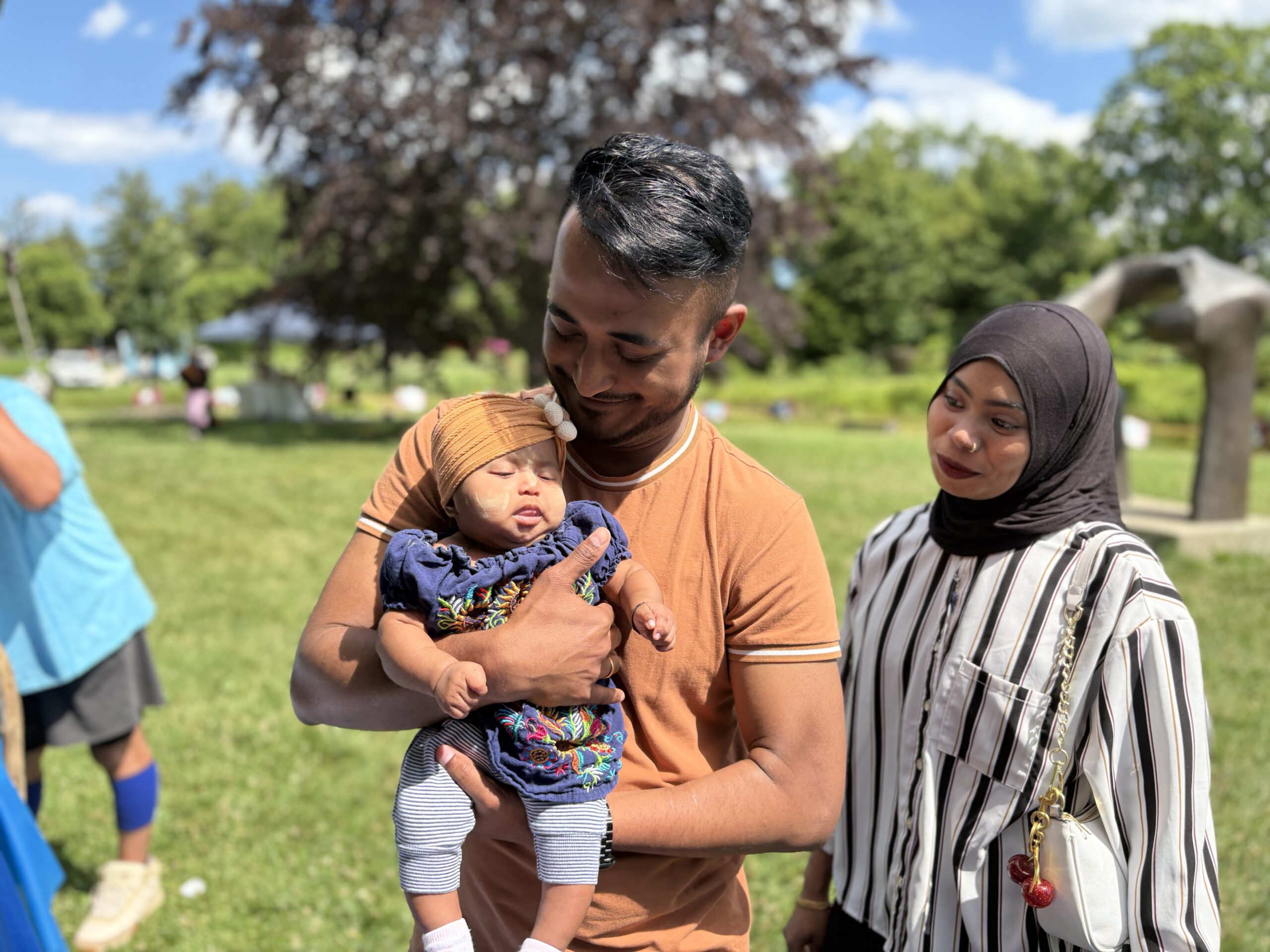
Photo by Cherrie Hanson
Young couple with their newborn child visited information tables at the HOME World Refugee Day celebration Saturday at Lynden Sculpture Garden.
We’re not a social service agency,” Khaira said. “But many of our partners are.” Through partners and refugees themselves, those working in the HOME Program keep a hand on the pulse of Greater Milwaukee’s refugee and immigrant communities. The changes in federal policies around immigration policies and funding “touch on all our work around refugee communities,” Khaira said. These changes “touch every aspect of our wellbeing starting with the basic human needs and basic human rights—survival, supporting our families and the communities around us, to safety. All those things have come into question.
“Where I see the HOME program come in is the right to assembly, the right to belong and questions of our identities as well. Safety is a basic human right. An extension of that is flourishing, not just surviving.”
Yet, this year is tangibly different, she added. “On some level, we are continuing with a celebration to commemorate and advocate for refugees, like what the United Nations is doing at the local level,” but today “what people are facing is monumental, bringing people to think deeply about how to engage in the community and in public events like this, considering what the implications could mean. How safe is it to show up or not show up?”
In the past two years, “we see and we are encouraging allies to show up,” she said. “Colleagues of refugees, supporters of refugees, those who have a permanent status or have already gained their citizenship, they want to contribute to the community. They are showing up. And other people who feel they must show up to show strength, show resilience, to show ‘joy and community against the odds,’ which is HOME’s theme for this year.
“Despite it all, against the odds, we still find ways to continue our work and continue our lives. Those have to continue.”