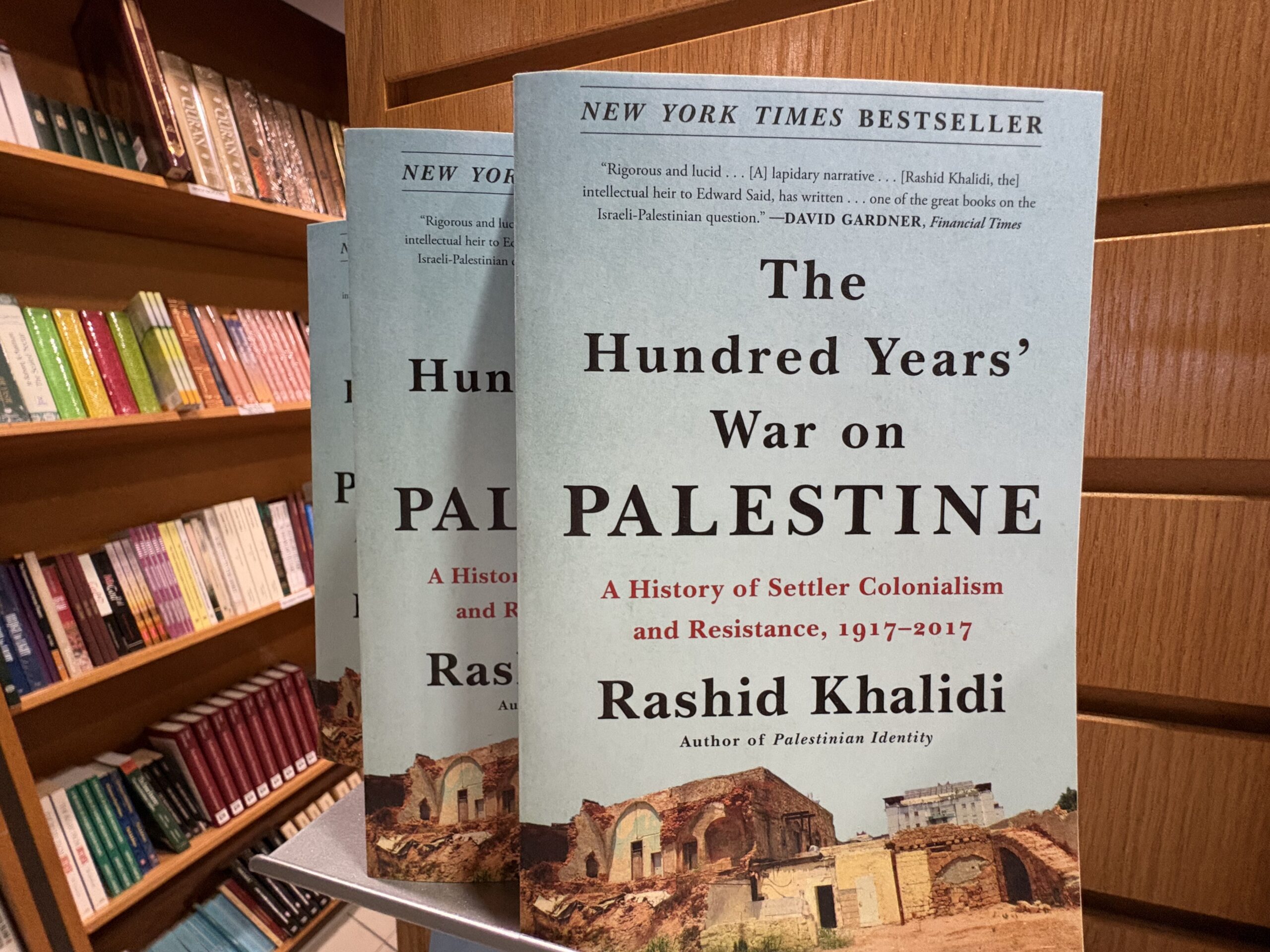
Illustrative photo by Cherrie Hanson
Leading scholar Rashid Khalidi’s “The Hundred Years’ War on Palestine” is available to borrow or buy at the Islamic Resource Center, 5235 S. 27th St., Greenfield.
The Islamic Resource Center offers a unique opportunity to engage in intense yet respectful interfaith discussions about a book with a Palestinian perspective on Palestine’s history by the foremost American scholar on the topic, Rashid Khalidi: The Hundred Years’ War on Palestine: A History of Settler Colonialism and Resistance, 1917-2017.
It rose on the New York Times Paperback Nonfiction Bestseller list in 2023, where it stayed at Number 4 well into 2024, as Americans grappled with understanding Hamas’ Oct. 7 attack in Israel and the now more-than-two-year genocide of Palestinians in Gaza. (In September, the United Nations Independent International Commission of Inquiry on the Occupied Palestinian Territory concluded Israel is actively committing genocide against the Palestinians.)
The IRC Book Club has been meeting monthly for 15 years with an interfaith group that includes Catholics, Jews, Muslims, agnostics, atheists – everyone who wants to attend. Participants join in person or on Zoom, once a month from 7 – 9 p.m. The diversity of perspectives in the room and our interest in learning from each other makes for rich, meaningful discussions, said Muslim Women Coalition founder Janan Najeeb. The IRC Book Club is a project of the MWC.
The discussion of The Hundred Years’ War on Palestine begins at 7 p.m. on Dec. 15 with a conversation about the introduction and Chapter 1 (pages 1-54). It will be held at the IRC, 5235 S. 27th St., Greenfield, and on Zoom.
Khalidi’s book is available to all for checkout from the IRC Library (you can sign up for a library card at the IRC) or for purchase from the IRC Book Store. For more information about the IRC Book Club or to request the Zoom link, email librarian@mmwconline.org or call (414) 727-4900 or follow on social media @mkemwc.
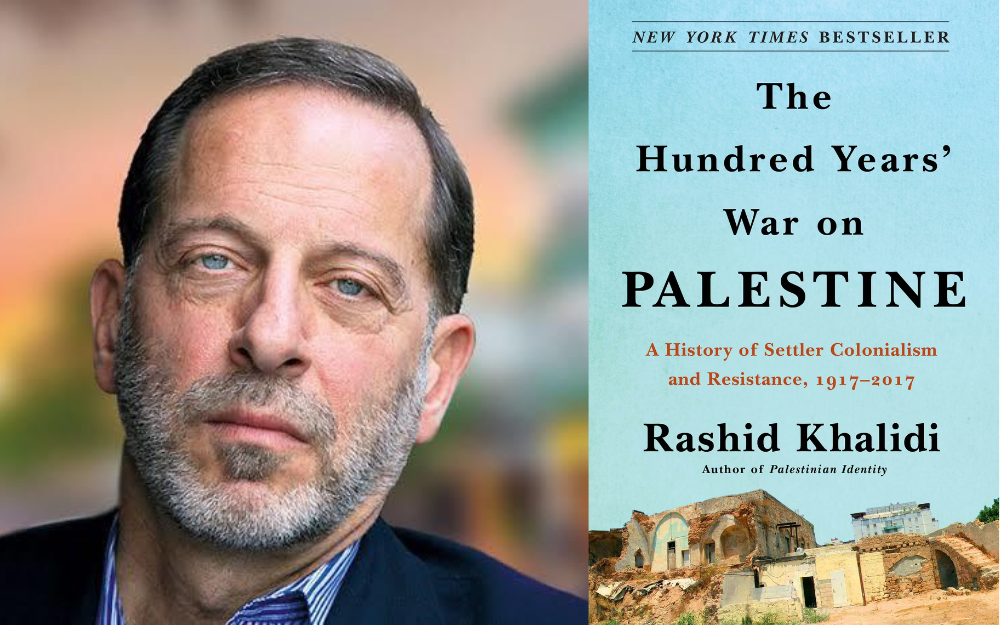
Author Rashid Khalidi is considered the pre-eminent Palestinian intellectual of his generation in the West, a mantle inherited from Edward Said.
About the author
Rashid Khalidi, named the foremost American scholar on Palestine by The Guardian, is the Edward Said Professor Emeritus of Modern Arab Studies at Columbia University and long-time editor of the academic Journal of Palestine Studies. He has also taught at the Lebanese University, the American University of Beirut, Georgetown University and the University of Chicago.
Khalidi was born Nov. 18, 1948, to an erudite family of Muslim scholars and statesmen, including a mayor of Jerusalem, who in 1899 corresponded with Theodore Herzl, the father of modern political Zionism, explaining the indigenous people of Palestine would not easily accept their own displacement and pleaded, “In the name of God, let Palestine be left alone.”
His book blends his rigorous scholarship of archival information with reports of generations of his own family members, including mayors, judges, scholars, diplomats and journalists. In the introduction, Khalidi quotes from Herzl’s diary (1895):
“We must expropriate gently the private property on the estates assigned to us. We shall try to spirit the penniless population across the border by procuring employment for it in the transit countries, while denying it employment in our own country … Both the process of expropriation and the removal of the poor must be carried out discretely and circumspectly.”
This quote and other facts he sets forth bring into question accepted interpretations of the Israeli-Palestinian conflict, which, he writes, “tend, at best, to describe a tragic clash between two peoples with claims to the same territory.” He argues that the modern history of Palestine can best be understood “as a colonial war waged against the indigenous population, by a variety of parties, to force them to relinquish their homeland to another people against their will.
About the IRC Book Club
When Linda Wolk of Milwaukee, a Catholic of Polish descent, tells her friends she is going to a book club hosted by the Muslim Women’s Coalition, with conversations led by a Catholic priest and philosophy professor, they raise an eyebrow and wonder if she’s serious. Wolk began participating in MWC activities after participating in Muslim-Catholic Interfaith Dialogues and joined the IRC Book Club as soon as it started 15 years ago.
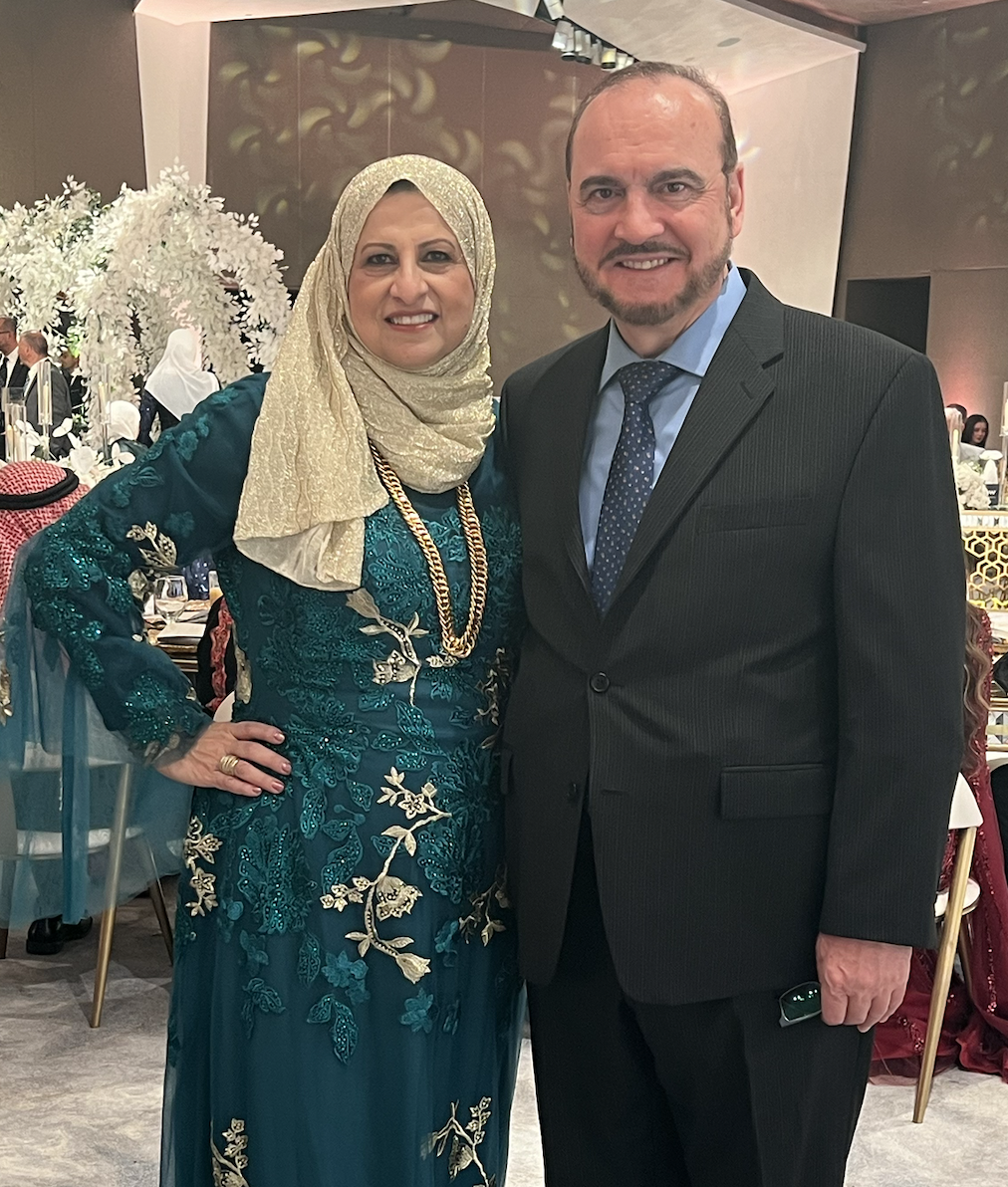
Janan and Waleed Najeeb, M.D., are both regular participants at the IRC Book Club.
“As an organization, we have been so engaged in a variety of interfaith initiatives,” said MWC founder Najeeb. “There have been quite a number of folks who have been part of those interfaith initiatives who continue with us. Linda is one of them.
“It has always been part of our intention to have a book club,” she said. “It’s part of helping people better understand the Muslim community by discussing books we feel accurately represent us. When people realize their long-held beliefs were incorrect and they realize they have held onto stereotypes debunked by our readings and discussion, it makes it all worthwhile.”
Outside of this book club, there are few opportunities “to have discussions that clear up misunderstandings,” she added. “We discuss challenging books with people who are eager to be informed in a relaxed environment. You can discuss something in depth, ponder it and come back the following month to discuss it some more.”
Father Philip David Reifenberg, a senior priest in Sheboygan, drives an hour each way to join in the book club meetings, except on cold winter nights when he will opt to connect via Zoom. Known to the group as Father Phil, he frequently leads the discussions. “One of the things the book club has done is to dispel a lot of prejudices, a lot of presuppositions, a lot of things we were taught or led to believe, not just in religious bodies but also political orientations.
“Take the whole issue of Palestine and how we presume the Jewish people are in a minority and are powerless, victimized. What we don’t understand is how much Zionism as a political movement has overwhelmed the Palestinians,” he said. “As I was reading The Hundred Years War on Palestine, I became more and more convinced about the terrible injustice of the land grab the Israelis have done. There’s absolutely no intention of ever allowing the right of return to those who have been dispossessed.
“It is underwritten by our own government, by the United States. There is no justice. That is something I expect we are going to get into. If people are unaware of it, they will certainly become aware of it as we get into this book.”
He credits Najeeb for creating an atmosphere that encourages everyone to share their views. “She’s masterful at drawing people out, without being manipulative. She gets people talking and she does it in a very nonjudgmental way. You never feel bad about disagreeing with her point of view. At the same time, she doesn’t back off. She is clear about who she is and what she believes but she is tolerant of other people and their perspectives.”
Participation in the IRC Book Club, along with his own exploration and study of Islam, “is part and parcel of a dynamic that really has changed me,” Reifenberg said. “It has broadened my perspectives and made me more conscious of the reality of Islam in our world. I am forever indebted to the IRC Book Club and to the Muslim Women’s Coalition for that gift.”
What participants have to say
Wisconsin Muslim Journal reached out to IRC Book Club participants to ask about what it is like. Here’s what they had to say:
Rida Fatima of Pewaukee
“I found out about the book club a couple of years ago through an email from the MWC. I love the different points of view,” Fatima said.
“I don’t end up contributing to the discussion, but the participants who are talking have such vast knowledge, it’s just an honor to get to listen to them. If you want to join a book club where meaningful books with strong content are shared, this is your club.”
Her favorite IRC book discussion so far, The Message by Ta-Nehisi Coates.
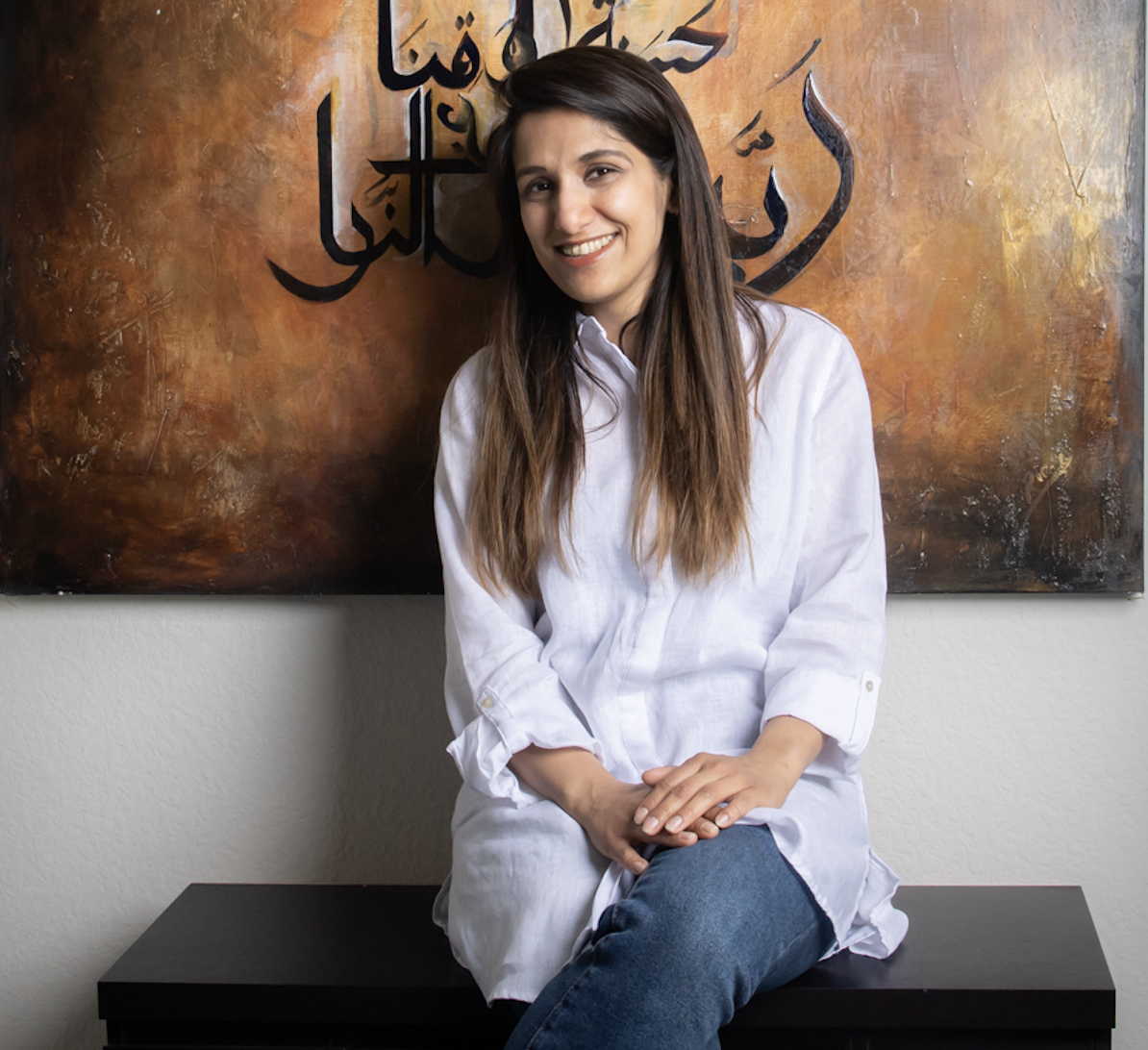
Jennifer Larson of Milwaukee
Jennifer heard about the IRC Book Club at the Milwaukee Muslim Film Festival in October 2024 and has been coming ever since.
“The people are welcoming to newcomers and listen to their ideas,” she said. “People listen to each other and discuss challenging topics in a caring manner.
“I attend because the books are meaningful and timely. Topics tend to be about different cultures or politics. The books provide a structure in which participants can learn about different cultures and points of view.
“We discuss a chapter or two a month which allows us to discuss ideas in depth. This helps us gain an understanding of what it means to be human and the importance of accepting people who are different from ourselves.
“I’m learning about other religions, history and current events, and how this shapes the culture and affects current politics. The people who attend bring diversity and insight to the discussion. I have been able to clarify concepts with others outside of the book club as well to encourage those in my circles to be thoughtful and to foster empathy.”
Her favorite books so far: The Message by Ta-Nehisi Coates and American Fascists by Chris Hedges, which was “comprehensive in explaining the Christian Right and how they gained power.”
Shaneela Motlani of Milwaukee
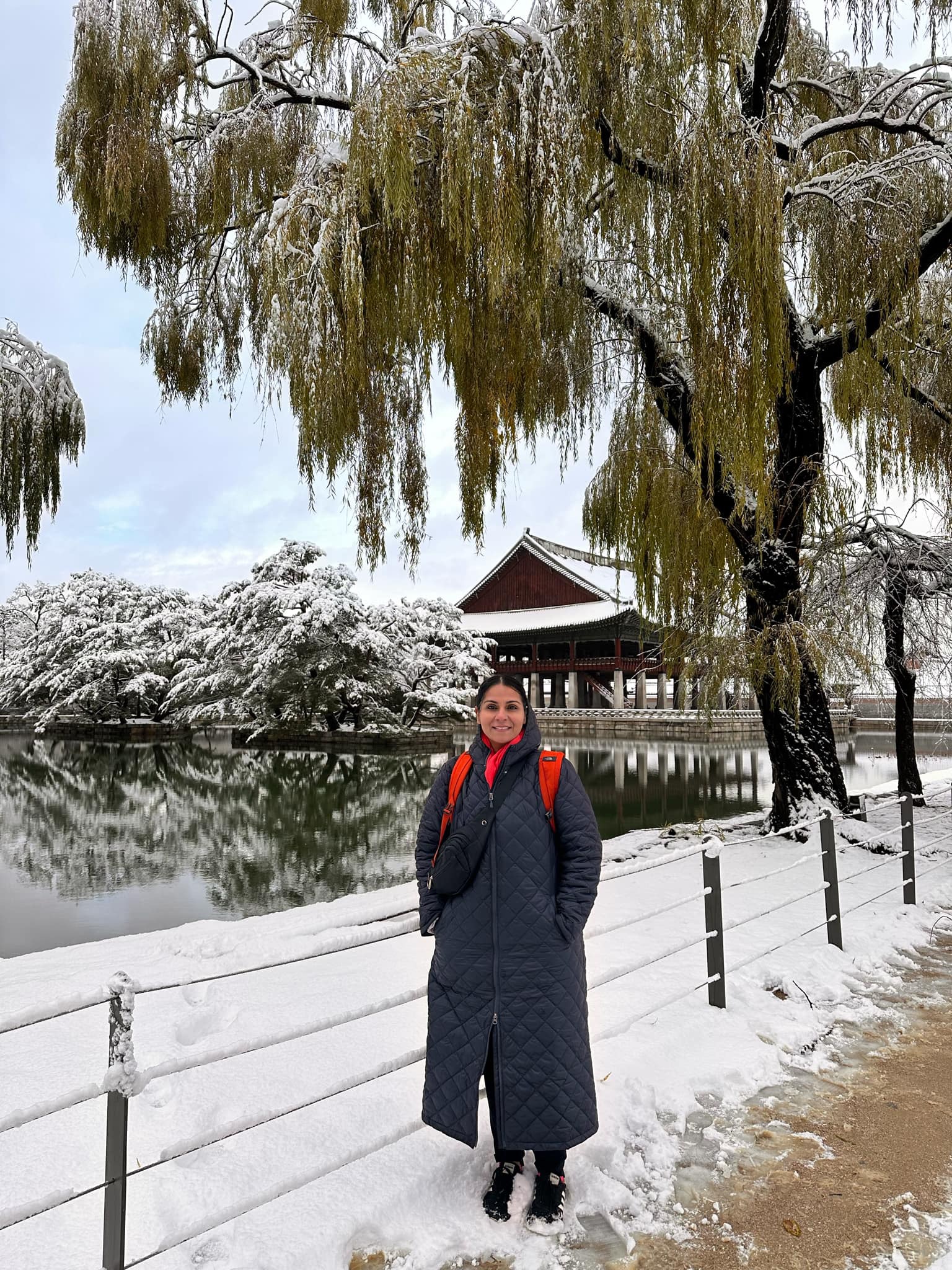
Shaneela joined in the spring of 2025, after attending a Muslim Women’s Coalition Networking Brunch and hearing about the Book Club. She found it to be “a welcoming, respectful environment where everyone can share their thoughts without fear of judgment.
“I value gaining outside perspectives,” she said. “It’s amazing how the same words can land so differently for each of us. Our backgrounds, faith and life experiences all influence how we make meaning.”
Her favorite book so far was The Message by Coates. “His insights on race reveal deep nuance and multiple layers of understanding. He addresses various cultures and the distinct ways oppression shapes their experiences.
“His use of language is powerful and expressive. During his visit to Palestine, he connected the injustices faced by Palestinians with those confronting African Americans today. He underscored the hypocrisy surrounding the denial of apartheid and stressed the necessity of speaking the truth.”
Betty Holloway of Brookfield
“I recently joined the IRC Book Club in September for the discussion of Chris Hedges’ American Fascists. It was serendipitous reconnecting with my friend Sandra Whitehead and she introduced me to the interfaith book club.
“I would describe the club as a refreshing gathering where people of different faith traditions share and listen to a variety of viewpoints, creating a respectful way for each of us to broaden and articulate our beliefs and understanding of humanity, and our individual roles and responsibilities within it. At a time of extreme division and misunderstanding, this forum is incredibly important and healing.”
Since I’ve only read one book so far with the group, my favorite is American Fascists (which really was an excellent choice to read and discuss!)
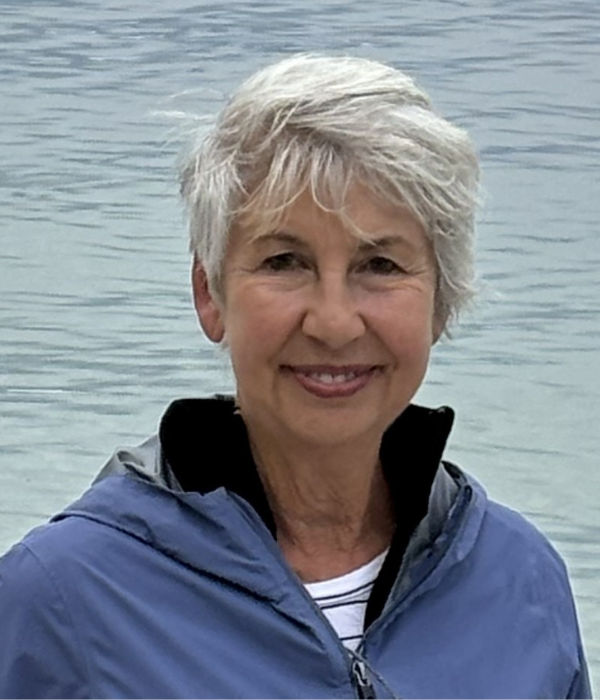
Father Philip David Reifenberg, a Catholic priest in Sheboygan
“I’ve been with it for the past 15 years, since it started,” Fr. Phil said. “I was part of a Catholic-Muslim Dialogue group that pre-dated the IRC Book Club.
“I attend because the discussions are stimulating, the book selections are amazingly engaging, varied and sometimes provocative. We’ve dealt with ecumenical and interfaith topics, Islamic subjects, historical matters and some current events.
“The participants are interesting, too—for the most part well-educated (at one time, we had several University of Wisconsin-Milwaukee professors participating), religiously diverse, usually polite (but sometimes more bullish).
“The discussions cover a lot of ground, which is why it can take several months to work our way through any particular book. The group tends more toward ‘blue’ than ‘red,’ so current events can certainly elicit some pretty clear opinions.
“I would describe it as a wonderful opportunity to meet a number of exciting and articulate men and women of different faith perspectives who are not about proselytizing or winning arguments but interested in expanding personal, religious and professional horizons through dialogue and mutual exploration.”
Father Phil’s favorite books have been about comparative religions, especially with Islamic themes “because of my own coming late to the subject matter. I blush to admit that until the first Gulf War, I really hadn’t given much thought at all to Islam.
“In the late 1980s and early ’90s, I was deeply involved M.I.C.A.H. (Milwaukee Inner-City Churches Allied for Hope). We took an anti-war stance regarding that war, and one of the people that we invited to address pastors and leadership in M.I.C.A.H. was Othman Atta, Janan Najeeb’s brother and the director of the Islamic Society of Milwaukee.
“Listening to him was a game-changer for me. As a Catholic priest, I’d had post-graduate work in the area of Canon Law (Church law) and had developed a bit of appreciation for the history of the development of law. So, when the Taliban blew up the statues of Budda in Afghanistan in 2001 and the press attributed the Taliban’s motivation to ‘Sharia Law,’ I was very curious about both Sharia Law and its development, and how it related to the statues of Budda.
“So, in early 2001, I started reading up on Islam and Sharia Law and many, many other related topics. My hunger and search just intensified after 9/11. In any case, the past 25 years—whatever else they may have wrought on the United States’ political sensibilities, the radical imbalances in world economic realities, the upheavals in social justice in so many parts of the world, issues regarding climate change—have, for me, been an exciting, invigorating, eye-opening and faith-generating journey.”
Linda Wolk of Milwaukee
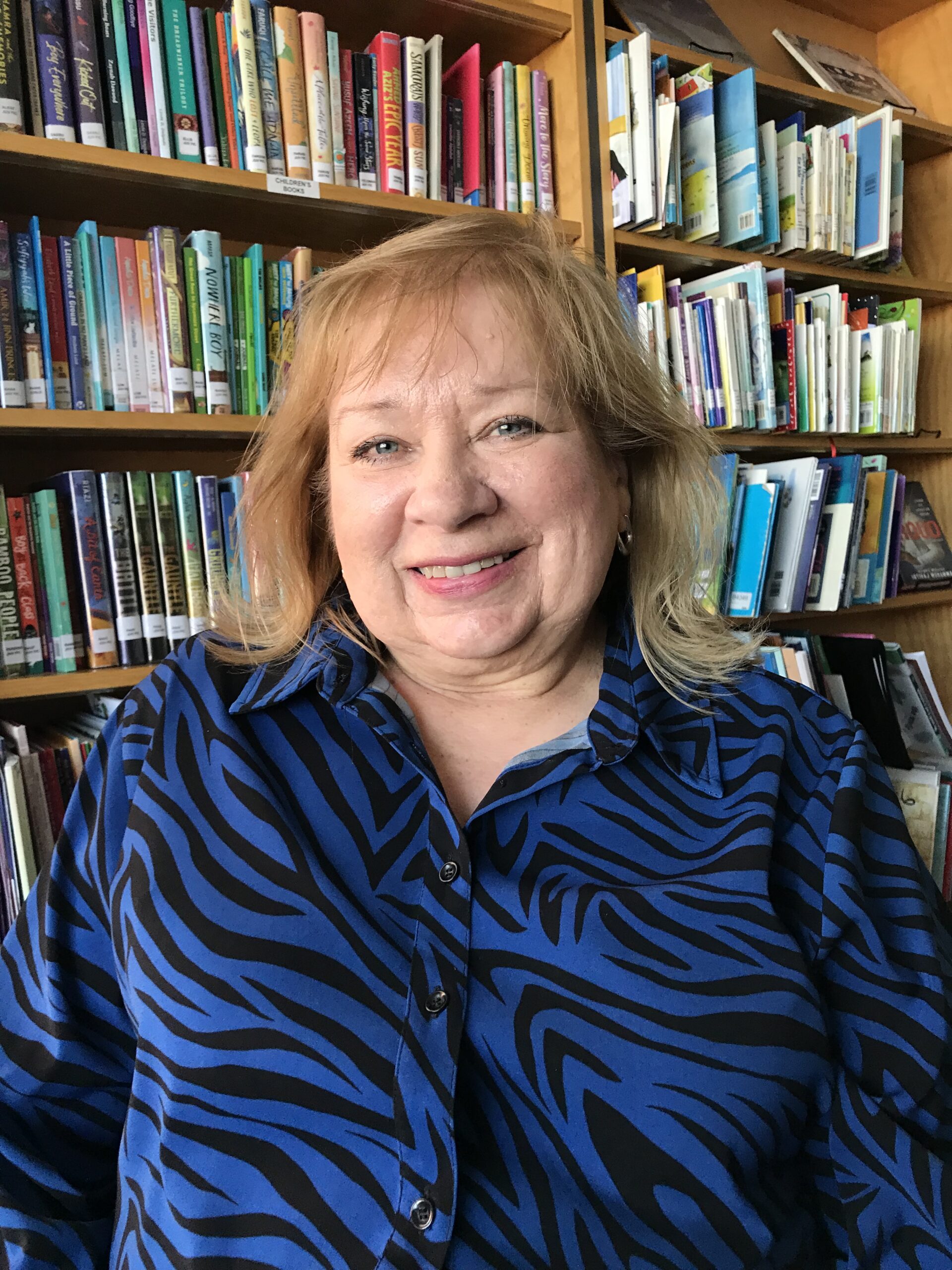
Linda has been involved in the IRC Book Club since it began 15 years ago, after participating in a Catholic-Muslim Dialogue in Milwaukee and participating in the Muslim Women’s Coalition activities.
“We’ve read a variety of books over the years that have always had a religious connection of some sort,” she recalled. Wolk went back to college at Alverno after what she called her “mid-life crisis” and minored in Religious Studies/Theology. The books she read at the IRC Book Club fulfilled both her interests in different religions and helped with her minor as well.
“It is always interesting to learn about Islam and Muslim culture but we also touched other topics, like when we read Karen Armstrong’s The History of God. It covered 4,000 years of the history of Judaism, Christianity and Islam.
“Another challenging book we read was on the history of Ukraine. I’m Polish. You can’t read about Poland or Ukraine or Lithuania without knowing about all three. It clarified a lot of things for me.”
A lot of people have been coming to the IRC Book Club for years but new folks are always welcome, Linda said. “You are entitled to your opinion and everyone’s contribution matters. My advice is to just keep coming.”
Sandra Whitehead participates regularly in the IRC Book Club.