Photos by Cherrie Hanson
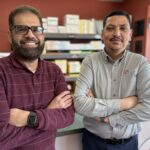
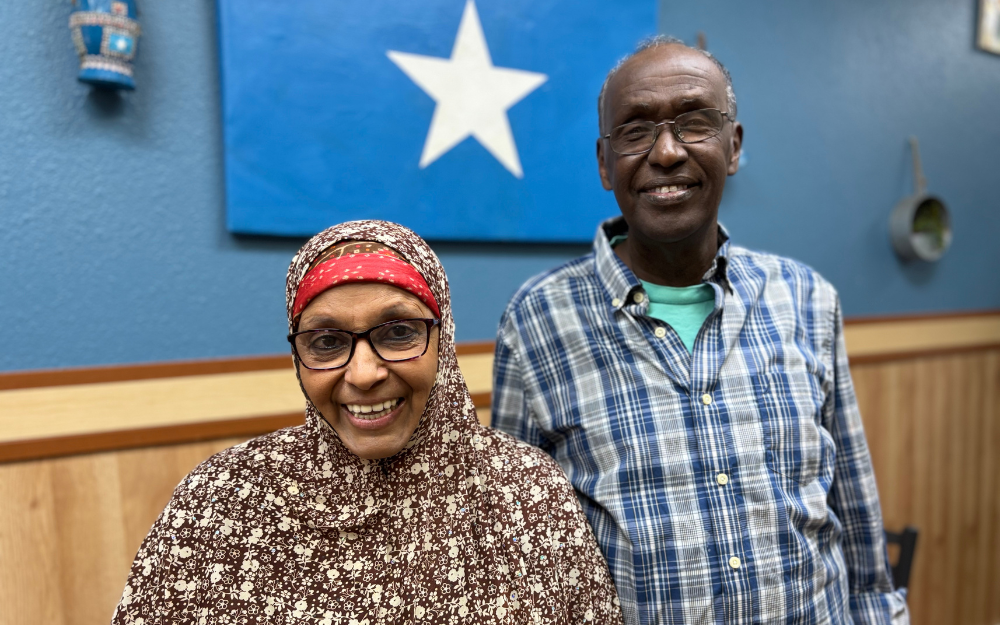
(Left to right) Alia Muhyadin and Abdirizak Aden opened Blue Star Café in 2012 and have nurtured it into one of Milwaukee’s best-loved family restaurants.
Food critics call Blue Star Café, at 1619 N. Farwell, “a hidden gem,” “under the radar” and “hiding in plain sight.”
“… a culinary institution that you probably haven’t heard of if you are not from Milwaukee’s Lower East Side,” says the Marquette Wire, naming it “an East Side favorite.”
For an unsung restaurant, this Somali café sure gets a lot of press.
Milwaukee Magazine’s March issue features its sambusas and “platters of rice, vegetables, chicken, goat or steak seasoned with xawaash, a warm spice blend (cumin, cinnamon, cardamom, etc.), and topped with raisins and cubed potato.” Once you have the chicken or tender bone-in goat with its sweet, earthy flavors, you will not forget it,” says dining editor Ann Christenson.
For Christmas week, she included “grabbing a sambusa at Blue Star Café” as her entry in Milwaukee Magazine editors’ list of “The Best Things to Do This Week.”
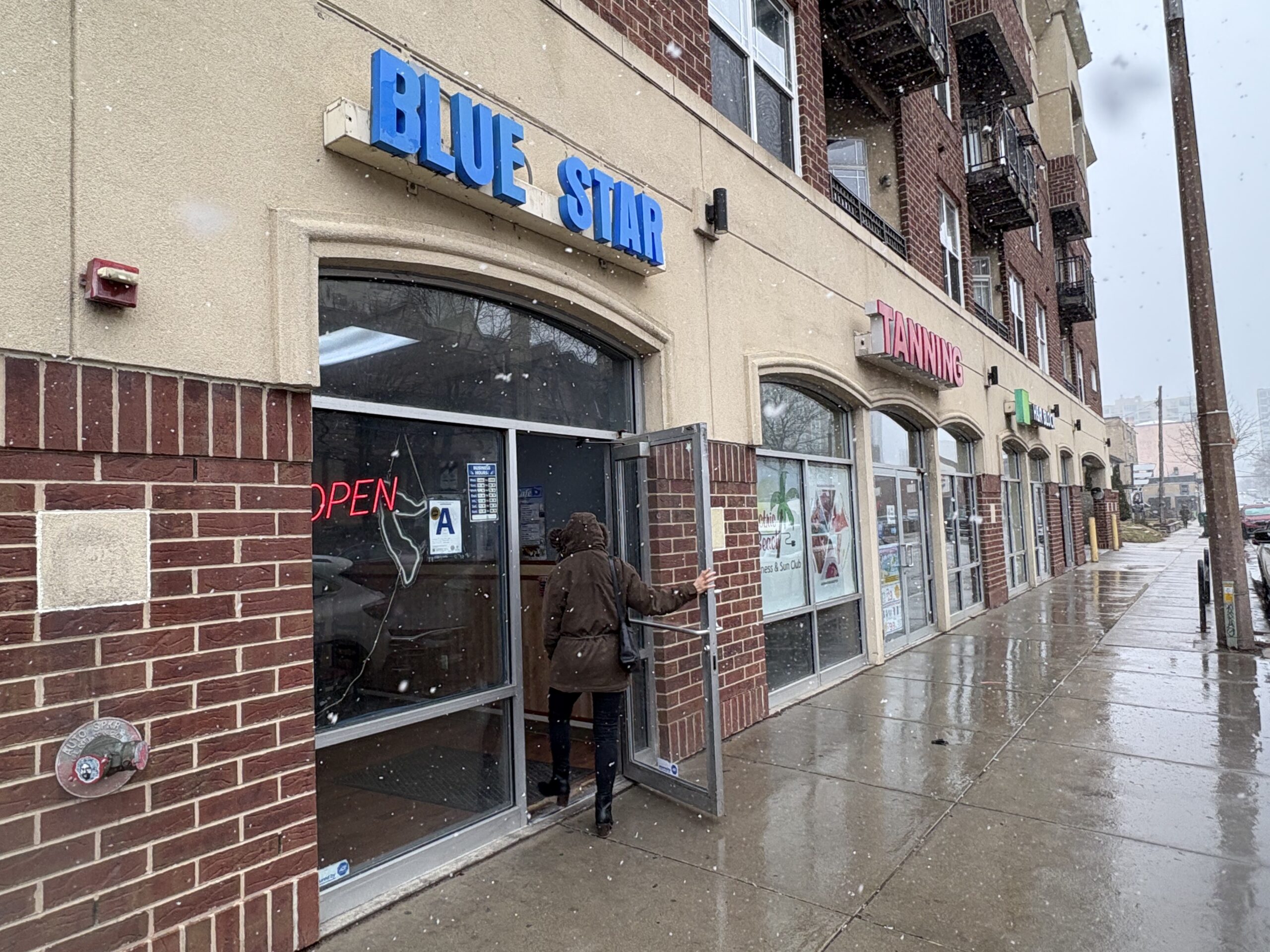
Blue Star Cafe, 1619 N. Farwell Ave., serves rice, meat and vegetarian dishes spiced with cumin, cardamom and turmeric.
Urban Milwaukee calls Blue Star Café’s cuisine “killer Somali food at ridiculously low prices.” Milwaukee Journal Sentinel dining critic Carol Deptolla calls it “comfort food at its best.” Shepherd Express food critic Franklin K.R. Cline says its tender beef sandwich is “damn good.”
The storefront restaurant won spots on OnMilwaukee’s 2020 52 Great Restaurants list and its 2018 Best of Dining poll. It praised its basbaas cagaar, a sauce made with green chiles, “bright with citrus,” packing “a moderate heat.”
Blue Star Café rose to national acclaim in October as No. 10 on Yelp’s Top 20 Best Halal Restaurants in the U.S.
The secret to success
Abdirizak Aden and his wife Alia Muhyadin run the Blue Star Café with four employees, they told Wisconsin Muslim Journal last week. Their four grown children have also helped from time to time.
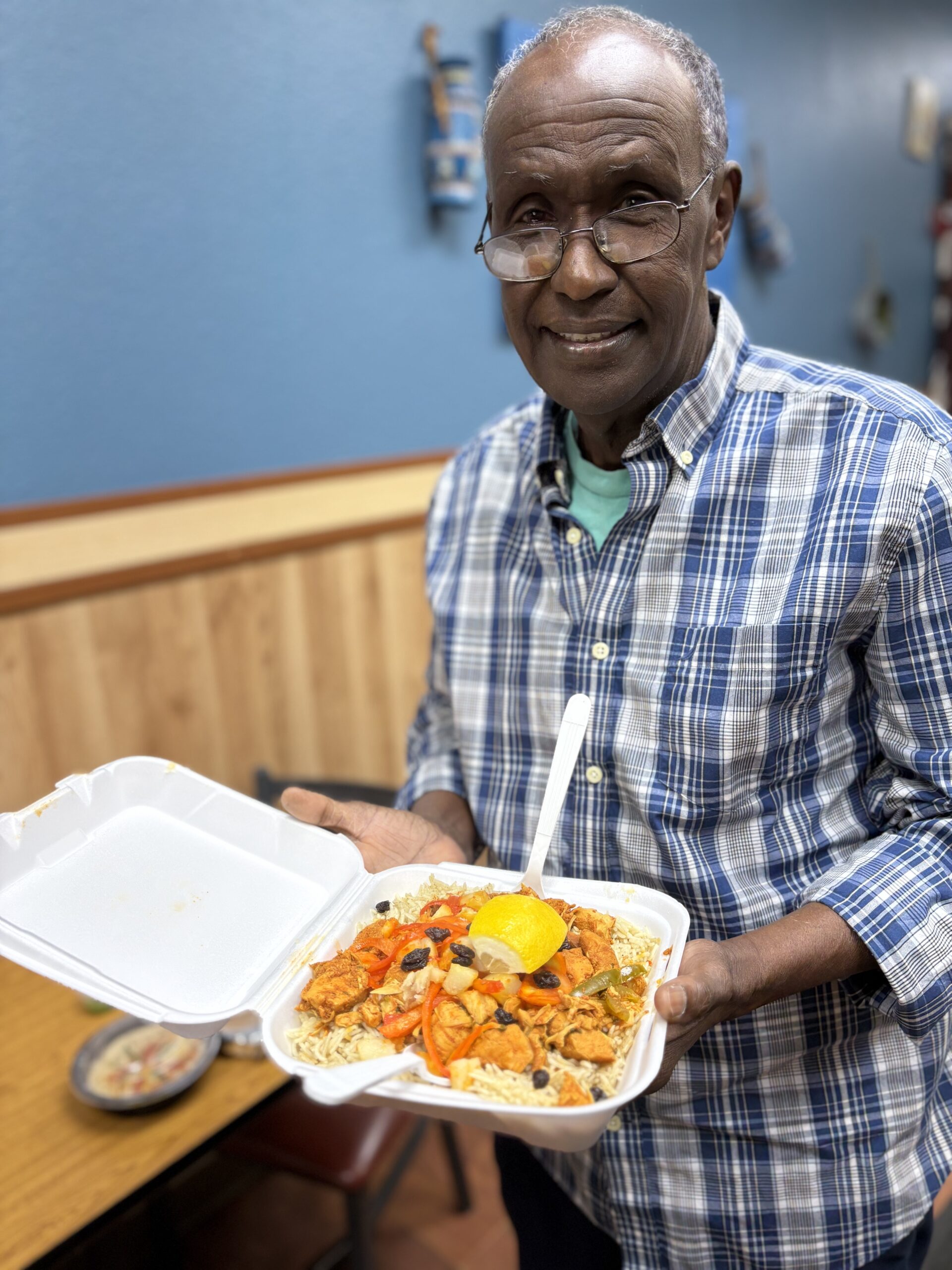
Abdirizak Aden holds an order of chicken suqaar, flavored with cumin, coriander, turmeric, paprika, potatoes and raisins on basmati rice.
On a cold day during Ramadan, with icy rain falling, Aden answered a steady, if slow, stream of phone calls for carry-out orders. He repeated an order out loud and looked at Muhyadin, who quietly gave her estimate, “15 minutes.”
“It’ll be ready in 15 minutes,” he said into the phone, while Muhyadin stepped behind a short wall that separated the kitchen from the small eat-in area with a counter. Inside a glass case on one end of the counter, beef and chicken sambusas sat on trays. On the other end stood a review in the Marquette Wire, mounted on a board and laminated. When calls stopped, Aden sat with WMJ and continued an interview.
“We get a lot of business from university students, Marquette and UWM, and people who live in the area. They love us,” he noted. “Come back at iftar (the breaking of the Ramadan fast at sunset). Or on the weekend. We’ll be busy. On Friday, Saturday and Sunday, they’re all lined up at the counter.”
Since opening in 2012, the restaurant has had “loyal customers,” said Aden. “Even in the pandemic, they kept us going. They’d place orders we’d give to them outside.”
Revenue was way down, he recalled. “I was worried about being able to pay our employees. We didn’t want to lose them. There are lots of businesses that lost good employees in the pandemic. They never recovered. When it was over and they were ready to reopen, they couldn’t do it. We were able to hold on to ours.”
One is a Somali chef who has worked at Blue Star Cafe for 12 years. “We were lucky to get one of the best,” Aden said. Another employee also helps cook. In its early years, Muhyadin cooked everything herself. Now she supervises.
The kitchen staff comes in early and opens the kitchen. By 9 a.m., they are cleaning and prepping food. Another employee drives to stores every morning to pick up fresh ingredients and other items.
Meanwhile, Aden and Muhyadin are out early, too, selecting products for the restaurant and running other errands. “That’s every day,” Aden said.
The couple usually arrives before 11 a.m. and stays until 8 p.m. except Monday, even in Ramadan. “We cook fresh, from scratch, every day,” he explained.
What’s been the key to their success?
“Word of mouth,” he answered.
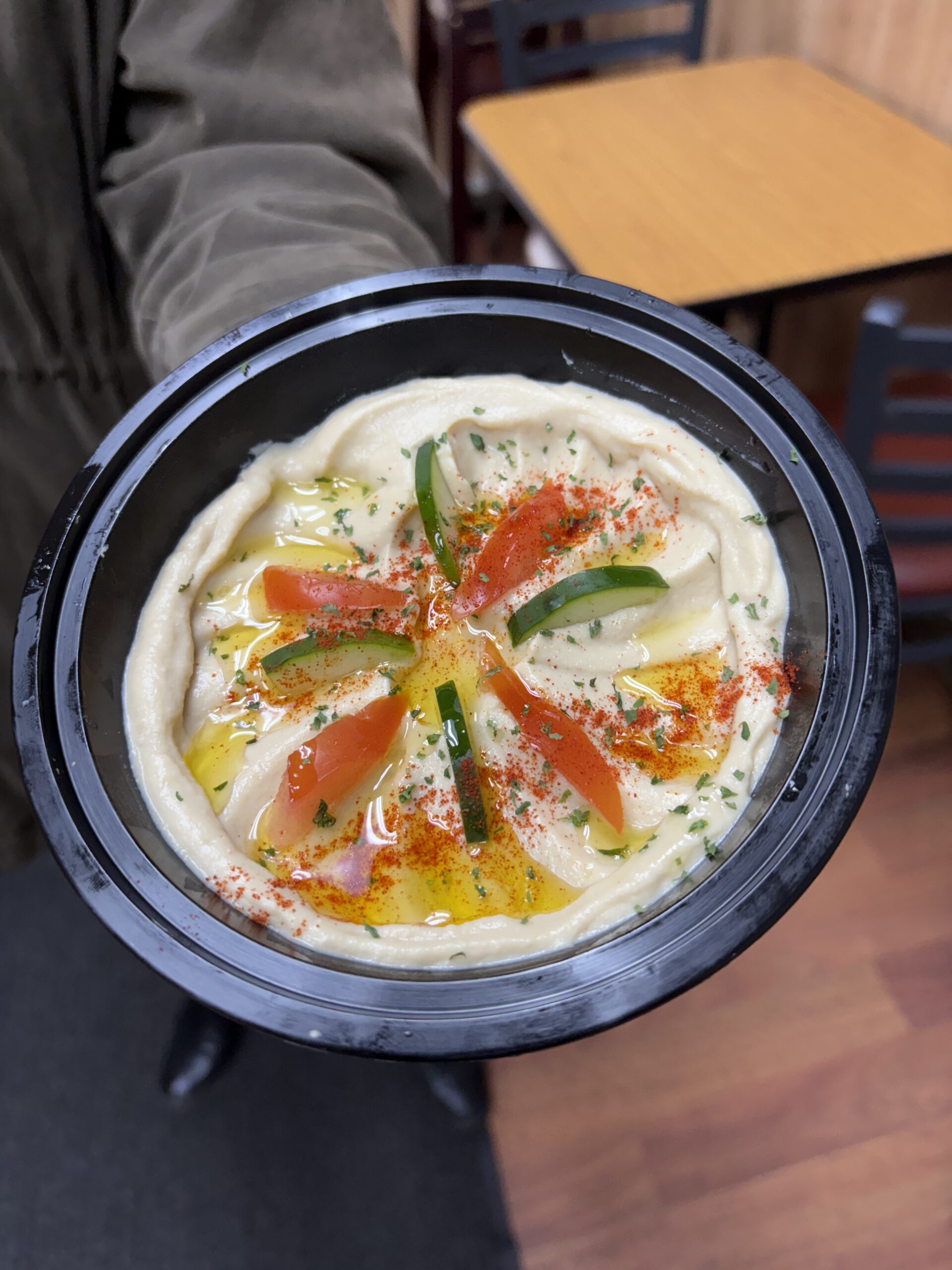
A bowl of creamy hummus, decorated with tomato and cucumber is topped with paprika and olive oil.
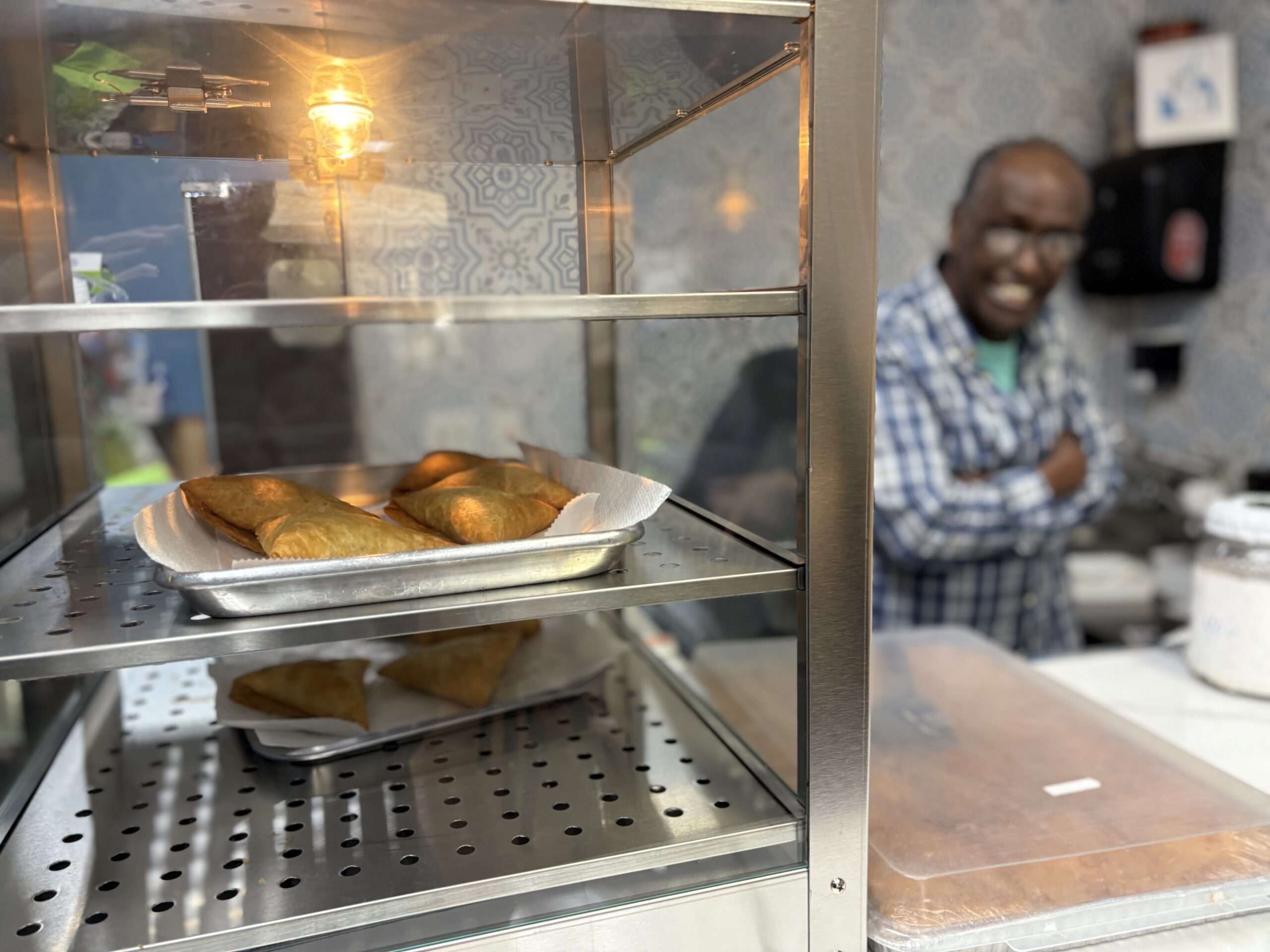
Sambusas, flaky triangles of pastry stuffed with ground meat, are served with spicy basbaas cagaar sauce and yogurt.
Building her business
“It’s her restaurant,” Aden said. “It was her dream to own her own business.”
PBS featured Muhyadin in a 2021 episode of “My American Dream,” promoting it as “her journey from fleeing from Somalia’s civil war in the 1990s to owning one of the top restaurants in Milwaukee.”
As a young couple, Aden drove a taxi. He had a college degree in business but didn’t find work in his field, he said.
Muhyadin worked as a dietician at the Jewish Home and Care Center on Prospect Avenue. “She worked there for a long time,” Aden noted. As their family grew, Aden worked at the post office, “mainly for the health insurance.”
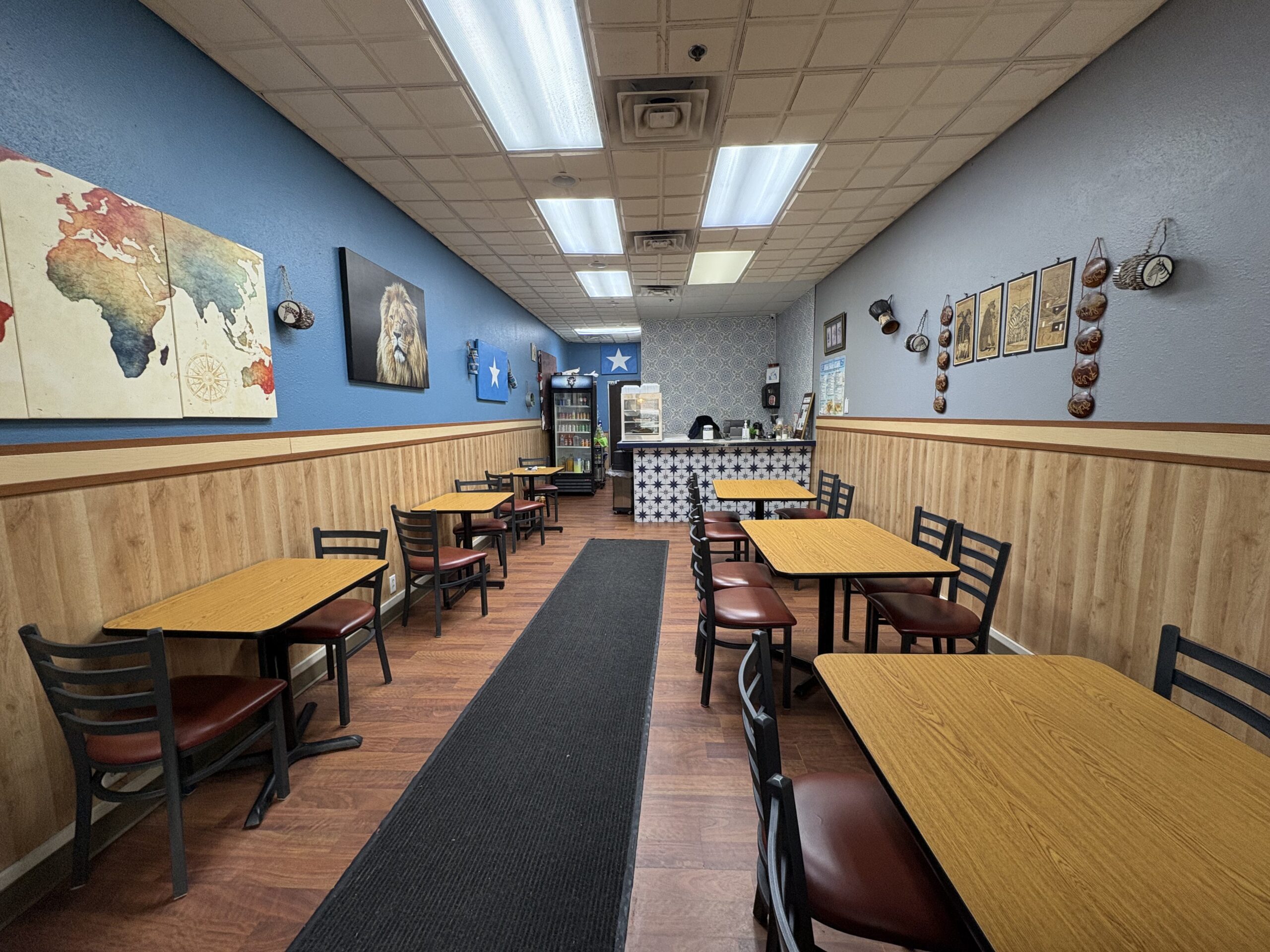
Reviewers have called the Blue Star Café’s interior humble, clean and simple.
“One day, she says, ‘Let’s have our own business,’ Aden recalled. “We had both been working all our lives but always for someone else.” Muhyadin was in her thirties and Aden in his forties at the time.
“She likes to cook, so we thought about a restaurant,” he explained. “A friend saw the space on Farwell Avenue for rent, and we decided to go for it. It took a lot of work to convert it into a restaurant. It took us about a year to get ready to open.”
In the beginning, the two of them did everything by themselves. “It takes a lot of time before you can afford to hire somebody,” Aden said.
Their son came up with the name “Blue Star.”
“We were throwing around some Somali names, then our young son goes, ‘Hey, how about if we call it ‘Blue Star?’ I said, “Wow, that’s nice. Short and catchy.” He was a teenager then. Now he’s finished both college and master’s degrees. Another son just graduated from medical school.
A painting of a bright blue Somali flag hangs on the wall. “The star is white, not blue, but it works,” Aden laughed.
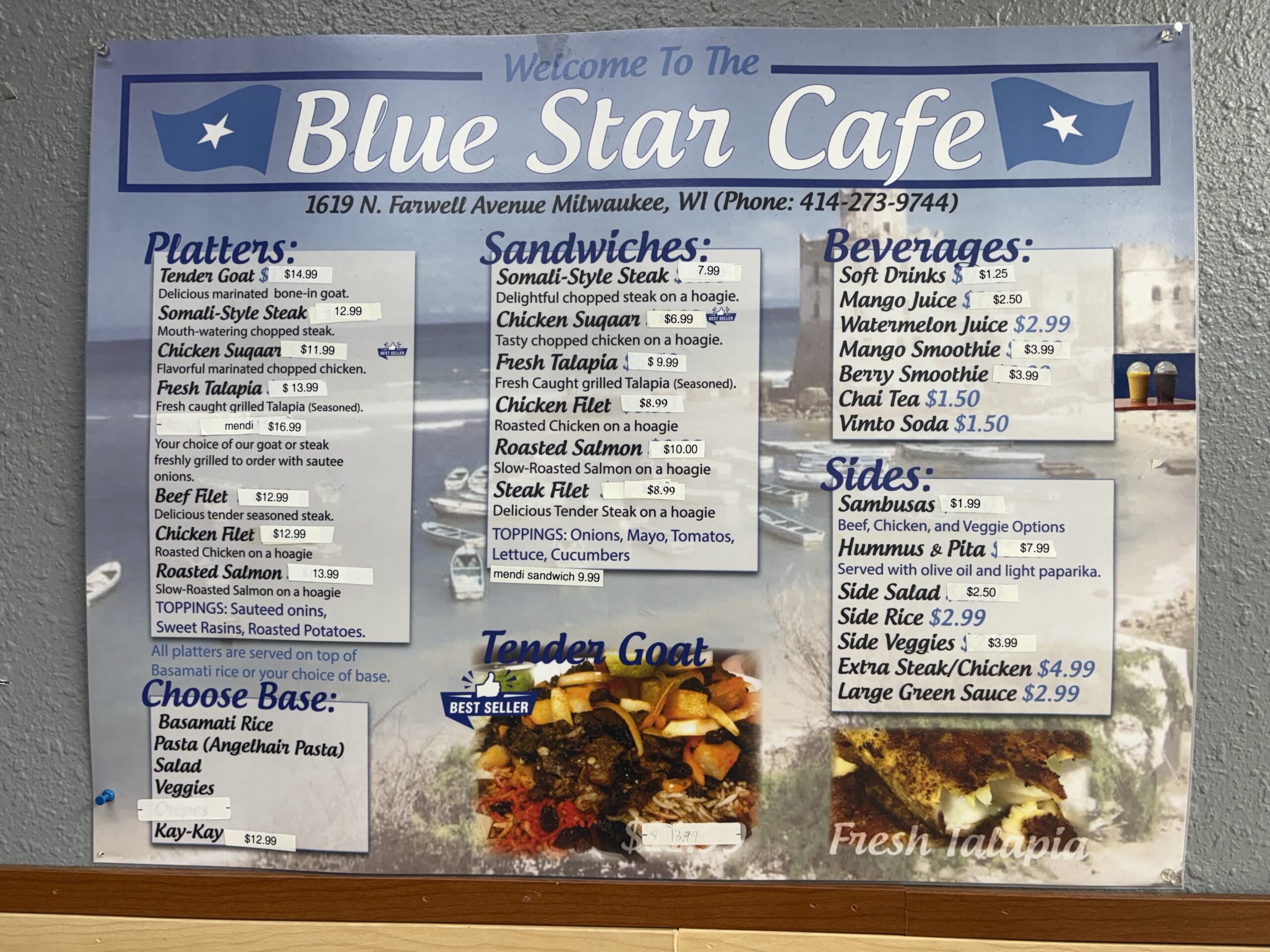
Of their four children, two own their own businesses, their daughter with a care home and a son with a trucking business. “He stopped by last Sunday and just started helping out. When any of them are around, they always help.”
What are the couple’s future plans? To work at the Blue Star Café.