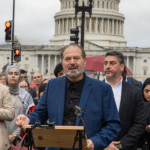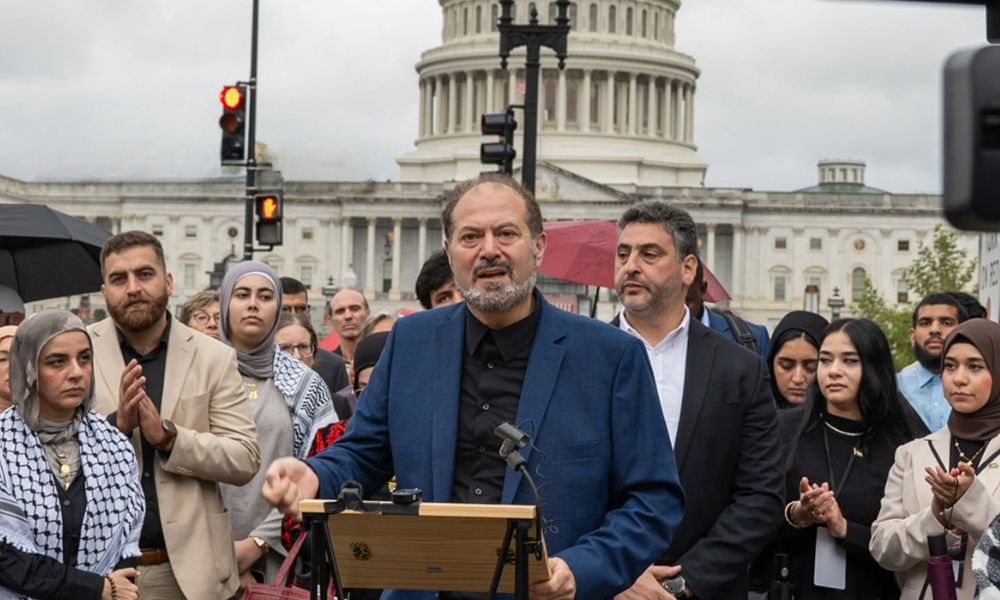
“I belong here,” Salah Sarsour, the president of the Islamic Society of Milwaukee, told Americans for Justice in Palestine, who gathered Sept. 22 at the U.S. Capitol in Washington, D.C.
An immigration judge ruled one week ago that Salah Sarsour, president of the Islamic Society of Milwaukee, is “deportable.” The next day, Mr. Sarsour, a 33-year Milwaukee resident and Green Card holder, and his attorney Munjed Ahmad participated in a fireside chat at the ISM Community Center, hosted by ISM and the Wisconsin Muslim Civic Alliance.
In an exclusive interview with the Wisconsin Muslim Journal yesterday, Sarsour and his oldest son Kareem Sarsour spoke about the emotional rollercoaster the Sarsour family has been on since the morning of March 30, when a dozen Immigration and Customs Enforcement agents surrounded Sarsour and whisked him away, first to Chicago and then to an Indiana jail. The father and son spoke about how Allah, the Milwaukee community, and people of all backgrounds and faiths who love justice give them hope.
“I’m very lucky to be able to surround myself with beautiful people,” Salah Sarsour told WMJ. “I feel we’re a huge family. I love them all because they represent the best values. They care about the future of the community, supporting justice, and the future of our children and grandchildren.
“I honestly feel very happy and want to thank everyone who stood with me, who wrote (affidavits) for me, who said good things about me, who stand with justice, who stand with Palestine, who stand with Gaza, who stand with victims all over the world. I really appreciate that.”
Updating the community
More than 100 people packed into a meeting room at the ISM Community Center Wednesday for a “fireside chat” the day after Judge Jayme Salinardi released his decision that Sarsour is deportable on foreign policy grounds, a decision that was reported in newspapers from the Milwaukee Journal Sentinel to Al Jazeera, and more. (WMJ provided a detailed explanation of the case from a post-hearing press conference.)
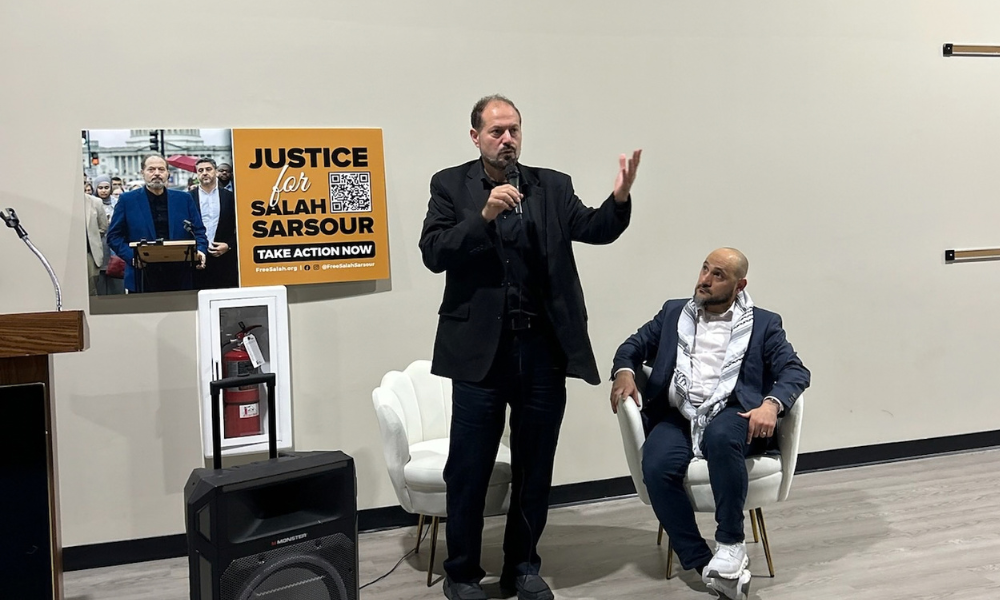
Photo by Sandra Whitehead
Salah Sarsour met with members of the Greater Milwaukee community Sept. 30, the day after an immigration judge ruled he is deportable. His attorneys said they will seek relief from deportation from the immigration court.
Salinardi rejected two of the government’s allegations: that Sarsour lied on his green card application and that Sarsour had falsely claimed to be a U.S. citizen in order to vote. His decision that Sarsour is deportable rested solely on a little-used law and Secretary of State Marco Rubio’s June 2025 memo that said Sarsour’s presence in the U.S. could have “potentially serious adverse foreign policy consequences.”
Many Milwaukee-area Muslims and others from Greater Milwaukee, including peace and justice advocates from Jewish Voice for Peace and other organizations came to learn what the immigration court decision means for Milwaukee’s Muslim community and where the case goes from here.
“I want to begin by saying … We stand with him as he stands, uncompromising, for the rights of oppressed people, particularly the Palestinians,” Atta told the crowd. “Salah continues to advocate every day. Just the other day, there was an advocacy day by the Council on American Islamic Relations in D.C. He went and met with many of our elected representatives because he’s not afraid of the consequences. He’s not afraid to stand up for truth and justice.
“Salah’s fight is our fight. This is not a fight just for Salah Sarsour. This is a fight for anyone who wants to advocate for Palestine or for any justice in this world.”
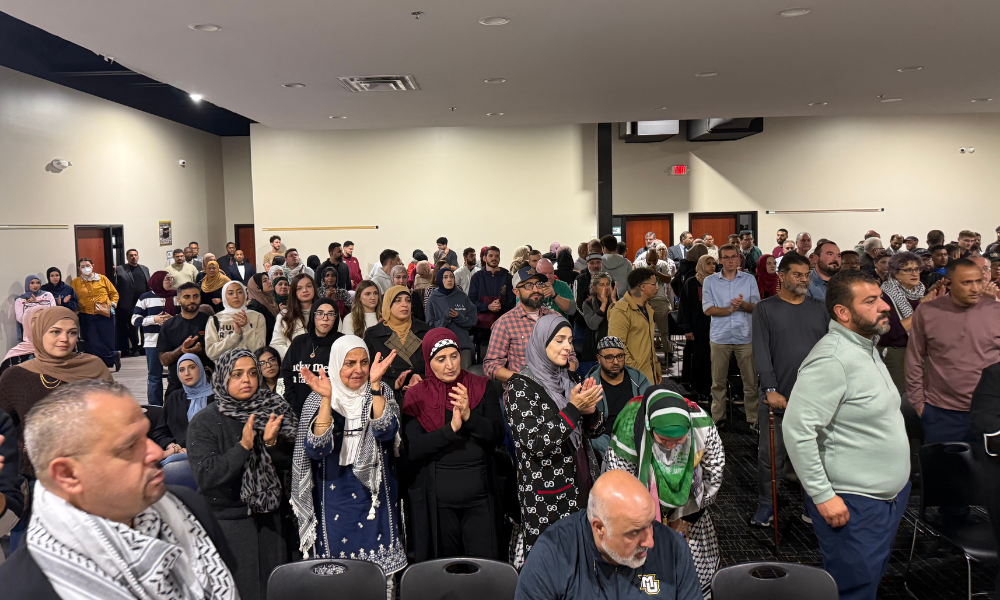
Photo by Ihsan Atta
More than 100 people filled an ISM Community Center meeting room Sept. 30 to learn what’s next for ISM President Salah Sarsour.
“I am so honored and appreciative that Allah chose me to serve this great community,” Sarsour said. “We should all be proud that we belong to this community. We are doing great here by supporting our children, building a future for this community and building bridges with other faiths.” Sarsour thanked JVP and other Jewish organizations, who collaborated to create an interfaith vigil outside the Cook County Jail in Brazil, Indiana, where he was being held.
“It’s important to remind ourselves of who we are and what our mission is,” he continued. “We want to make sure we have the facilities, all kinds of support and access for our children, to make sure our sons and daughters are strong and that they integrate in this society in the best way.”
Explaining a key point about the ruling, Ahmad explained, “What the judge did was indicate that Salah is ‘deportable.’ That means it’s possible for him to be deported, not that he is going to be deported.
“This was only the first phase of the immigration court. We still have the second phase in the immigration court in which we’ll file our applications for relief from deportation of removal,” he said.
Ahmad described future possible rounds of appeals that can take place and noted he did not expect Sarsour to be detained again during this process.
“Anybody on my social media knows I never post anything. Today was the first time I posted in a very, very long time,” Ahmad said. “And what I said is what I really feel—the decision of the court motivates me. It does not deter me. It motivates Salah. It does not deter Salah. And it motivates our entire legal team … the fight continues.”
Wisconsin Muslim Civic Alliance executive director Fauzia Qureshi spoke to the crowd about the importance of voting and engaging in the civic process.
A family in the midst of the battle
In an exclusive interview yesterday with Salah and Kareem Sarsour, WMJ asked questions many in Greater Milwaukee want to know: How are they doing? What have the past six months been like for Salah Sarsour and his family? Here are the highlights.
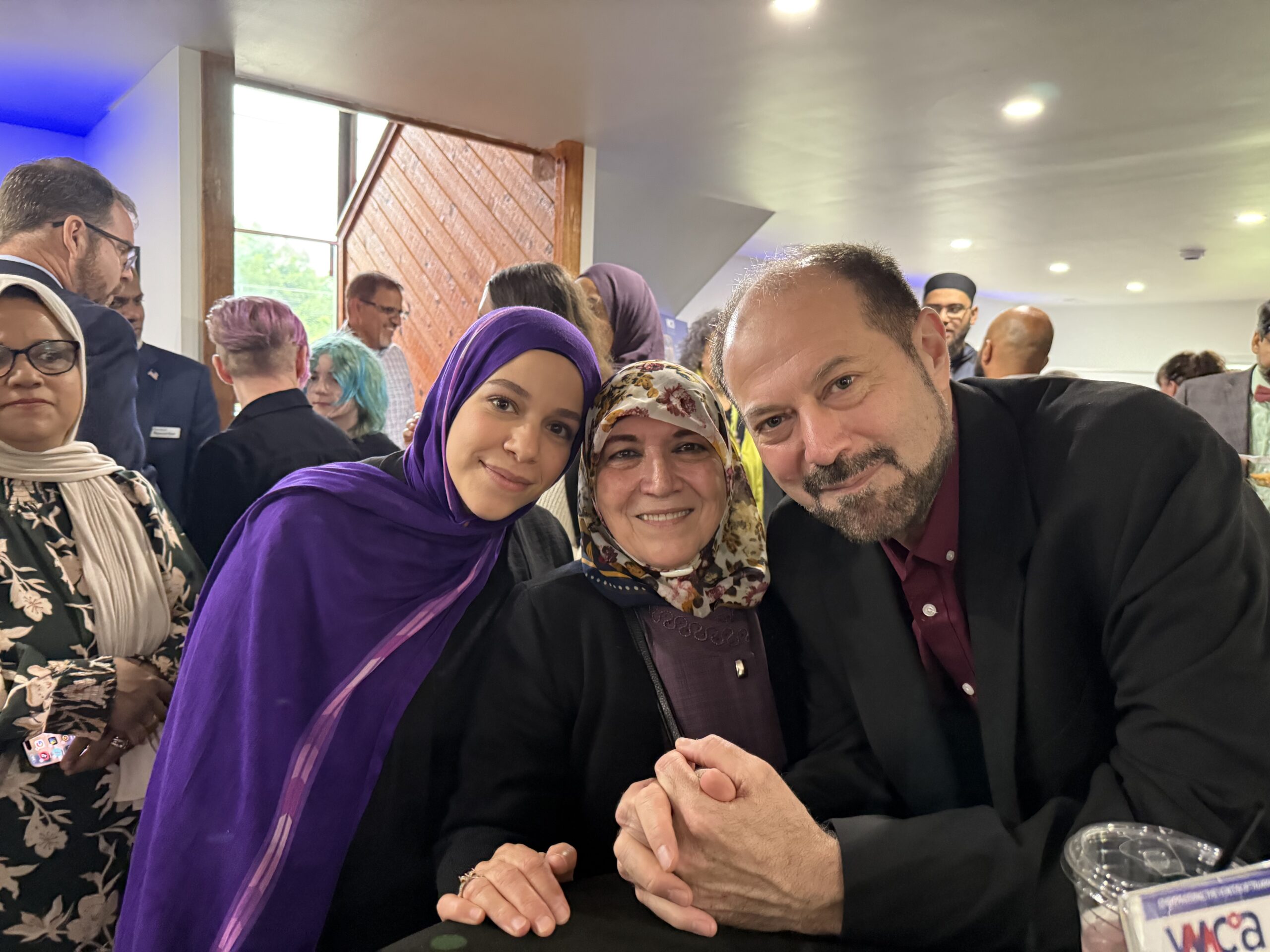
Photo credit: Fauzia Quereshi
Islamic Society of Milwaukee board president Salah Sarsour, his sister Fawzia Sarsour (center) and daughter-in-law Seema Oweisi joined the celebration of the Wisconsin Muslim community’s new home for civic activity. Sarsour, held by ICE for 81 days on charges his lawyers and supporters called false, credited God and the Milwaukee Muslim community and its allies with his June 18th release, when the community gathered at ISM-Main to welcome him home.
What were you feeling the day you were taken away by ICE agents?
“I will never forget that day, March 30th. Mm-hmm. I was arrested from the street, as if I have no address, no place to be identified with. Being active in the community as a business owner and elected for the second time as ISM president, the last thing I expected was to be trapped in the street by ICE agents with guns, none of them wearing uniforms. It was scary.
“I heard one of them saying on the phone, ‘We got him.’ I asked, ‘Am I wanted?’ It sounded like something you’d say about someone who is running away, trying not to be arrested, not someone who is active and visible in the community.
“I was in the car with two agents. My hands were cuffed and my feet. I told them I was supposed to take my mom to the doctor, that my brothers relied on me to take her. She had been in the hospital 10 days earlier for a heart problem. ‘I want to make sure someone knows I’m not going to take my mom,’ I said. They refused to let me call. I told them, ‘Listen, if something happens to my mom, you will be responsible. My mom is 85 years old and has dementia and can’t be by herself all day.’ They called a supervisor who told them not to let me make the call, but to make the call on my behalf.
“They contacted my wife and told her, ‘He’s arrested. He’s with us, and he wants someone to take care of his mom.’ That’s all they said.”
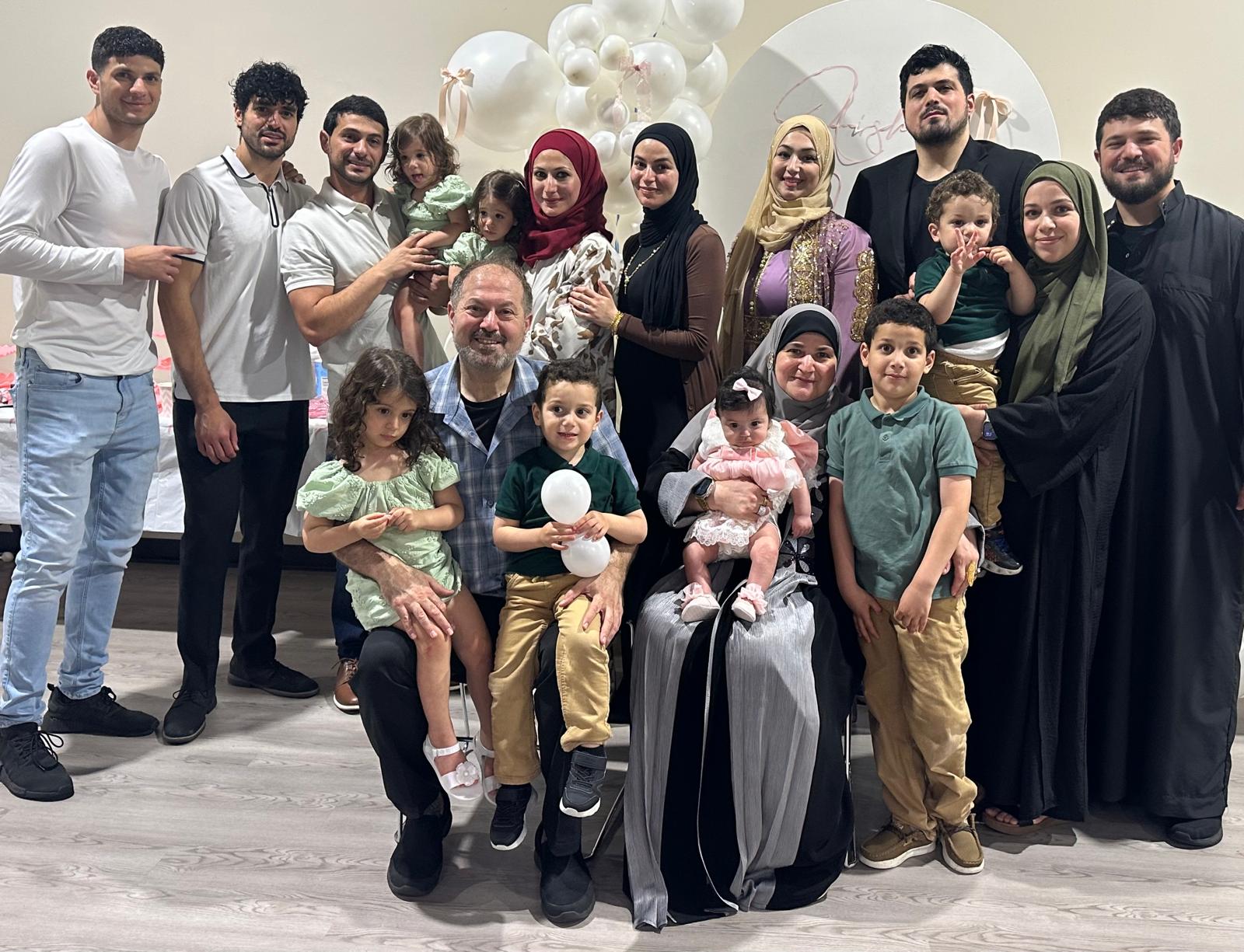
Photo courtesy of Kareem Sarsour
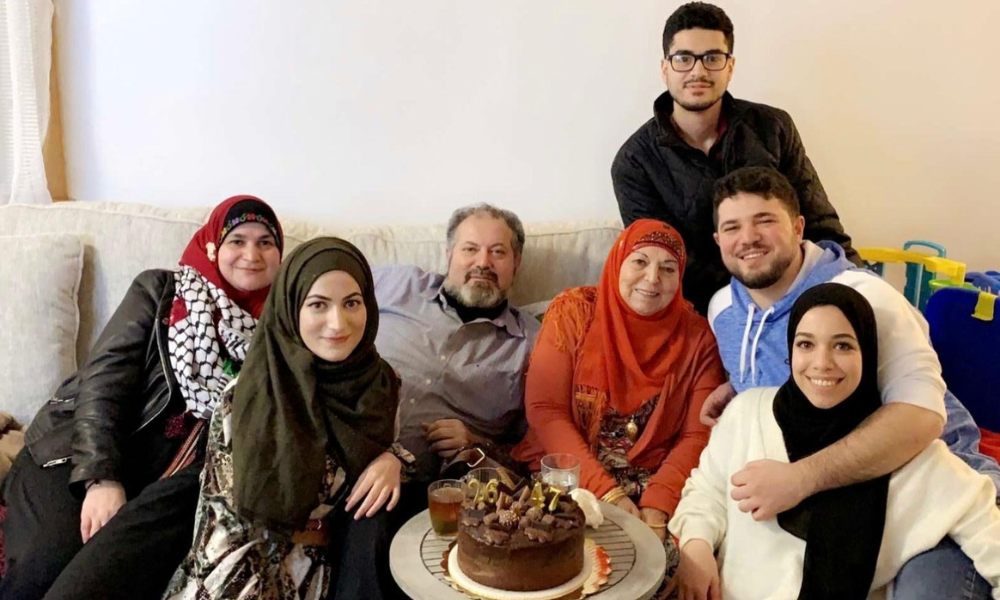
The Sarsour family gathered recently to celebrate the “aqiqa” of Sarsour’s granddaughter’s birth. His son Obada’s daughter Aisha was born when Salah Sarsour was held in ICE detention in Indiana.
Kareem, what did you and the family experience that day?
“The day they took him is going to be a core memory. When you get a call from a family member saying your dad was kidnapped, you start running, trying to understand what’s going on. The main focus for me, my siblings and the family was to try to see where they took him.
“We contacted law enforcement to help in this situation, where a family member is kidnapped. We reached out to our local law enforcement in Franklin and to cities nearby. We learned he had been taken by ICE and they’ll contact us. Then we got a phone call from our family attorney saying he was in Chicago.
“We didn’t think it was ICE. My dad has always been outspoken, especially for the case of Palestine. There are many people out there who don’t like that. We thought someone did something bad to him.”
When you realized your father was being held by ICE, what did you think?
“You always hear in the news about family members being taken away by ICE. Mm-hmm. And you feel with them. It’s heartbreak.
“When it happens to you, you live in a nightmare every single day, not knowing what’s going to happen the next day. We had hope something good would happen but with each day, my mother, grandmother, sisters, my wife, our family in general, grew depressed. We worried about his health and wondered if he was ok.
“When we talked with him, it was worse. He has diabetes and we were concerned about his medication, what he was eating, where he was sleeping, that he was unable to sleep, that he had problems doing his prayers and how they were treating him. All of that added to our worries.”
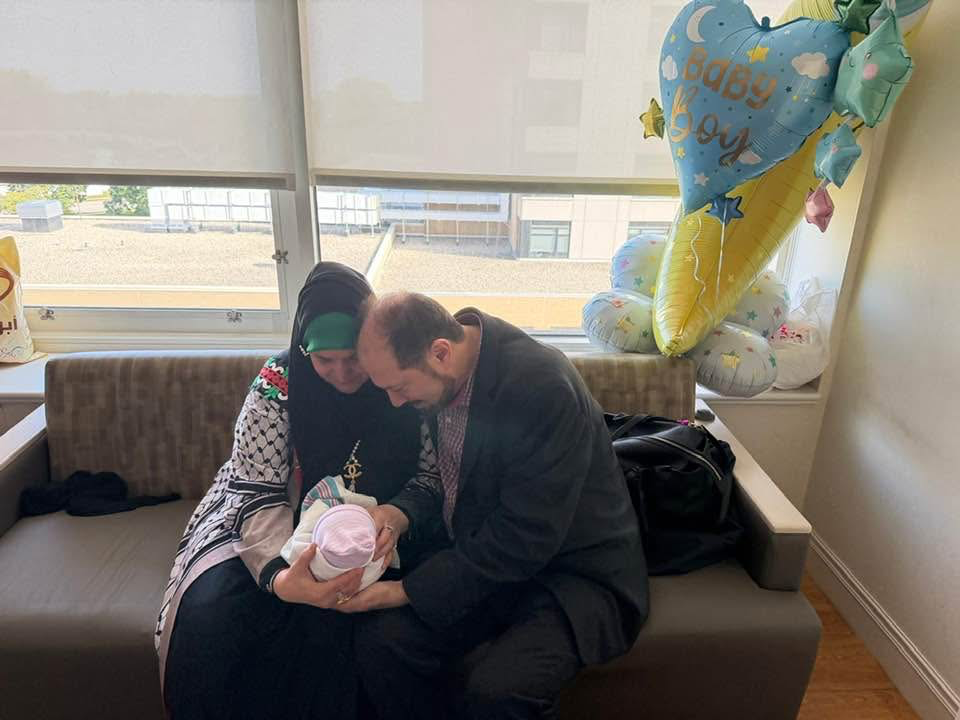
Photo courtesy of Kareem Sarsour
Salah, how could you stay hopeful during 81 days in detention?
I’m a strong believer, honestly. This is how I was raised. I was raised as someone who believes in God and that God will make things easy. Mm-hmm. Also, I have relied on my community for 30 years. I’ve been very active in my community since I was 20 years old. They have never let me down. As a community, we never let anyone down.
“All the people who believe in justice of our cause are part of this community, Muslims and people from different faiths. They will continue the fight. They will not stand by and watch this administration step on the Constitution and the First Amendment. I have a strong belief that justice will win in the end. I saw part of it when a judge ordered me released from detention.”
Photo courtesy of Kareem Sarsour
Salah, how could you stay hopeful during 81 days in detention?
I’m a strong believer, honestly. This is how I was raised. I was raised as someone who believes in God and that God will make things easy. Mm-hmm. Also, I have relied on my community for 30 years. I’ve been very active in my community since I was 20 years old. They have never let me down. As a community, we never let anyone down.
“All the people who believe in justice of our cause are part of this community, Muslims and people from different faiths. They will continue the fight. They will not stand by and watch this administration step on the Constitution and the First Amendment. I have a strong belief that justice will win in the end. I saw part of it when a judge ordered me released from detention.”
Kareem, how are you and your family doing now?
“The day we picked my dad up from Brazil, Indiana, wasn’t just for the family. We’ve always felt the community to be our bigger family. And not just the Muslim community. Also, the different faith groups that were brought together by this. We felt unity in the community. The level of joy we all felt was enormous.
“Our biggest joy will be when this whole issue is behind us. Right now, the fight continues. We want to make sure my dad actually wins his case.
“We never thought my dad would be taken away. He came to this country legally. He built his family. All his kids are American citizens. All his kids graduated college. He has now 10 grandchildren. He’s president of the Islamic Society of Milwaukee. He has lived the American dream.
“The day they took him, they showed us that anything can happen in this country, like something that happens in third-world countries, not in the United States.”
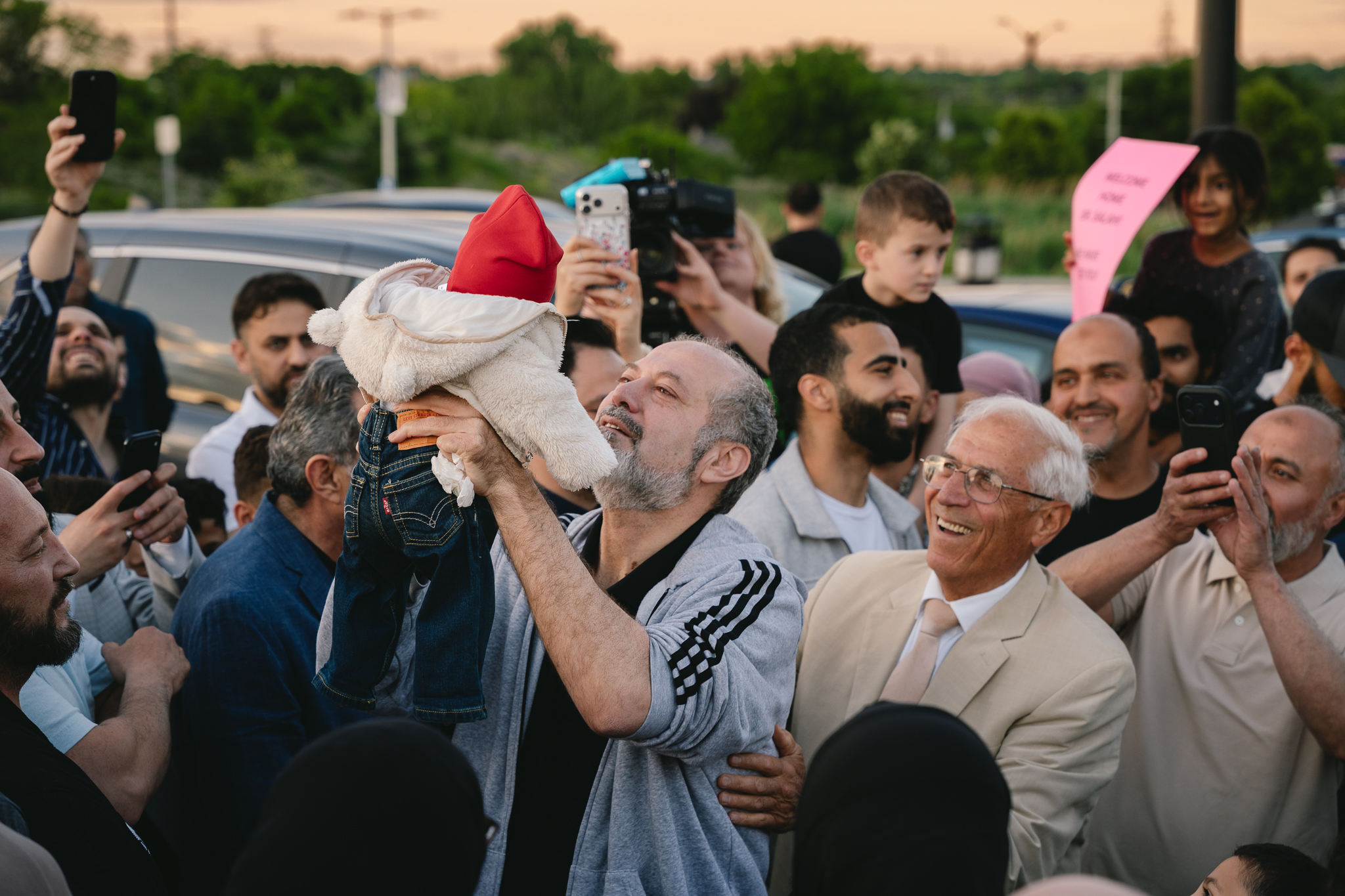
Photo by Yaseen Najeeb
Salah Sarsour held his new grandson for the first time March 30, when he returned to Milwaukee from ICE detention in Indiana.
Since you were arrested, your audience has grown. You are invited to speak in many places. How has that changed your life?
I am an organizer more than a speaker. All my life, I love to plan, to work with others to structure things and build for the community, for the future for our children, supporting others who deserve support. Now making speeches has been added to my plate.
“I believe in saying the truth. That’s the most important thing. I believe what they did to me and others, like Mahmoud Khalil, Mohsen Mahdawi, Leqaa Kordia, Rumeysa Ozturk and others. They want to distract us from the goal, the main work, which is supporting justice, supporting the victims and stopping the genocide, standing for all who are suffering, standing up for our rights and for the future of our children.
“I am not afraid because I feel a big shift happening. Americans, including public officials, community members and organizations are refusing to accept this treatment. I am surrounding myself with this circle—people of justice, people of faith, people of activism. They make me feel strong.
“Last week, I went to meet with our representatives, including senators and congressional representatives. I did not go to beg. I went to wake them up.
“I told them, ‘It’s time to stop sending bombs to Israel to kill people. It’s time to stop sending death to Gaza. It’s time to send love, to send life, to send medicine, food, shelter, and to open borders, rebuild hospitals and schools.
“That’s our message.”
Because our stories matter
Wisconsin Muslim Journal reports on people, stories and experiences of Muslims across our state. As a nonprofit publication, we are committed to making this work available to everyone without a subscription or paywall.
Every story we publish is produced by professional journalists, photographers and editors committed to reporting on Wisconsin’s Muslim communities. Keeping this work going requires time, talent and resources.
If you value dedicated, fact-based coverage that documents Wisconsin Muslim history, please consider supporting us with a donation. Gifts of any size make a difference and help us continue to report on narratives that might otherwise go untold.
We are grateful for your readership.