Photo by Yaseen Najeeb
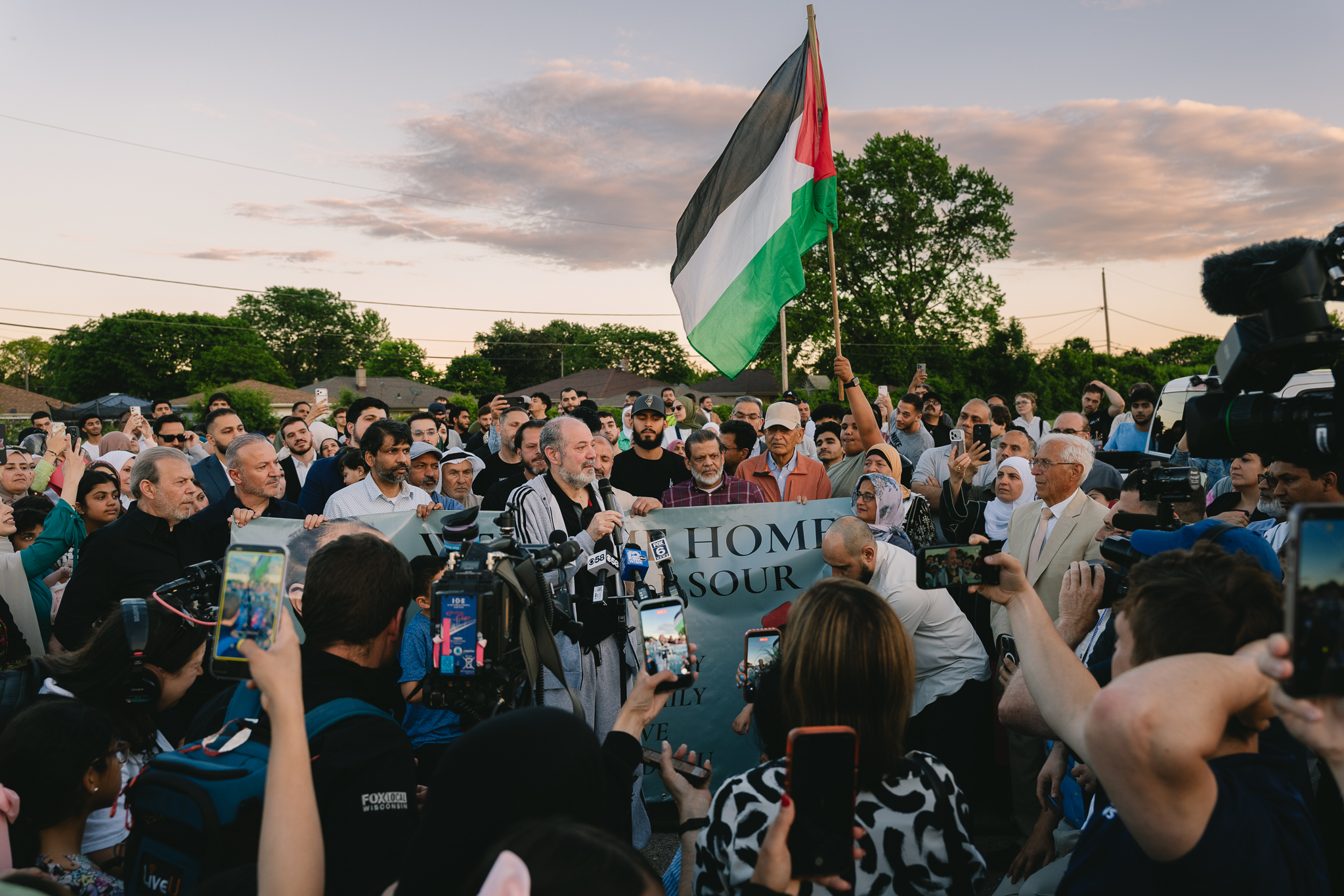
Salah Sarsour, 53, speaks to hundreds who gathered at the Islamic Society of Milwaukee June 18 to welcome him home on the day of his release after 81 days in ICE custody.
In deportation hearings for Islamic Society of Milwaukee president Salah Sarsour that concluded Monday, the government failed to meet its burden of proof and the charges were “all pretext,” his lead immigration attorney Patrick Taurel, J.D., a partner at Washington, D.C.-based Grossman, Young & Hammond, told reporters Tuesday at a post-hearing media conference.
Sarsour’s legal team maintains the charges are an unlawful, politically motivated attack on free speech. They argued that Immigration and Customs Enforcement agents targeted Sarsour, a law-abiding, respected, 32-year resident of the United States solely due to his high-profile advocacy for Palestinian rights.
“What’s at stake here is not just whether this good man can stay here, but whether people can speak freely in this country without fear of unlawful retribution, including one of the most pernicious sanctions of all, which is banishment from your home and family and everything that makes life worth living,” Taurel said. “That’s what we’re fighting about in this case.”
The final, written ruling is expected by Sept. 30, he said.
Revealing the real reason for charges
In a 40-minute recap of four days of testimony in a Chicago immigration court, Taurel said the government’s case unraveled. He explained how.
“We’re here because of Salah’s speech,” Taurel said, highlighting Sarsour’s legal team’s chief argument. “That’s what this is all about. These other charges … are all pretext, and we know it.
“We know this for two reasons—the charge and the timeline of events,” he said.
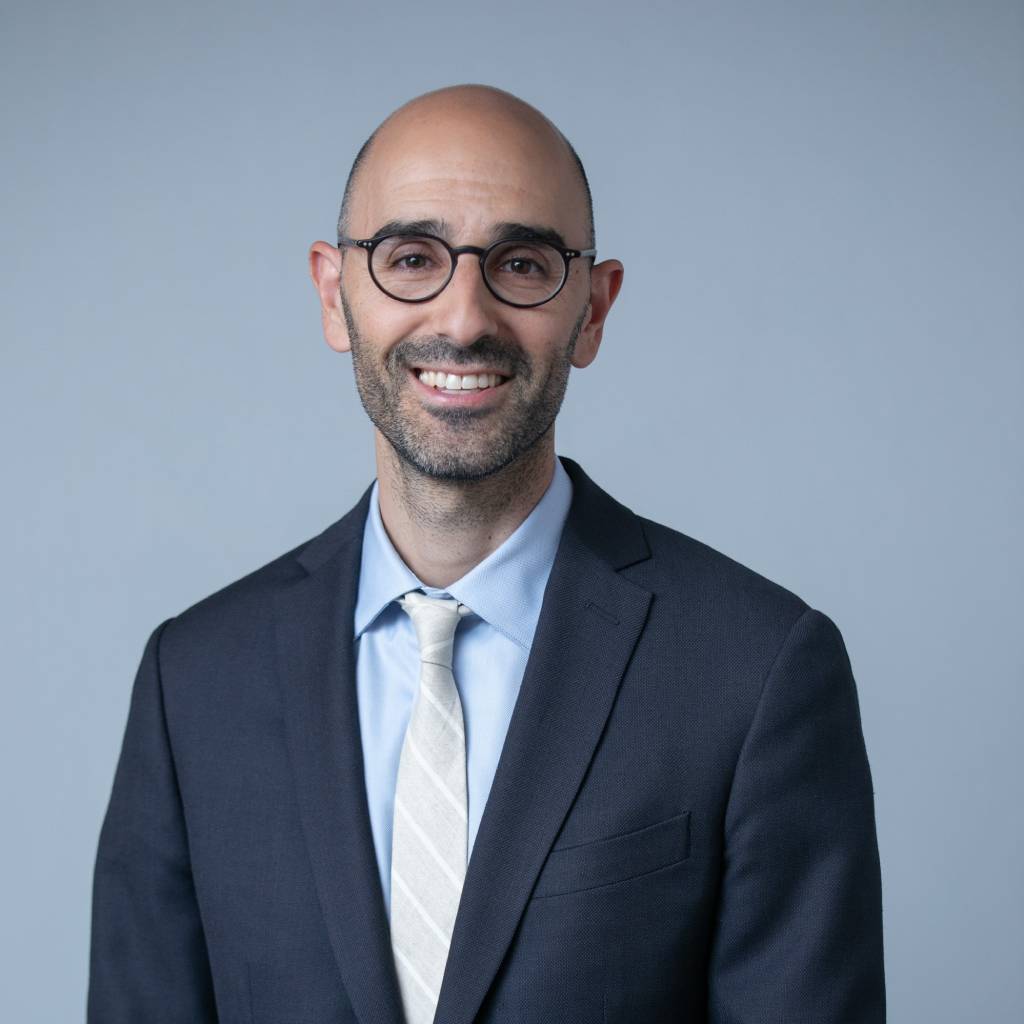
Patrick Taurel, J.D., a top immigration attorney, is recognized by Best Lawyers, a peer-reviewed legal ranking and referral organization.
“There’s a special provision in the immigration laws that was long dormant that this administration has revived with incredible fervor,” Taurel said. “That provision says if the Secretary of State determines a person’s continued presence in this country would have adverse foreign policy consequences, then they are deportable. Just a swipe of a pen from Marco Rubio and an otherwise legal permanent resident can be rendered deportable. It’s a really shocking statute.
“But there’s a sub-clause within that says that when they are targeting your otherwise lawful speech, they have to have an especially compelling foreign policy interest,” he continued. “Since they’ve invoked that clause in Salah’s case, we know they are going after him because of his lawful speech.”
Regarding the timeline of events, Taurel noted, “A deputy attorney general had said, ‘We are going to dismantle American Muslims for Palestine,’ a few weeks before Salah was detained.” Sarsour is a well-known AMP board member.
Dismantling the government’s case
The immigration judge will determine if Mr. Sarsour is “removable,” explained Taurel. Has he done something that makes him deportable? With a green card holder, it could be a criminal conviction or abandonment of residence, for example.
The government has argued Sarsour is deportable on the basis of three claims:
- A claim that Sarsour is a national security threat (determined by Secretary of State Marco Rubio)
- Allegations of lying on immigration forms, and
- An allegation of voter registration fraud.
The government’s claims against Sarsour are all excuses given to hide its true motivation to stop his advocacy for Palestinians, Taurel argued. Nevertheless, the defense team strongly addressed each one.
The U.S. Department of Homeland Security based its case on documentary evidence: records from the Israeli military court system from 1988-89 and 1994-95; Sarsour’s Green Card application from the late 1990s and subsequent citizenship applications; and a 2004 voter registration card bearing Sarsour’s information. DHS called no witnesses.
The defense team brought seven witnesses who aggressively disputed the validity of the government’s evidence. Because DHS did not bring witnesses, the trial consisted largely of cross-examinations of witnesses brought by Sarsour’s legal team.
“After four days of hearings, our position is that the charges have not been proven,” Taurel concluded. “We’ve successfully made the case he is not deportable as they have charged him.”
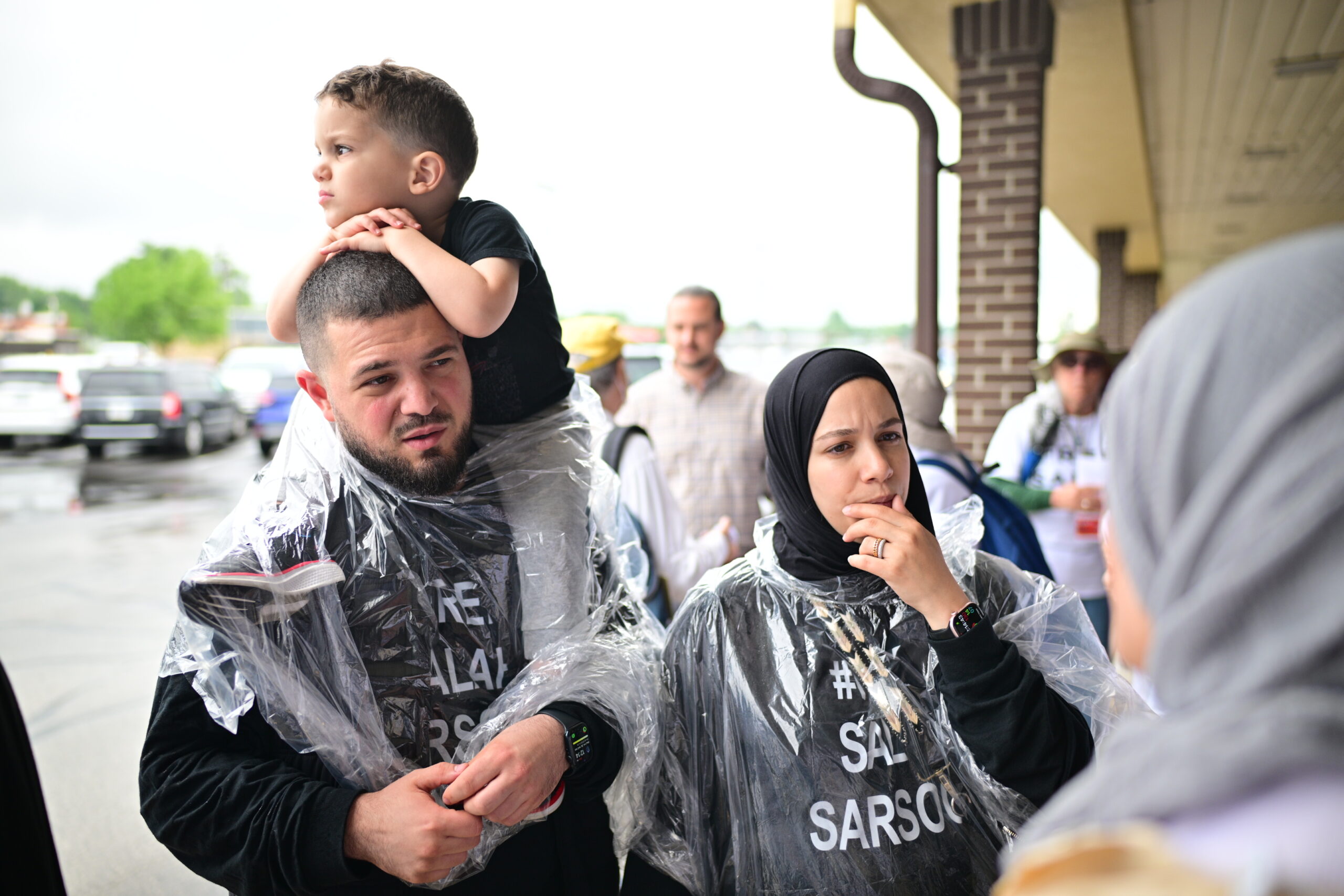
Photo by Andy Chen
Members of Salah Sarsour’s family traveled from Milwaukee to the Clay County Jail in Indiana to join in protesting Sarsour’s detention.
Breaking it down
“The government bears the burden of proving removability of a permanent resident, a Green Card holder, like Salah,” Taurel explained. “We put on a case to establish he was not deportable as charged.”
DHS relied on documents from Israeli military courts that convicted Sarsour on the basis of signed confessions. Sarsour was 15 when he was arrested in 1988 for allegedly throwing an explosive device at an Israeli soldier’s home (Taurel noted he was convicted of rock-throwing and disorderly conduct). He was 22 when arrested in 1994 while visiting his family in the West Bank, accused of attempting to illegally possess weapons and ammunition.
(“They have falsely characterized the stone-throwing case in their press releases to say he was convicted of throwing a Molotov cocktail. He was charged with that but not convicted of that,” Taurel said.)
The government used Sarsour’s U.S. immigration application from the late 1990s and subsequent citizenship applications to show Sarsour had answered “no” to questions asking if he ever committed a crime or been convicted to argue he lied on his applications.
The defense team countered that the documents from Israeli military courts were legally invalid because Sarsour was severely tortured and coerced into signing a false confession written in Hebrew, which he didn’t understand. In addition, they brought expert witnesses who testified that the Israeli military court system lacks due process protections for Palestinian detainees.
“We brought witnesses, including his brother who saw with his own eyes his condition when he was in Israeli custody and a forensic psychiatrist who determined Salah suffers from post-traumatic stress disorder, which is consistent with what he described as happening to him in Israeli custody,” Taurel said.
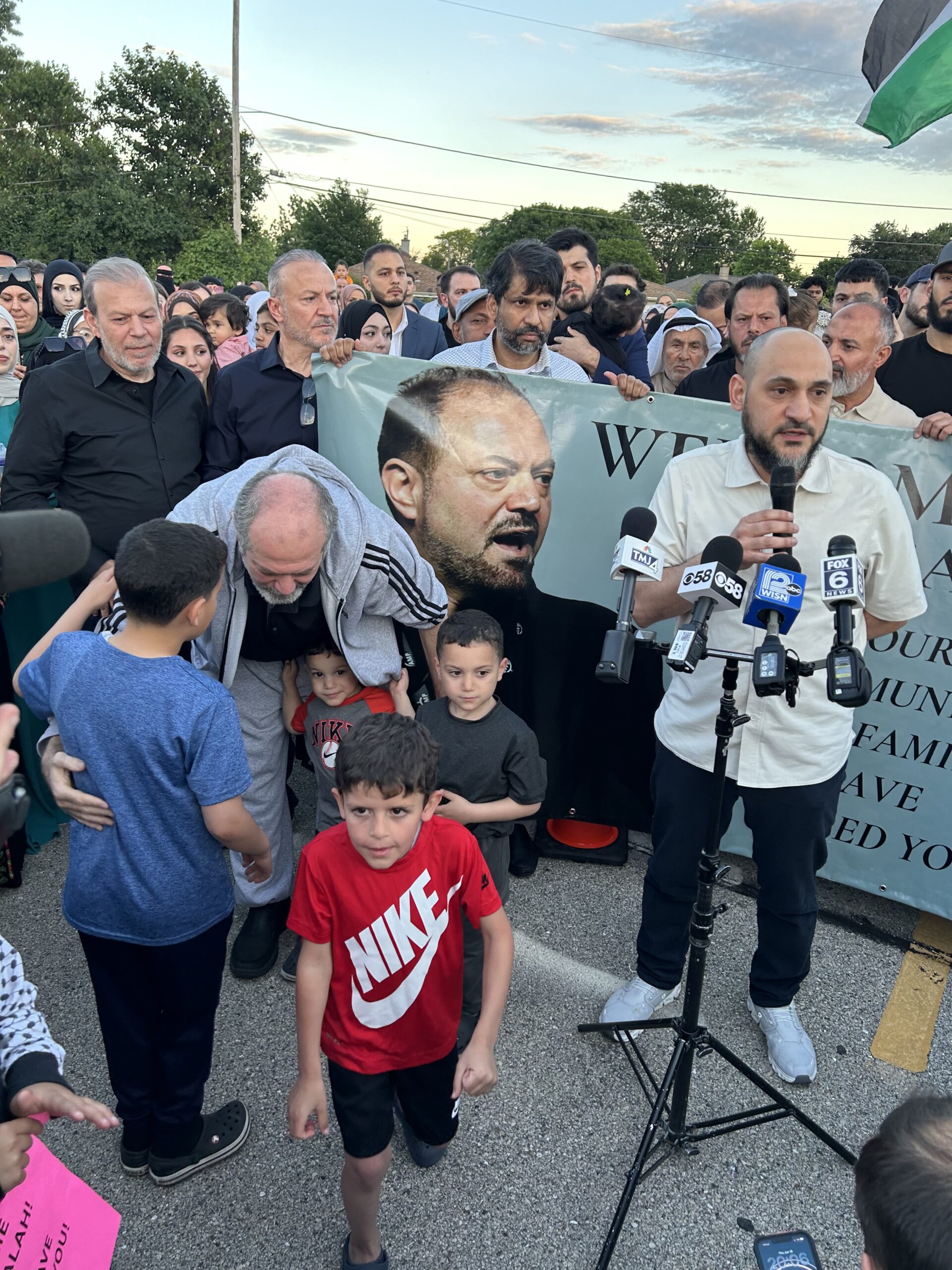
Photo by Sandra Whitehead
Salah Sarsour leans down to hug his grandchildren while his lawyer Munjed Ahmed, J.D. addresses hundreds gathered June 18 at the Islamic Society of Milwaukee to welcome Sarsour home.
“We also heard from Jawad Boulos, who represented Salah in Israeli Military Court in 1988-89 and 1994-95,” he said. Boulos noted that Sarsour was coerced into confessing to the offenses that are now emphasized as grounds for his removal.
Boulos testified that in 1994 Sarsour was severely tortured, beaten unconscious, eventually forced to sign a confession and, notably, hospitalized. Boulos testified that he’s represented thousands of detainees and the fact that Sarsour was hospitalized was highly unusual.
“He also testified about how Israel had no evidence against Salah except his involuntary confession, which was procured by torture,” Taurel said.
Other witnesses included a lawyer who represented Sarsour in immigration cases, a preeminent expert on the treatment of Palestinian detainees who face Israeli military tribunals and a sociologist who is an expert on Palestinian political expression.
The sociologist talked about stone-throwing by Palestinian youth. “It’s not to harm anyone. Rather, it’s an act of political protest, a kind of screaming into the void” against occupation,” Taurel quoted her as saying.
“We also heard from a good friend and another community leader, Othman Atta, who had served as Salah’s attorney for a spell,” Taurel said, “about how the U.S. government essentially admitted it had no real derogatory information against Salah in an investigation that opened in the late 1990s.”
Significantly, Sarsour’s legal team showed that DHS had been aware of these exact records from Israeli military courts for years. The U.S. government evaluated and reviewed them multiple times since 2000, when assessing Sarsour’s immigration and citizenship applications, raising the question of why there would be a sudden push to deport now, Taurel noted.
“The U.S. government knew about the 1988 stone throwing conviction as early as 1992, when Salah was applying for and admitted into the country the next year on a visa. He’d gotten a waiver for it. The government knew about the 1994 case as soon as he came back to the U.S., because he was debriefed about it by the FBI.”
Finally, “there’s no evidence” for the claim about voter registration fraud, Taurel said. “The evidence clearly shows he has zero recollection of ever filing it. Even if he did, he didn’t do it for a purpose of any kind because he never actually voted. There’s no evidence of that. In order for you to be deportable because you falsely claim to be a U.S. citizen, you have to falsely claim to be a U.S. citizen for a purpose or benefit under the law.”
What’s next?
“How is the judge going to rule? I don’t want to venture a guess,” he said. “We have made our case. I think the judge’s heart is with us.
“But I also know there is a lot of pressure on immigration judges today,” Taurel continued. “The New York Times has reported that judges who ruled in favor of non-citizens who were charged under the foreign policy grounds, pro-Palestine advocates, were fired. Over 150 immigration judges have been fired since this administration came in. There’ve been lots and lots of directives issued that are sending the clearest of signals to judges about how they’re supposed to rule in these cases. Neutrality of immigration courts has been severely undermined.
“I hope this judge takes a fair look at the evidence,” Taurel said. “If he does, he’ll find that Salah is not removable on the charges the government has filed.”
If the judge finds Sarsour is removable, “we’re going to pivot to the second question (an immigration judge answers): is he eligible for relief from removal?” Taurel said. “It would focus on the question of what dangers or risks to his personal safety Salah would face if he is deported to the West Bank.”
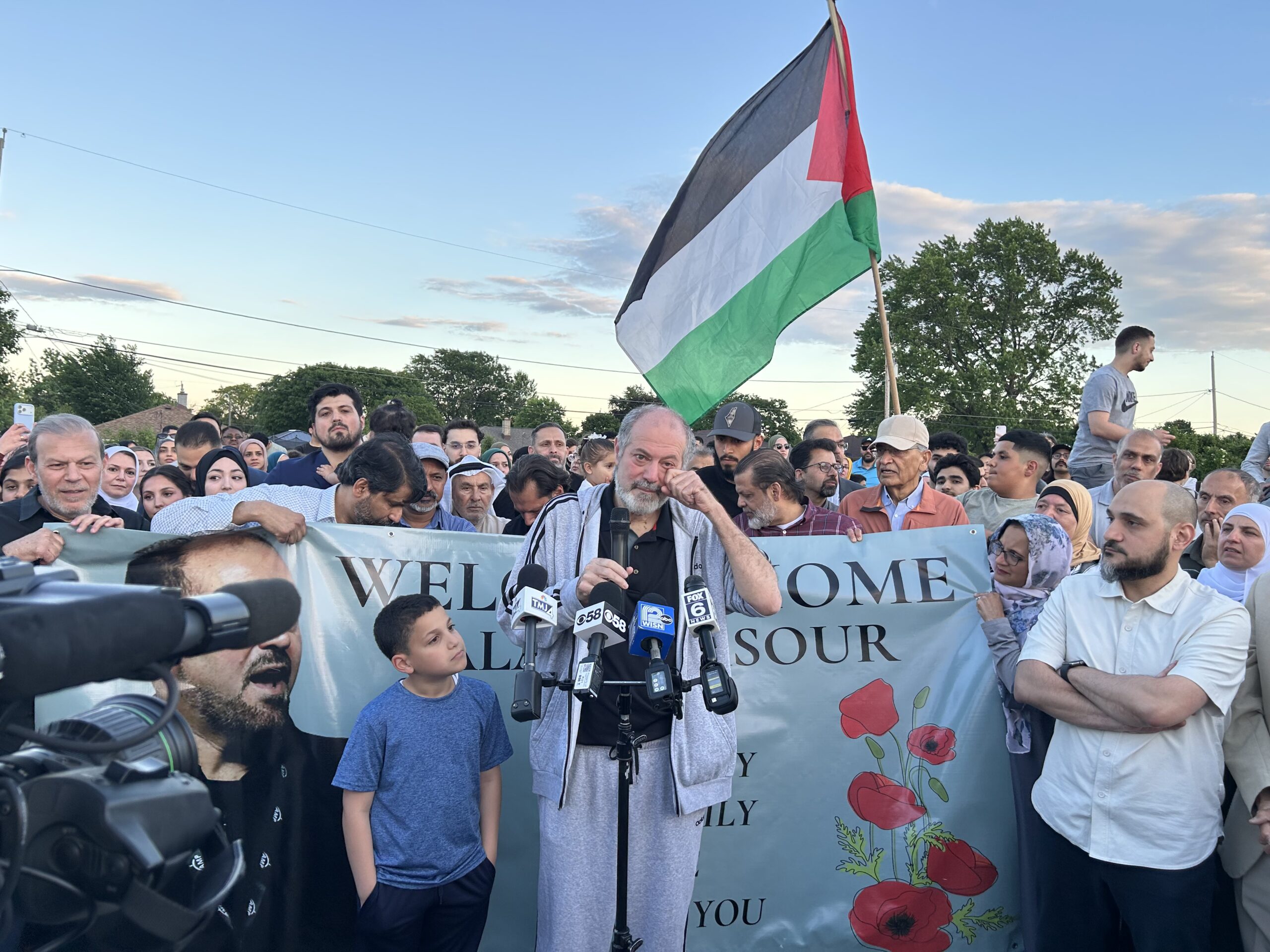
Photo by Sandra Whitehead
With his grandson on one side and attorney and friend Munjed Ahmad, J.D., on the other, Salah Sarsour wipes away a tear as he addresses the media June 18, upon his release from ICE custody.
What happened before the deportation hearings?
U.S. Immigration and Customs Enforcement agents arrested Sarsour, 53, of Franklin on March 30. The father, husband, grandfather and caretaker of his elderly mother, business owner and Islamic Society of Milwaukee board president was held in an Indiana jail for 81 days on charges his legal team called “false.”
“It appears to be the latest case in which the administration has sought to deport someone active in pro-Palestinian causes, ” The New York Times reported in April, noting that U.S. Secretary of State Marco Rubio deemed Sarsour to be “a threat to the U.S. foreign policy interest of combating antisemitism” in 2025.
U.S. District Judge James P. Hanlon ordered Sarsour’s immediate release June 18. In his 29-page order, the judge noted Sarsour’s First Amendment claims “are substantial, which could render his detention unlawful.” Freed, Sarsour immediately stepped back into his leadership role at the ISM and in the Milwaukee Muslim community.
Meanwhile, the U.S. government fast-tracked his deportation case to make a political point, according to Samuel Cole, a former immigration judge and senior attorney at the American Civil Liberties Union of Illinois, The Guardian reported in July.
The Executive Office for Immigration Review assigned Sarsour’s case to Assistant Chief Immigration Judge Jayme Salinardi. Although Sarsour, as a Milwaukee-area resident, would typically have his case heard by a Chicago Immigration Court judge, the executive branch bypassed standard administrative routing to assign the case to the Kansas City-based judge by using its authority to designate specific judges to high-profile or complex cases.
Sarsour’s legal team expressed concerns about this unusual procedural shift. Prior to being a judge, Salinardi worked as a prosecutor for ICE. He has a record of denying asylum claims 90% of the time, compared to a national average of 59%.
Four deportation hearings have been held since late July, with the final hearing on Monday, Sept. 14.
Because our stories matter
Wisconsin Muslim Journal reports on people, stories and experiences of Muslims across our state. As a nonprofit publication, we are committed to making this work available to everyone without a subscription or paywall.
Every story we publish is produced by professional journalists, photographers and editors committed to reporting on Wisconsin’s Muslim communities. Keeping this work going requires time, talent and resources.
If you value dedicated, fact-based coverage that documents Wisconsin Muslim history, please consider supporting us with a donation. Gifts of any size make a difference and help us continue narratives that might otherwise go untold.
We are grateful for your readership.