Photos courtesy of the Hakim/Clark family
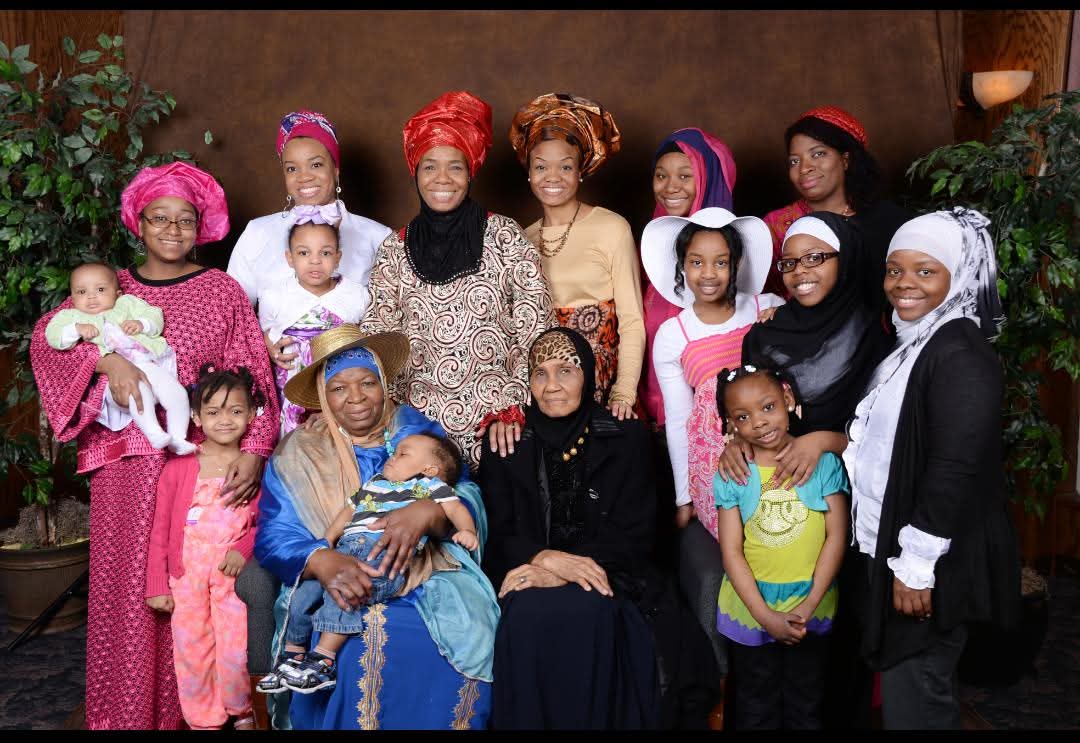
Four generations of women related to Sr. Hadrat Hakim and Br. Jalil Abdul Hakim, perhaps Milwaukee’s first Muslim couple, celebrate a Mother’s Day event. Adults (front row, center left in blue) Lathita Ahmad, (center) Hadrat Hakim and (right in white hijab) Aliyah Clark. Back row (left to right) Sakinah Clark, Sumaiyah Clark, Karima Hakim, Hadiyyah Clark, Fatihah Harris and Akhira Ahmad.
Journalism is said to be “the first rough draft of history,” an aphorism credited to Philip L. Graham, Washington Post president and publisher from 1946-1963. Without journalism, many impactful people and happenings would never appear in history books. Capturing the story of Wisconsin’s Muslim community is Wisconsin Muslim Journal’s mission.
This is the first of two articles based on interviews in 2022 and 2026 with three generations of one of Milwaukee’s first Muslim families. In today’s story, we go back 75 years into the early days of Milwaukee’s Muslim community.
Watch for more stories about families and individuals who played important roles in the history of Wisconsin’s Muslim communities.
Diving in
Karima Clark came to Milwaukee from Texas to visit her family in March 2022. During that visit, she and her mother, Hadrat Hakim, now 97, spoke with WMJ about Sr. Hadrat’s early years in Milwaukee. Sr. Hadrat’s oldest son Kalim Hakim called in to join the conversation.
Memories flowed, and there was much more to say, but we all got busy and did not resume the conversation until this month. Sr. Hadrat’s granddaughter Hadiyyah Clark organized a Feb. 14 call with them again and also with her grandfather’s sister Lathita Ahmad. In the meantime, Sr. Hadrat had moved to Texas to be close to Karima.
The following story is based on those interviews, emails and other communication with the family.
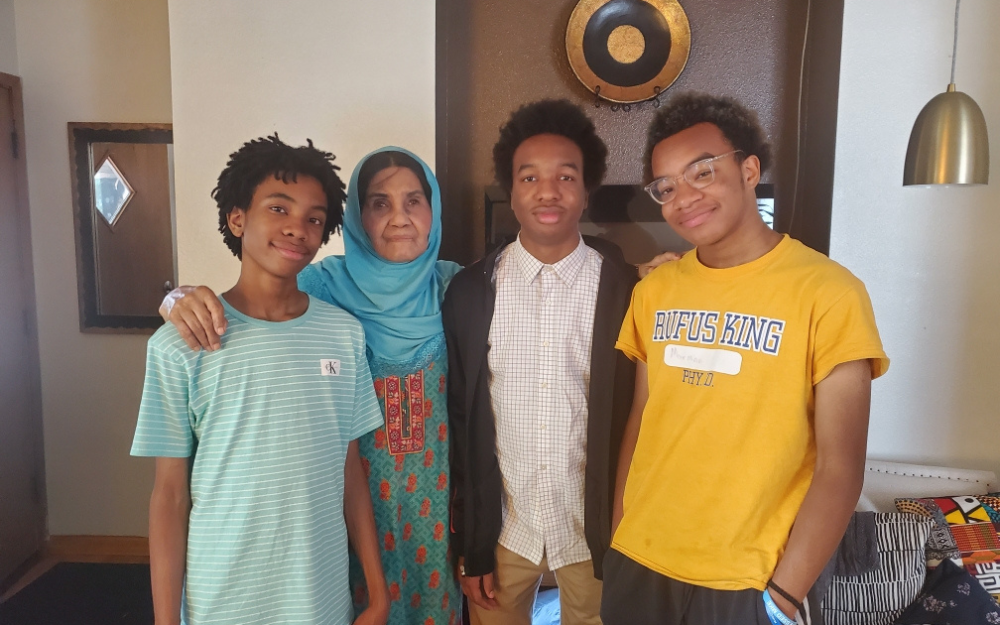
Second from left, Hadrat Hakim poses with great grandsons Aayan Henry, Aajmal Henry and Nasir Moorman.
A pair of Milwaukee matriarchs
Before we go back to the beginning, we will highlight two women who helped lay the foundation for Milwaukee’s Muslim community with their behind-the-scenes servant leadership: Sr. Hadrat Hakim and her sister-in-law, Lathita Ahmad.
Sr. Hadrat Hakim-the rock
“My mom is the rock of the whole community, the foundation,” Kalim Hakim said. Many of Milwaukee’s Muslims in the early days were students at the University of Wisconsin-Milwaukee, Marquette and other universities, he explained. They came from Turkey, Egypt, Somalia, Jordan and Palestine.
“And whose house did they come to? Who do they remember? My mom,” he exclaimed.
“We had one Eid when the whole community came to my mom’s house to eat and celebrate the festival. In fact, several times she invited the whole community to her house,” Karima said. “We prayed in and outside her house,” on Milwaukee’s Northside, near North Avenue. “The neighbors had never seen anything like it.”
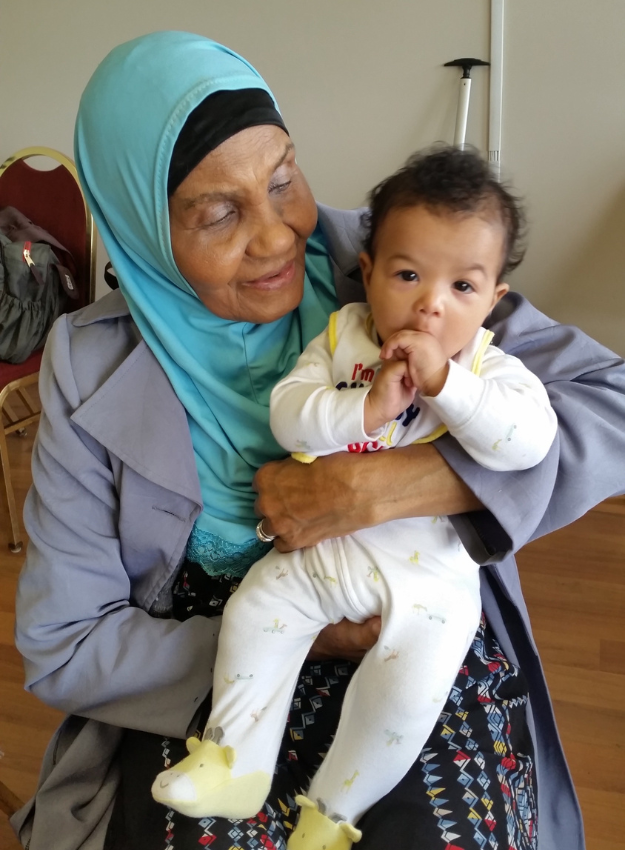
Sr. Hadrat Hakim
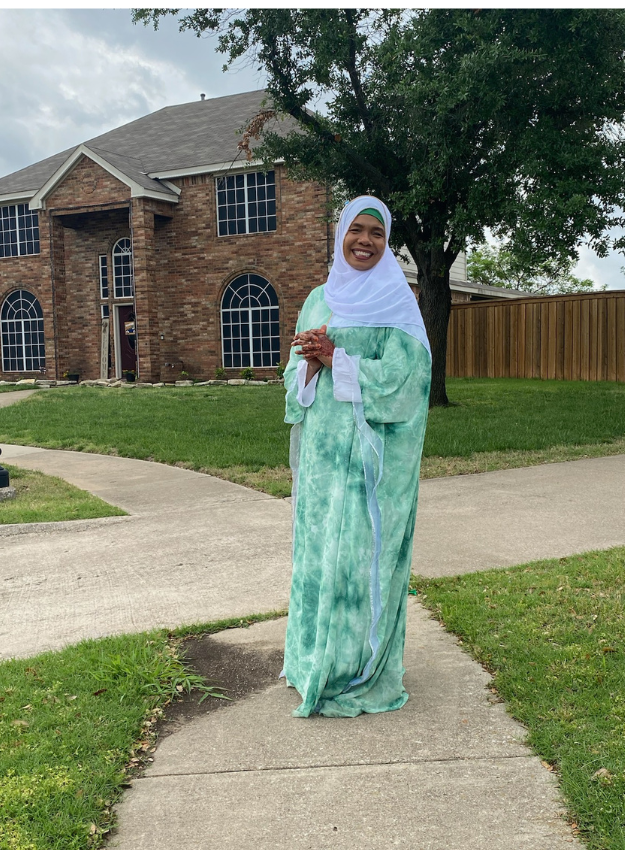
Sr. Karima Hakim
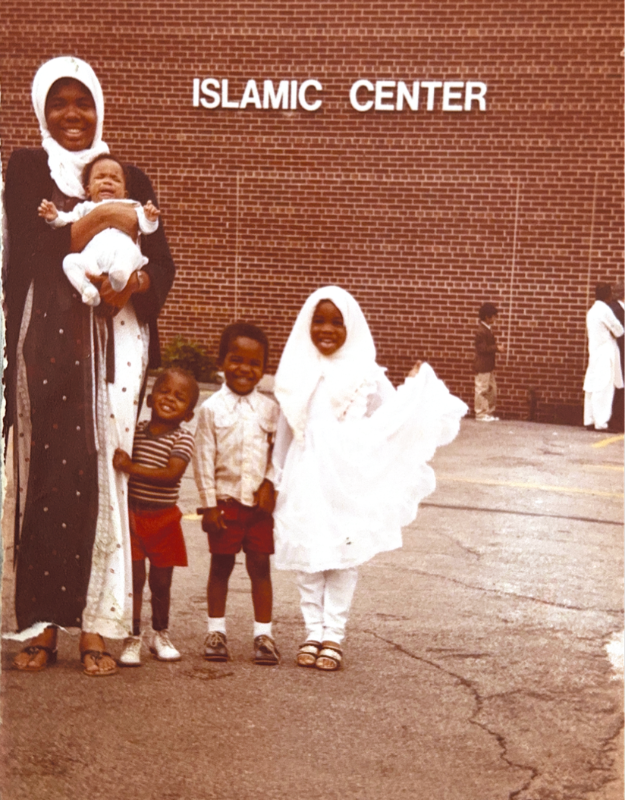
Over the years, Sr. Hadrat did a lot of cooking and baking for community events and fundraisers, family members agreed. She and her husband Jalil Abdul Hakim helped repair and clean the old school building that became what is today the Islamic Society of Milwaukee and mosque at 13th Street and Layton Avenue.
Their children also pitched in. In the early days of the ISM, “we were always there, doing whatever needed to be done,” said Karima, recalling her early teen years. Her mother, Sr. Hadrat, led her family and the community by example, she said.
Dedicated to fulfilling her Islamic obligations, at 70, Sr. Hadrat performed the Haj, the required Muslim pilgrimage to Mecca in Saudi Arabia. In 2000, she went on a pilgrimage with a travel group of people, mostly from Chicago.
Auntie Lathita-a servant leader
“Auntie Lathita is the epitome of a servant leader,” Sr. Lathita Ahmad’s great niece and Sr. Hadrat’s granddaughter Hadiyyah Clark told WMJ. (Sr. Lathita is Jalil Abdul Hakim’s sister.)
The Dawah Center has long had a clothing drive to help people in need. Decades ago, Sr. Hadrat’s son Kalim’s wife noticed the white box for clothing donations overflowed and spilled onto the floor. She decided to collect them, wash them and distribute them to community members who would benefit from them. When she died, the clothing drive stopped.
Then Sister Lathita stepped up. “The torch wasn’t passed to Auntie Lathita,” Hadiyyah explained. “She chose to do the work because no one else was doing it. She asked the brothers at the masjid what would be done with the clothes and they responded they would take them to Goodwill or somewhere to donate, she recalled in an interview last week with WMJ.
“Why?” she asked.
“They keep coming in. We have to take them somewhere,” they responded.
Hadiyyah explained what happened next. “Auntie Lathita said, ‘I will be the Goodwill. And, I’ll be cheaper and give the money to the Dawah Center.’ She took the clothes home and washed them at her own expense. In exchange for clothes, she asked those who could afford it for a small donation, but gave items freely to those who could not. The monetary donations went directly to the Dawah Center Sunday School program.
When she retired from her job as a nursing assistant, Sister Lathita did this work by herself, with occasional help from two of her former co-workers, “two good Christian women who were always kind.”
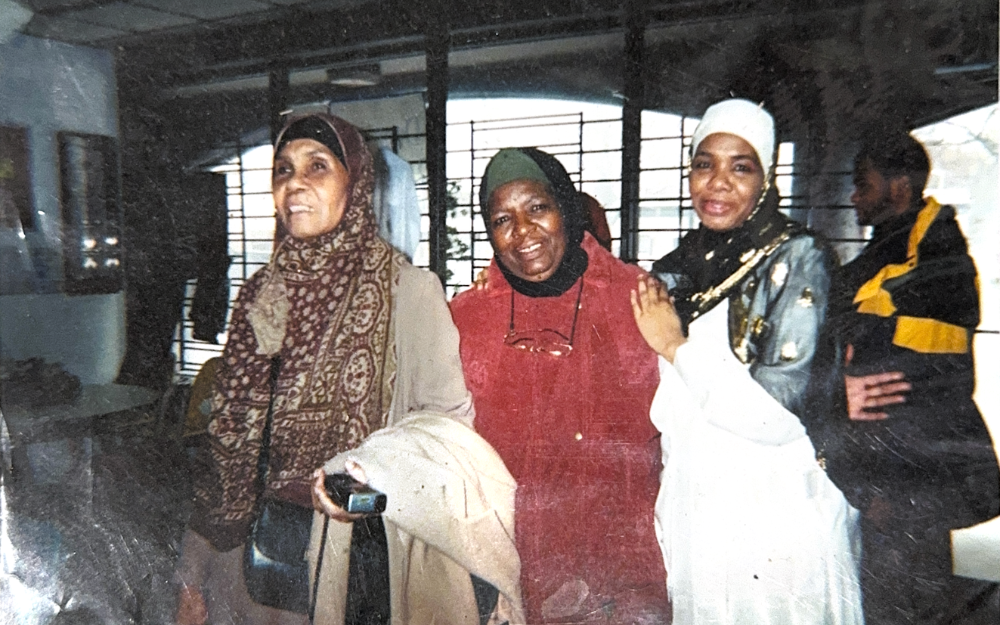
Hadrat Hakim, Lathita Ahmad and Karima Hakim stop for a photo after jummah (Friday) prayer at the Milwaukee Islamic Dawah Center.
Sr. Lathita has continued this work into her senior years and her children, Bilal, Raqib, Uthman and Akhira, have stepped up to help, Hadiyyah said. “She doesn’t think about her legacy. She said, ‘You just do what needs to be done. Giving clothes to people makes you feel good because they need it. It makes them feel good and you as well.’
“She asks Allah to make her children strong in Islam and to be good Muslims,” Hadiyyah added. “She’s showing her children how to do that by being a living example of a true servant leader.”
Sr. Lathita’s daughter Akhira summed up what her mother’s example taught her, saying, “If you’ve got it, you give it. And, you don’t look for it to come back.”
Now, back to the Hakim family story.
Planting roots in Milwaukee
“Our first family members living in Milwaukee would be my parents, Jalil Abdul Hakim and Hadrat Hakim,” Kalim Hakim said. “My father was born in 1923 and my mother in 1928. They were born Muslim and came to Milwaukee as a couple. My father had lived in Texas as a small child and my mother in Mississippi.
“They were ambitious and Milwaukee during the sixties and seventies was very industrial, with a lot of factories and bustling with work. There seemed to be a good work ethic here. They came to Milwaukee to create a better life for themselves.”
“But there were no masajid (mosques) here at all,” Kalim noted. There was the Nation of Islam’s Masjid Sultan Mohammad No. 3 in Milwaukee, but the Hakims followed the path of Sunni Islam.
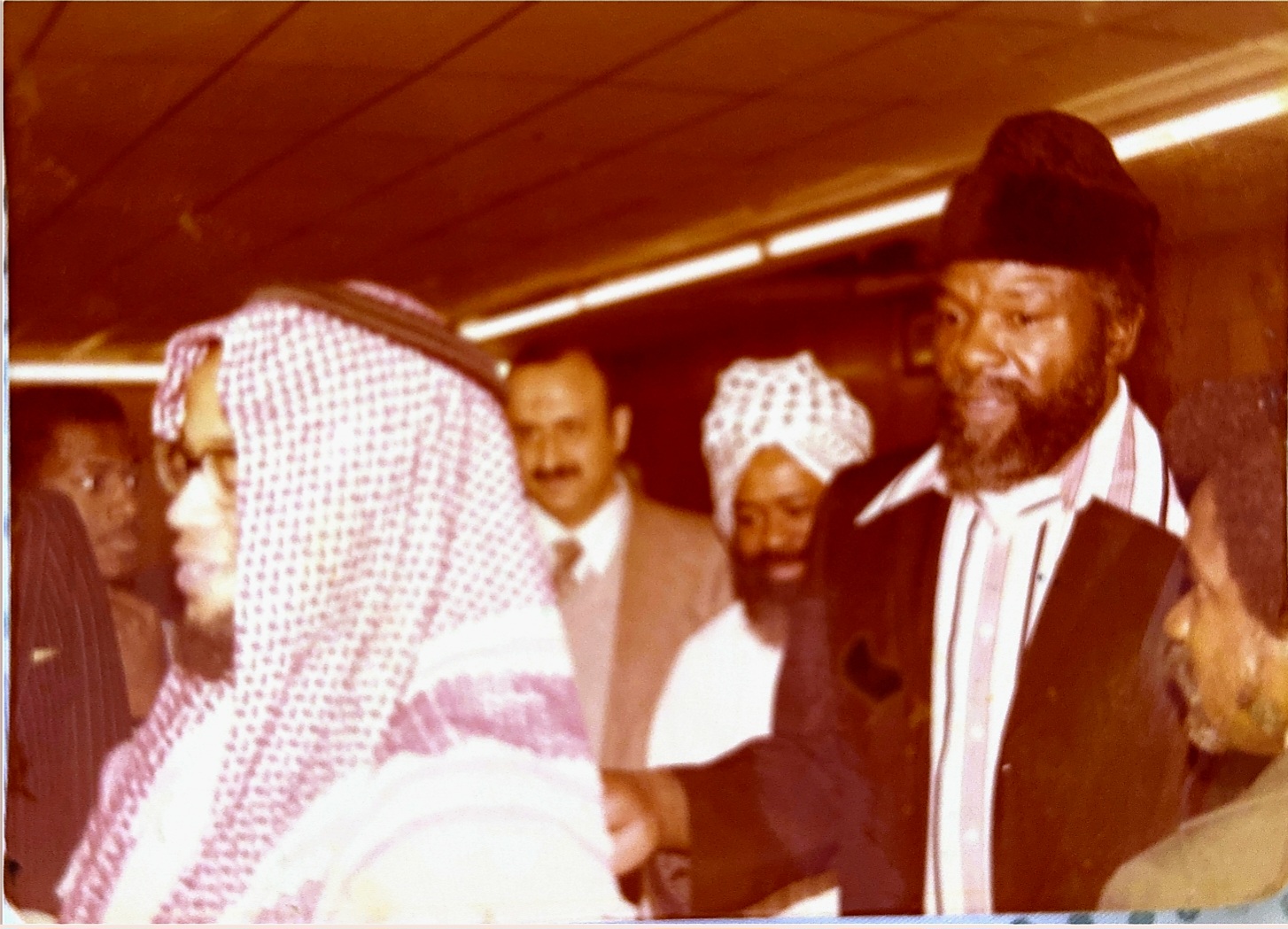
Jalil Hakim (right) walks behind groom Abdallah Clark during the wedding of Hakim’s daughter Karima at the Kenwood Methodist Church near the University of Wisconsin-Milwaukee. The church provided Muslims with place to pray on Fridays.
A handful of Muslims
“Mahmoud Atta and his father were some of our first acquaintances with other Muslims,” Sr. Hadrat said. “Mahmoud came here from Palestine as a boy. He and his dad lived with us for a while.” (The late Mahmoud Atta is the father of Islamic Society of Milwaukee executive director Othman Atta, Muslim Women’s Coalition founder Janan Najeeb, Bayan Salous, wife of Franklin alderman Nabil Salous, and Milwaukee businessman Ihsan Atta.)
“When Mahmoud was living with us, we would have jummah prayer in our house,” Sr. Hadrat said. “That was before he went back home and married Intisar. I knew him as a teenager going to school; he graduated from West Division.
“Every Friday, we would put a blanket down on the floor in our living room,” Sr. Hadrat recalled. “We had jummah prayer on our living room floor. Mahmoud was our imam. That was the beginning, about 74 years ago,” Sr. Hadrat said.
“I didn’t know any other Muslims except the Attas and our family,” Karima said about her childhood in the sixties and seventies.
“Back then, we had copies of the Quran, but not a lot of translations were available,” said Kalim. “There was not a lot of information about Islam available, period. It was very, very rare to find a copy of any hadith.” There was no internet. We would rely on what we could gather from anyone who had studied.”
A brother in the community, “Khalid Walid, also called ‘Chief,’ was a student of a mufti who studied at Al Azhar in Egypt,” he continued. “So, Khalid Walid learned from this shaykh and he started teaching my father and mother. He was considered the most knowledgeable amongst the group.”
Sr. Hadrat added, “Mahamoud Atta was one of the biggest helpers in the group for teaching Islam.”
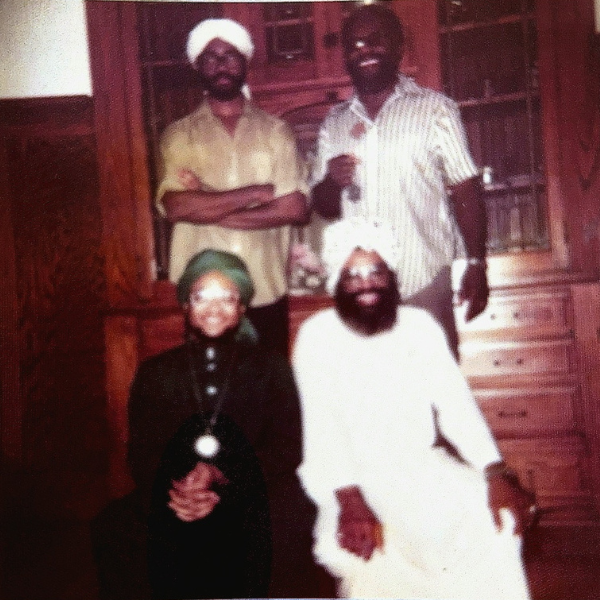
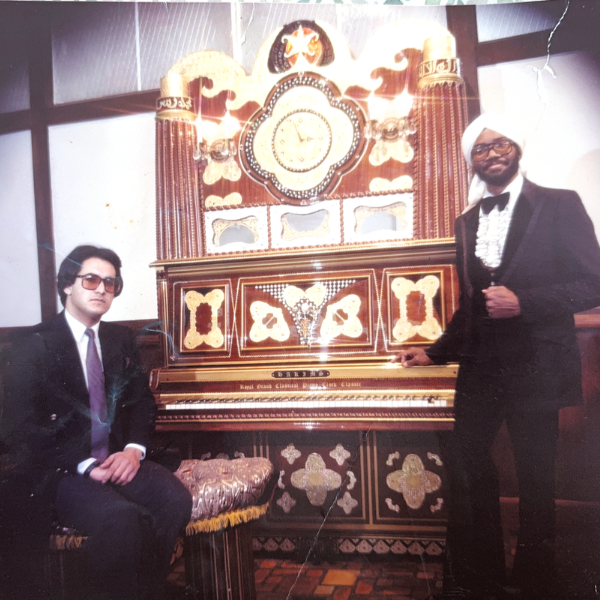
Kalim Hakim (right) stands next to his custom-designed piano; A representative from Saudi Arabia (left) commissioned Kalim to design a very large Quran that people see when they enter Mecca.
Growing and building
What started with two or three families praying at the Hakim’s house grew. And as the community grew, so did the need for a masjid (mosque), a school and other Islamic organizations.
As the hub of Milwaukee’s early Muslim community, the Hakims worked hard with their fellow Muslims to establish a mosque—starting with a storefront for Friday prayers to space in a church near the University of Wisconsin-Milwaukee, to the Muslim House, a mansion on 31st and Kilbourn that the community purchased in 1976 as its first masjid. The Hakims and others had worked to raise funds. Legendary basketball star Karim Abdul Jabbar, who played with the Milwaukee Bucks, donated a check for $500. “That was a large donation at the time,” Kalim said.
The community outgrew the Muslim House and, in the early 1980s, sold it, raised more money and purchased an old school at 13th and Layton, the site of the Islamic Society of Milwaukee-Main. Everyone worked together to make it happen, they said.
“My husband, Jalil Hakim, was one of the real founders of the Muslim House, the Islamic Center and the Dawah Center,” Sr. Hadrat said.
“He worked really hard for the community during the time of the Muslim House,” Karima added. The Hakims did whatever they could do, they agreed.
The good old days
In the seventies and early eighties, Milwaukee’s Muslim families spent a lot of time together, the Hakims said. During Ramadan, “we used to go to each other’s houses at night,” Sr. Hadrat said. “Every night we’d break fast at a different family’s house.
“All the sisters would get together at each other’s homes,” Karima said. “They would come to our house and we would go to theirs.”
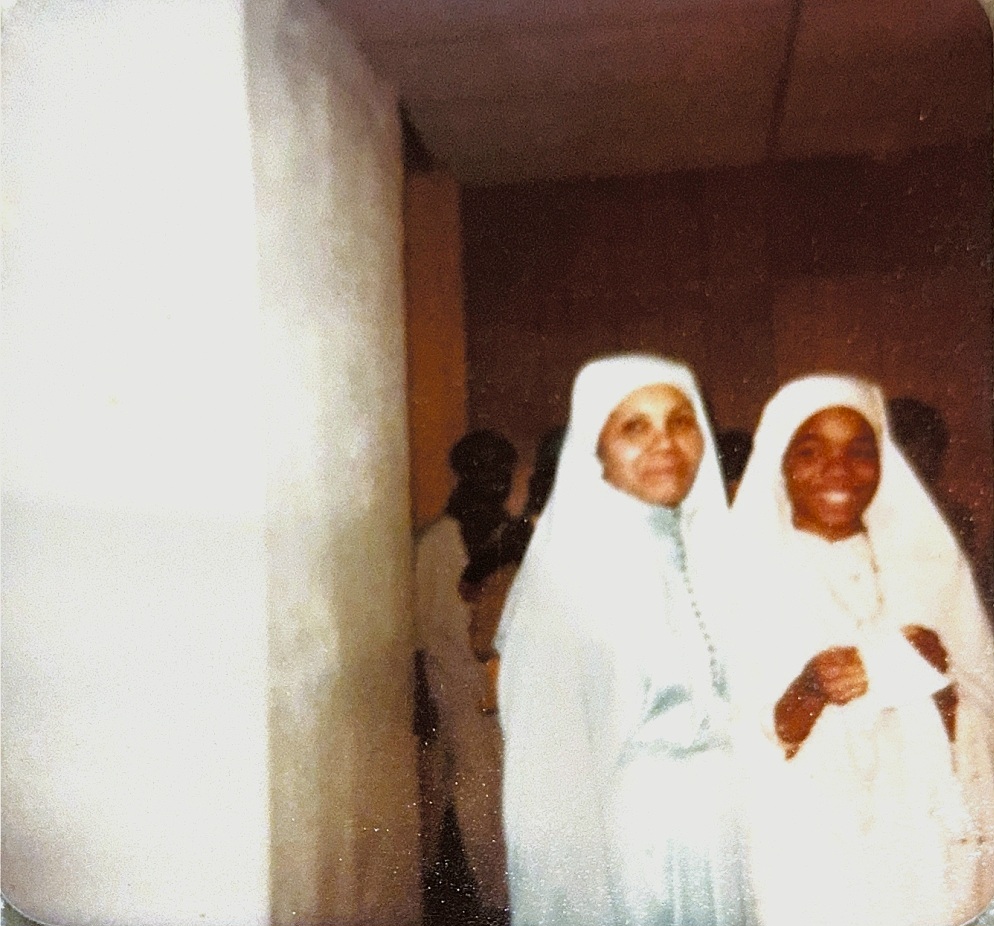
Hadrat Hakim shares a moment with her daughter Karima before Karima’s wedding to Abdullah Clark. Karima went on to have eight children and earn a medical degree.
“We all knew each other because we were always getting together,” Sr. Hadra added.
“Everybody in the community came,” Karima said. “It wasn’t separated by race or ethnic background. Everybody joined in together.
“When all those students came to our house, we had so many different cultural foods, I didn’t even learn how to make American food,” Karima exclaimed. “I was raised amongst so many different cultures, and that was Islam to me.”
“When we started the Muslim House on Kilbourn, Karima was one of the kids running around everywhere,” Sr. Hadrat recalled. “We had the biggest family, with four sons and two daughters.”
“I was 13 and 14 years old, and we used to go there all the time,” Karima said. “They’d have jummah prayers and martial arts training. A couple of grandmasters would come and train the kids.”
“One of the grandmasters was your brother, Kalim,” Sr. Hadrat noted.
“Abbas Yassin was the other,” Kalim added.
Once the community moved to the old school at 13th and Layton, “I’d be in the kitchen where I’d bake and bake,” Sr. Hadrat said. “We always had bake sales. We needed to raise money to get curtains and fix the place up.”
“I remember the kitchen,” said Karima. “We got in there and cleaned it up and tried to make it ours.”
“We worked hard in that building,” Sr. Hadrat agreed. “Cleaning and painting, baking and selling by the dozens.”
In the early days, not many Muslim families lived on the northside of Milwaukee who weren’t part of the Nation of Islam. Many Muslim immigrant families lived on the southside near the Islamic Center and some moved to Milwaukee’s Western suburbs.
Consequently, the Hakim children didn’t find many Muslim children to play with in the city, but it was not a problem, Karima said. “All my life, I went to public schools. Being a Muslim here, everyone looked at me as different because I wore a hijab all my life, I carried myself differently and I just felt different from other kids. My father always told us to ‘Remember who we are.’
“But they were just curious,” she recalled. “There were no hostile feelings, no Islamophobia. I played with the neighborhood kids. There was no hatred of Muslims.”
Even reactions during the Iran hostage crisis in 1979 were short-lived, she said. “I remember I was out walking down the street with my kids (I got married at 16), and someone told me to go back home. I was thinking, you don’t realize my mom is half Native American. But that was the only time I heard that type of hatred until after 9/11.
“I think it’s better now,” she said, “because people began to wonder what this religion is. And more and more people learned about and accepted Islam.
“After I moved to Texas, when I’d visit Milwaukee and stand next to my mom at Friday prayers, or visit the Islamic Center, I was moved by seeing so many Muslims, shoulder to shoulder,” Karima said.
“Sometimes I wonder if they know how all this started.”