Image cred: @o.dembele7 on Instagram
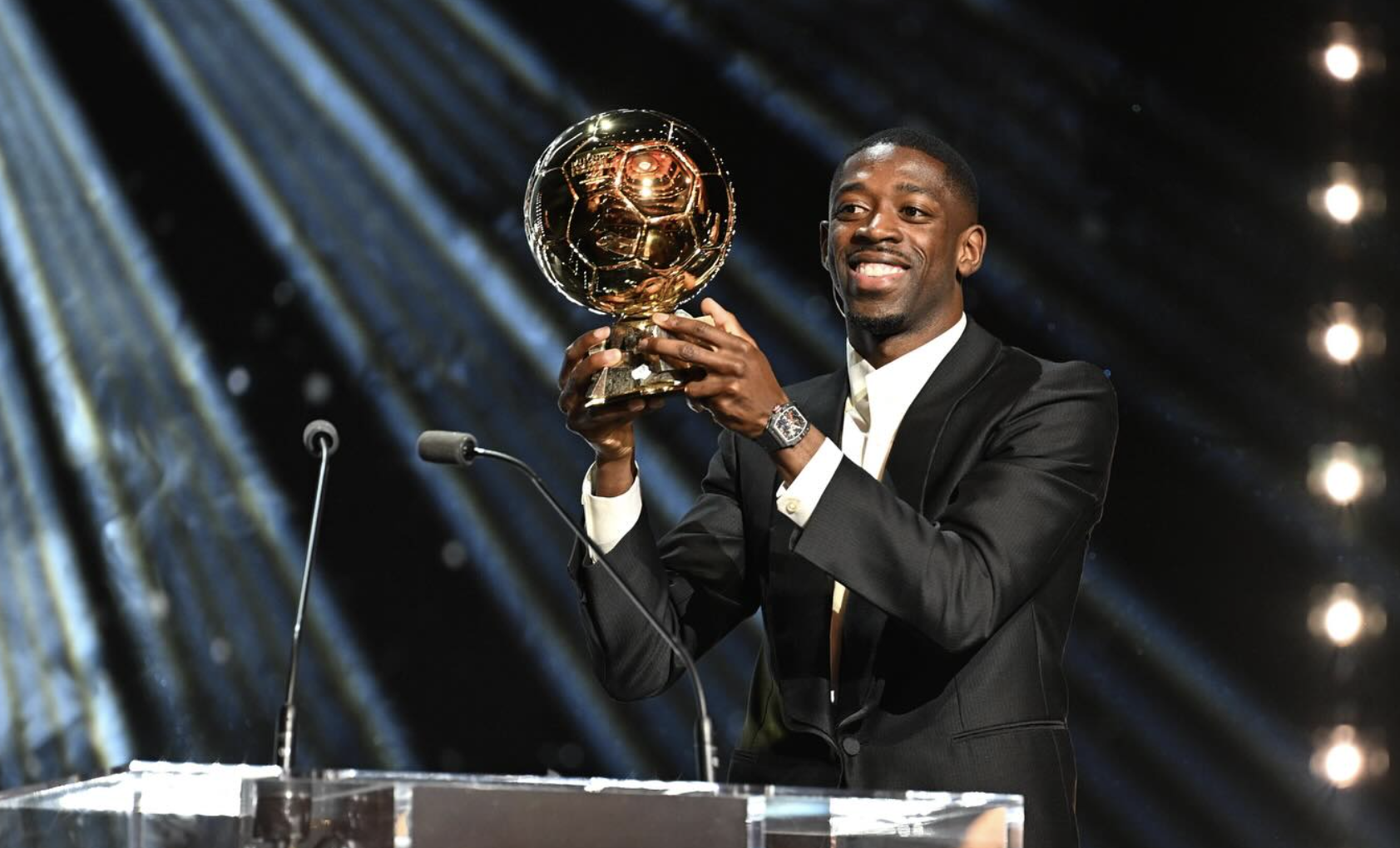
On Sept. 22, 2025, French soccer player Ousmane Dembélé won the men’s Ballon d’Or, the most prestigious award in global soccer. He became just the third Muslim to win the award since its debut in 1956, following Karim Benzema in 2022 and Zinédine Zidane in 1998. In addition to this singular achievement for Dembélé, four of Goal’s top 10 global power rankings in 2025 are Muslim including Lamine Yamal, Mohamed Salah, and Achraf Hakimi.
This achievement is the most recent milestone for the increased representation and visibility of Muslims in sports both internationally and here in the United States.
Muslims in Sports in North America
“When Muslim athletes reach that level, it’s good for themselves, of course, as a personal accomplishment,” said Saludeen Nausrudeen, president of the Islamic Games of North America. “As Muslims, we are taught that discipline and hard work will bring results, and athletes at every level use those guidelines to reach the top.”
Islamic Games is partnered with over 200 leagues and academies and puts on seven sports events annually across North America with over 2,000 participants per event. It began as a local organization in Queens, N.Y. but now has a national profile after years of determined effort. Nausrudeen said it’s a testament to the increase in Muslim involvement in sports in the U.S.
“Our mission is to allow athletes to really come together, learn from each other, compete, be the best they can be and give them inspiration to move further up the sports ladder,” he said.
Shareef Amer, the director of athletics at California State University San Bernardino, can vouch for the increasing Muslim American interest in sports.
After completing his undergraduate and law degree at the University of Michigan and University of Tennessee respectively, he decided to work in college sports. Exposed to a strong sports culture in both of his alma maters, he quickly became interested in athletic compliance.
“I always played sports growing up,” Amer said. “It was a big part of my life and there are a lot of life lessons that you learn [through athletic competition].” Some of those life lessons, he said, include collaboration, communication, and understanding team goals.
Nausrudeen would agree. He said he believes that every human being has a natural aptitude in at least one sport, and one way to connect people to athletics is to provide access to different facilities in the community. “Right now, at the Islamic center of Frisco [in Texas], they are raising $3 million to build their gym,” he said.
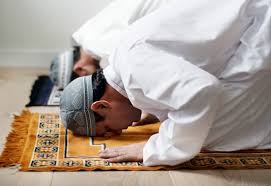
Such an investment sends a message that Muslims can grow as athletes without compromising their religious obligations such as praying five times each day.
“Muslims in America. . . want to do what’s American and what’s halal,” he explained. “There’s nothing better than sports, which is [both] American and halal.”
Nausrudeen said that while it’s important to celebrate Muslims who have climbed the athletic ladder, it doesn’t mean the community has reached its utmost potential.
“As Muslims we know that when we reach the top, our job is not done – our job has just started,” he said.
Nausrudeen also emphasized that the Muslim community needs to do a better job of cultivating Muslim athletes on the local level. Oftentimes, local stars fall through the cracks because there isn’t a system in place to elevate them. “There’s a lot of Muslim sports professionals that have great accomplishments, but because we don’t create a space for them to express who they really are, they become just a guy or a sister at the masjid,” he said.
Amer said he can clearly see the result of this lack of infrastructure for young Muslim athletes in the U.S. today. As an athletic director, he knows that sports culture dominates in many college settings. But there is a distinct absence of Muslim representation in those spaces. For example, many college football teams have a Christian chaplain. And most of those teams apply eye black (a grease that’s painted underneath the eyes to limit glare from the sun) in the shape of Christian symbols. “Even if you’re not a Christian, you’re seeing your teammates do their eye black in the shape of a cross and it’s a part of the sport culture, so I think that’s a barrier,” Amer explained.
While growing up in suburban Chicago near Notre Dame University, Amer was around prominent football culture. “It was an area that was about 85% Catholic,” he said. “And just having that shared identity with Notre Dame for a lot of people who live there was really important.”
Despite having influential names in American athletics including Muhammad Ali and Kareem Abdul-Jabbar, Amer always thought about the fact that there isn’t a “Muslim Notre Dame,” a Muslim-centric higher education institution with a prominent athletics program, anywhere in the United States.
Generational Change: Creating Space for Muslim Athletes
Despite the lack of Muslim American representation in American athletics, Amer said he believes future generations will be more involved. Tariq Ahmad, the owner of Sports Court Consulting, a sports marketing agency, echoed that sentiment.
“[Immigrant] parents are like, ‘Be a doctor, be a lawyer, be an engineer – everything else is terrible’,” he said. “But now, we are … second generation, born and raised in the United States, and I think our parents and elders now see that there are other opportunities out there in America that we can take advantage of.”
Through his work, Ahmad helps college athletes maximize their name, image, and likeness (NIL). He helps secure brand deals and partnerships, negotiate contracts, and build personal branding for today’s college athletes.
“I’ve always felt that colleges made… hundreds of millions, if not billions of dollars off the backs of college athletes,” explained Ahmad. “And they’ve never seen a dime of that until very recently.”
In his marketing work, Ahmad helps college athletes portray the most authentic version of themselves. . . But, he explained, some parts of American culture don’t align with Islamic values, a fact that can be challenging for Muslim athletes at the collegiate level. Still, he explained that it’s important for Muslim athletes to not feel forced to go to spaces that make them feel uncomfortable like bars or nightclubs where American sports culture is blended with the consumption of alcohol.
“Navigating that is tough at first, especially when you’re younger because people say ‘oh, he’s not a team player, how come he never comes out here?’”
Shareef Amer would agree and emphasizes the need to create a safe and welcoming space for Muslim athletes in college programs in America today. He recalls a Senegalese basketball player that chose to sign for his institution after learning that Amer is Muslim. “He said that I’m the first Muslim athletics director that he has ever met, and so I think representation matters,” Amer explained. “When [athletes] see somebody who has a similar background, that helps athletes.”
For example, Amer knows when important dates in the Muslim calendar are coming up, such as Ramadan. This allows him to plan and to accommodate the schedules Muslim athletes need to keep, especially during the holy month.
“We have games that start on Fridays at one or two,” said Amer. “I’m always going to miss those games because I have to go pray, whereas there are recognized rules [that allow time for Christian worship] for Christian universities.”
For example, during the National Collegiate Athletic Association championship, his soccer team was going to play a Christian university on Sunday (the holiest day in the week for Christians), but the governing body made an exception and moved the game to a Saturday.
“None of that exists for Muslims,” explained Amer. “In part it’s just because we are not there yet.”
Muslim athletes have reached new heights globally. However, sports professionals believe that basic involvement and recognition at the local level will help elevate Muslims in sports even further.
By Malak Kassem, a recent graduate of St. John’s University in New York. She is a freelance journalist and works in local news and education.