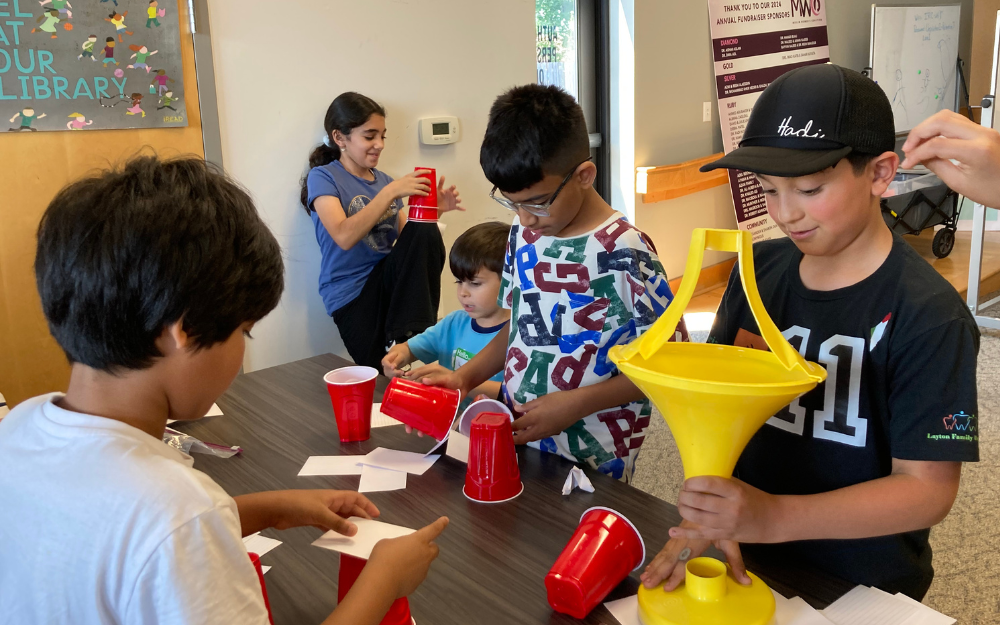
The IRC Summer Reading Program encourages children to read more during the summer break while discovering new interests through fun educational events.
Imagine you are building your dream home and one day, you discover that somehow, a fourth to a third of the building – your beautiful kitchen and dining room – has suddenly disappeared. Would you be concerned? Of course you would! Losing that amount of progress would be a serious setback. This is analogous to the losses your school-age child can experience over the summer break.
Numerous studies have shown that the average student loses between 17 to 28 percent of their school year gains in English language arts (reading and writing) and between 25 to 34 percent of their math gains. Many children work hard all school year to build the academic skills that will support their future learning and earning. If they lose those skills it puts them behind their classmates in the fall.
Statistics show importance of reading throughout the year
Children who do not read over the summer experience the “summer slide” on their reading and math score and standardized tests, decrease after a summer spent without reading.
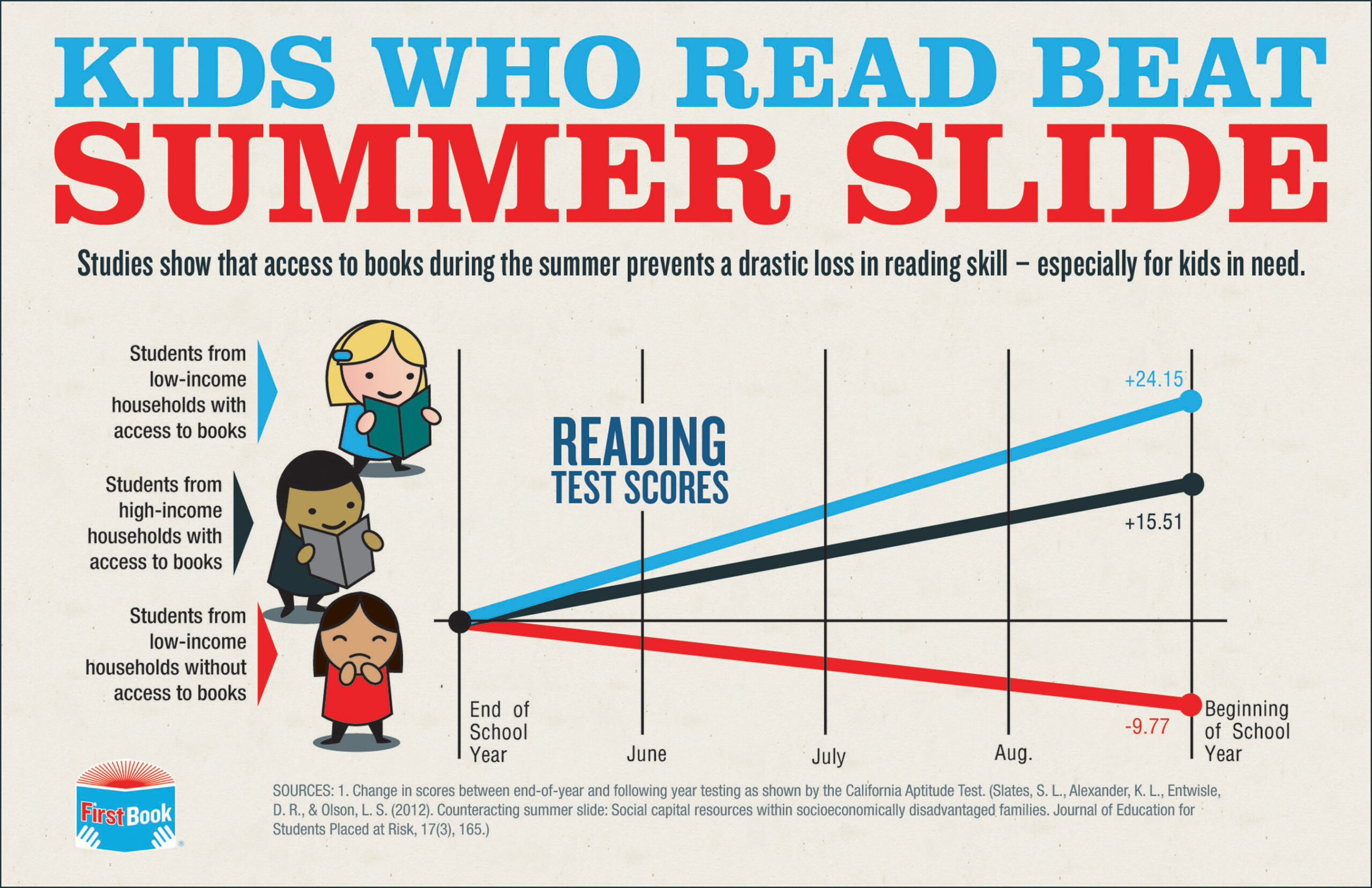
One especially concerning fact about summer learning loss is that it is cumulative – every summer of falling behind is added to the previous years putting those students further and further behind their classmates.
Fortunately for parents, it is easy to ensure that your children do not fall behind. Participating in summer reading programs and doing simple, real-life learning activities at home can be enough insurance to keep their academic “house” standing. Spending a lot of money on expensive tutoring at learning centers is usually not needed unless your child’s teachers have recommended it.
Many parents are aware of the importance of summer reading and enrichment activities with almost half the parents in one survey saying they wished their children could have attended summer programs or participated more than they did. Almost a third of the parents shared that financial barriers prevented their children from attending.
Keeping kids engaged
In order to serve community families, the Islamic Resource Center (IRC) offers an annual no-cost summer reading program designed to keep kids reading, learning and discovering new interests. Educational and entertaining events keep kids curious and a fun, interactive summer reading challenge encourages students to read and do other character building activities.
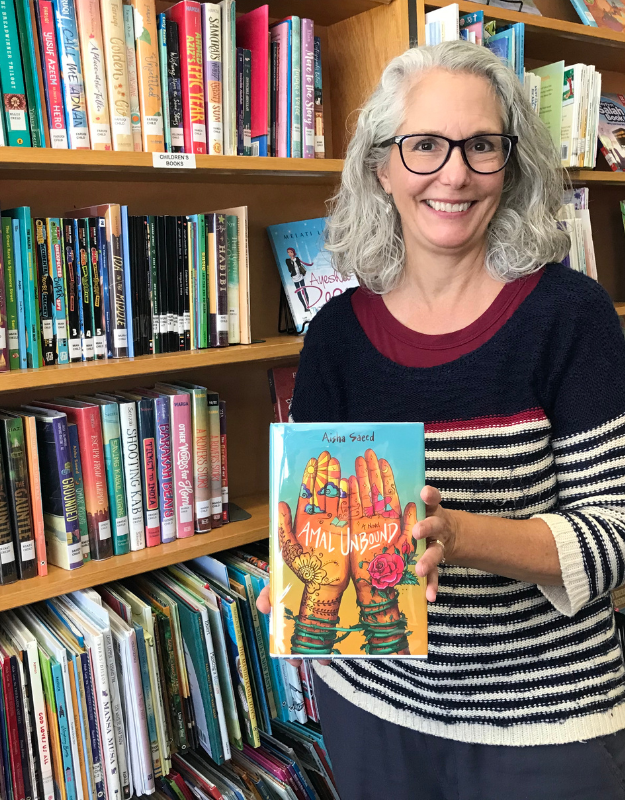
Jenny Wegener, Islamic Resource Center librarian
Children earn small prizes and raffle tickets for larger prizes by completing the weekly activities.
In 2025, of the 130 children registered for the IRC Summer Reading challenge, 55 completed at least 3 learning logs, 39 completed five and 18 kids did all seven logs!
Experts agree that children should read a minimum of 20 minutes a day to maintain their reading skills but more is always better!
Families can find a great selection of books at the IRC featuring Quranic stories, Islamic values and Muslim characters.
The IRC monthly circulation statistics showed students checked out a record 171 books in July. We are hoping to surpass that amount this year!
In addition to curling up in a comfy chair and getting lost in a book on a hot summer day, children can expand their school skills with fun, hands-on activities that allow for natural, child-led learning.
Summer Reading and Activity programs designed to educate, engage and inspire
The IRC has a strong line up of educational presentations for school age children and ideas for creating a summer environmental camp. Planned activities include visits by Wehr Nature Center, Milwaukee Public Museum, Schlitz Audubon Center, as well as many more.
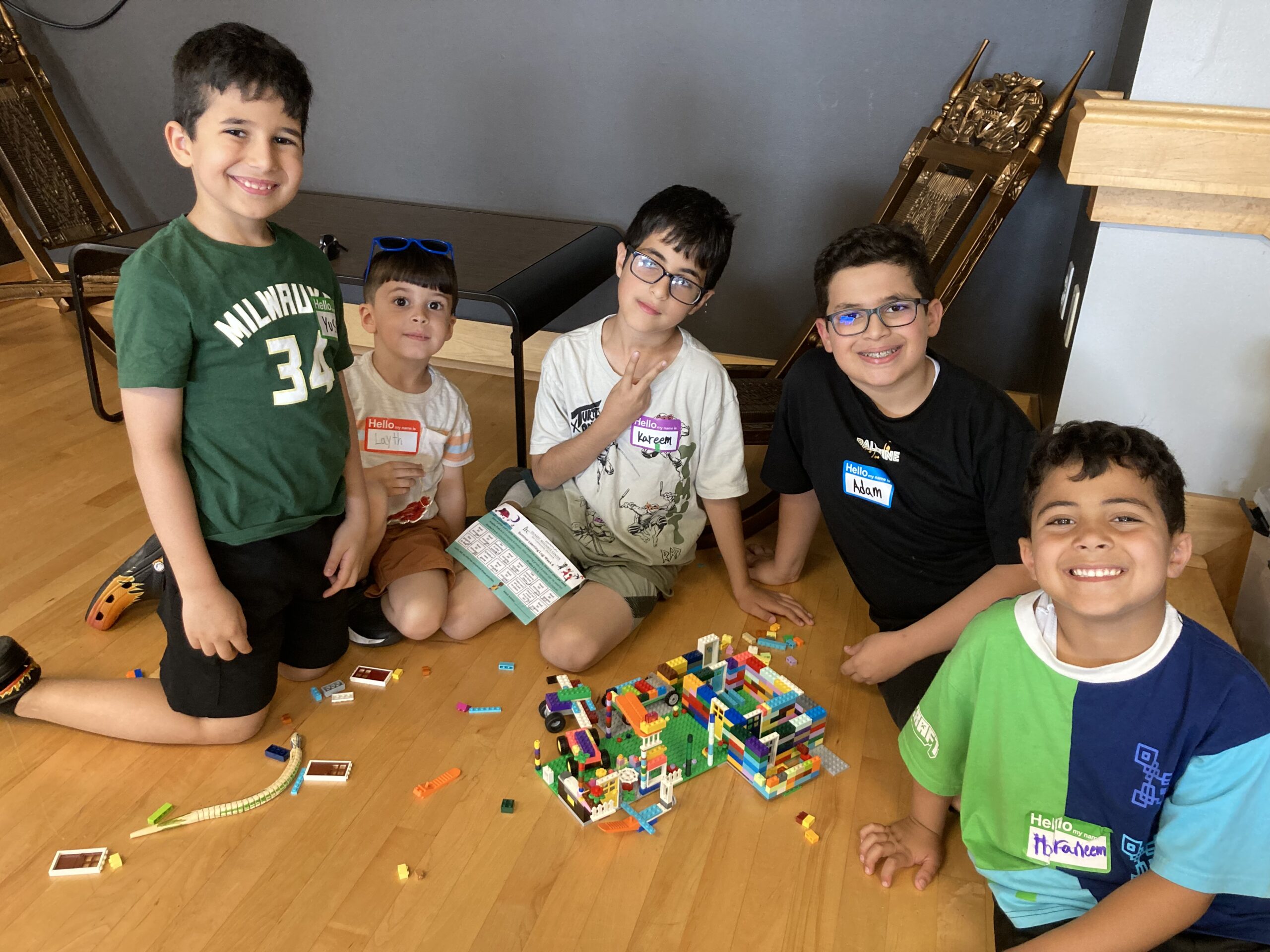
At last year’s LEGO building activity, kids explored engineering concepts, creativity, collaboration and problem-solving skills.
As well as structured programs like those here at the IRC, parents can grow curiosity and learning with trips to the park – look at plants and animals (science!) or the city (architecture, engineering, transportation), visiting museums and historical sites (social studies, reading, background knowledge!), listening to live music (art and math), building with blocks and Lego (creativity and engineering), making art (creativity and fine motor skills), cooking (science and math!), and trips to the grocery store (writing, budgeting, planning and math!)
Hands-on learning with real-world experiences is a deeper, richer, and more memorable way of learning than doing worksheets or spending time on a tablet. When children engage in active learning through real-life experiences using their mind, hands and bodies they understand and retain more information.
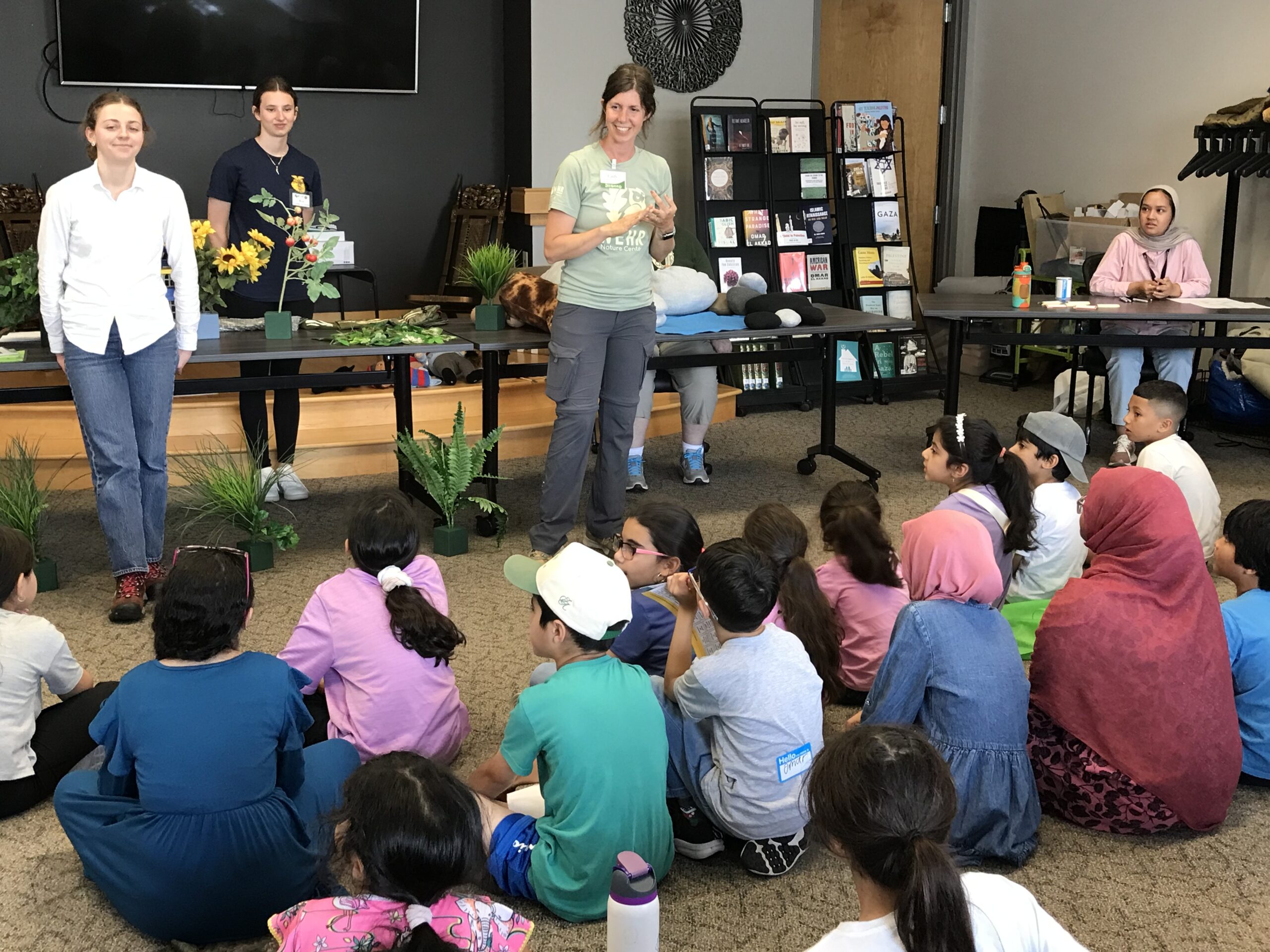
Visiting Naturalists from Wehr Nature Center teach summer programs about insects and reptiles to increase children’s understanding of the natural world.
There are some good math apps and other learning apps but summer should not be an excuse for unlimited screen time. Screen time can be educational but must be monitored. Pediatricians recommend limits for screen time to prevent a host of negative consequences. Creativity grows when kids are a little bit bored!
As an educator who has spent over 25 years helping kids learn over the summer months, kids love learning when it is something they are interested in and excited about, and when they can follow their own curiosity. I encourage families to invest in their children’s learning during the next few months.
Recommendations for other fun, hands-on summer learning
Build Math Minds – summer ideas
Islam 4 Kids – stories, some free printables, and more.
From Scholastic – “101 Easy, Free, and Fun Ways to Keep Kids Learning Over the Summer”
Tons of great science and nature content from the Wisconsin Department of Natural Resources
Recipes and Cooking Tips from Cooking With Kids -yummy!
Fun and easy at home experiments from the Children’s Science Lab in Virginia