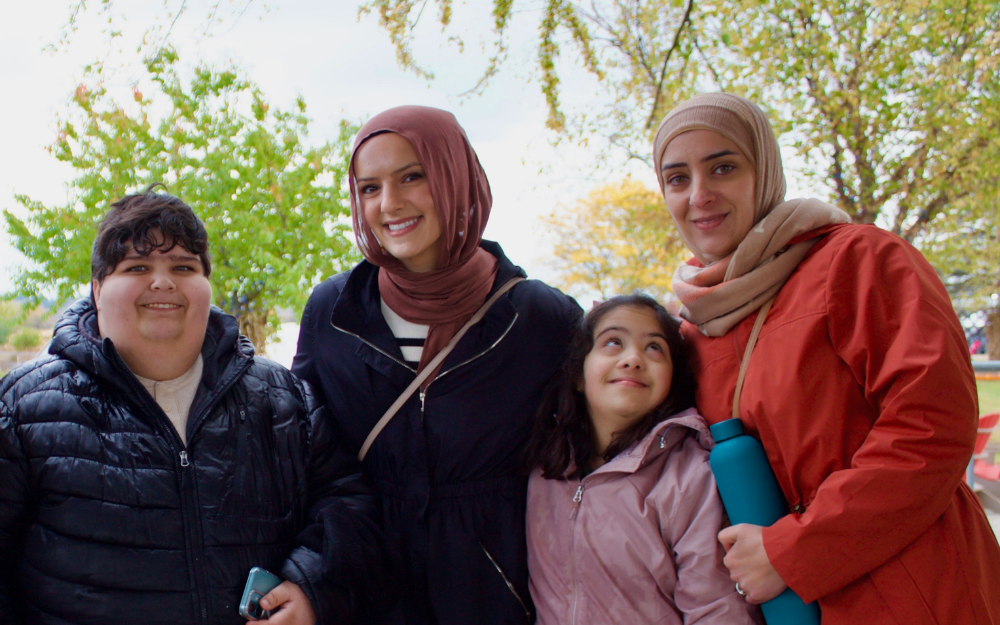
MUHSEN facilitator Hanan Kaloti (second from left) joins Ameer Tahir and Mariam Zreik, with her mother, at a MUHSEN nature outing in Kenosha.
Monaal Barakat of Milwaukee works full-time as manager of a medical lab that does compatibility testing for transplants. Her husband, Munther Barakat, PsyD., also has a demanding job as the director of Behavioral Health Therapy at Aurora Health Care.
“We have an 18-year-old, nonverbal daughter with autism, so she has a little bit more needs than others,” Barakat explained. “Work weeks are busy. I get pulled in many different directions. In addition to operations, I’m responsible for clinical interpretation and cover calls a week at a time for transplant support.
“Caring for a person with a disability is also a full-time job that never stops, which can be exhausting,” she said. “When you talk to caregivers, you’ll hear that burnout is real.”
The Caregivers Wellness Session, offered Saturday, July 25, by two Muslim organizations, aims to create an opportunity for special needs caregivers to connect with fellow caregivers and learn practical strategies for their own self-care, while respite care is provided so caregivers can fully participate and enjoy the experience, a flier for the program explains.
The MUHSEN-SIHA Caregivers Wellness Session will run from 2:30 – 4:40 p.m., Saturday, July 25, at Wehr Nature Center, 9701 W. College Ave., Franklin.
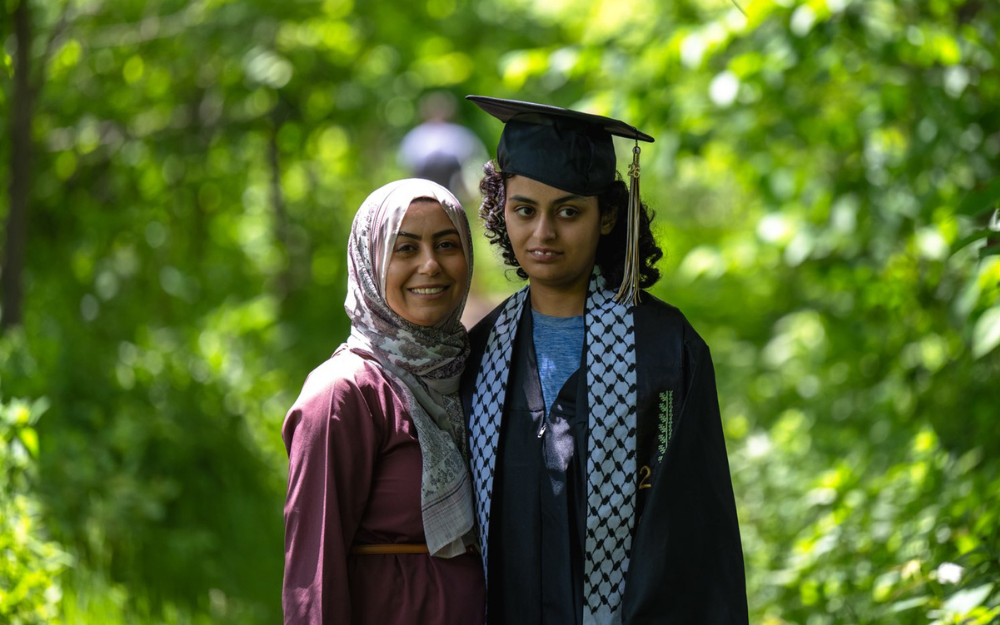
Monaal and Aya Barakat
MUHSEN (“Muslims Understanding and Helping Special Education Needs”) is a nonprofit organization serving families and individuals nationwide with intellectual, mental and physical disabilities. It is a leading organization in creating a better understanding of disabilities in Muslim communities, and in improving inclusiveness and accessibility in Muslim institutions.
SIHA (Striving to Improve Health for All”) is a nonprofit that aims to empower Wisconsin Muslims toward a holistic sense of wellbeing. Its board includes advocates, educators and healthcare professionals who work together to create a lasting impact on Muslims’ health through research, education, advocacy, community empowerment and resource sharing, its mission statement says.
The Caregivers Wellness Session offers special needs caregivers:
- The opportunity to connect with fellow caregivers;
- Meaningful facilitated discussion;
- Practical strategies and tips;
- And a guided nature walk led by a Certified Wisconsin Master Naturalist.
Respite care is provided onsite.
It is free but registration is required. Register here.
Creating space for caregivers
“A very important part of the Caregiver Wellness Session is creating space for caregivers to connect and participate in a facilitated conversation,” said SIHA co-founder and board member Laila Azam, Ph.D. “We have a practical, educational program but the main objective of the session is to create connections and learn from each other.”
SIHA board member and longtime educator Amal Jaber, M.E., of Brookfield said she has limited experience with being a caregiver. Her son, who is now 32, has low vision. “He didn’t need adaptive support except for his vision and we never needed respite care,” she said. “He graduated from the University of Wisconsin – Whitewater, where he lived on campus on his own.”
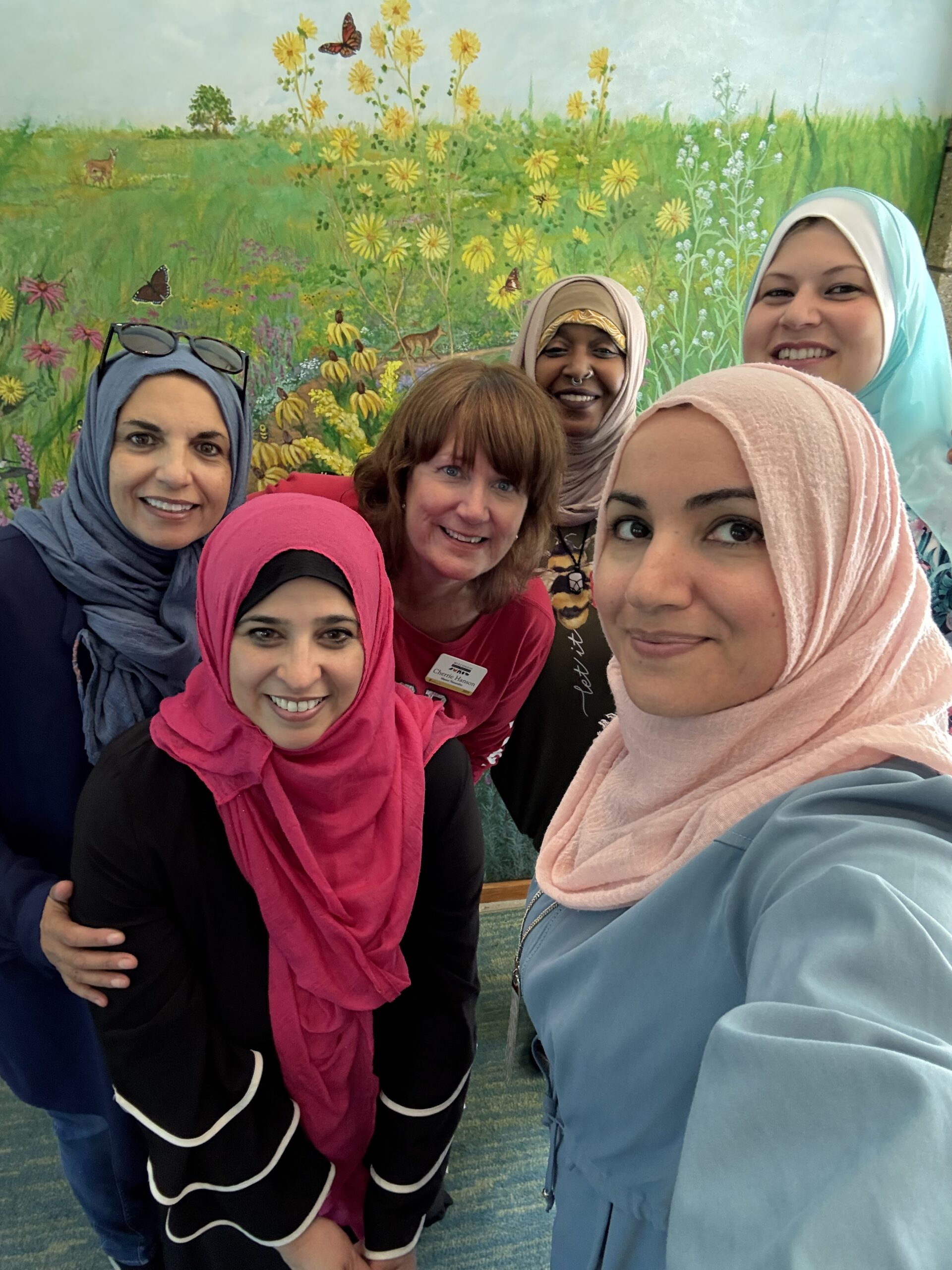
From left to right, Amal Jaber, Fauzia Qureshi, Cherrie Hanson, Wisconsin Master Naturalist, Dr. Thalia Williams, Islam Elayan and Laila Azam at SIHA’s first event held in summer of 2025.
Nevertheless, she had participated in a support group at the Islamic Society of Milwaukee–Brookfield for a short time and found just how beneficial these groups can be, she said.
“Families interacting with each other and having opportunities to network is very important for families with children or adults with special needs,” Jaber said. “Those interactions are important because they give the family support, just knowing other families are facing the same things they are.
“In our Muslim culture, we don’t always talk about these topics so easily,” she continued. “Now it’s getting better, but I have noticed people like meeting other families with individuals with special needs because they have a lot in common in regards to things they are going through.
“They can also see into the future when they have a young child with a special need and connect with someone with an older child with a similar need. They share resources. They see the future can be bright when they see how some children with special needs have excelled.
“Just hearing the stories of other families about how they faced this barrier and that, how they solved different issues, what helped and what didn’t, gives them a wealth of information they can use right now,” she said.
Barakat agreed. “My daughter is 18. What we realized in this journey of disability is that in each stage of her life, as caregivers, we experience a lot of things for the first time. Just when you think you have things down pat, you get thrown into a new experience.
“At diagnosis you’re learning to navigate what programs are out there and what is needed from a school perspective. Now we’re in adulthood and trying to navigate that. It feels like a diagnosis all over again. School is done. What do we need to do from a legal perspective with guardianship after the age of 18. Networking will be very helpful for learning what other families in similar positions are doing.
“And, through it all, you are building your tribe. All parents need a tribe. They say it takes a village, right? Well, it takes much more for raising an individual with a special need.”
Collaborating around common missions
The seed for “an important collaboration” between MUHSEN and SIHA was planted at the Muslim Women’s Leadership Conference in April, Azam said. Hanan Kaloti of MUHSEN served as moderator for a panel titled, “Turning Faith into Purpose.” Azam, a member of the panel, spoke about SIHA. After the session, the two women immediately began brainstorming about how they could work together on their common missions, both said.
“It is important that we (at SIHA) are expanding our work through this collaboration with MUHSEN,” Azam added.
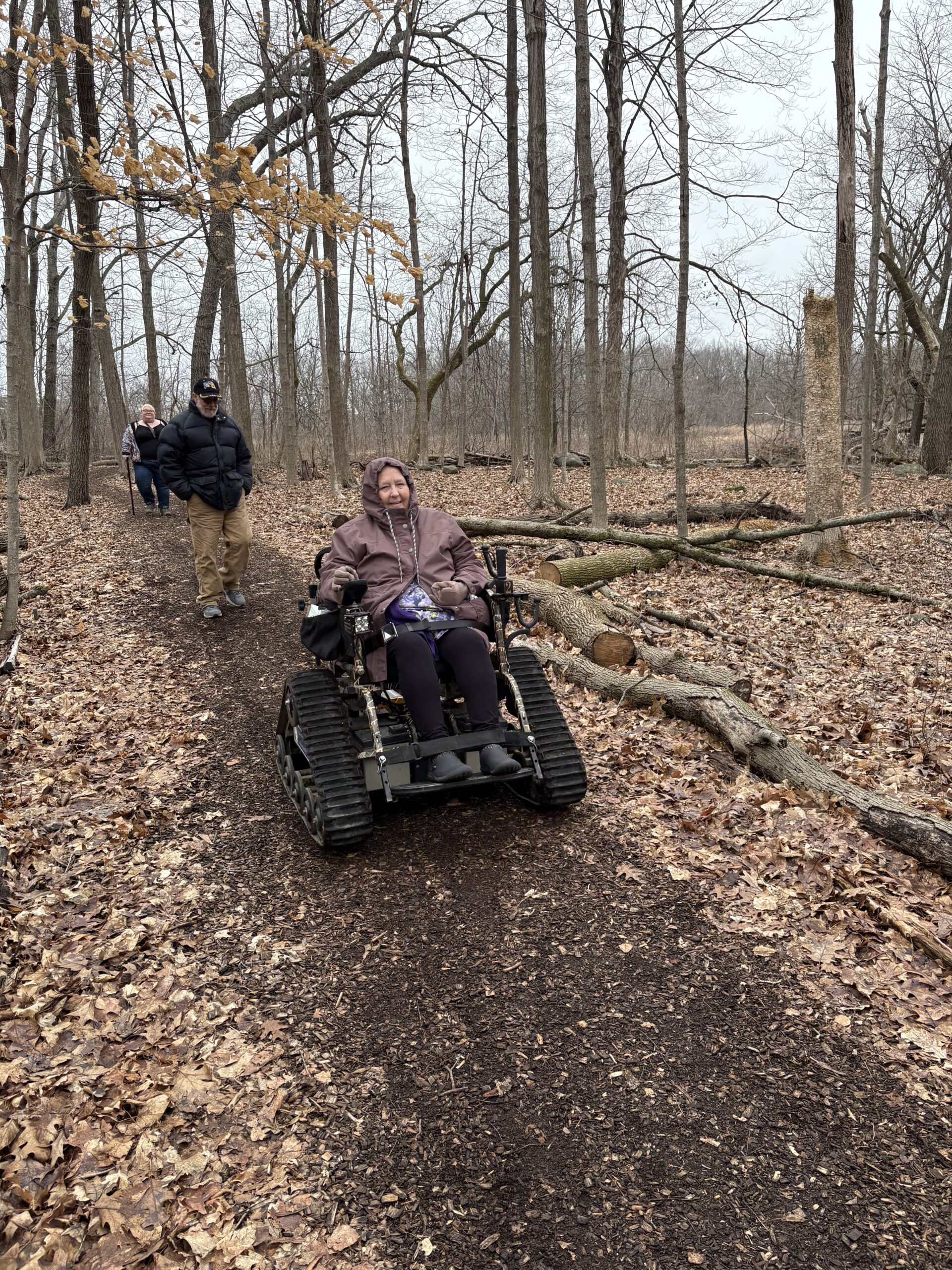
A visitor at Wehr Nature Center used one of the all-terrain wheelchairs, available upon request.
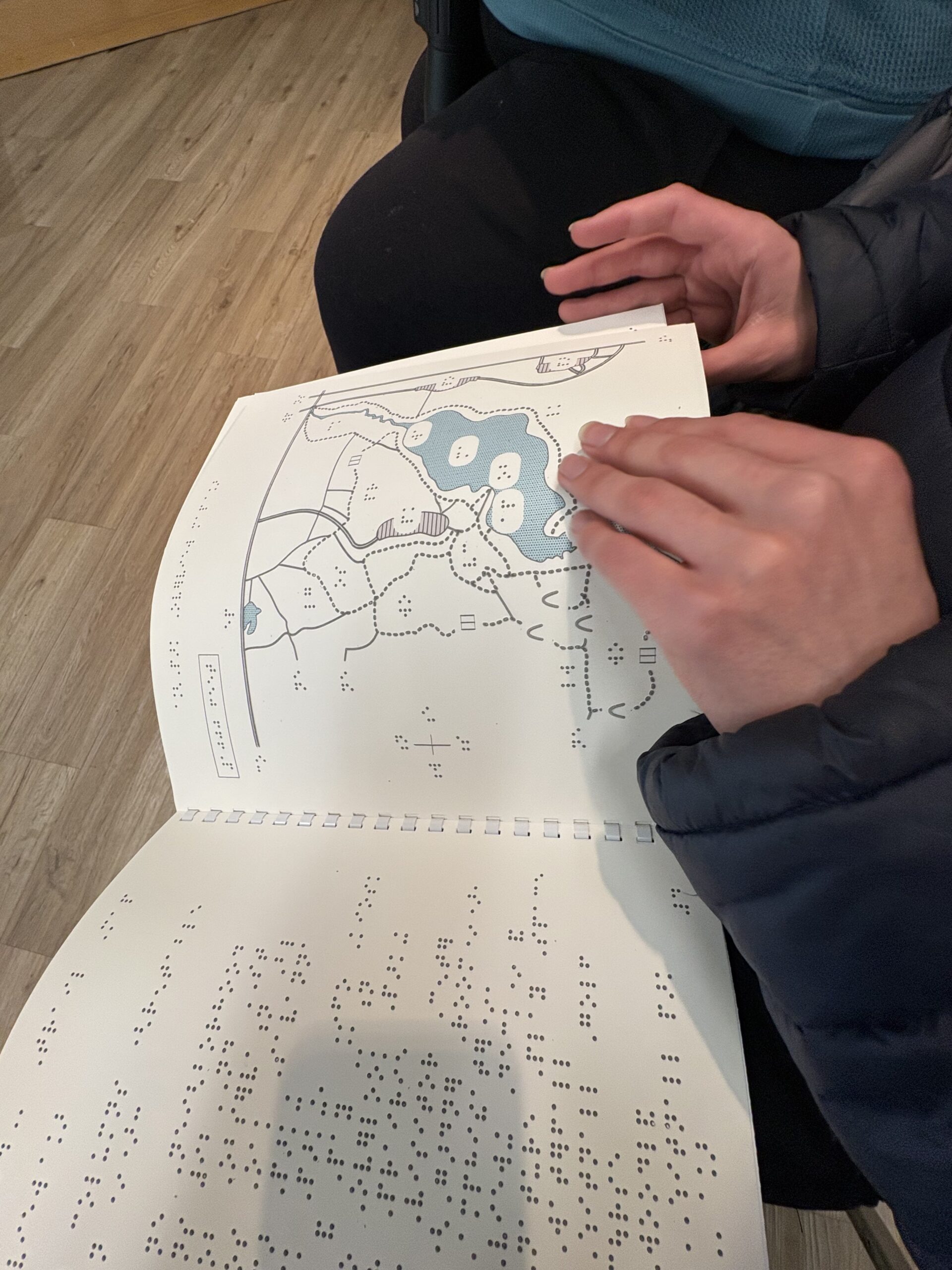
In partnership with ABLE (Audio & Braille Literacy Enhancement), Milwaukee County Parks at Wehr Nature Center offers a braille trail map to navigate the nature preserve.
“The timing was perfect for our collaboration,” Kaloti explained. “When I asked some of our MUHSEN parents how things are going, I kept hearing things like, “I feel spread thin,” “I’m feeling burnt out.
“With summertime coming, many would be with their kids all day every day. Some of the kids are not in school or in programs, especially once summer comes. The timing (of a program for caregivers) obviously just seemed so fitting.
“The biggest feedback I hear from parents is that they feel burnt out or that they are not doing enough for their kid,” Kaloti said. “I knew whatever we planned, we needed to connect back to that. I’m hoping we can give some strategies for caregivers to use whenever they are feeling burnt out or overwhelmed or like they are not doing enough.
“Second, I hope the parents leave with a sense they are part of a community of caregivers. Even in our Muslim community, there are so many caregivers experiencing the same burnout.
“And, third, that they leave with resources. At every event, we hope to share resources with them and them with each other.”
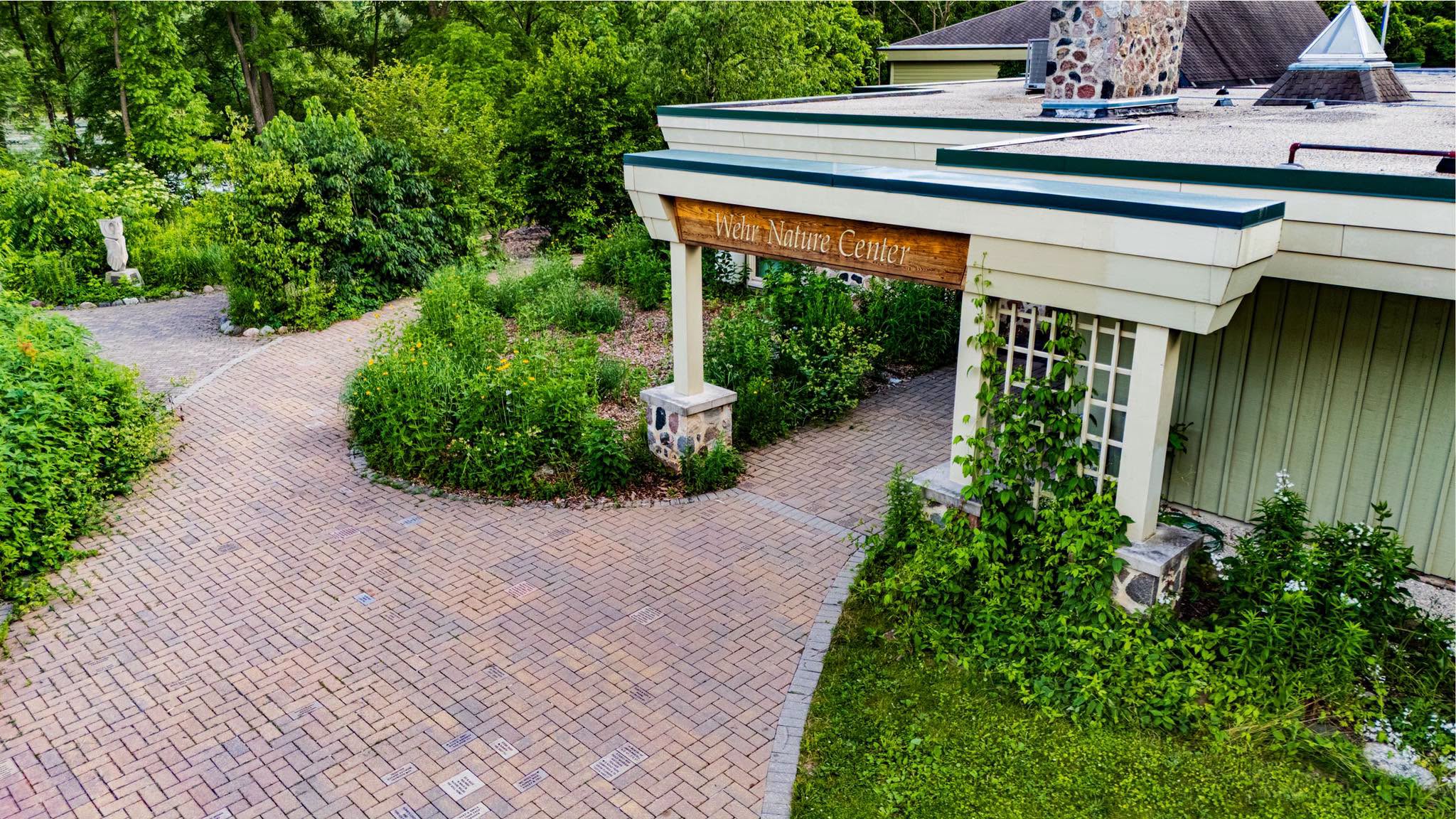
Photo by Mitch Macari
Wehr Nature Center, a 220-acre nature preserve within the Whitnall Park complex in Franklin, is committed to accessibility for all.
SIHA’s connection with the Wehr Nature Center, which promotes “nature for all,” and works to make nature accessible and inclusive, brings a valuable addition to the mix,” Kaloti added. “I’m so happy that qualified people at Wehr and Cherrie Hanson, who is a Certified Master Naturalist, add a connection with nature.”
Hanson will lead caregivers on a guided nature walk and will teach practical breathing techniques that bring a sense of calmness, Azam said.
“Someone just advised me I should follow Wehr Nature Center on social media,” Barakat mentioned. “They said they release a lot of information about adaptable equipment or visuals to help connect to nature. I think Wehr is doing a great job with making nature accessible and getting the word out.”
From one caregiver to others, Barakat shared a thought on wellness: “It’s easy to say it but harder to do it. To put time and energy back into yourself is a challenge. As a caregiver, you’re 100% focused on helping others. Helping yourself is the last thought in your mind.
“(This workshop) is important because it creates that space to help you before it’s complete burnout, a pause along the way to refill your cup and continue on as a caregiver helping others.”