Photos by Ali Aleiou and Sandra Whitehead
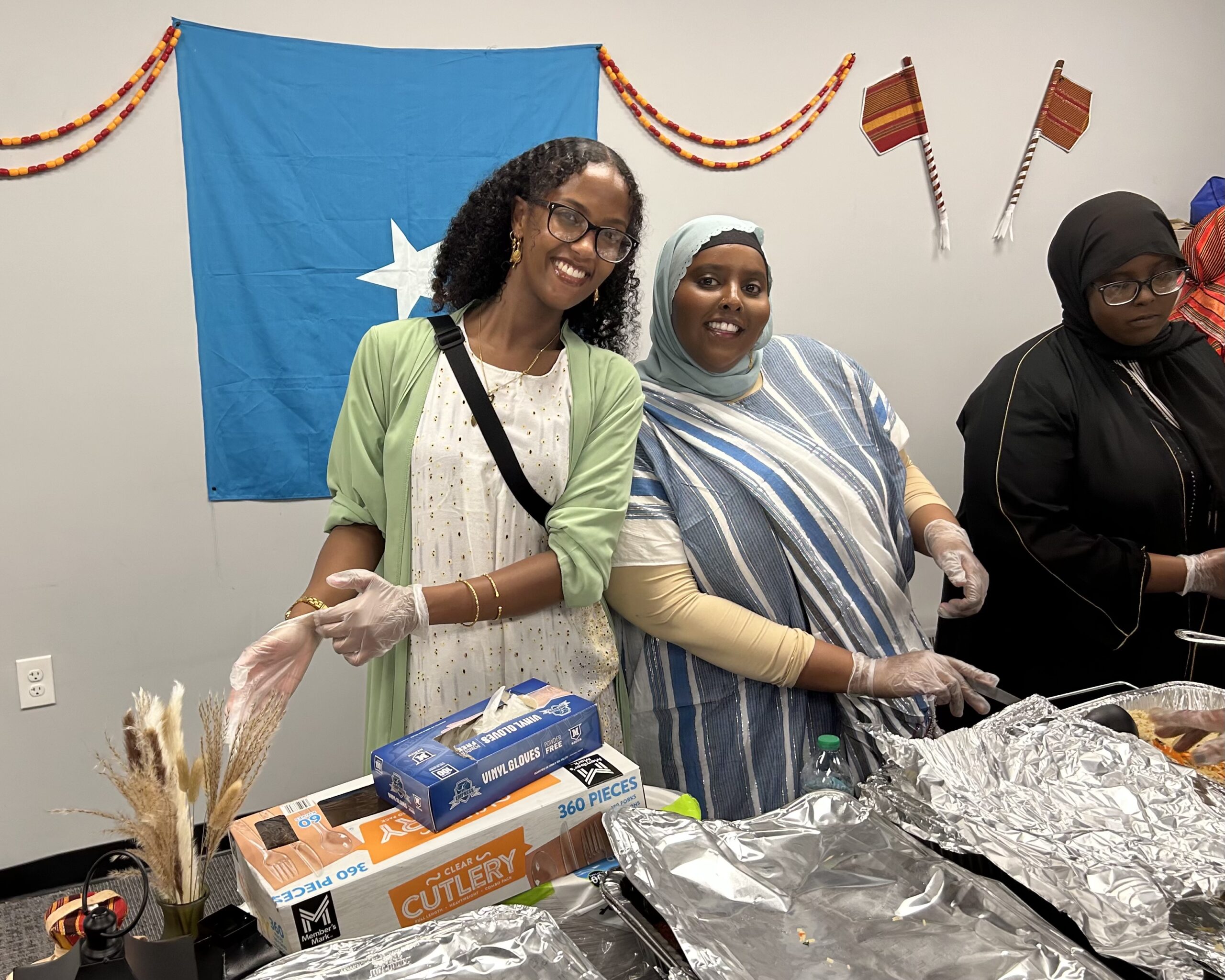
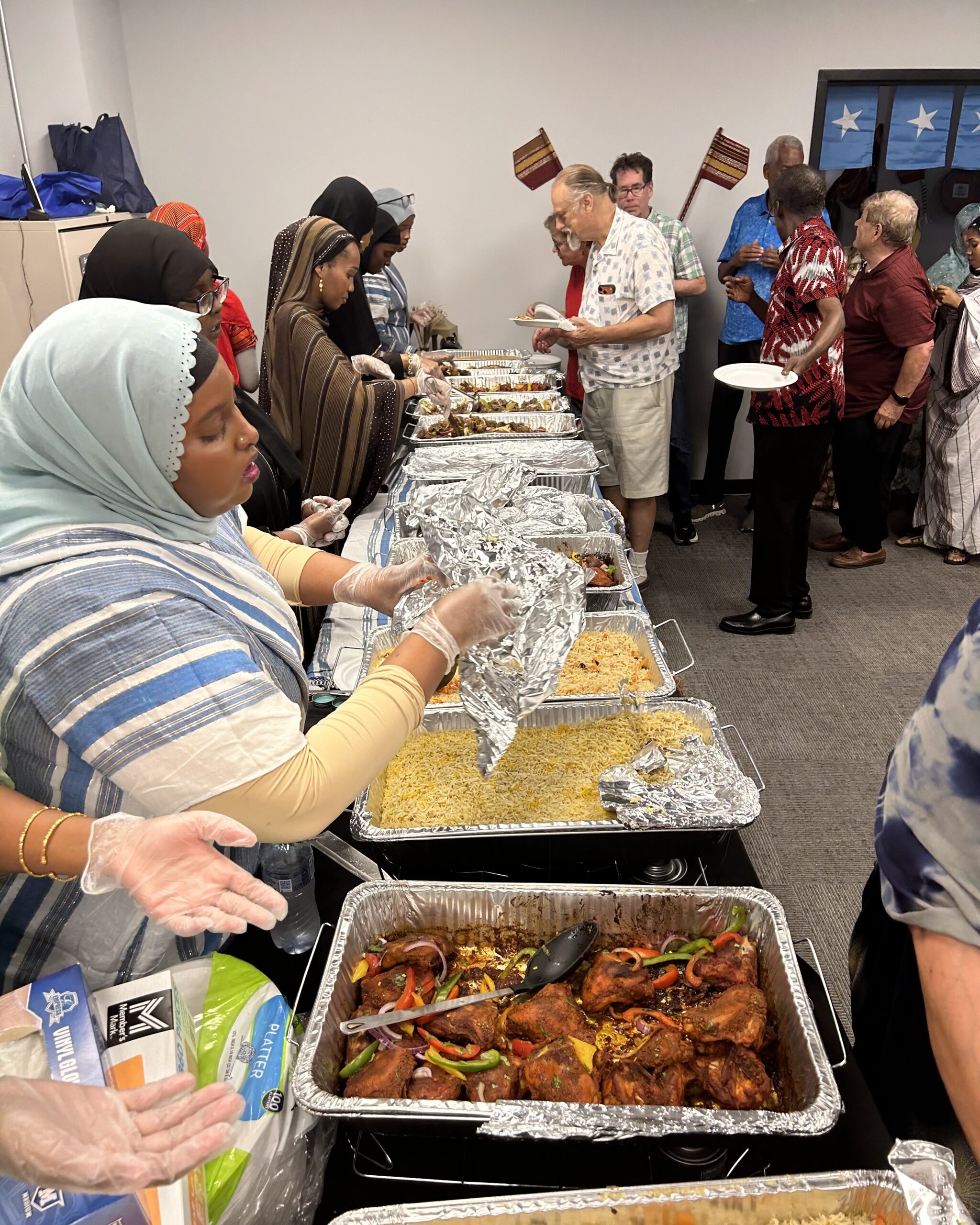
Volunteers serve up a tasty buffet of chicken and goat with rice and samousas (fried pastries filled with beef and vegetables) at Somali Cultural Night at the Somali Resource Center, 1020 W. Historic Mitchell St., Milwaukee.
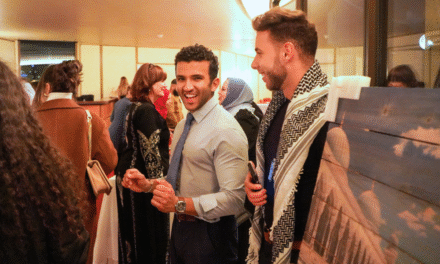
The Somali Resource Center of Milwaukee, 1020 W. Historic Mitchell St., hosted its first annual Somali Cultural Night last Friday .
“With July 1 being Somali Independence Day and July 4th being the U.S. Independence Day, we decided Friday (July 3) was a good day for our celebration,” said the Somali Resource Center co-founder and executive director Lul Abukar in an interview with the Wisconsin Muslim Journal after the event. The July 1 Somali national holiday marks the unification of the Trust Territory of Somalia and the state of Somaliland into the Somali Republic, and the new nation’s independence from colonial rule in 1960.
“We plan to hold Somali Cultural Night every year around this time,” Abukar said.
A joyful occasion
I arrived with my family at 6:30 p.m., our first visit to the Somali Resource Center. We parked on an empty street in front of what appeared to be an empty building. A lone shopkeeper on the other side of Mitchell Street leaned against a wall in front of the Garden of Eden International Grocery. He was the only person in sight. We crossed the street and approached him.
“We’re looking for the Somali festival,” I said.
“Follow me,” he said. We did and returned across the street. We passed the corner building and found ourselves in a big parking lot. It was filled with cars and buzzing with families in colorful, traditional dress. Children skipped along excitedly.
He pointed to a door where the people flowed in. We thanked him and joined the procession.
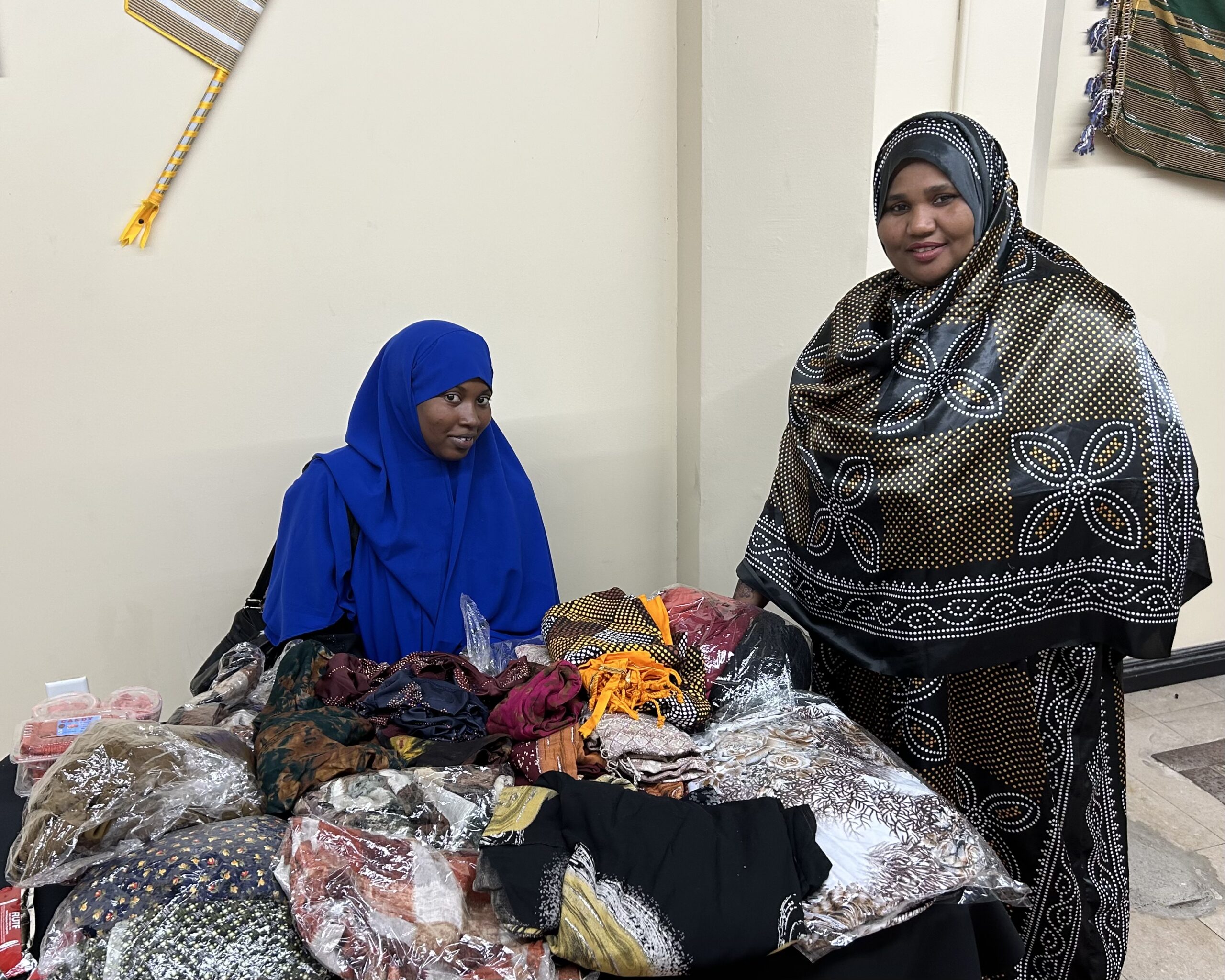
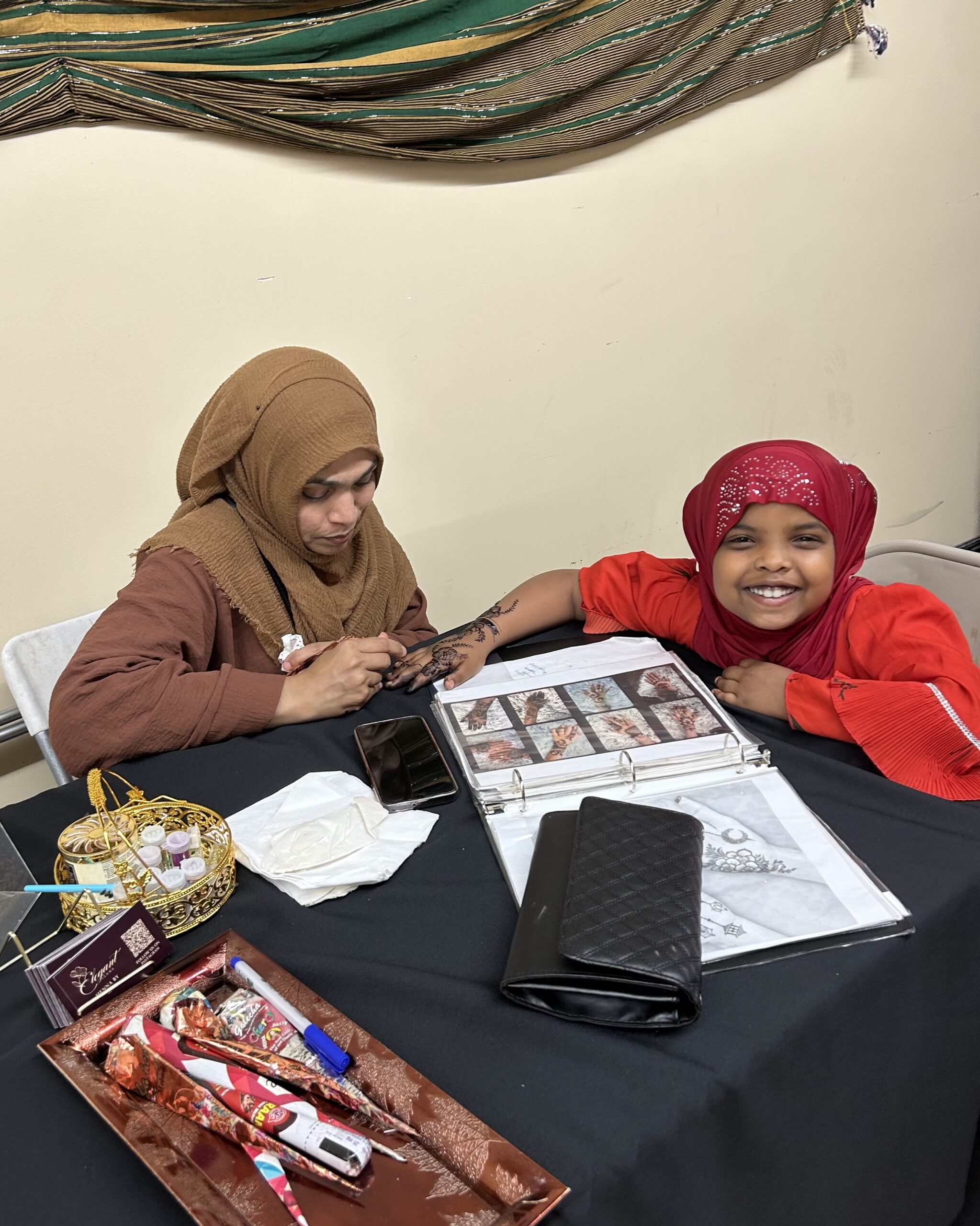
Downstairs in the basement, we entered a wide tunnel. Vendors sat at tables that displayed colorful hijabs (Muslim headscarves) and jewelry. A child sat beside a henna artist who painted a tattoo on her hand.
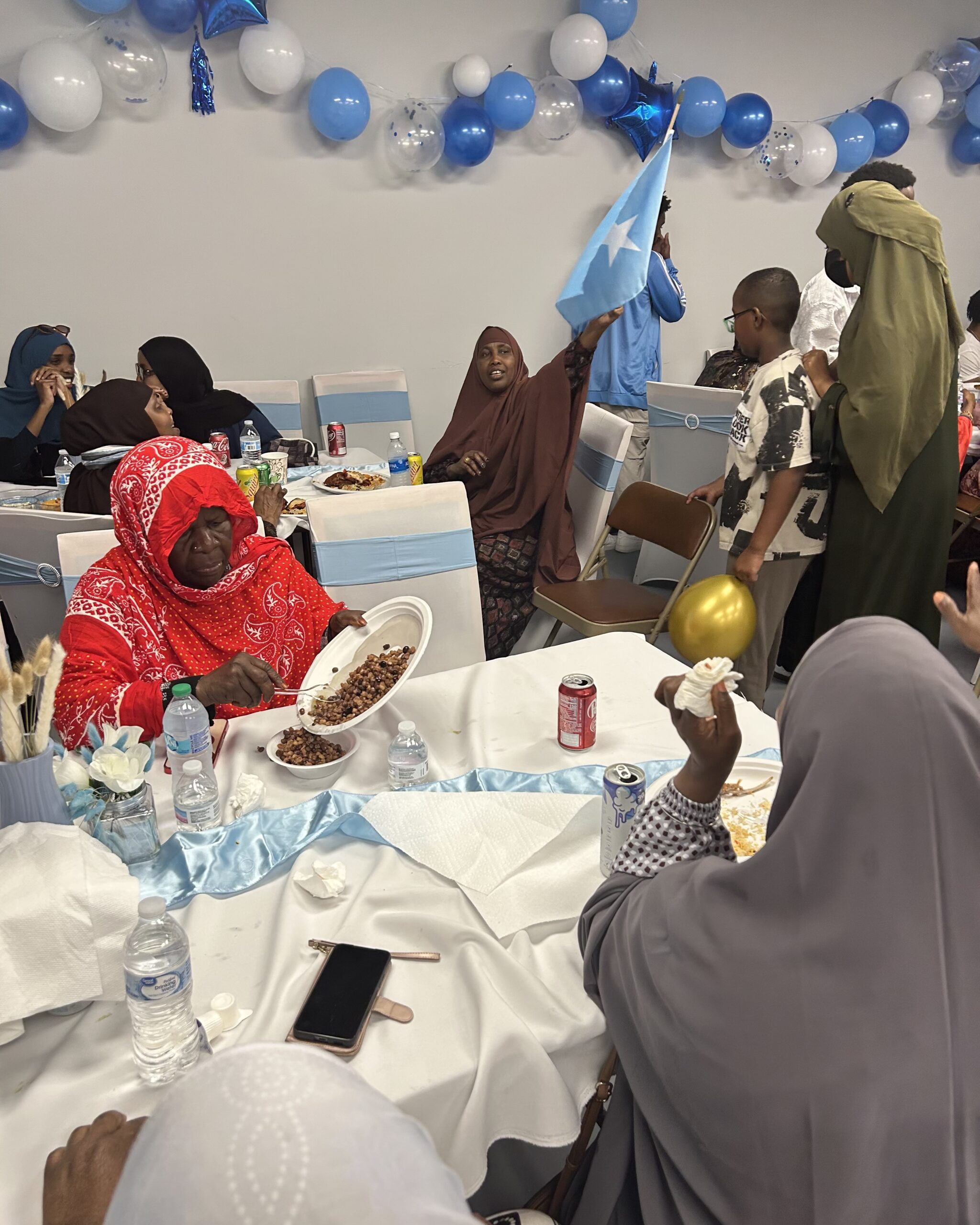
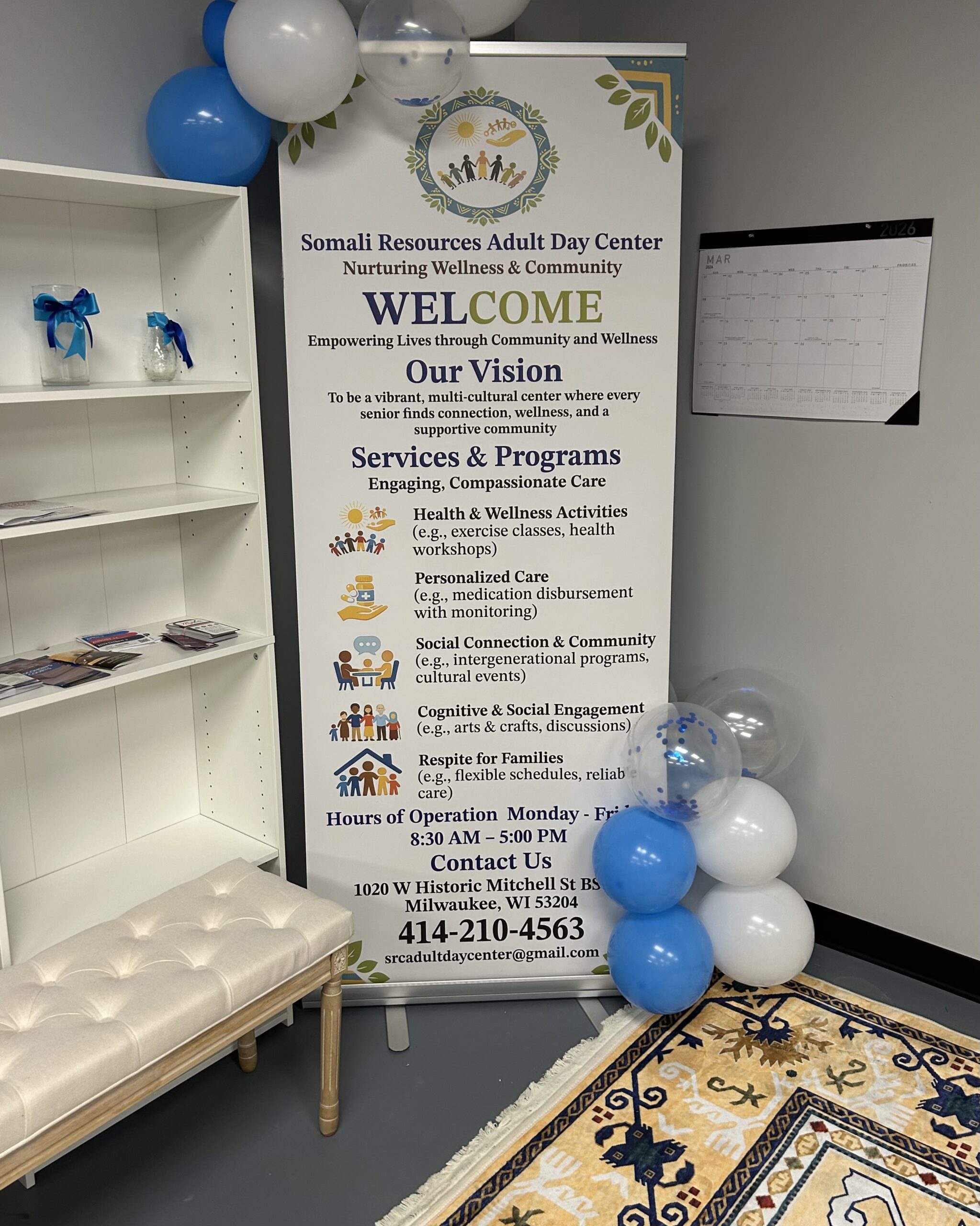
Somali Cultural Day festivities were held in the Somali Resource Center, which is home to an adult day program during the week, as well as a hub to help community members find services they need.
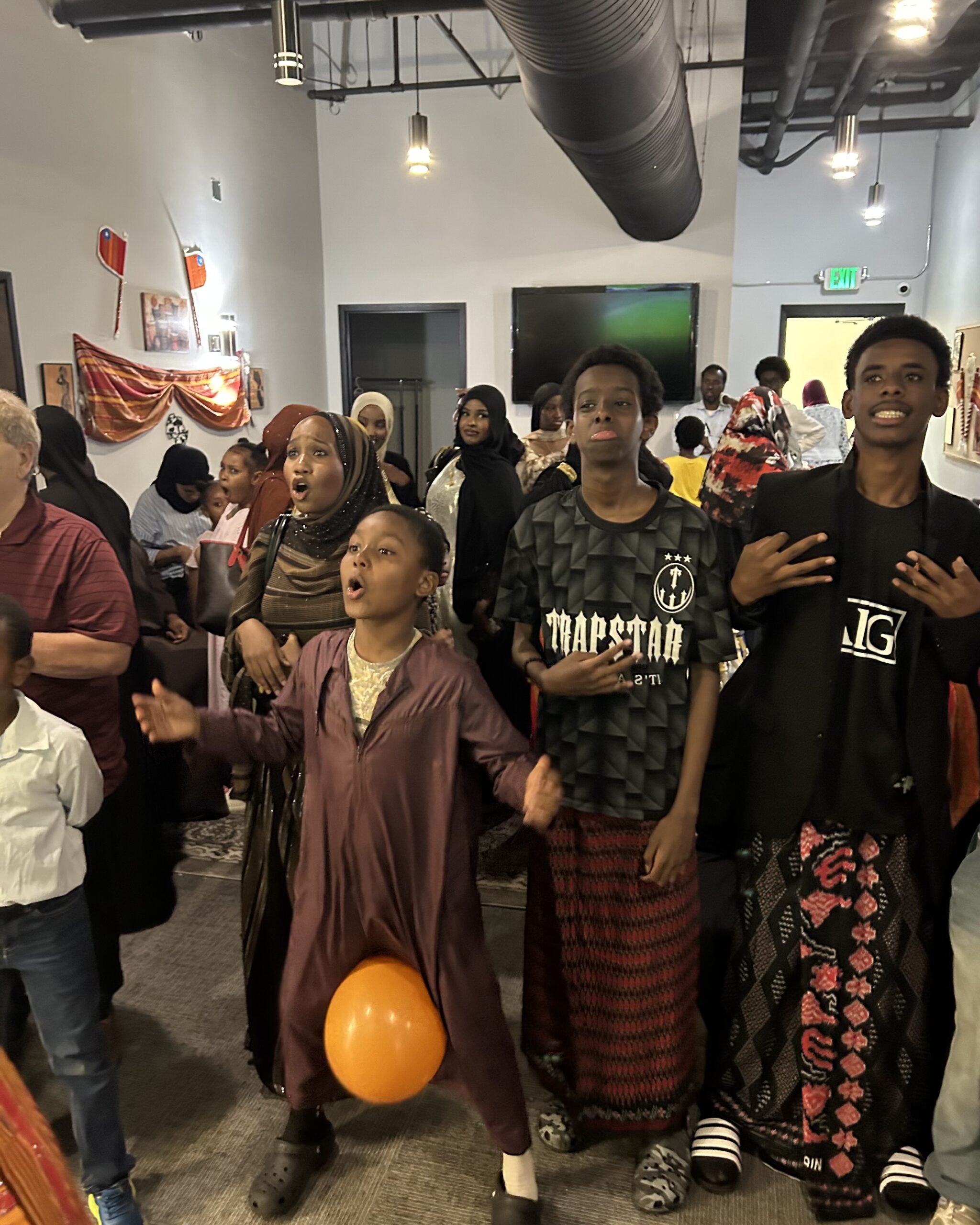
Inside the center, youth (and a few adults) stood in the lobby in front of a large screen, cheering for Cape Verde against the mighty Argentina in a surprisingly close World Cup game. Their energy was palpable.
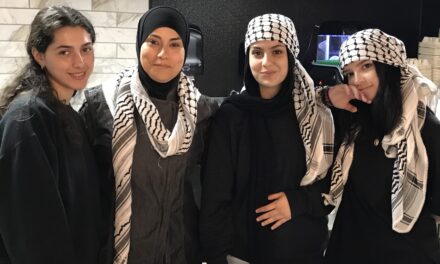
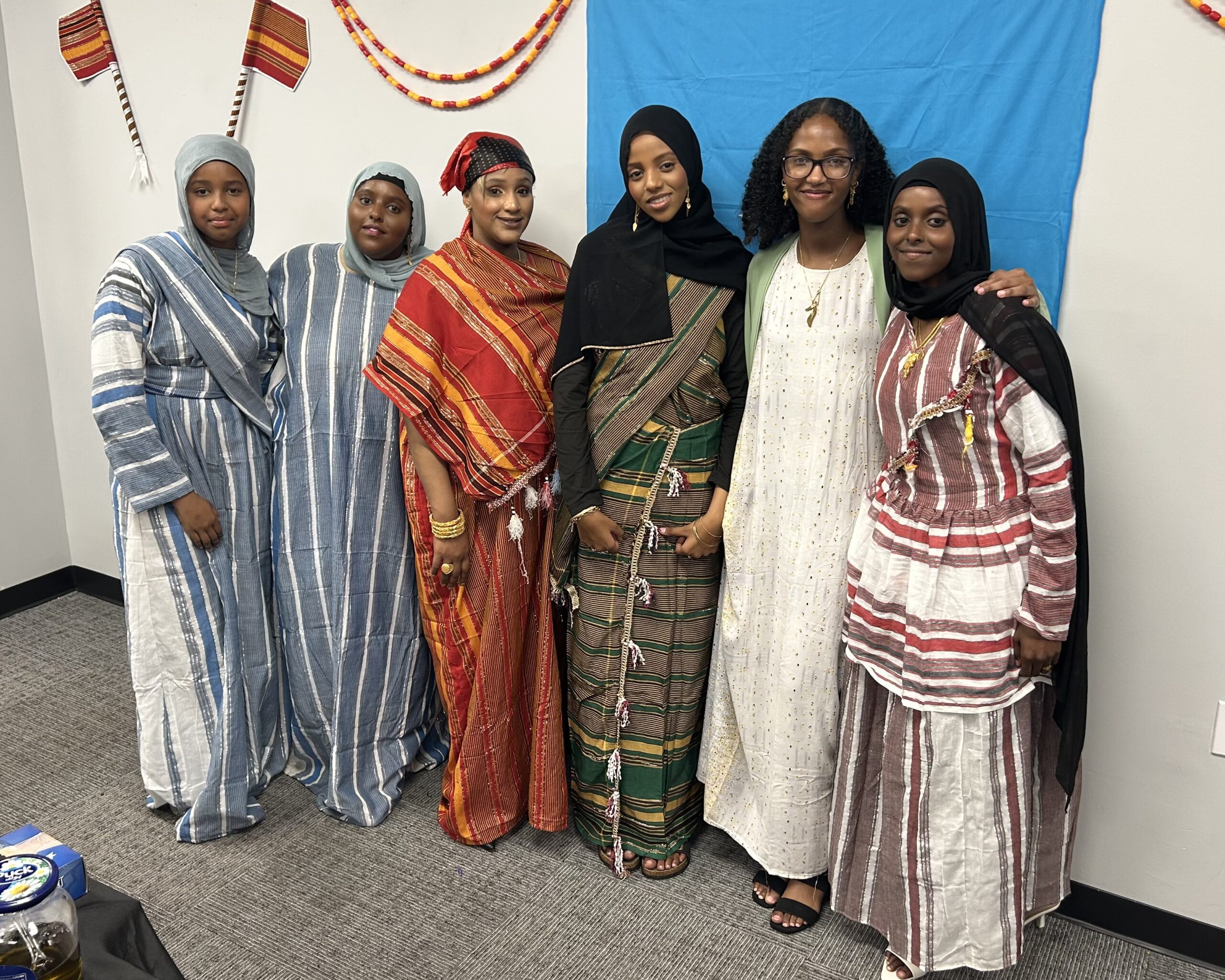
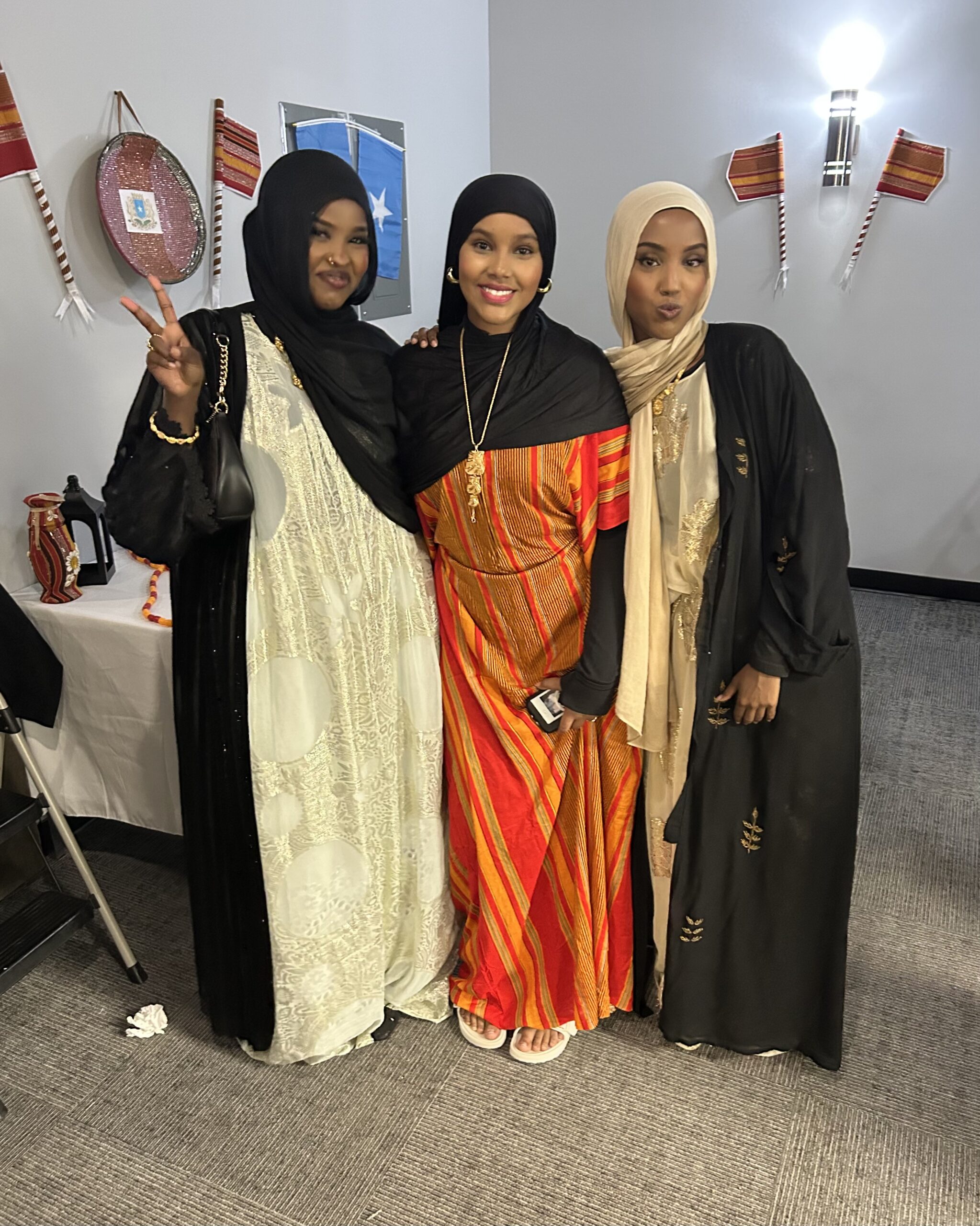
Young ladies snapped photos of each other in an adjacent hall, in front of a Somali flag with a light blue background and a five-pointed white star in the center.
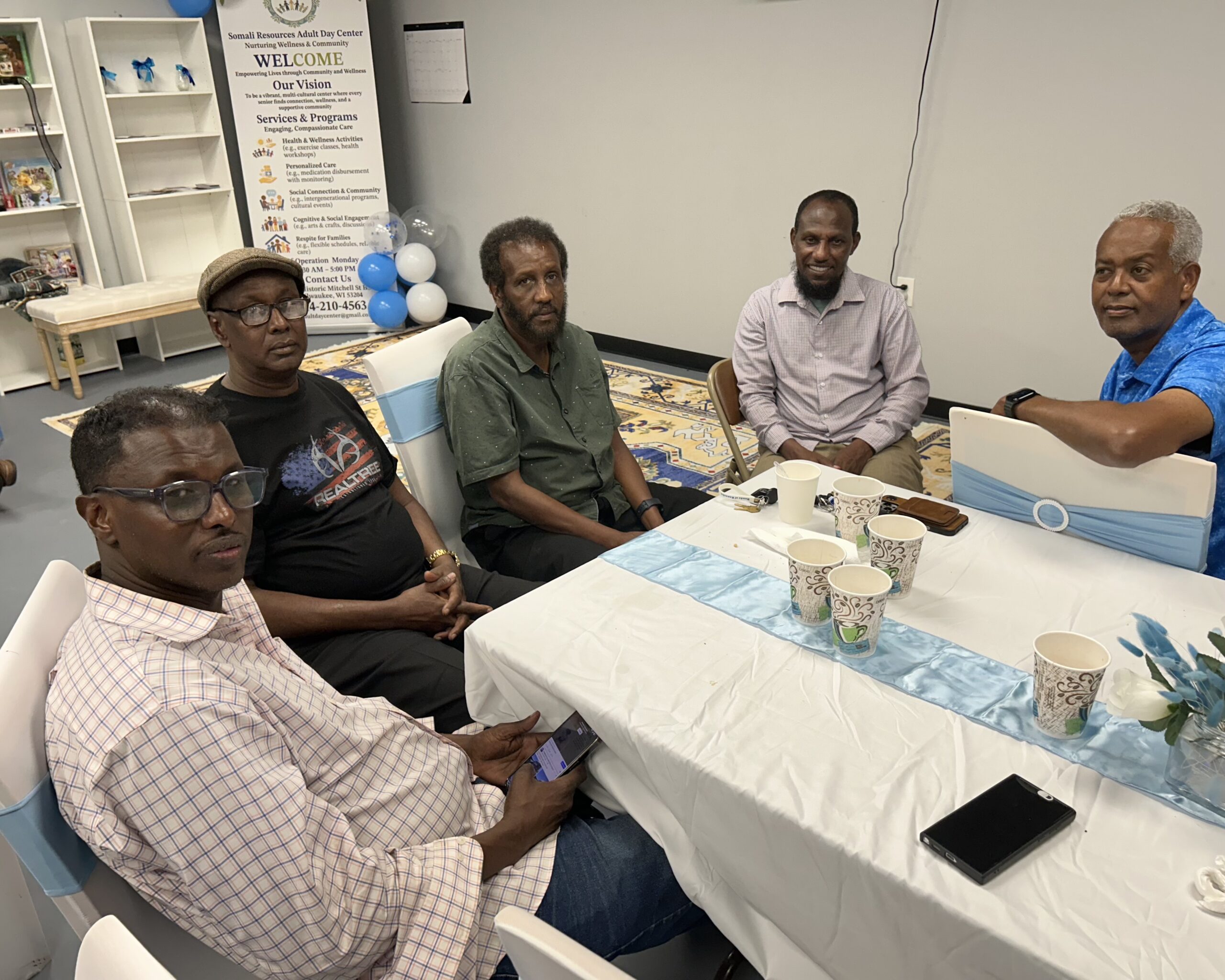
A curtain of shiny blue streamers hung across a doorway. We waved them apart and entered a banquet room. Mostly men sat at half a dozen long, rectangular tables covered with white linens, watching the game on another wall-mounted screen. A light blue runner ran down the center of each table. Blue and white balloons and crepe paper streamers draped the walls. A man circulated, offering water to guests.
Volunteers set up a hot buffet of chicken and goat meat with rice, beef sambosas (a popular fried pastry with a savory filling) and tasty sabaayad (Somali flatbread). Friends in their finery greeted each other in the buffet line and took photos together.
Although everyone had cheered for Cape Verde, no one seemed to mind the final score—Argentina 3 and Cape Verde 2.
Wisconsin’s Somali community
“As a result of the devastating Somali Civil War in the 1990s, approximately two million Somalis sought refuge in neighboring African nations and abroad,” wrote Joshua R. Brown, Ph.D., professor of German and linguistics at the University of Wisconsin – Eau Claire, in the university’s “Somalis in Wisconsin” project.
In the early 1990s, the United States opened up its borders to asylum seekers, he explained. By 2024, about 165,000 Somalis lived in the U.S., with 3,429 living in Wisconsin (.06% of the state’s population), according to the World Population Review.
The majority of Somali refugees in the U.S. settled in Minnesota, but “urban pressures like increasing crime, decreasing job opportunities and overcrowding forced some Somalis living in the Twin Cities (Minneapolis and St. Paul) metropolitan area to move to Wisconsin,” Brown wrote. “Since the 1990s, Barron – the county seat of Barron County – in northwestern Wisconsin has a total population of 3,000 with approximately 400 Somali residents.” Others moved to Milwaukee and other cities for job opportunities and because of familial ties.
Said Hassan, who co-founded the nonprofit Community Services Agency, Inc., also known as COMSA, in Green Bay in 2016, was there “to support the mission of the Somali Resource Center,” he said in a few words of support to the crowd. COMSA has served thousands of refugees and immigrants with case management, housing support, employee assistance, English as a Second Language classes and K-12 after-school programs, Wisconsin Public Radio reported.
Like COMSA, Somali Resource Center of Milwaukee is a nonprofit organization dedicated to supporting immigrants and non-English-speaking residents of Greater Milwaukee. It aims to be a trusted resource hub for individuals and families seeking support, guidance and empowerment,” its website says.
A community hub
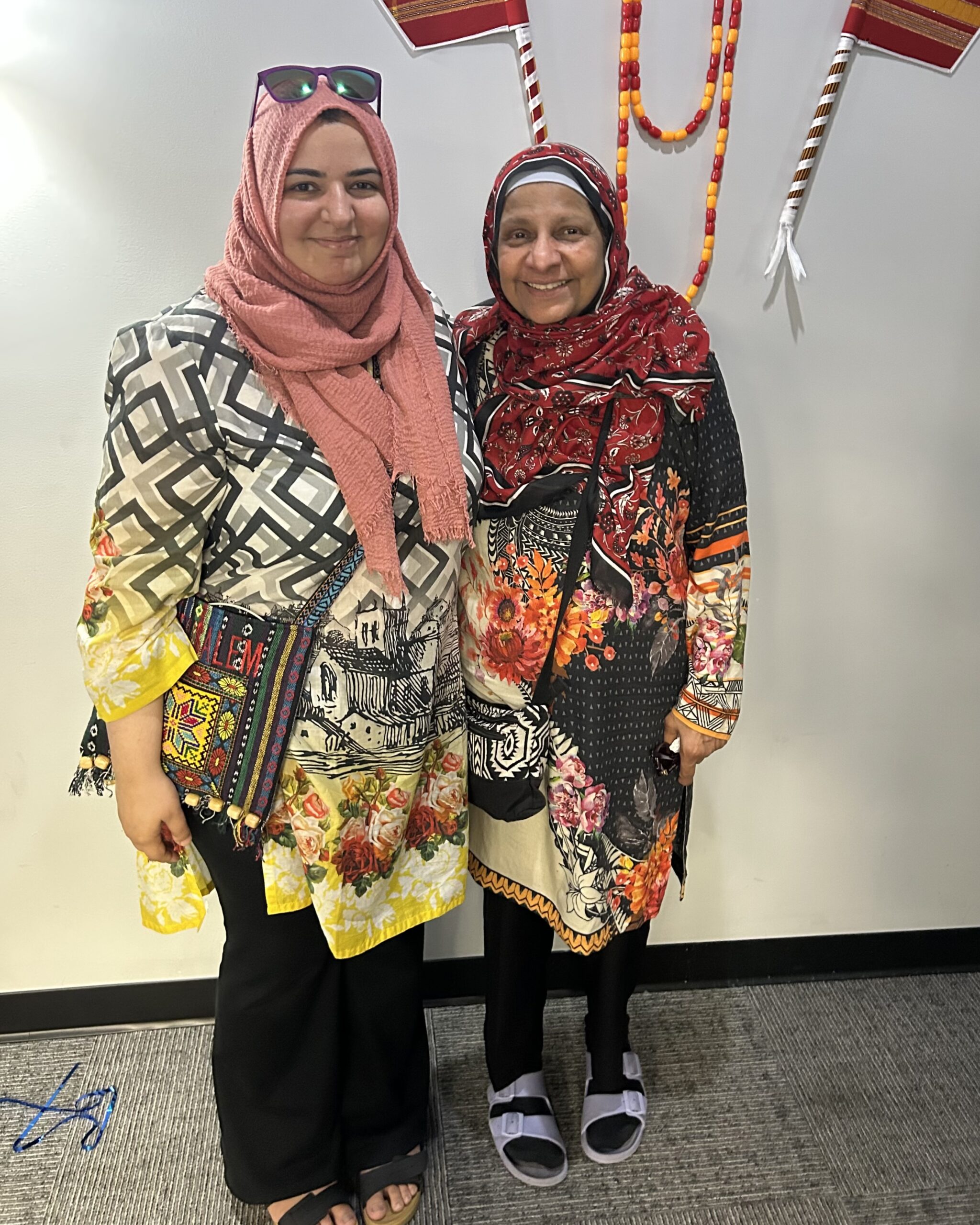
Friday night Milwaukee’s Somali community, along with many friends of the Somali Resource Center, filled three spacious rooms. Milwaukee Alderman Alex Brower (District 3) attended. Inshirah Farhoud, a long-time nurse practitioner with Children’s Hospital, and her mother stopped by.
“A great friend to the Somali Resource Center, Dr. Mike Mentor, and his wife Barb came,” Abukar noted. The Milwaukee pediatrician “has been a great support since November 2024, since we first opened our doors.”
The Somali Resource Center of Milwaukee’s volunteers all work without pay, executive director Lul Abukar told the Wisconsin Muslim Journal. “It’s been two years and we haven’t billed anybody yet.” With no grants yet, the center’s activities are funded completely by donations from within the community, she said.
Addressing urgent needs
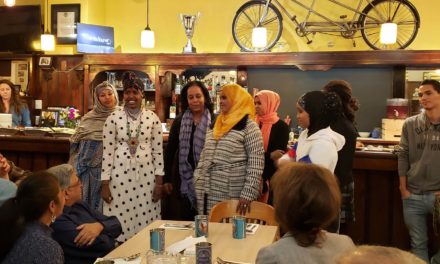
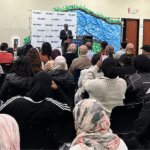
Abukar and the Somali Resource Center’s longtime volunteer and new vice president, Fatima Aden, offered a short presentation about the Somali Resource Center, its services and history. The center’s services develop based on the needs that arise among the Somali community and other immigrants in the greater Milwaukee area, Abukar said. They include services such as housing assistance, interpreting services and connecting individuals to resources for food, healthcare, youth activities, education, social and other essential services.
“Tell me about Lul Abukar?” I asked Aden in a text after the event.
“Lul is the most dedicated and hardworking person I know,” she replied. “She leads by example and always gives her best in everything she does. I admire her for her integrity, kindness and strong work ethic.
“She is patient, supportive and genuinely cares about helping our community grow and thrive,” she continued. “She encourages me to challenge myself and to never stop learning. She believes in my skills and abilities. I’m grateful for the guidance and encouragement she continues to give me.”
“I have been working in the community since early 2015, as a language specialist,” Lul Abukar told WMJ. She worked in roles with Aurora Healthcare, Connections, the IRIS consultant program by Lutheran Social Services, and others to connect people with the services they needed for refugee settlement, to find healthcare and more. “Prior to that, I was always an interpreter for the family—aunts, uncles, and for refugee families.
“My family was one of the first Somali refugee families,” she said. “My father arrived in 1990 and we came in 1993. He spoke multiple languages but Arabic and Somali were the main languages at home.”
As a young teen, Abukar spent summers with her father in Columbus, Ohio, working in a community center he started in 2000, one of the first in the United States. “I would go and stay with him and he would take me to his office every morning,” she recalled. “I would have to work and volunteer there.
“Then I thought it was torture,” she said. “Never in a million years did I think that 20 plus years down the line, I would be the one at the office actually working.
“He was one of the founding fathers of the first (Somali) community in the U.S., and his was the first community center in Columbus, Ohio, for Somalia and East African individuals. He passed in 2011. I learned a lot from him and for that I am grateful.”
Likewise, Abukar’s mother was “a community philanthropist and volunteer,” Abukar said. “When we came to Milwaukee in 2004, my mother welcomed a lot of the refugee families and helped them settle in. It was natural to her. She would help them get furniture, find used items to use in their house. Growing up with those two parents, I learned giving back first was always a priority.”
After earning a university degree in healthcare management with a minor in business, Abukar also became the only Somali licensed as a certified language specialist in Wisconsin and found many families that needed so much more than healthcare. They needed housing, food, education, jobs.
“The way it works in our community is by word of mouth. When you help one uncle or aunt, they tell each other. Word gets around,” she said. Soon people began stopping by her house to get help filling out social security paperwork, Medicaid applications and many other things.
As her network grew, she learned what people needed and where to find the resources they needed. “That’s what led me to decide we needed a hub where people could get the services they need,” she said.
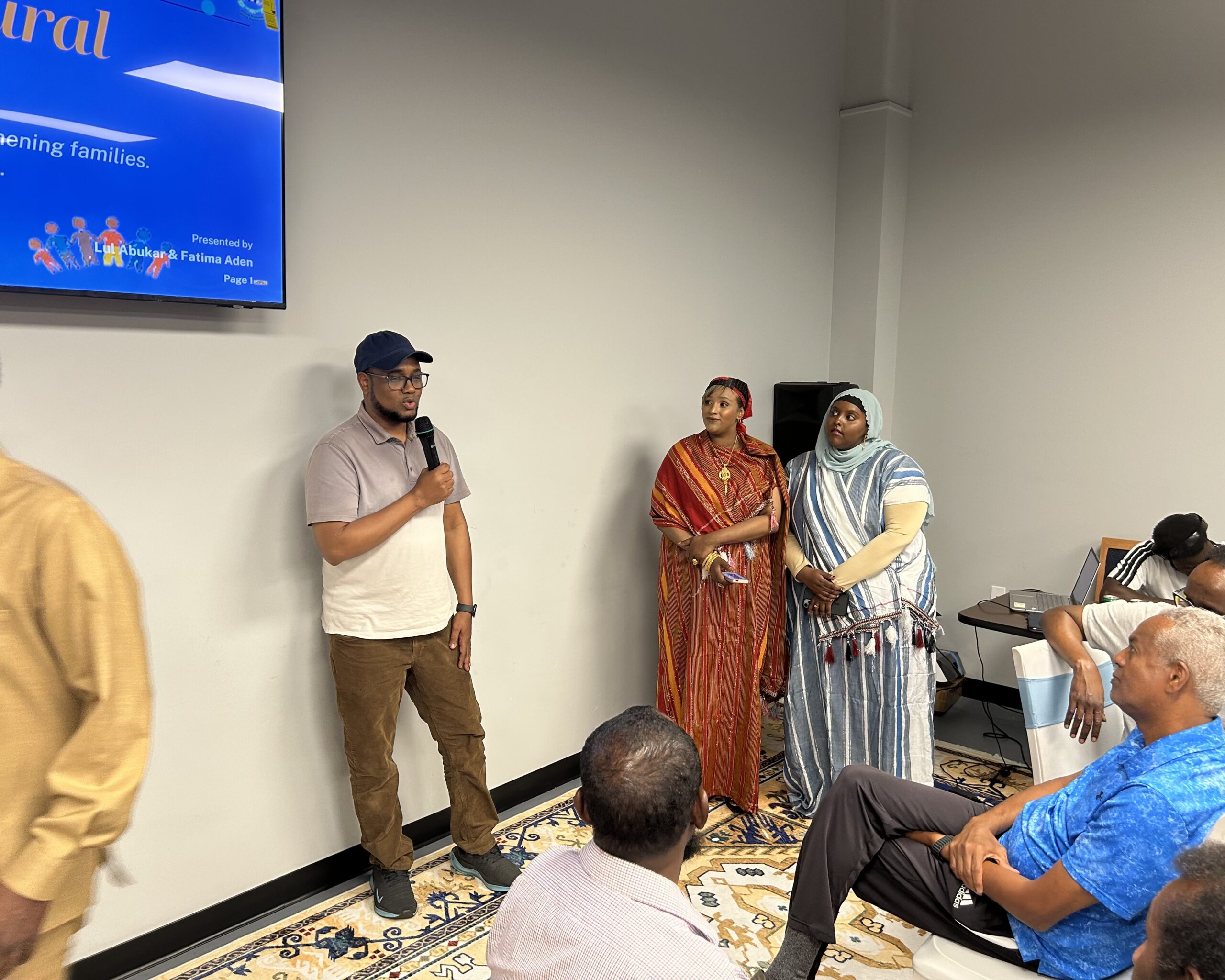
Said Hassan, co-founder of the nonprofit Community Services Agency, Inc., also known as COMSA, told the audience he was there “to support the mission of the Somali Resource Center.”
Building a hub
When Abukar decided to build a community hub, “I had no clue how to do it,” she confessed. “I actually thought I would start my own interpreting company. But, when it came down to it, people needed resources as well as interpreting,” she said. So, with three other co-founders, she looked for a large space where people could come in and feel comfortable, rather than just a small office, she said.
“We call it a Somali Resource Center but we host all refugees, no matter where you come from,” she explained. “Right now we have Senegalese, Burmese, Somali and a few Arabic individuals. But I still want to respect and honor where my parents came from, so we call it the Somali Resource Center.”
The center serves about 40-55 walk-ins a week, she said. Those are people seeking information and help in finding resources. Its adult day program is open Monday through Friday and serves 15 seniors, “and we are hoping to bring more.”
VP Fatima Aden, also the assistant director of the adult day program, has been working with Abukar since the beginning. She heard about the center the way everyone else does, word-of-mouth from her family, she said. “I decided that I wanted to be a part of it,” she said.
Days at the center are full of variety, she said. People walk in with all different kinds of needs. The center is there to help them meet them.
And, by the way, they are all volunteers. “None of us get paid because we haven’t started billing yet, Abukar said. “We also don’t have any state or federal grants. For two years now, we’ve been self-funding by collecting community funds from amongst ourselves, and my business partner, Abdisalam Osman, who owns Garden of Eden, he’s a godsend.”
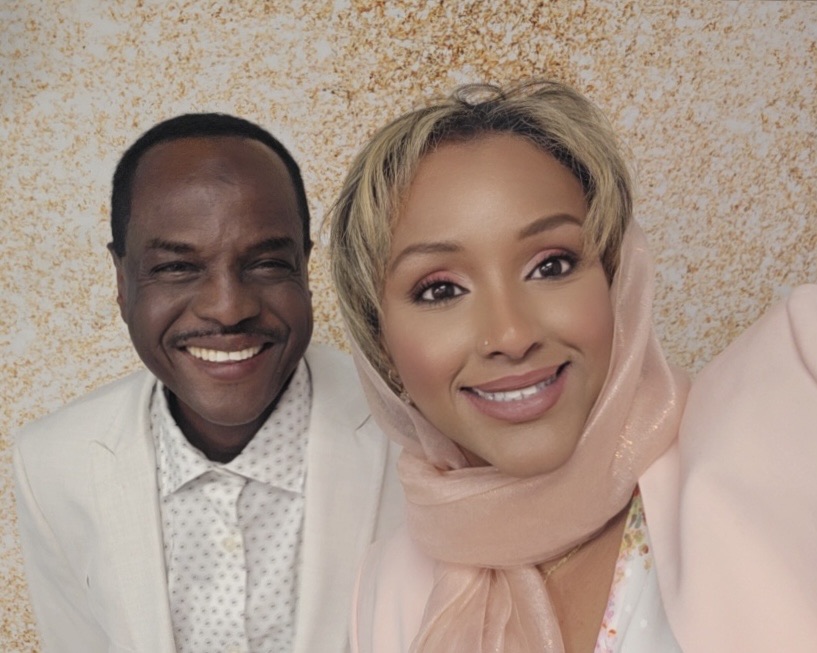
Abdisalam Osman and Lul Abukar are co-founders of the Somali Resource Center.