Photo by Sandra Whitehead
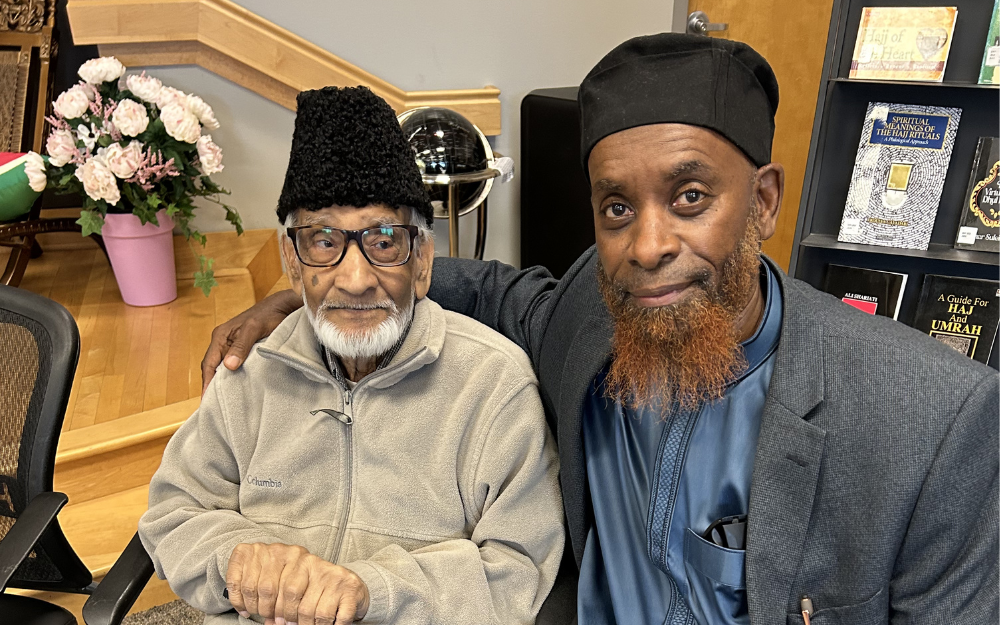
Waheed Ahmed, Ph.D., (left) and Will Perry (right) participated in a panel in May at the book launch for “Muslims in Milwaukee,” Three University of Wisconsin – Milwaukee professors began research for the book in 2010, after Dr. Ahmed and his son Aamer proposed UWM conduct a demographic study of Milwaukee’s Muslims.
(This article is part of a series that features families and individuals who played important roles in the history of Wisconsin’s Muslim community. Dr. Waheeduddin Ahmed, Ph.D., is among the founders of the Islamic Society of Wisconsin and the Milwaukee Islamic Dawah Center.)
In an email to the Wisconsin Muslim Journal, Waheed Ahmed, Ph.D., politely offered a correction to an article I wrote in November about the history of the Milwaukee Islamic Dawah Center’s food pantry. The article credited former MIDC executive director Will Perry with founding the pantry.
“We should place the credit where it belongs, although Will Perry’s contribution has been selfless and invaluable. Here is some additional information, which was not available to her at the beginning and probably to almost all people presently associated with the Dawah Center,” he wrote. “The first stage of every project, big or small, successful or not, is its conception and initiation. The food pantry idea was conceived, initiated and initially financed by Dr. Nauman Siddiqi, a nephrologist, who was doing his fellowship at the Medical College of Wisconsin … He was assisted in this effort by the late Br. Ayyub Al-Amin.
“He is one of those selfless people who try to remain out of the limelight,” Dr. Ahmed added. “However, a respectable and vibrant community like ours must place the credit where it belongs before all the witnesses are gone to meet their maker and the information is totally lost.”
Exactly! I thought.
Thus began our correspondence, a visit to his longtime home on Milwaukee’s south side and interviews with his children and others who witnessed Dr. Ahmed’s important role in establishing Milwaukee’s Muslim community.
The early days
In a subsequent email, Dr. Ahmed said, “I wrote a history of the Islamic Society of Milwaukee as well as that of the Dawah Center, both of which have become miserably outdated now. I am one of the two or three old goats who are still alive and are dying to tell the tale whenever opportunity is presented.”
“May my husband and I visit you?” I responded.
“You and your husband are most welcome,” he replied. We visited in mid-January.
Dr. Ahmed’s wife, Syeda, greeted us at the door and directed us to the living room. She disappeared down a hall to tell her husband we arrived.
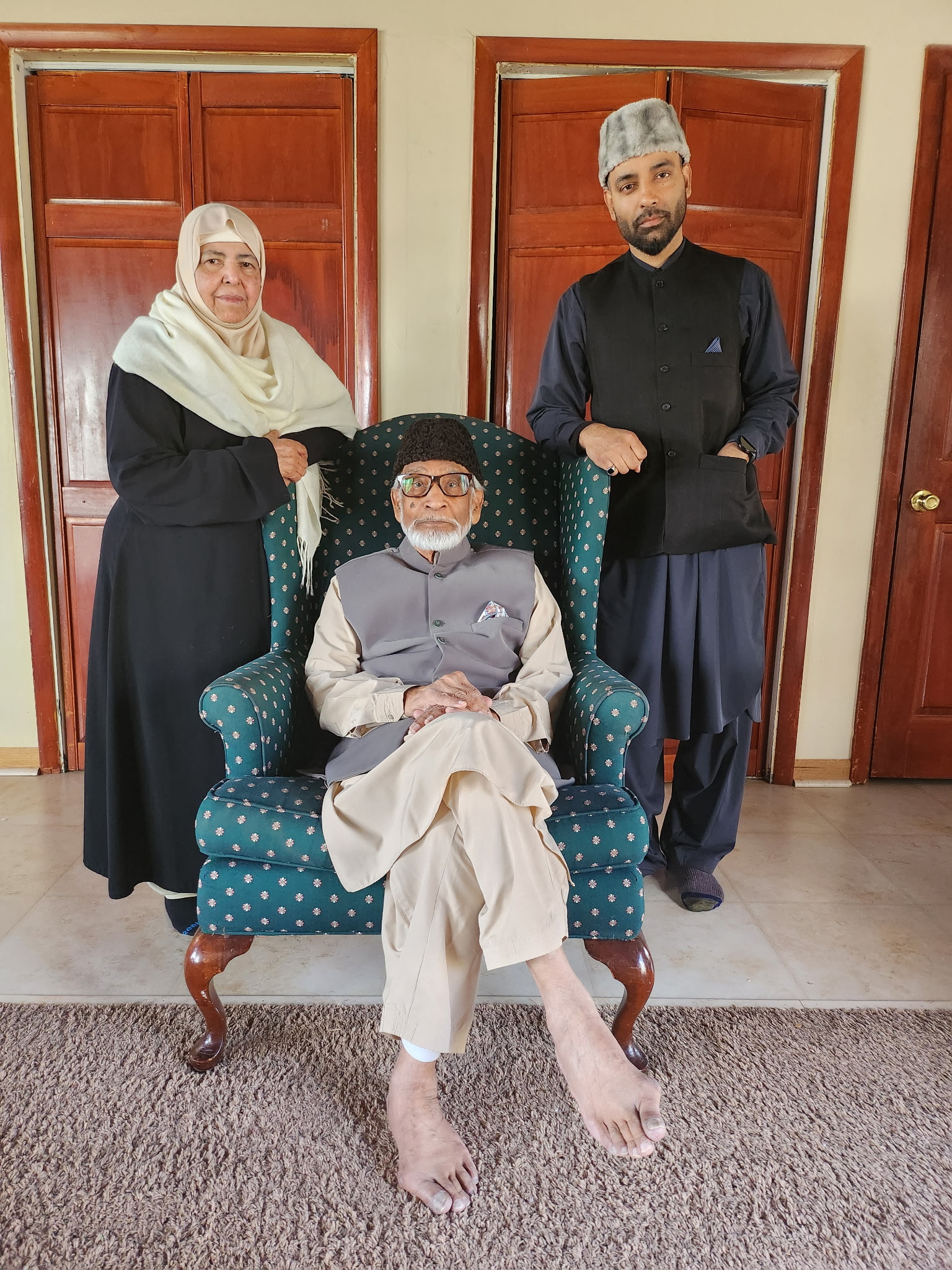
Syeda Ahmed, Dr. Waheed Ahmed and their son Aamer Ahmed on the Eid of 2023.
Dr. Ahmed emerged from his study where he had been reading a variety of newspapers. One of them was The New York Times. He has been subscribing for 40 years and has never missed a day of reading it, he said.
Apologizing that he couldn’t hear well, the small man, dressed in a beige tunic and loosely fitted beige trousers, sat in a large armchair. He mentioned he still drives, but getting across the ice and snow to the garage behind the house is impossible these days.
Dr. Ahmed presented us with a copy of his self-published, 31-page booklet, “A History of the Islamic Center of Milwaukee, The Formative Years.” Published in 2012, it notes, “The author was the president of the Muslim Student and Community Association of Greater Milwaukee from 1982 to 1983 and the president of the Islamic Society of Milwaukee from 1983 to 1986. This history was first published as a booklet in 1990 and now revised with minimal changes.”
As he did for my story, Dr. Ahmed wrote his history to set the record straight. Its introduction explains, “Written records and documents are scarce and scattered. If the Islamic Center loses its link with the past, it is likely to lose its relevance.” Having “been involved in the Islamic work in Milwaukee since 1979 and in the acquisition and the administration of the Center since 1979 to 1986, “I have in my possession facts as well as vivid memories which I would like to put on record for the benefit of those who might be interested,” he wrote.
Born in Hyderabad, India, in 1933, Waheeduddin Ahmed completed a Ph.D. in chemistry at London Metropolitan University. He worked as a professor at the University of Tripoli in Libya before coming to Milwaukee in 1976 to work as a research scientist at Sigma-Aldrich Chemical Company.
Ahmed wrote in a Nov. 12 email that he came to know other Muslims in Milwaukee at the Sunday Islamic School run by the Muslim Student Association at the University of Wisconsin-Milwaukee. “In parallel with the classes for children, a Quranic study session for adults used to take place. This whole activity was organized by Dr. Suleyman Kurter. Abdullah Clark, Mahmoud Atta and Ayyub Alamin were among the attendees, he noted.
“Those meetings were what gave birth to the Islamic Society of Milwaukee,” he wrote. “When the proposal for the formation of the Muslim Student and Community Association was made, Abdullah Clark was supposed to be the president of that organization, but for some reason he couldn’t attend the elections. So, Dr. Farooq Al Quadan was elected. After he left, Dr. Munir Al Gharaiibah succeeded him and, after him, I was elected president. From that setup, the ISM emerged with me as its first president.”
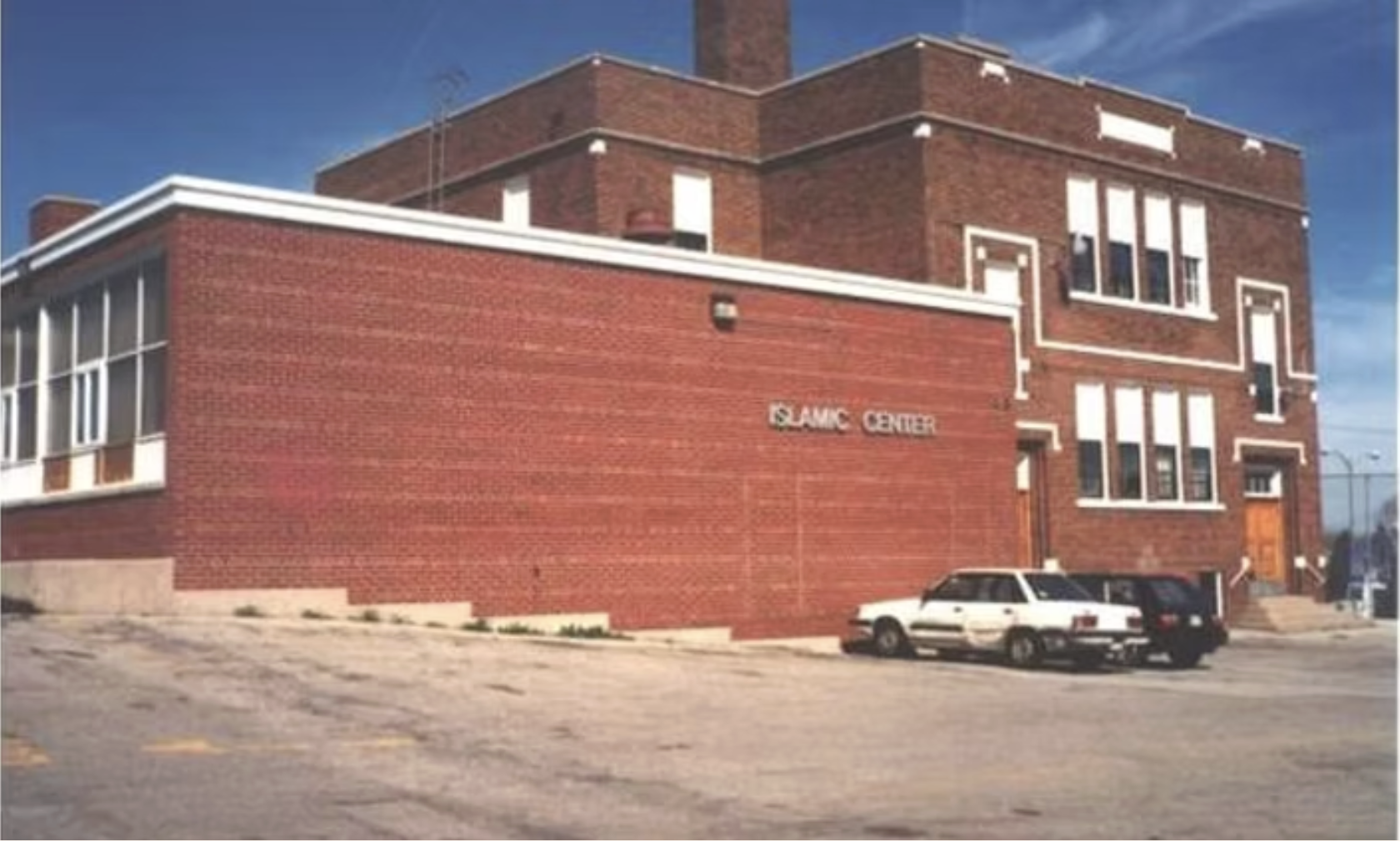
Milwaukee Public School System placed the New Road School for sale in 1982. It was purchased that year by a coalition of two early Milwaukee Muslim organizations (the Islamic Foundation of Greater Milwaukee and the Muslim Student and Community Association) for $115,000.
Another early Milwaukee Islamic organization, the Islamic Foundation of Greater Milwaukee, was also organizing to create a mosque for the Muslim community. Its members included M.Y. Quereshi (president), Mohammad Aslam Cheema, G.M. Shah, Hafiz Yunus, Mohammad Saleem, Mohammad Y. Khan and Mahmoud Atta.
During Dr. Ahmed’s presidency of the MSCA, the two organizations pooled resources to purchase a building in 1982 that had formerly been a Milwaukee Public School. Initially, they did not have enough money to buy the school building, so a fundraising effort began, Dr. Ahmed said. Some generous donors from the Muslim community contributed, including some UWM students.
“One of the most successful fundraising projects was the production and the sale of audio tapes,” Dr. Ahmed wrote in his booklet. Audo tapes of Islamic lectures, songs and Quranic recitations proved to be very popular, he said. The building was purchased on the fourth day of Ramadan, July 1, 1982, with Dr. Ahmed signing on behalf of the MSCA and Dr. Cheema signing for the IFGM, Dr. Waheed wrote.
The old New Road School became a home for the Milwaukee Muslim community that included a mosque, Sunday school classrooms and an area in the basement used for Ramadan iftars and other events. The community expanded the ISM building in the Nineties, making a larger prayer hall and Wisconsin’s largest Islamic School.
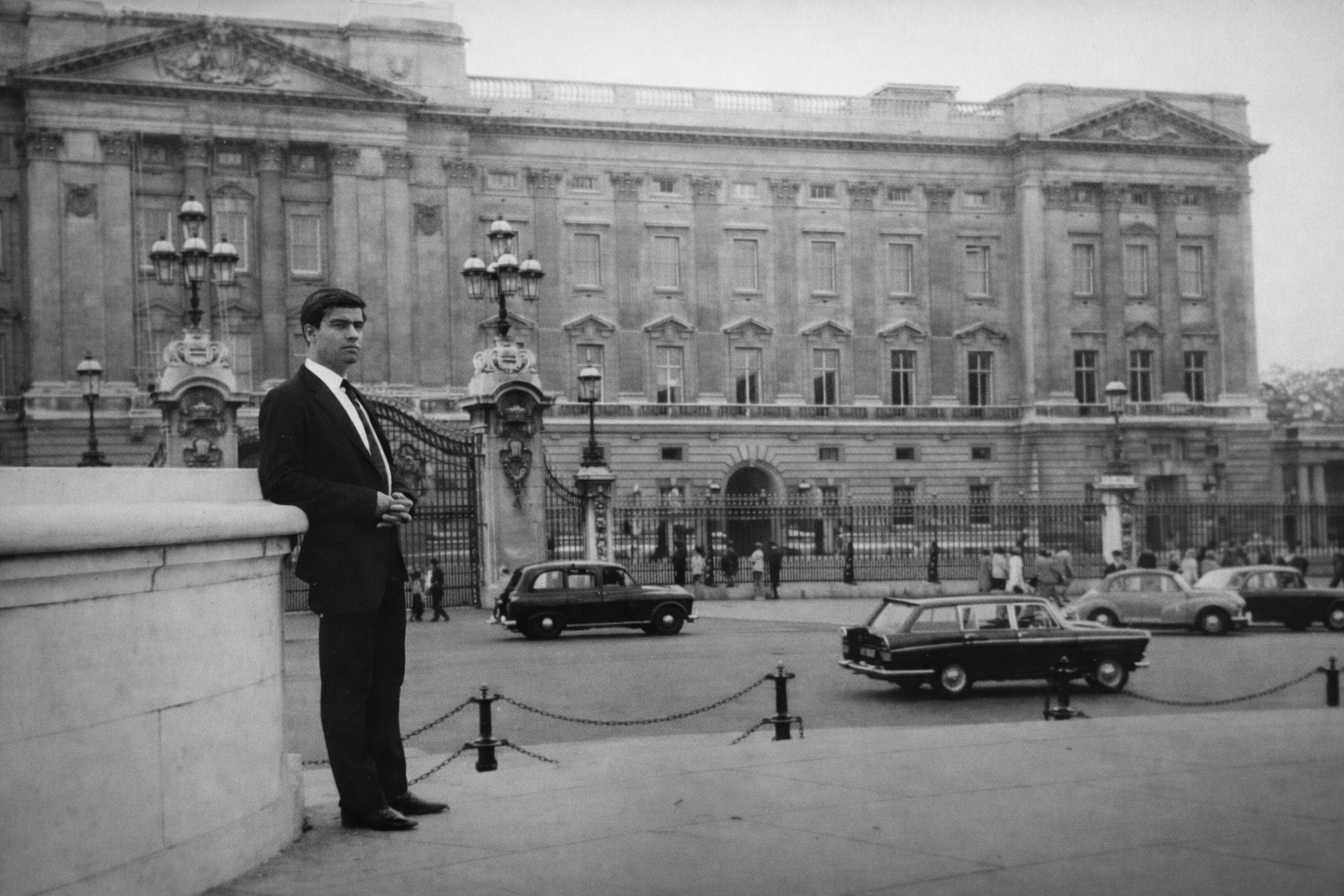
Waheed Ahmed spent 14 years in England, where he completed a master’s and a doctoral degree in chemistry at London Metropolitan University and worked in a pharmaceutical company.
Siblings Othman Atta, the current director of the Islamic Society of Milwaukee, and Janan Najeeb, founder of the Muslim Women’s Coalition, both recall their father, Mahmoud Atta, being involved in meetings with Dr. Waheed and the other founders.
“All of them were instrumental in establishing an Islamic presence in Milwaukee,” Atta said in an interview with the Wisconsin Muslim Journal. “That was the generation that established the mosques and, even before the masjid, they began meeting as a community. And the tape project, they would go to conventions and copy lectures on cassette tapes, and bring them back to the community and sell them at national conventions, spreading information about Islam. Before that, there wasn’t any organized, established Islamic culture here. Dr. Ahmed and those other early leaders played an important role in the initial founding of Milwaukee’s various Islamic organizations.”
Next up—the Milwaukee Islamic Dawah Center
With a home for the community, Ahmed and some other early leaders turned their attention outward. “The Islamic Center of Milwaukee (later ISM – Main) … was at first the target of considerable hostility from the local population,” Ahmed wrote in his history. “As is always the case, it was caused by ignorance about us which bred prejudice.”
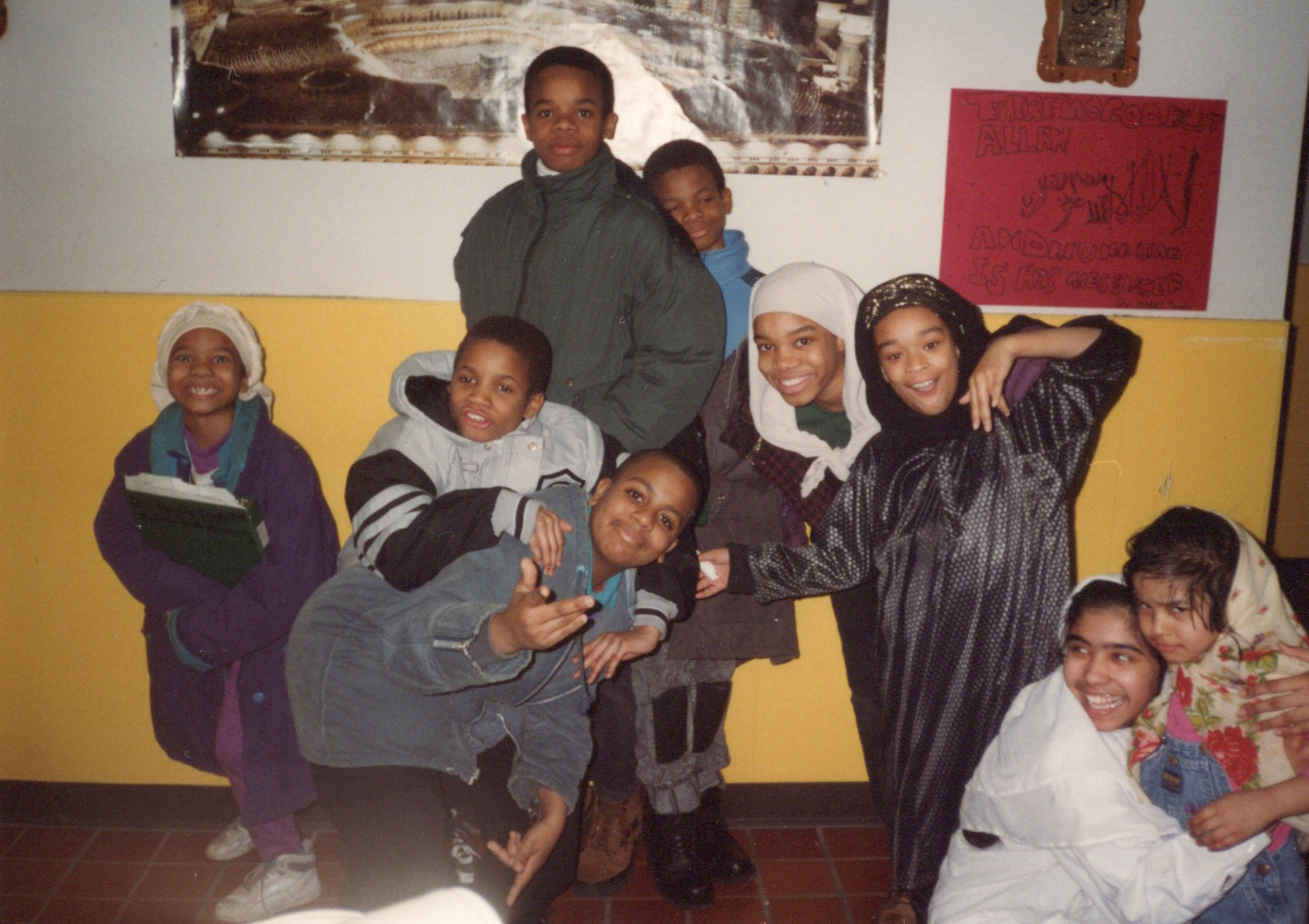
Courtesy of Abdallah Clark
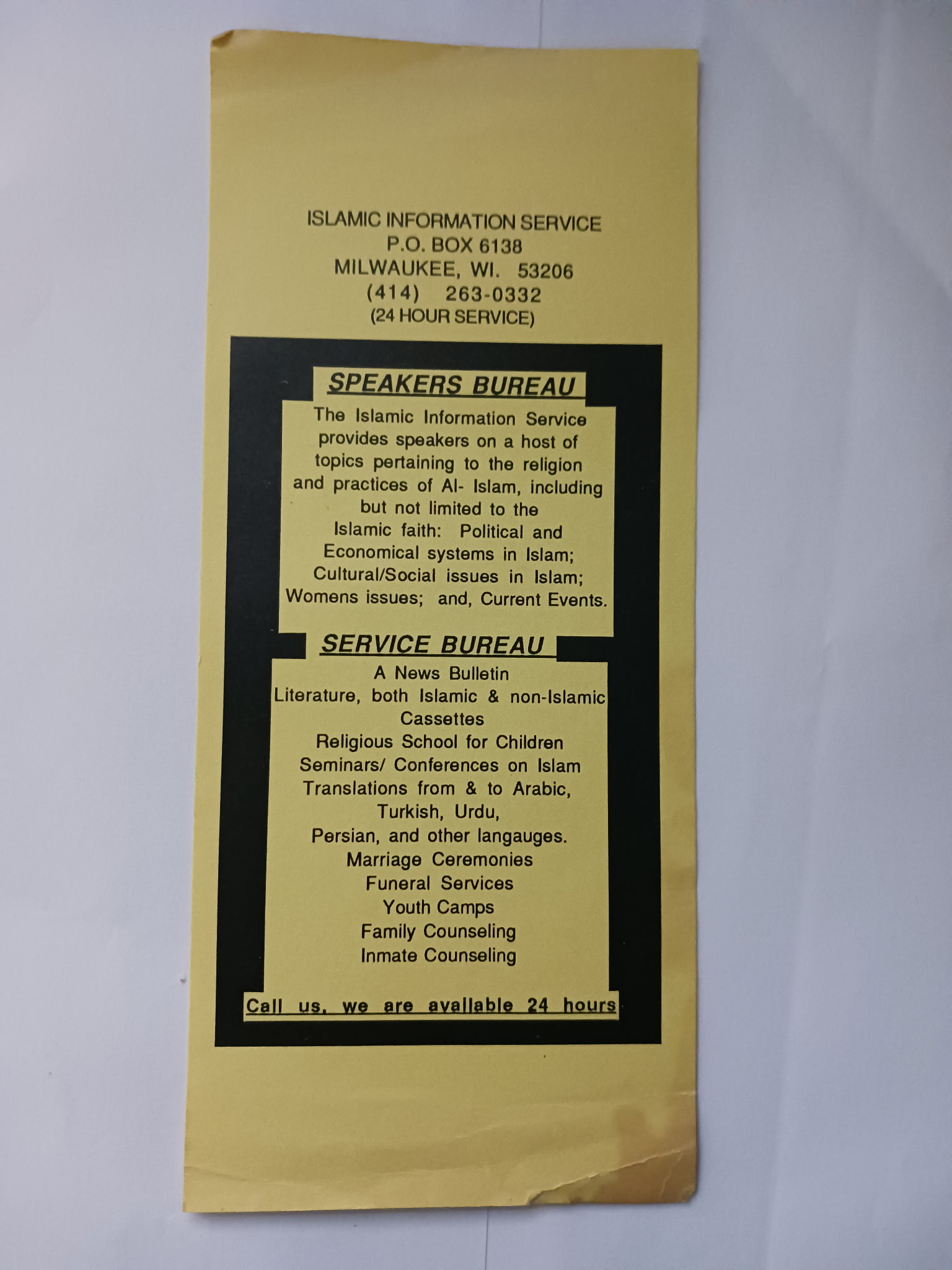
Ayyub Alamin and Ali Lubbad, who were in a grocery store business together, answered the Islamic Information Service Hotline, while Abdallah Clark, Dr. Waheed Ahmed and others served in its speakers bureau.
Determined to pursue dawah (sharing the message of Islam), the early leaders held an open house, Ahmed said in the interview at his home. “People didn’t know about Islam. They thought we were maybe the P.L.O.
“Our idea was to somehow engage them in asking questions and we could give them information,” he said. “That led to the Islamic Information Center, which was a precursor to the Dawah Center.”
Brother Ayyub Al-Amin and his business partner Ali Lubbad monitored a 24-hour phone line. It rang in their store during business hours, then transferred to Al-Amin’s home phone afterwards.
Longtime executive director of the Milwaukee Islamic Dawah Center Will Perry first met Dr. Ahmed in 1999 or 2000, Perry recalled in an interview with WMJ. “That’s when I learned about the Dawah Center and first got involved,” he said. “I met Dr. Waheed, his son Aamer, Brother Mahmoud Mala, Dr. Pruitt, Sheikh Zacharia, Mohammed Abdul Hamid … they were leading the Dawah Center and were all my mentors. Dr. Waheed was at the helm. He was president of the shura (the board).”
Dr. Ahmed “was intent on getting the Dawah Center actively engaged in the greater community,” Perry said. “He’s a social activist kind of guy. He’s got to shake the tree a little bit, getting involved in the community politically and socially. He spearheaded a lot of that activity. And so did Aamer (Ahmed).
“Brother Waheed’s also an intellectual guy, a scientist. He’s always very thorough and systematic in his approach to things,” Perry added. “We all had a great appreciation for his knowledge and historical perspective. He’s been a guide for me in regards to having a broader view on Islam, its history and the impact it has had in the United States. He’s written some beautiful, in-depth articles where he breaks down complicated ideas in simple terms.”
Reflecting on the man
Dr. Ahmed’s son, Aamer Ahmed, 44, spoke with WMJ about his memories of his father. Aamer was born in 1981, the year before ISM formed.
“All of my earliest memories actually happened to be in the mosque,” he said in a phone interview from Florida, where he lives. “He would take me along every time, for meetings, prayers, everything. The community was a lot smaller and everyone brought their kids along.
“From the standpoint of a child to now, I see the progression of the community. There were dynamics back then you don’t see so much now. One of them is that everyone had the shared goal of building a community. Now the community is well-built, well-established, with multiple institutions.
“Consequently, back then there was a greater need to bind together,” he said. “As a byproduct, the cultures were always secondary. So, I remember it as very diverse. People were from different backgrounds—Sunni, Shia, South Asian Muslims, Arab Muslims and Black Muslims were all together.
“That has shaped my outlook on life, and my mission and purpose in life as well,” said Aamer, who helped establish Mahruf, a Muslim social service organization.
“It was very family-oriented back then, too. Today, you’d hire a construction company and the contractors would do all the work. Back then, the community came together and did a lot of stuff themselves. That created bonds between us across our diverse backgrounds.
“There was no full-time Islamic school,” he recalled. “My mom was a teacher and when she learned about the Clara Muhammad School, she quit her other school and asked for a job. I remember going there in a preschool type of situation.”
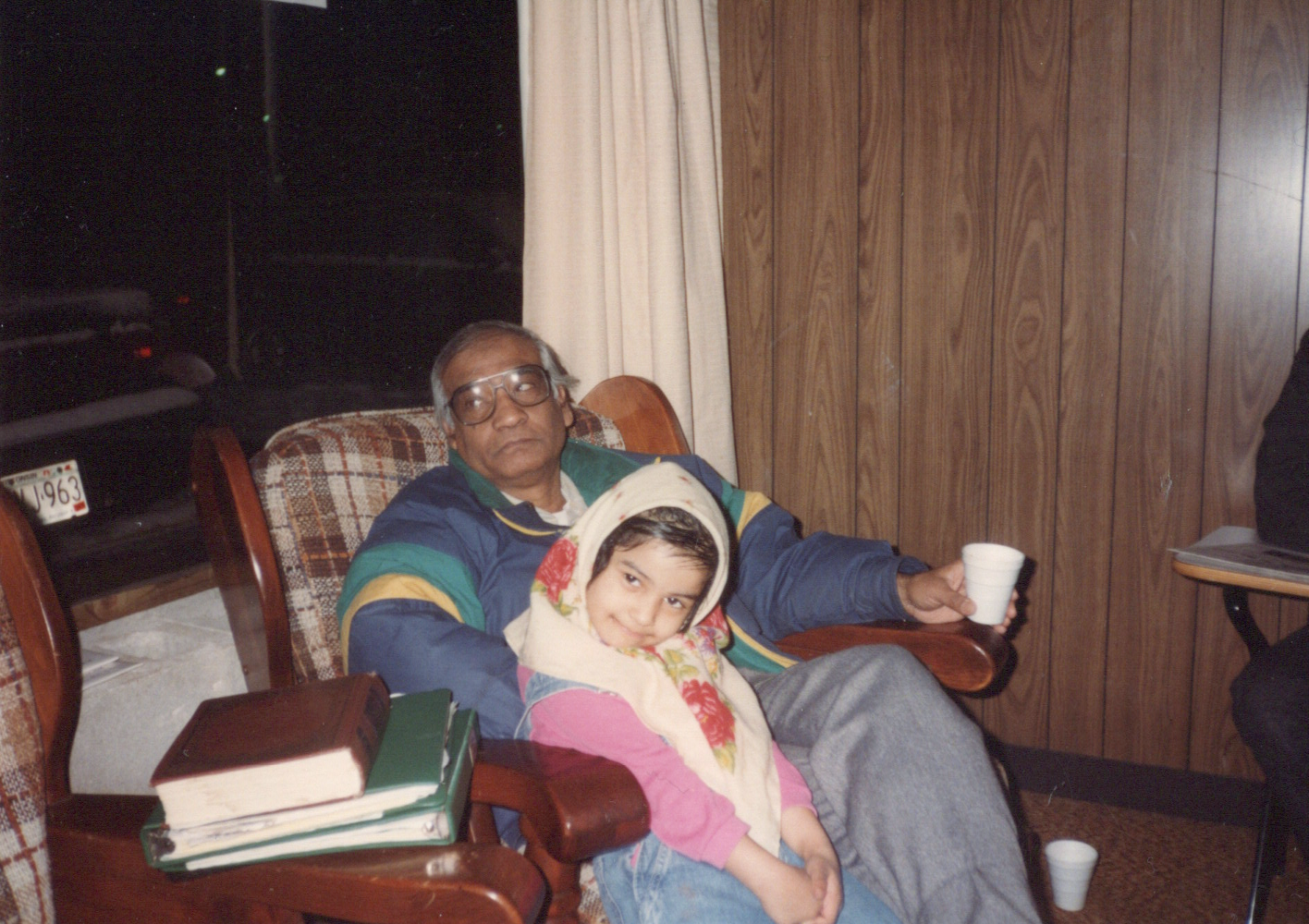
At that time, the Ahmeds lived on the north side of Milwaukee. Aamer was in middle school when they moved to the south side. “They only moved once since they came to America,” he said with a laugh.
“I see my dad as someone who was almost like glue that brought really disparate people together around a common cause,” Aamer said. “I think he did a good job diplomatically in creating a pathway for people to put their differences aside.
“In this country, it didn’t matter if you were Salafi or Sufi, Shia or Sunni, Palestinian or Pakistani. This country doesn’t see those things. They see you as Muslim. That is why my dad saw Dawah as so important. It let us create (for ourselves) an awareness of Islam and Muslims in America, to create a level of understanding and mutual respect between communities.