Credit: Designed by Lara Witt
“These things I am going to say, not shout. For it is a long time since shouting has gone out of my life. So very long.” –Frantz Fanon
Different segments of U.S. radical leftists, and the influencers they follow on social media, are working extra hard to devour themselves. While being targeted by the fascist establishment for complete annihilation, they’re turning their eyes on one another in extraordinarily nonsensical ways. It’s an ideological race to inevitable implosion, and you have to be basic, clownish, or completely detached from reality to qualify for this run backward. We’re living through what I believe will be complete self-destruction, which I warned about in “The Nation on No Map” as well as several of these columns.
Maybe I was naive for thinking it could be avoided, but the chosen nonissues that consume so much of people’s attention tell us what too many on the U.S. left are not prepared for: to actually fight fascism. It tells us what the denominations of the U.S. left are not: organized communities. And it tells us that online leftism is a powerful system of self-surveillance that effectively captures and counters righteous anger.
I have spent a lot of time thinking about the self-sabotaging nature of the online left because its ridiculousness is under-appreciated. While other spaces of ideological zealotry online, like men’s rights and white supremacist groups, often get attention, the U.S. left is oftentimes deemed too unserious for concern. Authorities find it worth observing, of course, but when I talk about these issues with others who see it, they often dismiss it as insignificant. It’s not. Based on the similarities and patterns that make it function similarly to other cultish places online, I worry we may see intracommunal violence soon.
For years, toxicity has plagued these groupings in repetitive fights about geopolitics, academia, and who or what is counterevolutionary. It’s not getting anyone anywhere or changing much for the better, but it is helping a generation of people lose their sense of self. Furthermore, it’s making confusion, misinformation, and conspiratorial accusations the standard. Reality and organized resistance are being sacrificed for a culture of posturing that’s absolutely being manipulated by outside forces.
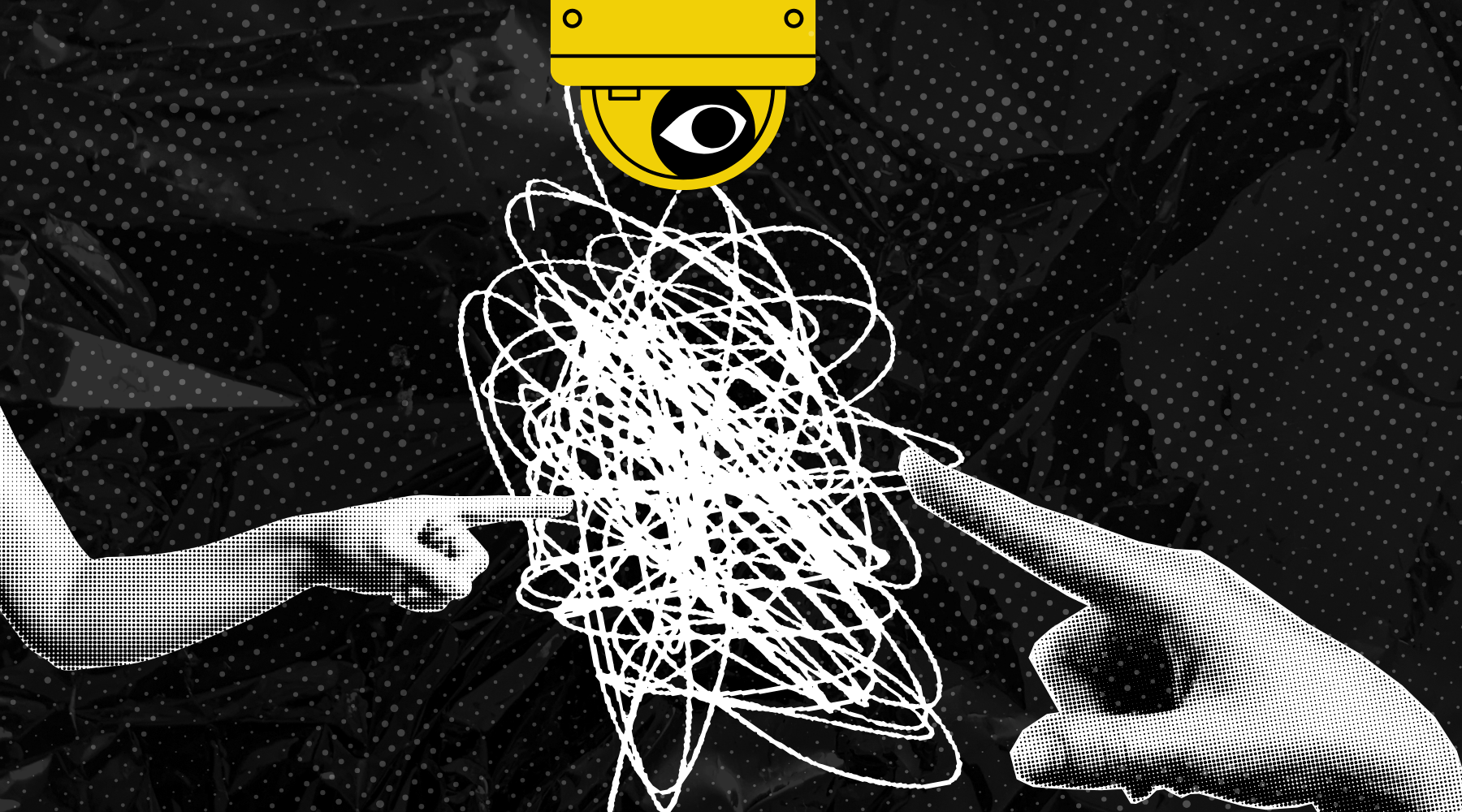
While the online left continuously accuses one another of being feds, the major irony is where it’s playing out. Social media is one of the most willful submissions to mass surveillance of our time. En masse, Western radicals are willing to hand over their data, tracking themselves and their opinions in the open for tech oligarchs and governments. Those who don’t do this and have the sense to keep some of their business private, or at least discreet, are rare finds. In the midst of Substack wars, debates over left media (writings, videos, left pundits, etc.), and endless engagement-seeking clickbait posts, we are engulfed in an era of sheer asininity. Addiction frames the inability of the influenced and the bad-actor content creators who do the influencing to let go. So this predicament will lead to destruction. What’s sad is that this scenario reveals just how deeply fearful and unprepared many among us who quote revolutionary fighters actually are to live up to their words.
Those who cannot or will not fight fascism openly turn on each other. Perhaps some are scared, but others seem much more invested in personal power grabs. While people are without power and food in major disasters, they’ll be online beefing. When families are being swept up into facilities and disappeared, they’ll be online beefing. When authorities are murdering people in the streets, at home or abroad, they’ll be online beefing. As the food system breaks down, they’ll be online beefing. As new fascist laws appear, they’ll be online beefing. This is what they do. Factions of the U.S. left fight over symbolic moral claims, self-righteously justifying their own reflection while suffering increases all around them in the very communities they live in.
They fight over history because their own myths of what did or didn’t lead to this moment fuel their sanctimonious attention-seeking. They fight, they fight, they fight. People who recognize this pattern and are either tired of it or refuse to engage must leave this world to shape a genuine struggle where differences can be held and respected in favor of common goals. People who want to fight fascism have to actually fight it and not be consumed by timeline wars, leftist influencer rage bait, and the clear manipulation of these spaces by outside forces who want us unfocused. We have to at least try to build a real community, but we need to define what that means.
I have pointed to the intercommunal mosaic as a model I appreciate for thinking through all of this. This is a model to “allow individuals, organizations, and entire communities to exercise self-determination in deciding what types of social orders they choose to struggle to bring into being.” We’re also tasked with retreating from a false sense of community. I thought about this recently when a clip of Professor Tressie McMillan Cottom crossed my path, where she argued that the idea of the Black community wasn’t something that actually existed:
Like what we are calling a Black community is an idea of one that we inherited from the civil rights movement generation. But for community, you need institutions; you still need a place. And if you don’t have a real estate, if you don’t have a building, you don’t have an address, you don’t have a phone number, you probably don’t have the geography for real community. We are now just a community in the way that we share ideas on the internet. That is all a signifier, though. Those aren’t people that you can see and touch and reach out to. … If you don’t understand that your community, the basis of your community, has been pulled from beneath you, you don’t have enough information to make good decisions.
I couldn’t help but think about the online left when I heard this. People throw around the word “community,” but they don’t define it in terms of real connection and real-life interaction. These petty squabbles aren’t happening because people disagreed and approached one another and tried to discuss and find common ground. They happen because detached people project onto one another in bad faith and influence others to do the same. These are clearly siloed sects of bad faith and disrespect, devoid of the most basic communication skills. If a large majority of these types I’m lamenting here were radicals engaged in grassroots struggle, they would know how to speak to others and resolve conflict instead of always perpetually wallowing in it. Having disagreements and differing priorities is a normal part of life, but people always being in disputes online and slinging mud is a red flag of the types of people, spaces, and organizations we must avoid. It absolutely does not have to be this way.
Social media has made needless clashes into the political equivalent of an influencer doing a repetitive dance to gain followers. The moves remain the same, but people are glued to the spectacle in the comments no matter what. As tech fascists do their best to bring about a civil war and cause discord around the world, aiding the rise of the global far right, left content creator radicals do their dance of disharmony. And to make matters worse, they do it as free employees on platforms where they train algorithms, generate ad revenue, and where their data is used to manipulate them. Remember these words from Martin Sostre:
We have to defend our own—all comrades of conscience who have put it on the line, who have opposed the State, who have risked their butts in doing so when they didn’t have to. This should mean something to us and we should stop the little petty ideological struggles we have and look at the substance. These comrades are being snuffed by the state and for us to stand by as if nothing is happening puts us in the category of righteous cooperators, acquiescers in the unjust incarceration and maybe death of these comrades.
Understand that whether you’re on the payroll or not, by engaging in the reality TV-like, cultish, chaotic conflict culture driving the online left, you’re cooperating with and actively aiding authorities. We will always have critiques of others in our proximity, but it’s wise to be strategic about when and how we raise issues with one another. For example, with the proliferation of fascist attacks on left radicalism, what we say or who we go after can easily be used by fascists to undermine all resistance. It’s not like left ideologies are actually distinguishable to them anyway. That doesn’t mean we can’t take issue, but again, how and when matter. Those who show complete disregard for this and seem to traffic in conflict are people we should be wary of. Without a doubt, there are agents and informants among us. Let’s be sure that we’re not walking into easily identifiable traps.
Editorial Team:
Lara Witt, Lead Editor
Carolyn Copeland, Top Editor
Stephanie Harris, Copy Editor