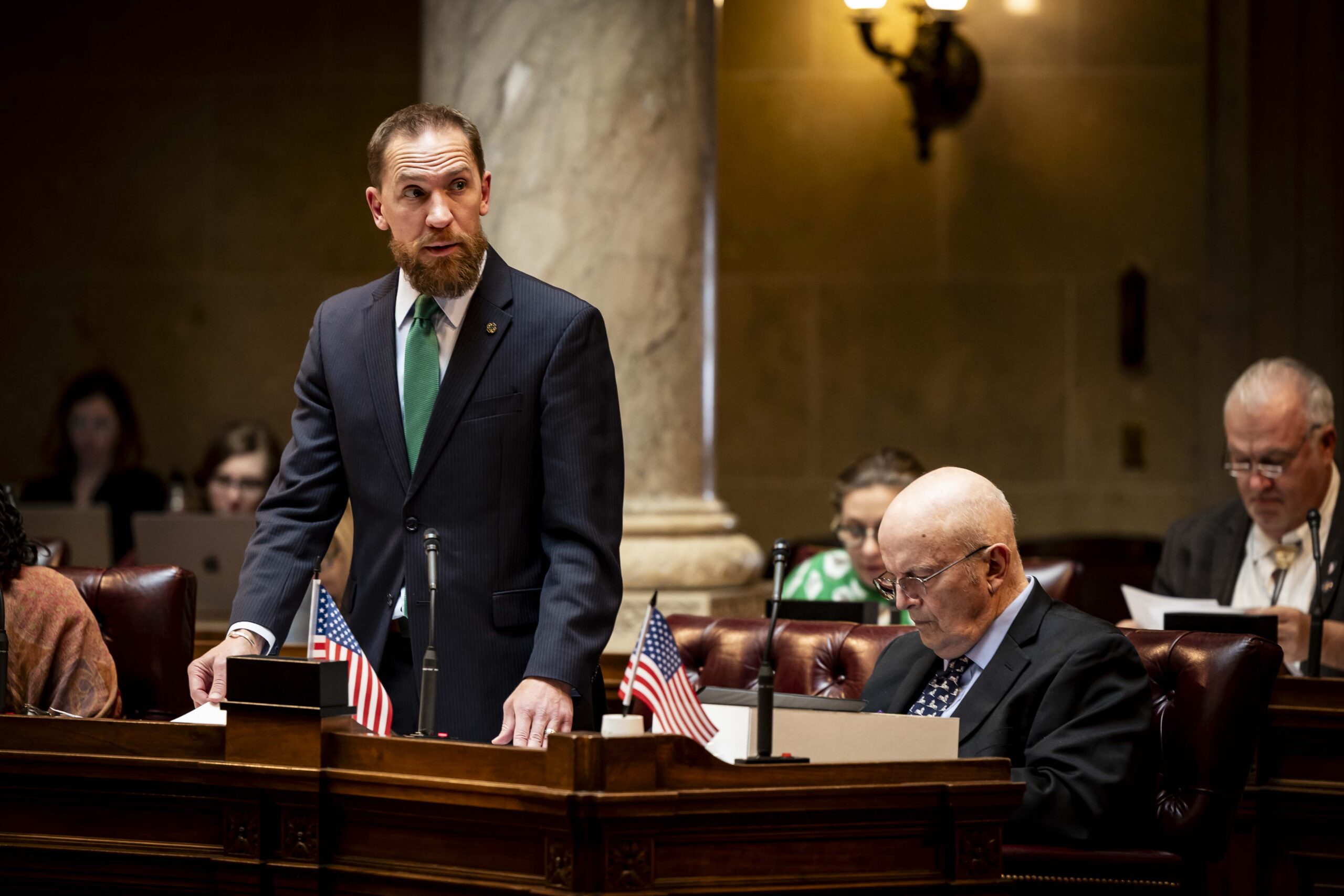
Photos courtesy of Senator Larson
Wisconsin Sen. Chris Larson (D-Milwaukee) told Wisconsin Muslim Journal he sees his role as speaking for “folks who don’t have the power and privilege to be able to hire high-powered lobbyists or spend a great deal of money on campaigns.”
Wisconsin Sen. Chris Larson (D-Milwaukee) has a message for Wisconsin’s Muslims: “Now is the time to show up and fight for your rights.”
In the midterm elections in November, Wisconsin Democrats secured a state-government trifecta, winning the governorship and flipping both the Senate and Assembly, giving them unified control for the first time in 16 years. “This is the time to make sure there is a clear ask and to show up at the Capitol, just as everyone else is,” Sen. Larson told the Wisconsin Muslim Journal in an interview last week. “I think there is an obligation to do that.”
“Do not shy away from being involved in our government,” he continued. “When there is an effort to try to make people shrink, to make a specific population feel fear and intimidation, to feel unwelcome, that’s the time to show up.
“Whatever the ask is, I look forward to hearing it and will do my best to help in amplifying it, the same way I do with other folks who don’t have the power and privilege to be able to hire high-powered lobbyists or spend a great deal of money on campaigns to influence an outcome.”
Setting legislative priorities
Muslims in southeastern Wisconsin plan to meet to discuss issues that matter to them at two upcoming meetings, one with both the Wisconsin Muslim Civic Alliance and the Wisconsin Muslim Civic Foundation and the second with the WMCA.
WMCA is the state’s leading Muslim civic organization. It works to organize and advocate for Wisconsin’s Muslim community. WMCF is a nonprofit public service foundation that strengthens Muslim civic engagement and leadership through research and education.

WMCA and WMCA are in the midst of conducting a traveling statewide Town Hall tour to hear concerns of Muslims throughout the state. Town Halls have been held in Appleton, Oshkosh and Green Bay. A Greater Milwaukee Town Hall will be held Thursday, Dec. 3, at 6 p.m. in the ISM Community Center, 811 West Layton Ave., Milwaukee. Register here.
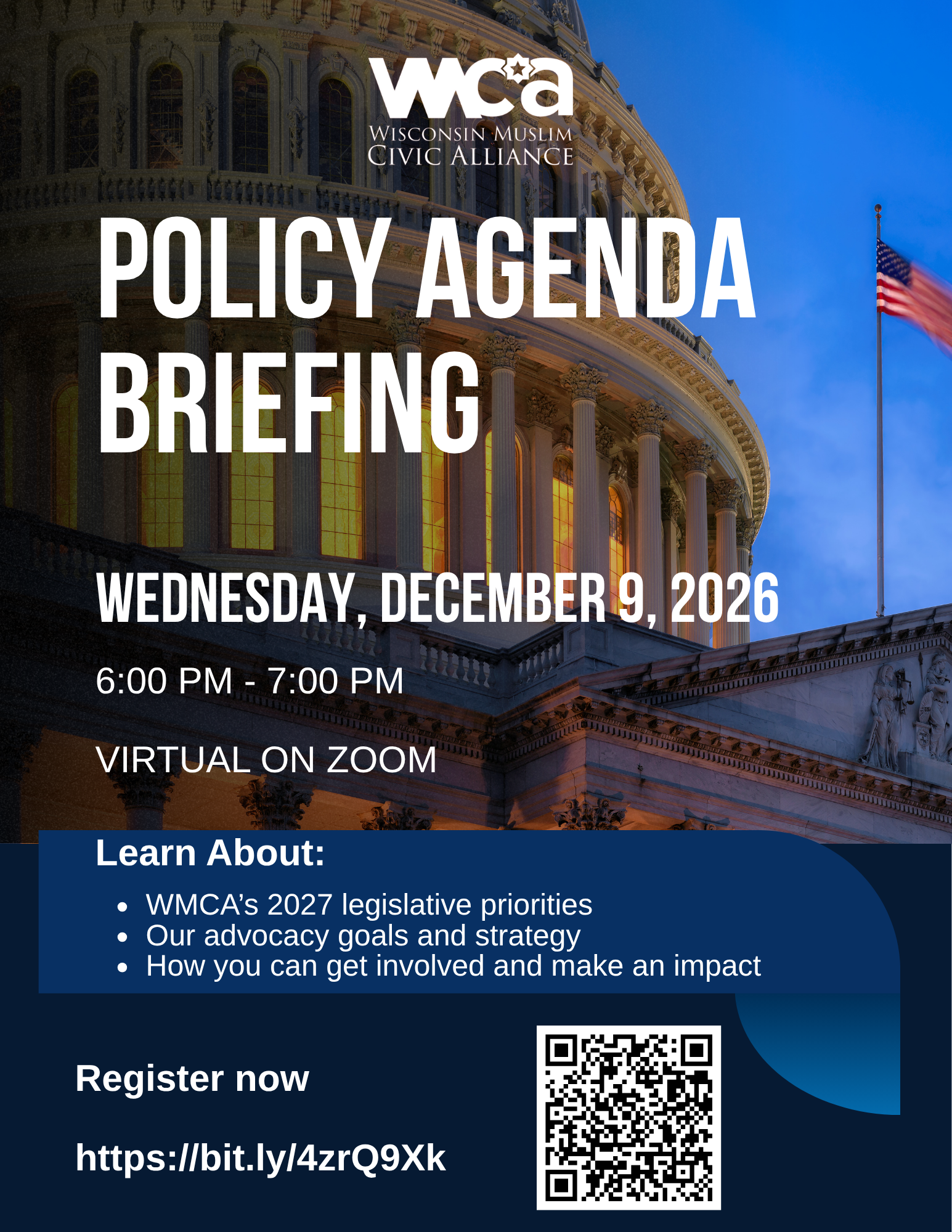
WMCA will host a virtual Policy Agenda Briefing on Zoom Wednesday, Dec. 9, from 6-7 p.m. Its purpose is to discuss WMCA’s 2027 legislative priorities, advocacy goals and strategy, and share information about how individuals can get involved. Register here.
A senator who’s listening
Wisconsin Muslim Journal interviewed Sen. Larson Wednesday during a break in a caucus meeting to review various proposals. Here are the highlights, edited for brevity.
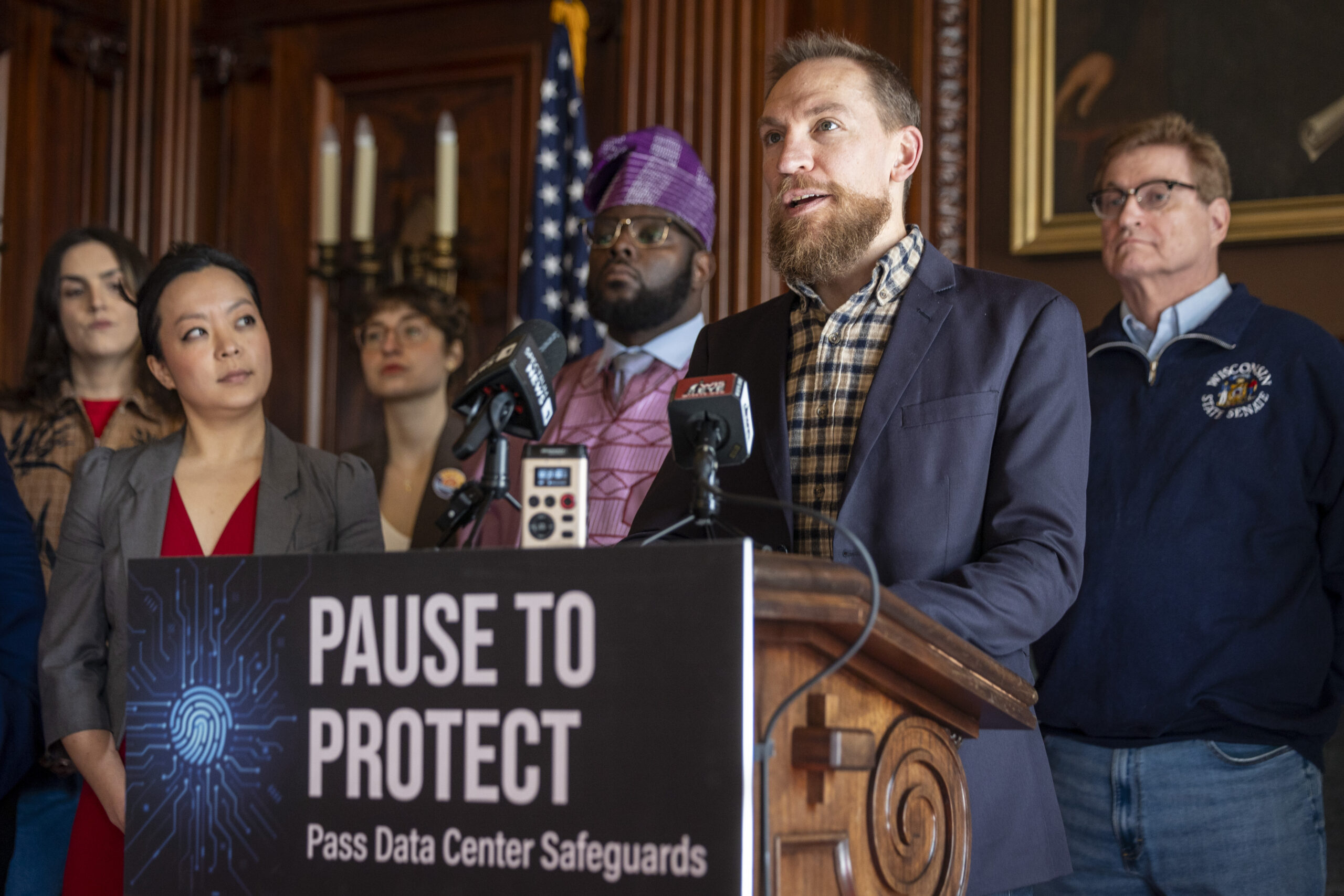
Sen. Chris Larson introduced the Data Center Moratorium Bill, known as the “Pause to Protect” Act, at a Feb. 12 press conference and in the Feb. 18 Senate Floor Session.
It was easy and quick to get this interview. Do you always answer calls quickly?
When people call and ask for help, or ask for a room or advice, I try to help, whether it be an individual thing, for a group or about a law that needs to be changed. Most people don’t call their lawmakers for anything. When they do, it’s usually because they’re already struggling.
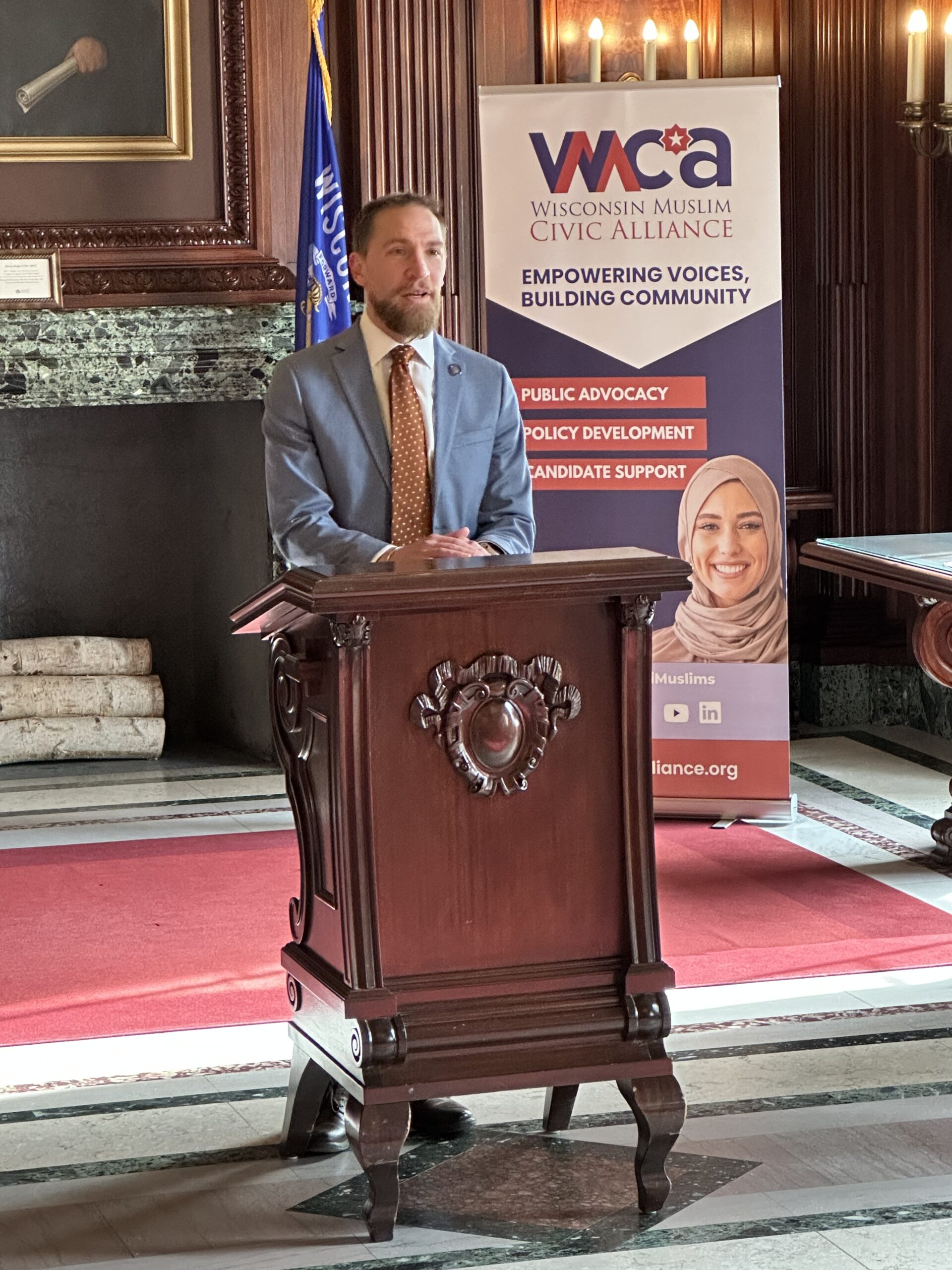
Wisconsin State Sen. Chris Larson introduced an anti-Islamophobia resolution in 2017. It didn’t pass. He introduced it again at the Wisconsin Muslim Civic Alliance’s first Advocacy Day in February 2025.
You opposed the adoption of the IHRA definition of antisemitism. Why?
It was clear it was going to be used as a way to target folks who were critical of Israel. I thought it was unhealthy for our democracy to conflate criticism of Israel with antisemitism. To say criticizing any country or its leadership could be a form of hate speech, on its face, slaps against the idea of what it means to be an American and to have free speech.
Were you accused of being antisemitic?
Yeah. Anyone opposed to galvanizing a definition of what antisemitism is in state statute and claiming (the definition) was harmful risked being called antisemitic. It became clear in the testimony that it was not targeting a real problem, that people criticizing Israel were not engaging in hate speech.
There are people who avoided taking a stand against it because they didn’t want to be accused of antisemitism. I know who I am and where I stand. I am not antisemitic.
You took a stand for ISM president Salah Sarsour? Why?
Salah’s case was devastating. I traveled to Minnesota a month prior to bear witness to what was going on there with ICE and federal agents at the direction of the president to target an entire community with a campaign of terror, including arresting, detaining and extolling violence on a community. Seeing this happen in Wisconsin a short time later made me realize this was close to home.
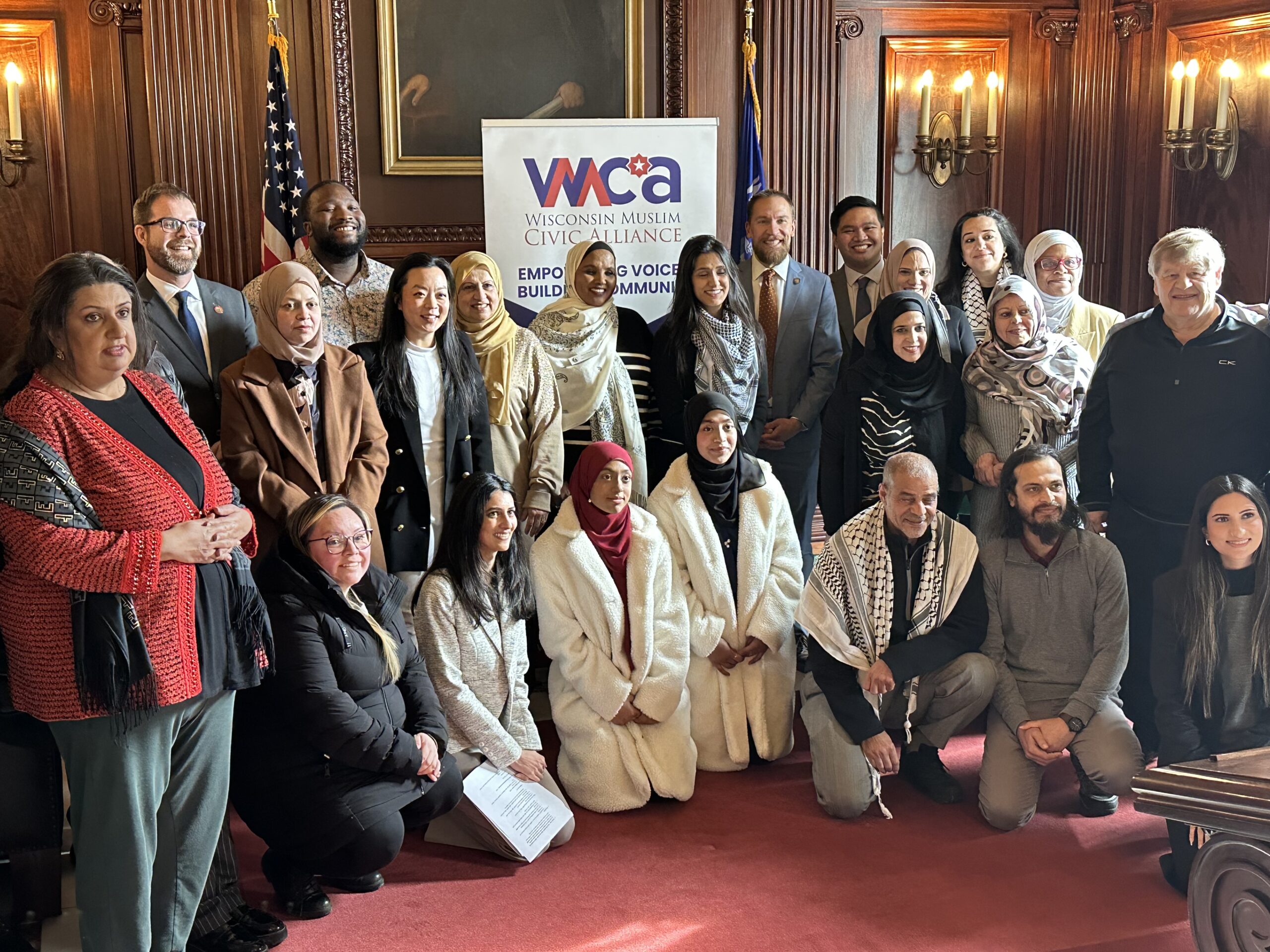
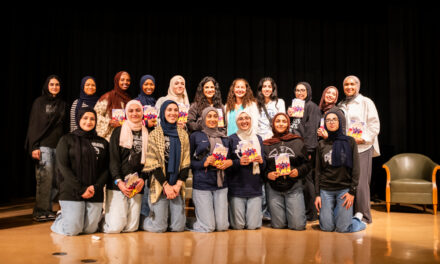
Wisconsin Muslim Civic Alliance’s first Advocacy Day, Feb. 19, 2025, drew participants from Milwaukee and Madison.
The way they were tarnishing Salah’s name – someone who is a leader in the community – specifically for speaking out against genocide, speaking out the same way I and many others have, who are frustrated with the United States government sending billions of dollars to carry out a genocide. It reeked of fascism. I spoke out. I was one of many. I cannot imagine not doing that.
I went to many events for him. I remember meeting his sons. They were moved to tears. And speaking to his brother who reminded me a lot of my own brother. He described Salah as somebody who wanted to make peace, to bring the community together, to solve disputes between friends, business partners; he was always aiming to make sure there was peace. He is a connector.
It was clear this could have been anybody. In this case, it was the Trump administration specifically targeting those on the margins of society to see what they could get away with, to pretend they are not deserving of the same love, respect and rights as every other person. I cannot see any other choice than to speak out.
We hosted a breakfast for the Milwaukee delegation to have the chance to meet Salah and hear his story. I think it was important because even if they don’t understand the intricacies of his life and what happened, what Marco Rubio and the Trump administration were trying to do, there’s a bigger story of free speech that everyone can see when they hear Salah’s story.
What message do you have for Wisconsin’s Muslim community?
It’s important for everyone to understand what’s going on in our community and to show up.
As someone who grew up as a child of white flight and lived in a very sheltered environment, growing up in the suburbs and going to a Catholic grade school and a Catholic high school in a mostly white community, all of my learning about other peoples and cultures came after I was an adult.
Having a close Muslim friend in college made all the difference and helped bridge the divide. We’ve been friends ever since.
Be the bridge. Now’s the time to show up.
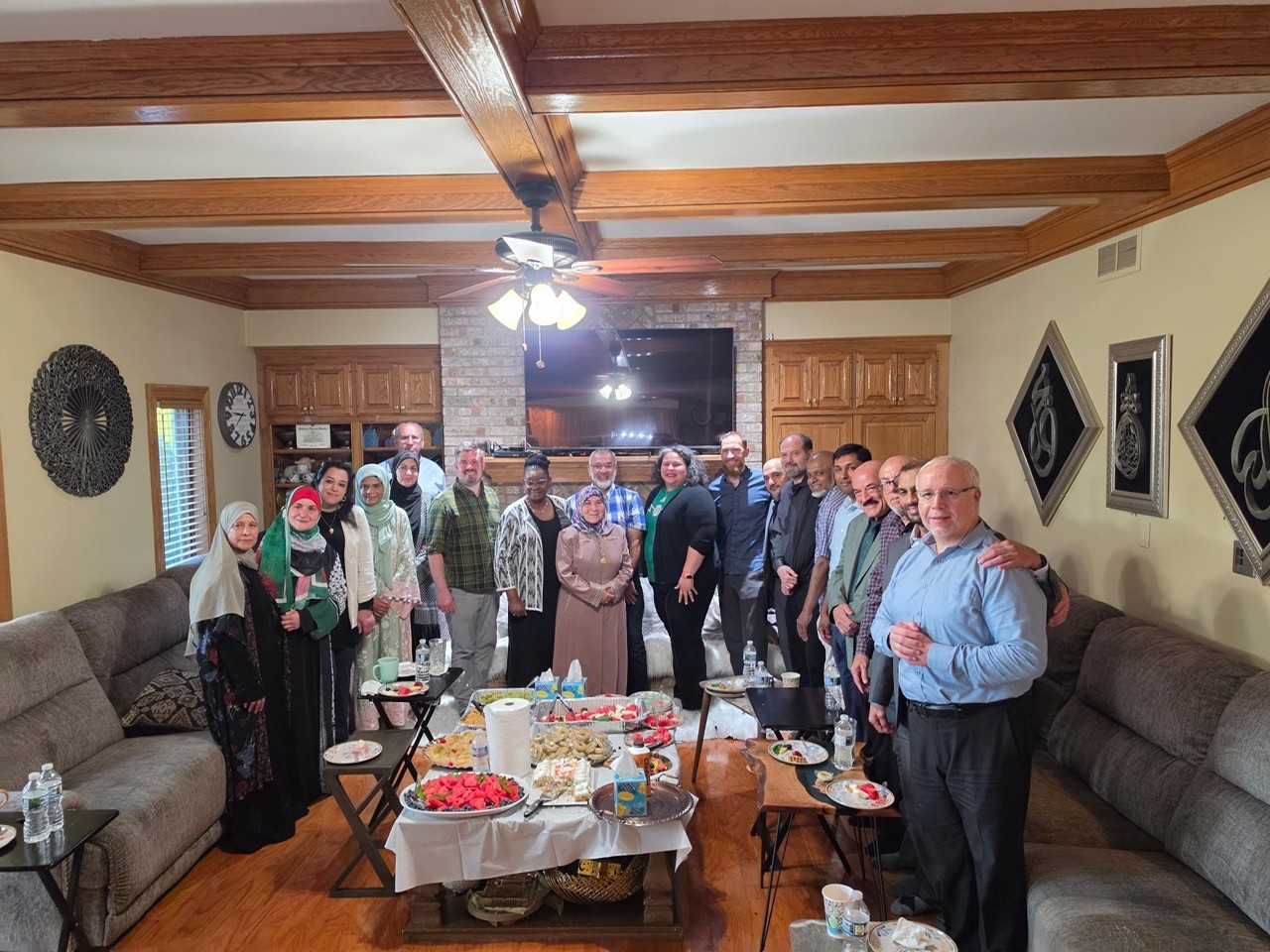
Sen. Chris Larson gathered at Islamic Society of Miwlaukee president Salah Sarsour’s home with family and friends after Sarsour was released from ICE detention, where he was held for 81 days.
A proven track record
WMCA presented Larson with its Community Ally Award in March 2025. “Sen. Chris Larson has been a real partner to WMCA and WMCF,” said WMCA/WMCF executive director Fauzia Qureshi. “We are grateful for his support in making sure Muslim voices are heard at the Capitol.
“He helped make WMCA’s first and second Advocacy Days possible. He sponsored the room, and he helped us pick a day that worked for legislators so our community could meet with them directly.”
When Sen. Larson learned in April that Immigration and Customs Enforcement officers arrested and detained Islamic Society of Milwaukee president Salah Sarsour, he was instrumental in organizing the Milwaukee delegation of legislators to condemn his detention and call for his immediate release. Prior to that, he independently sent an April 2 press release saying he was “horrified” by Sarsour’s detention and called for his release.
“He opposed the IHRA adoption and co-sponsored the Eid resolution,” Qureshi added.
IHRA stands for the International Holocaust Remembrance Alliance. It defines antisemitism as “a certain perception of Jews, which may be expressed as hatred towards Jews. Rhetorical and physical manifestations of antisemitism are directed toward Jewish or non-Jewish individuals and/or their property, toward Jewish community institutions and religious facilities.” Wisconsin Gov. Tony Evers signed Act 143 in March, codifying the IHRA 2016 definition of antisemitism into state law for evaluating discriminatory intent and hate crimes. Critics, including Amnesty International, the ACLU, Jewish Voice for Peace and B’Tselem, charge that it conflates criticism of the Israeli government and its policies with antisemitism, resulting in the chilling of political speech protected by the First Amendment.
The Eid Resolution, 2025 Joint Resolution 129, a resolution calling for Wisconsin to recognize the Muslim holidays Eid al-Fitr and Eid al-Adha. Larson signed on as a co-sponsor in February. It has not yet been adopted, but the push continues as legislators continue to sign on as co-authors and co-sponsors.
Even before WMCA formed in 2019 to advocate for the Muslim community, Larson took a stand in 2017 against Islamophobia. After a violent attack on a Milwaukee Muslim woman, he issued a press release headlined, “We are Stronger Together: Legislature Must Take a Stand Against Islamophobia and Hate After Brutal Attack.” Larson and Rep. Jonathan Brostoff introduced the Resist Hate Join Resolution “to show solidarity with our Muslim neighbors,” it said.
Because Our Stories Matter
Wisconsin Muslim Journal reports on people, stories and experiences of Muslims across our state. As a nonprofit publication, we are committed to making this work available to everyone without a subscription or paywall.
Every story we publish is produced by professional journalists, photographers and editors committed to reporting on Wisconsin’s Muslim communities. Keeping this work going requires time, talent and resources.
If you value dedicated, fact-based coverage that documents Wisconsin Muslim history, please consider supporting us with a donation. Gifts of any size make a difference and help us continue to report on narratives that might otherwise go untold.
We are grateful for your readership.