Photo by Nadia Alkhun
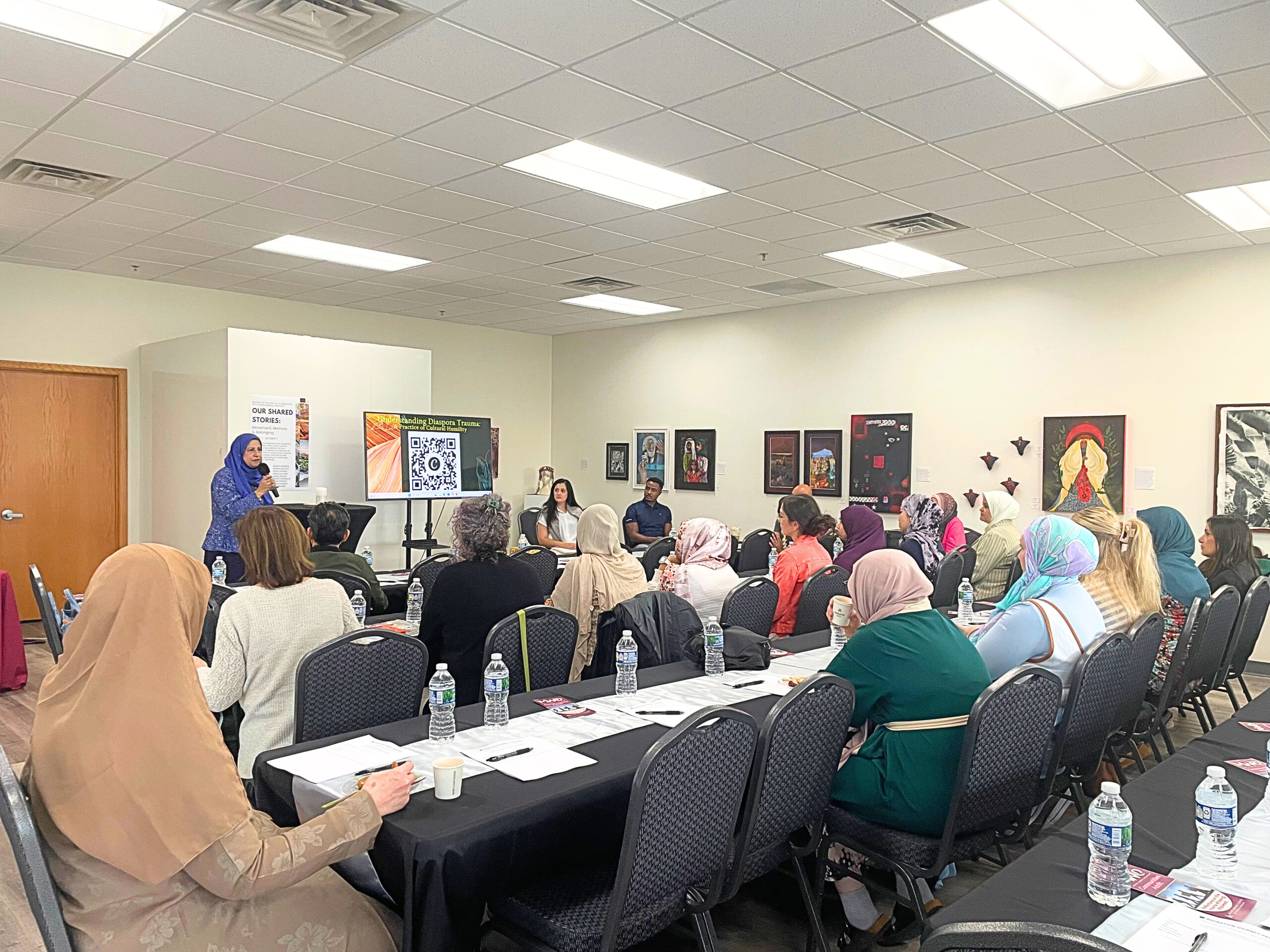
Muslim Women’s Coalition executive director Janan Najeeb welcomed attendees Saturday to MWC’s Diaspora Trauma Workshop. She proposed it after reading about some of the mental health difficulties experienced by diaspora communities.
Milwaukee’s Muslim community is impacted by diaspora trauma—some of us directly and others through our interactions with refugees and immigrants. This article is for anyone who wants to create a psychologically healthy, welcoming community for people experiencing diaspora trauma.
The information here comes from the Muslim Women’s Coalition’s Diaspora Trauma Workshop, held Saturday at Nadiana Art Gallery in Greenfield, where more than 50 attendees learned techniques from mental health professionals to create a psychologically healthier community. (Learn more about how this workshop came about here.)
While the three-hour workshop was designed for both members of diaspora communities and people who interact with them, this article highlights the lessons for people outside of the diaspora communities. What can we learn to better understand fellow community members who suffered displacement and trauma? What tools will help us better interact with refugees among us day to day?
Munther Barakat, Psy.D., a clinical psychologist and director of Behavioral Health for Aurora Health Care who organized MWC’s Diaspora Trauma Workshop, offered valuable tools that he said, “Not only help you become a more culturally competent person in interacting with members of diaspora communities, but also help you in your everyday lives.” These tools include: establishing psychological safety, recognizing one’s own biases, listening to understand and cultural humility.
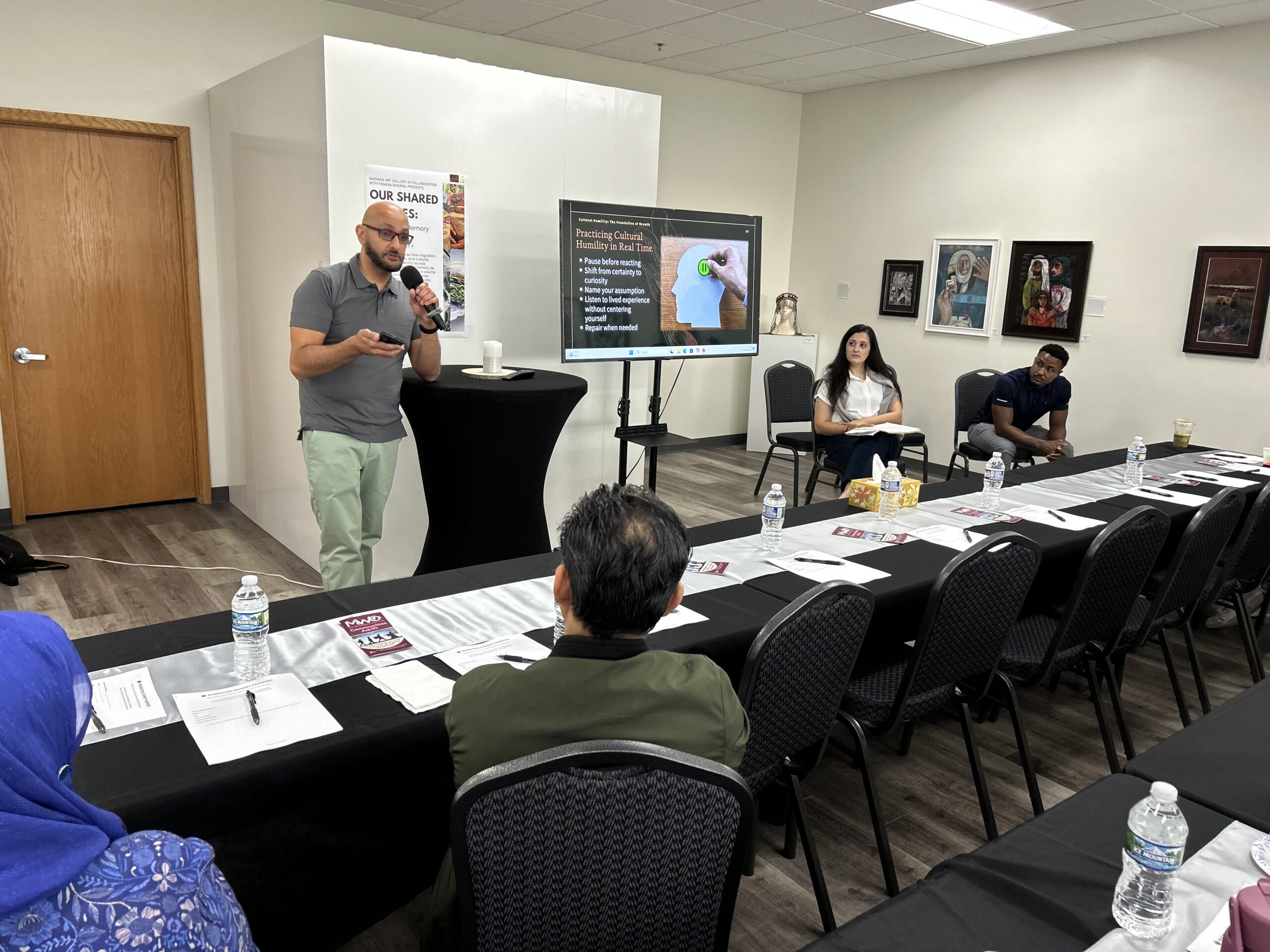
Photo by Sandra Whitehead
Clinical psychologist Munther Barakat, Psy.D., director of Behavioral Health for Aurora Health Care, says we all benefit when we develop cultural humility.
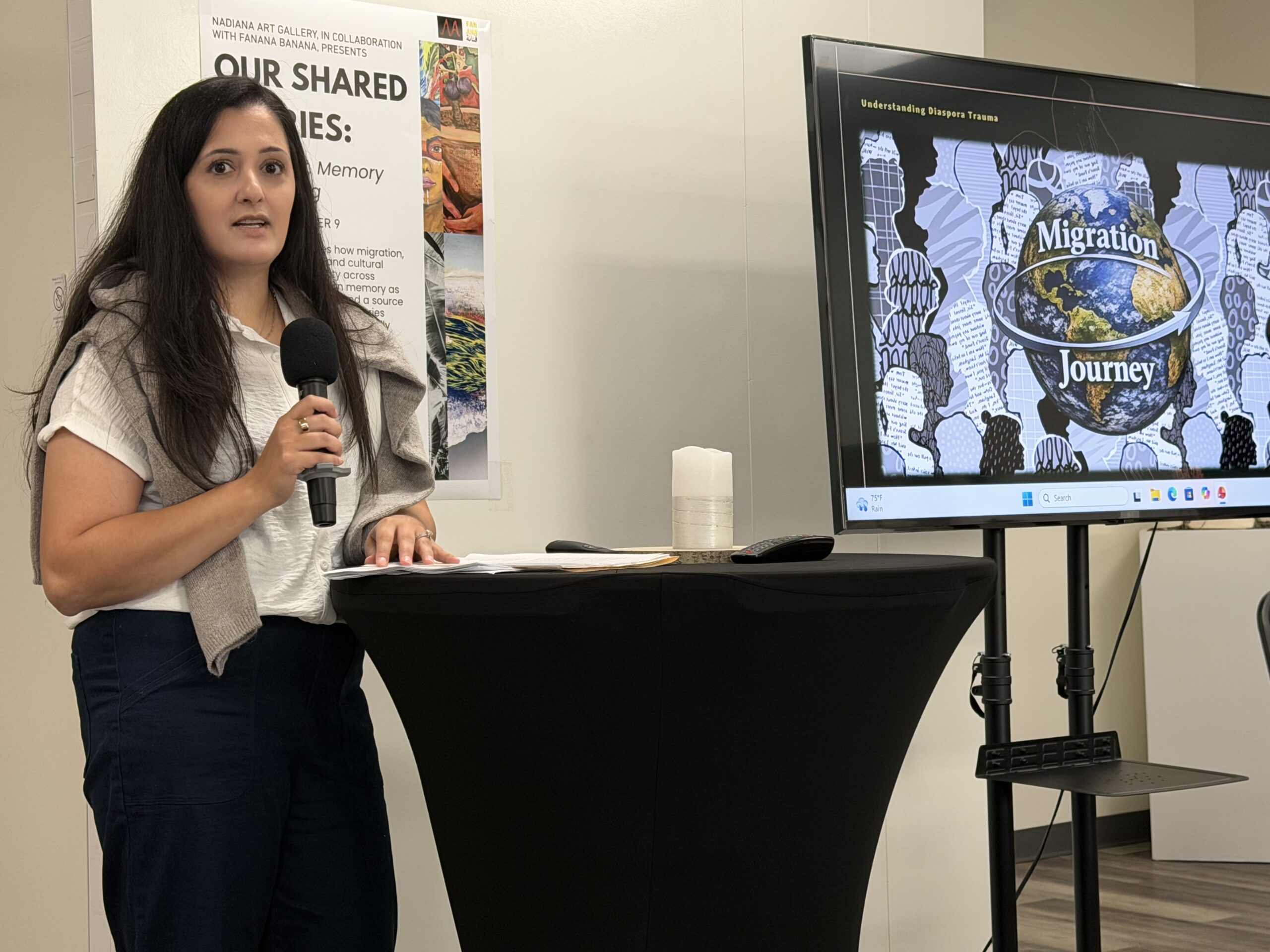
Photo by Janan Najeeb
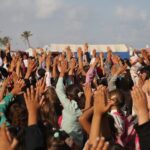
Duaa Kheirieh, Psy.D., led the audience in an exercise that strengthened empathy with the refugee experience.
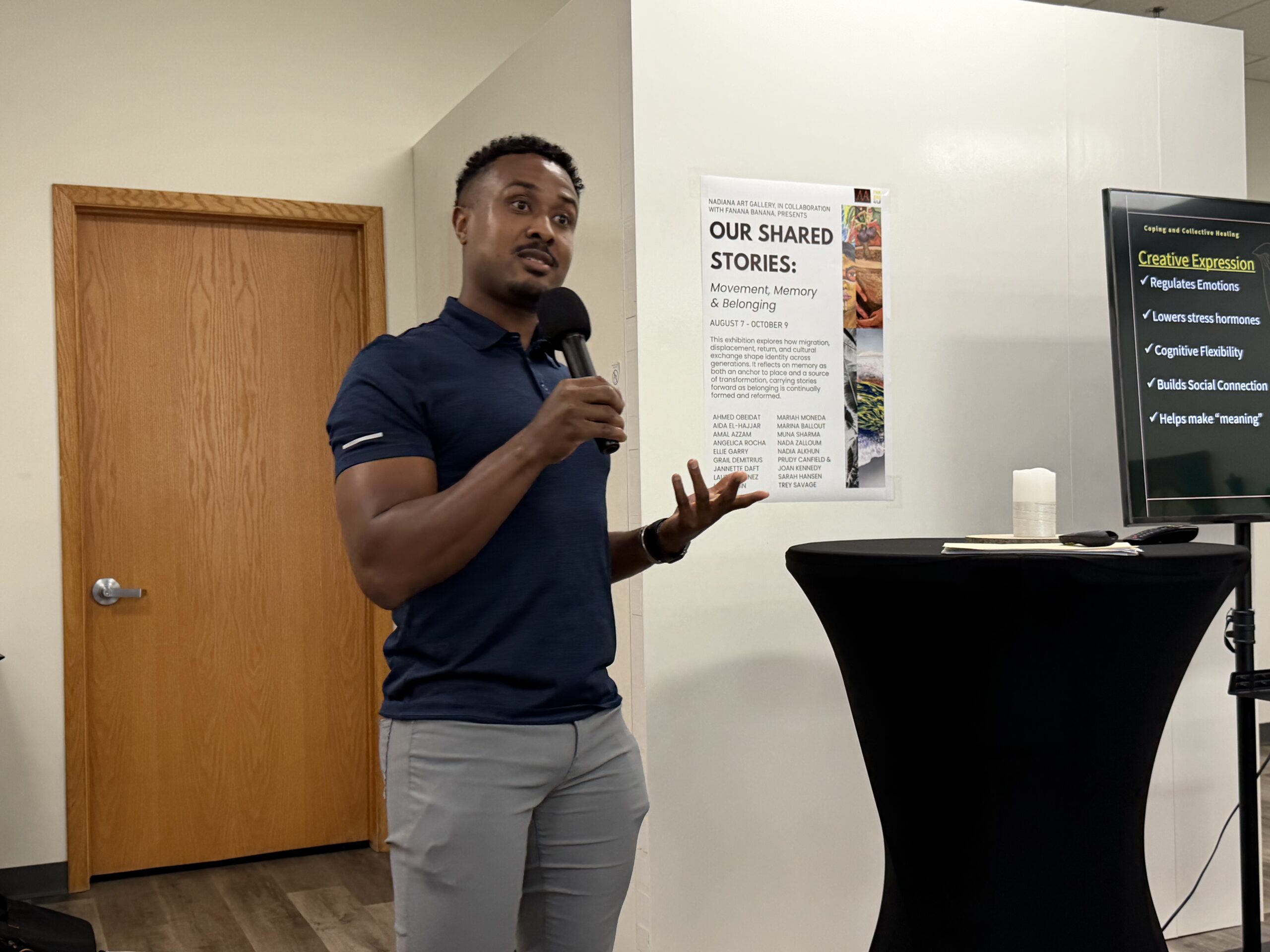
Photo by Janan Najeeb
Shannon Johnson, LCSW, a clinical educator at Aurora Psychiatric Hospital, led a discussion on coping techniques.
Defining “diaspora trauma”
First, it’s important to understand what diaspora trauma is. In a 2024 article in Ethnic and Racial Studies, researchers Baser and Toivanen defined it as “the psychological and emotional distress carried by displaced populations and their descendants, stemming from historical violence, forced displacement and ongoing geopolitical threats to their homeland.”
In his workshop presentation, Munther Barakat, Psy.D., said understanding diaspora trauma involves unpacking its many layers. Some forcibly displaced people themselves experience post-traumatic stress disorder (PTSD), having fled war, genocide and other violent situations. Other layers include: survivor’s guilt, collective grief and a new concept called, “Gaza Syndrome.”
Survivor’s guilt is a complex emotional and psychological condition where an individual feels intense guilt or remorse for surviving a life-threatening or tragic event when others did not. Psychologists say it can emerge through immigration experiences where people, even in the same family, face unequal opportunities.
Collective grief is the shared emotional response and mourning felt by a community, nation or other large group of people after a significant loss. It binds people together through a common story of shared sorrow or tragedy. An example is the Palestinians’ Nakba (the Arabic word for catastrophe), when an estimated 750,000 Palestinians were forcibly displaced in 1948 from their land and the land of their ancestors. It is experienced as a shared loss, even by subsequent generations.
“Gaza Syndrome” is a new term used by some mental health professions to refer to an ongoing state of collective mental trauma. Anyone with family members in Gaza, and Gazans themselves, experience the daily trauma caused by news (or experience) of ongoing bombing, starvation, forced displacement and other traumatic conditions.
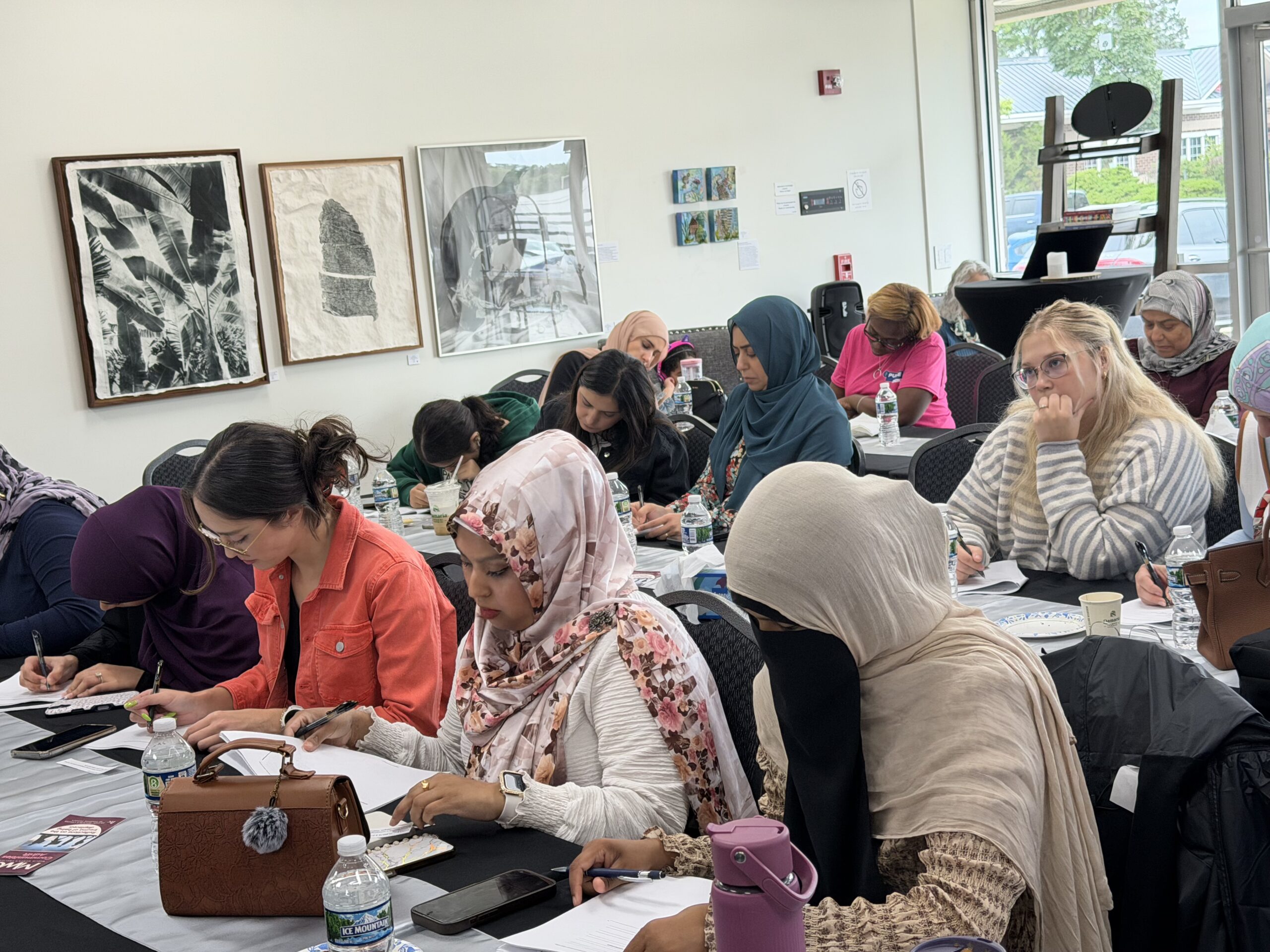
Photo by Janan Najeeb
MWC Diaspora Trauma Workshop attendees completed worksheets about decisions they would make during their journeys if they were forcibly displaced.
How we can help
Dr. Barakat offered the following suggestions for becoming more understanding, compassionate and kind people, creating an environment where all are safe and welcome.
Establish psychological safety
Psychological safety allows you to express yourself and be vulnerable. You make a place psychologically safe for others by allowing them to express their opinions without judgment and making them and their views welcome.
Recognize your own biases
“Name your assumptions. Be really good at naming all the assumptions that you have and why you have those assumptions about certain people, about certain interactions, about certain settings, and listen to lived experiences without centering yourself,” Barakat suggested.
“Recognize in-group biases,” he added. “We perceive information based on the group we belong to. Expand your empathy beyond in-group bias and simplistic thinking. Use critical thinking. Develop your cognitive complexity.”
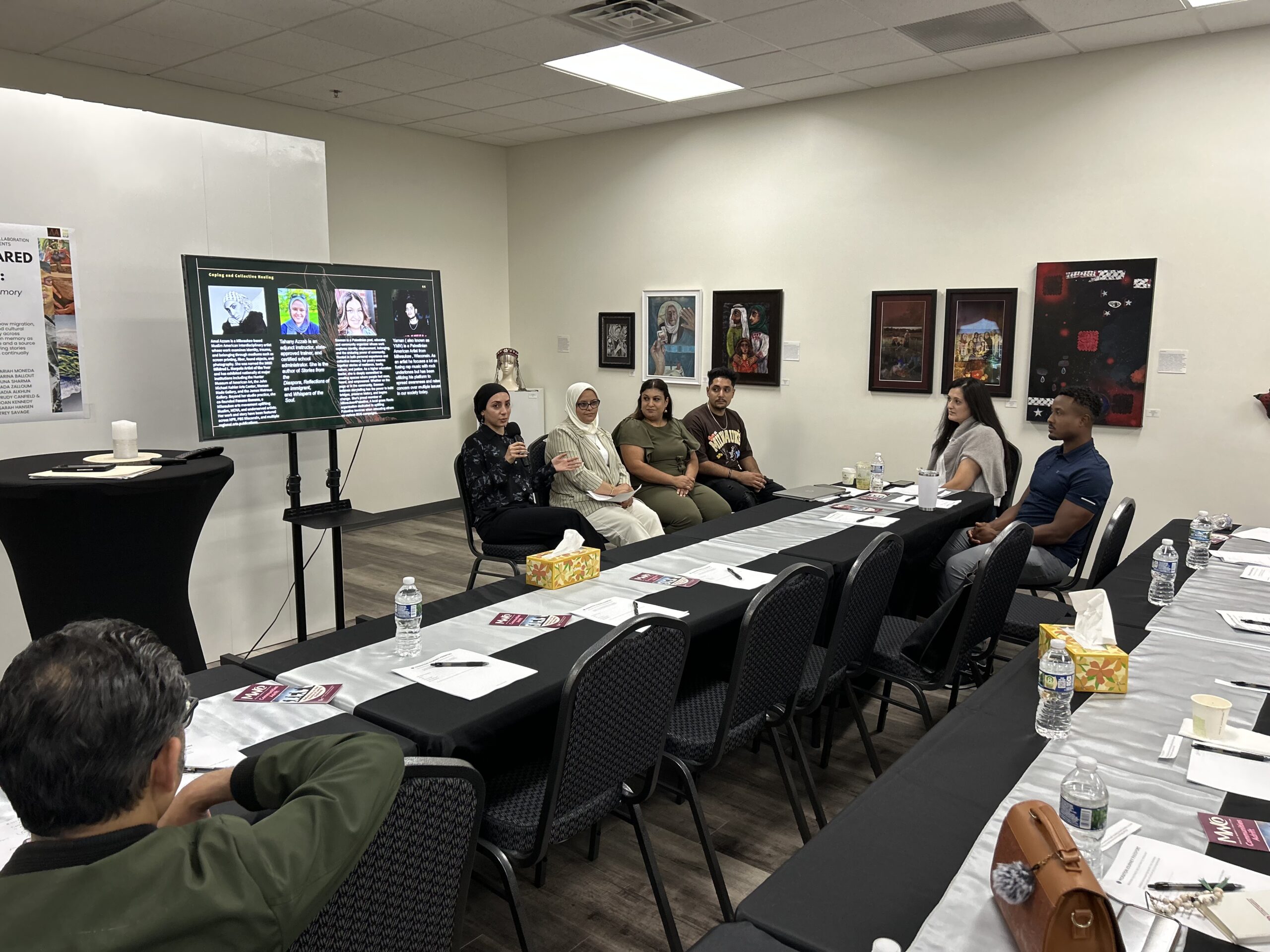
Photo by Sandra Whitehead
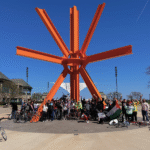
Artist Amal Azzam, poets Tahany Azzab and Sawsan Rizeq, and musician Yaman Othman spoke about how the arts help one cope with diaspora trauma. All of them are from diaspora communities.
Listen to understand
“When we are listening, often we center ourselves,” Barakat said. “I encourage you to just listen to what is being said with a sense of curiosity and wanting to understand.”
Develop cultural humility
“In helping professions, cultural humility is to be your baseline. It is recognizing that you bring something to (every discussion) and what you bring has to do with your background and life experiences … It extends throughout every aspect of your life.
“Whenever you meet someone, you tell yourself a story about that individual. There’s a natural human tendency to fill in the blanks because it is uncomfortable to approach someone we don’t understand fully. Unfortunately, we fill in the blanks based on our own experiences and information we were fed consciously or unconsciously.”
“It teaches you to tolerate discomfort and allows you to acknowledge you might not know everything. It looks at being wrong as an opportunity for growth. It strengthens your critical self- reflection, and is one of the best defenses to prevent you from becoming susceptible to propaganda.”
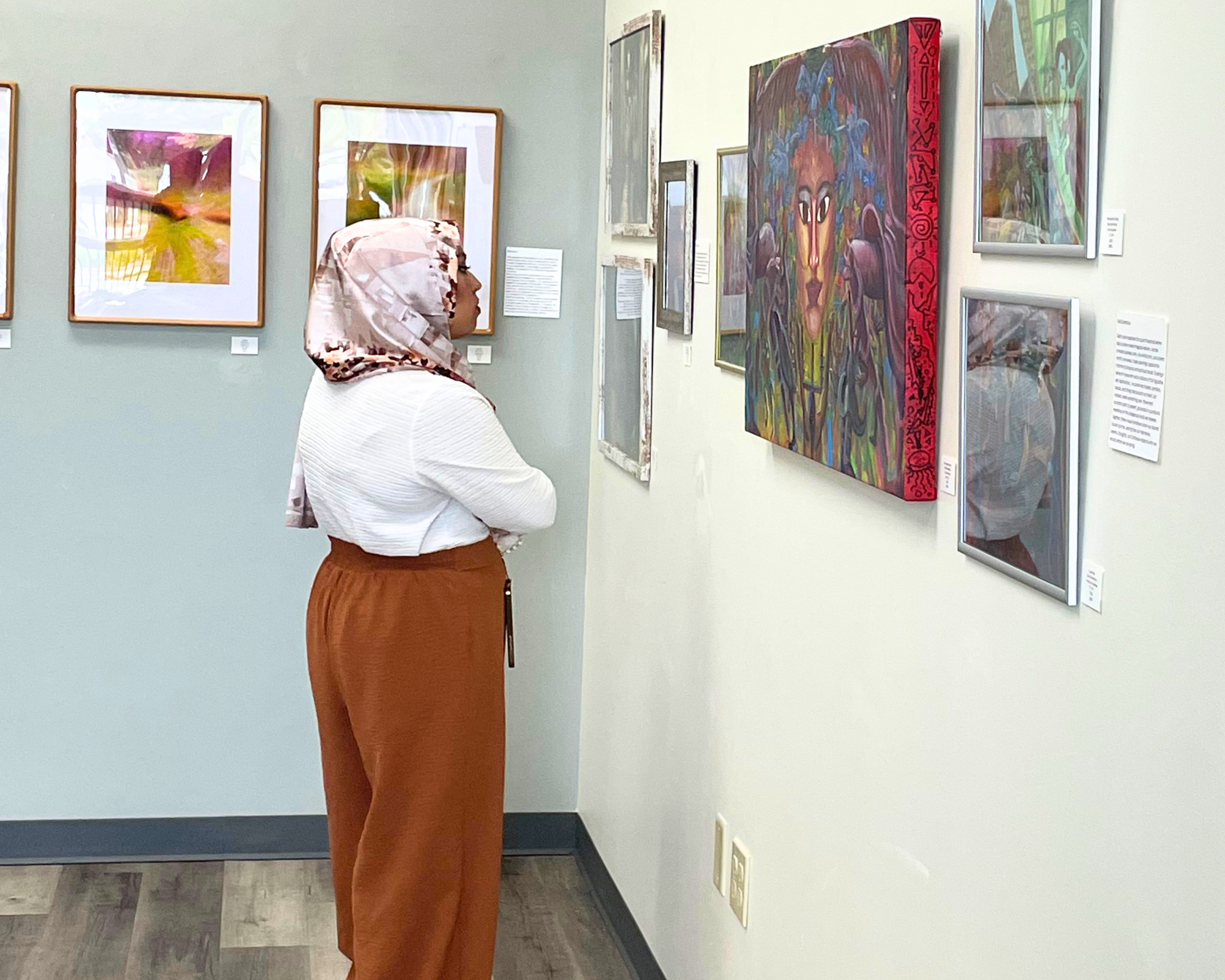
Photo by Nadia Alkhun
Nadiana Art Gallery in Greenfield hosted Our Shared Stories, an exhibition that brought together artists whose work explores themes of movement, memory, identity and belonging. The art gallery hosted MWC’s Diaspora Trauma Workshop.
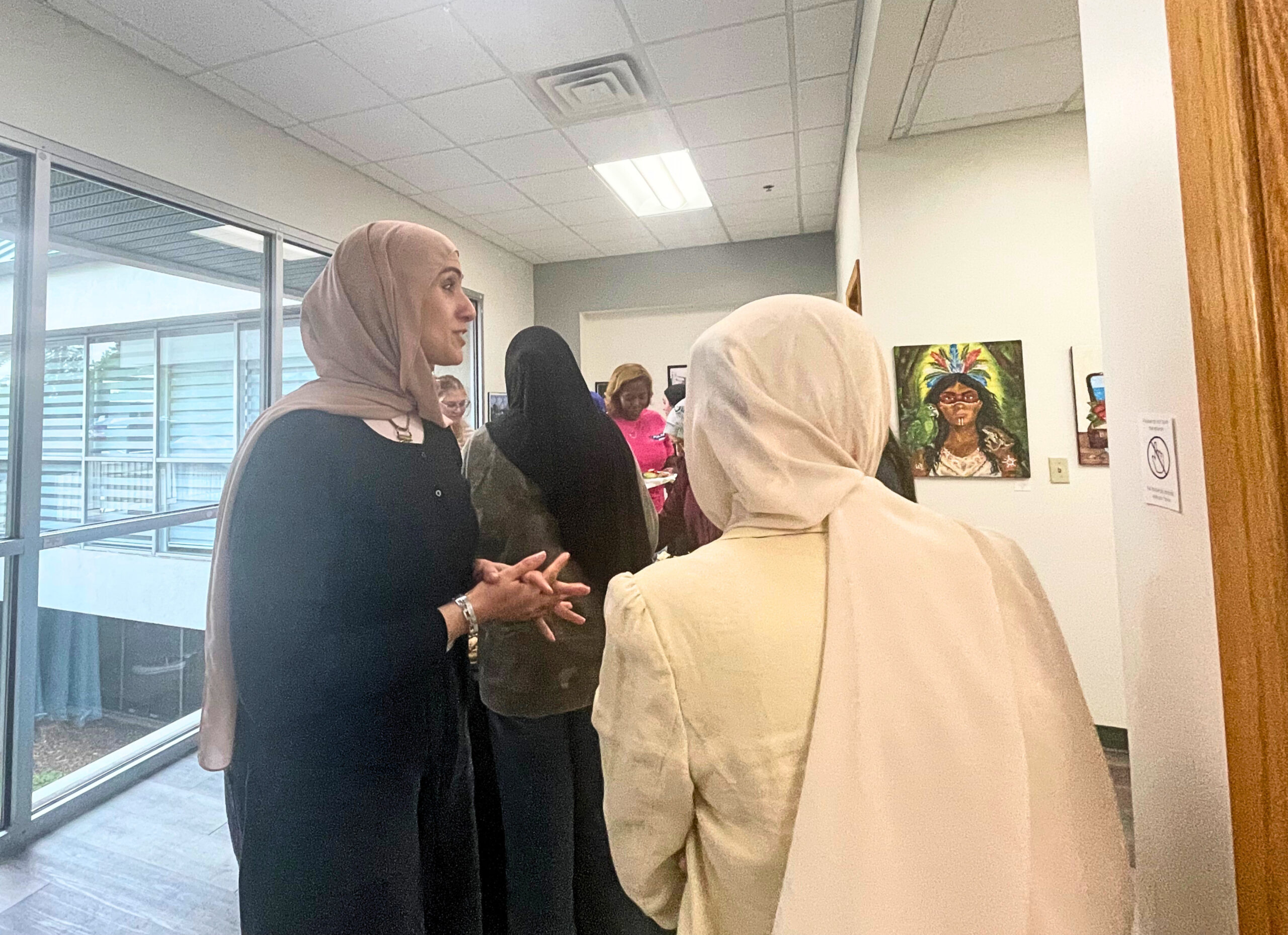
Photo by Nadia Alkhun
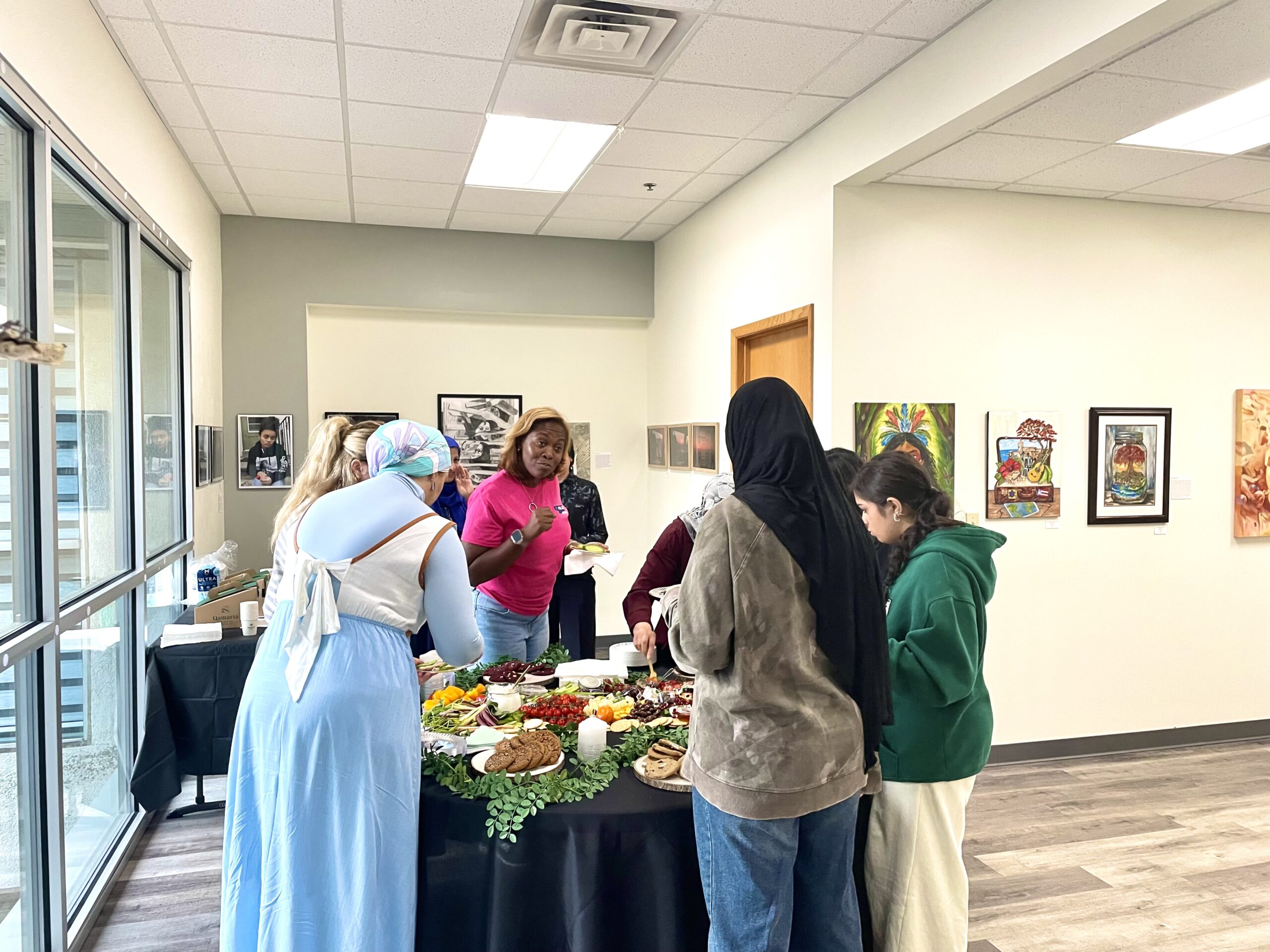
Photo by Nadia Alkhun
Keep practicing cultural humility
“Cultural humility isn’t a destination. It is a journey,” Barakat said. “It is a constant awareness and practice. We constantly learn it by approaching others with curiosity and respect, without making assumptions. It depends on understanding that you are a biased individual. We all are.
“When you constantly practice cultural humility, it changes the structure of your brain and you start assessing your environment in a different way. It does more than make you a culturally competent person; it makes you an overall healthier person psychologically. It increases your awareness of assumptions and your own emotional reactions in certain situations. It shows you your blind spots, reduces defensiveness and ego reactivity. It enhances empathy, perspective- taking and psychological resilience.”
It also helps you get through disagreements more productively, he added. “Whether it be in the workplace or with your family, if you’re engaging in cultural humility and understanding your biases, you will better understand the person sitting across from you.”
Because our stories matter
Wisconsin Muslim Journal reports on people, stories and experiences of Muslims across our state. As a nonprofit publication, we are committed to making this work available to everyone without a subscription or paywall.
Every story we publish is produced by professional journalists, photographers and editors committed to reporting on Wisconsin’s Muslim communities. Keeping this work going requires time, talent and resources.
If you value dedicated, fact-based coverage that documents Wisconsin Muslim history, please consider supporting us with a donation. Gifts of any size make a difference and help us continue reporting narratives that might otherwise go untold.
We are grateful for your readership.