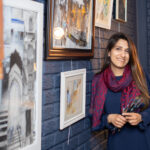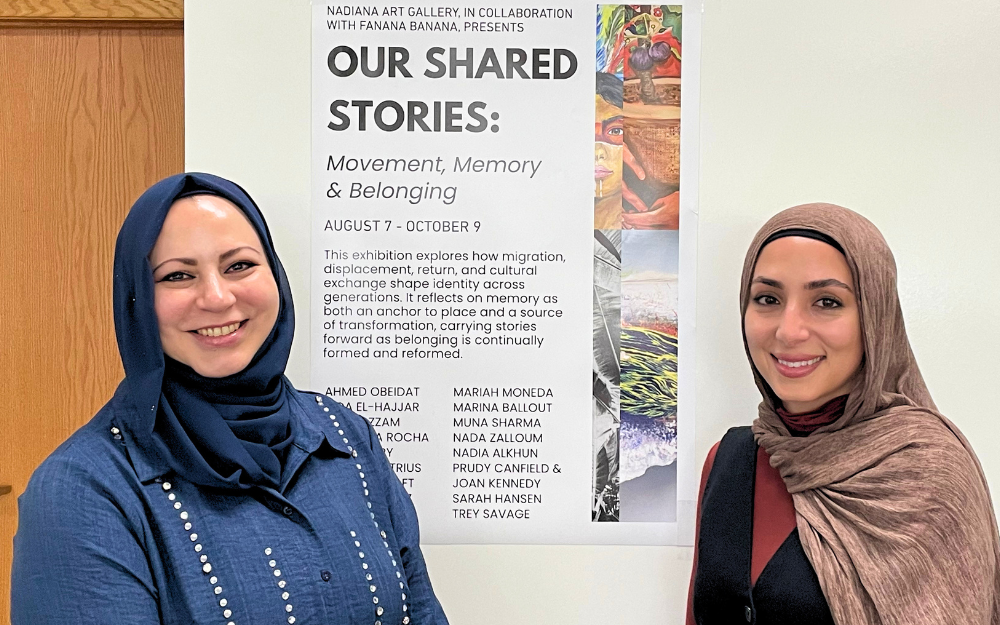
Nadia Alkum, owner of Nadiana Art Gallery in Greenfield, and Amal Azzam, co-founder of Fanana Banana collaborated on the art exhibition Our Shared Stories, which looks like the perfect setting for the Muslim Women’s Coalitions Diaspora Trauma Workshop on Aug. 29.
Moral injury, survivor’s guilt, generational trauma, collective guilt.
When Muslim Women’s Coalition executive director Janan Najeeb read an article about some of the mental health difficulties experienced by diaspora communities, she immediately thought this topic needs to be addressed in Milwaukee, where waves of refugees from Myanmar (Burma), Afghanistan, Syria, Palestine and other places have come to live.
Her first call was to Munther Barakat, Psy.D., a clinical psychologist and director of Behavioral Health for Aurora Health Care. They talked about how to support the mental health needs of people who experienced war and the destruction of their homelands, and also often face seemingly insurmountable challenges in their new home.
Barakat reviewed the research and explored resources, including mental health professionals with the expertise to explain the impacts of diaspora trauma, how to support those affected and how to start healing. What developed was a plan for a Diaspora Trauma Workshop that combines education, reflection and healing, led by mental health professionals, that will be free and open to the public.
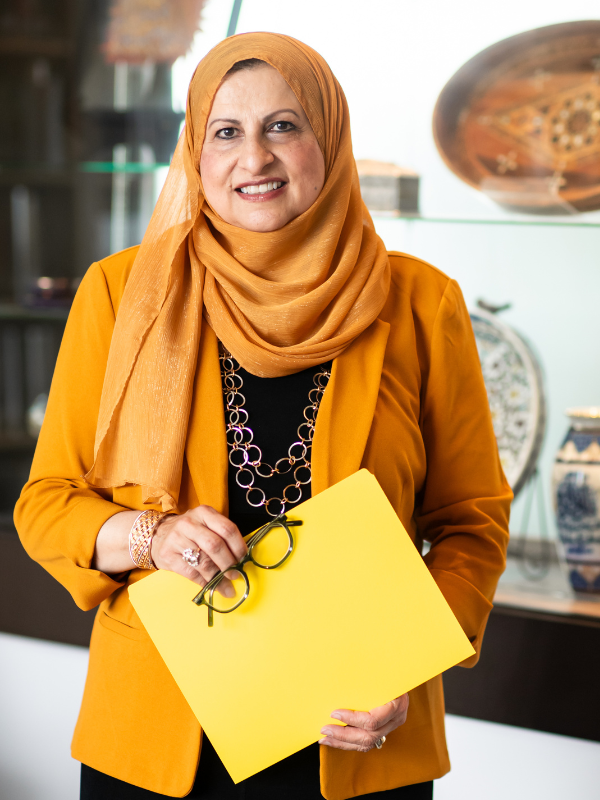
Janan Najeeb, Muslim Women’s Coalition founder and executive director
Najeeb thought hosting the event at Nadiana Art Gallery in Greenfield would be a good idea. “When people go through stressful situations, one source of healing is art, with its beauty and creativity,” Najeeb said. Gallery owner Nadia Alkun “is known for her meaningful exhibits. She is also an MWC board member.” Najeeb suggested Barakat contact Alkun and visit the gallery.
Meanwhile Alkun and Milwaukee artist Amal Azzam, co-founder of the art collective Fanana Banana, were about to launch a plan of their own—an exhibition that “brings together artists whose work explores themes of movement, memory, identity and belonging,” Nadiana Art Gallery website says.
“We had been planning it for about a year,” Alkun said.
Barakat contacted Alkhun and she invited him to the Aug. 8 opening of Our Shared Memories, which runs through Oct. 9. The “exhibit explores how migration, displacement, return and cultural exchange shape identity across generations,” a promotional flier states. “It reflects on memory as both an anchor to a place and a source of transformation, carrying stories forward as belonging is continually formed and reformed.”
The connection between their projects is striking.
“Pure coincidence,” Alkun said. Serendipitous.
“Destiny,” Najeeb said.”
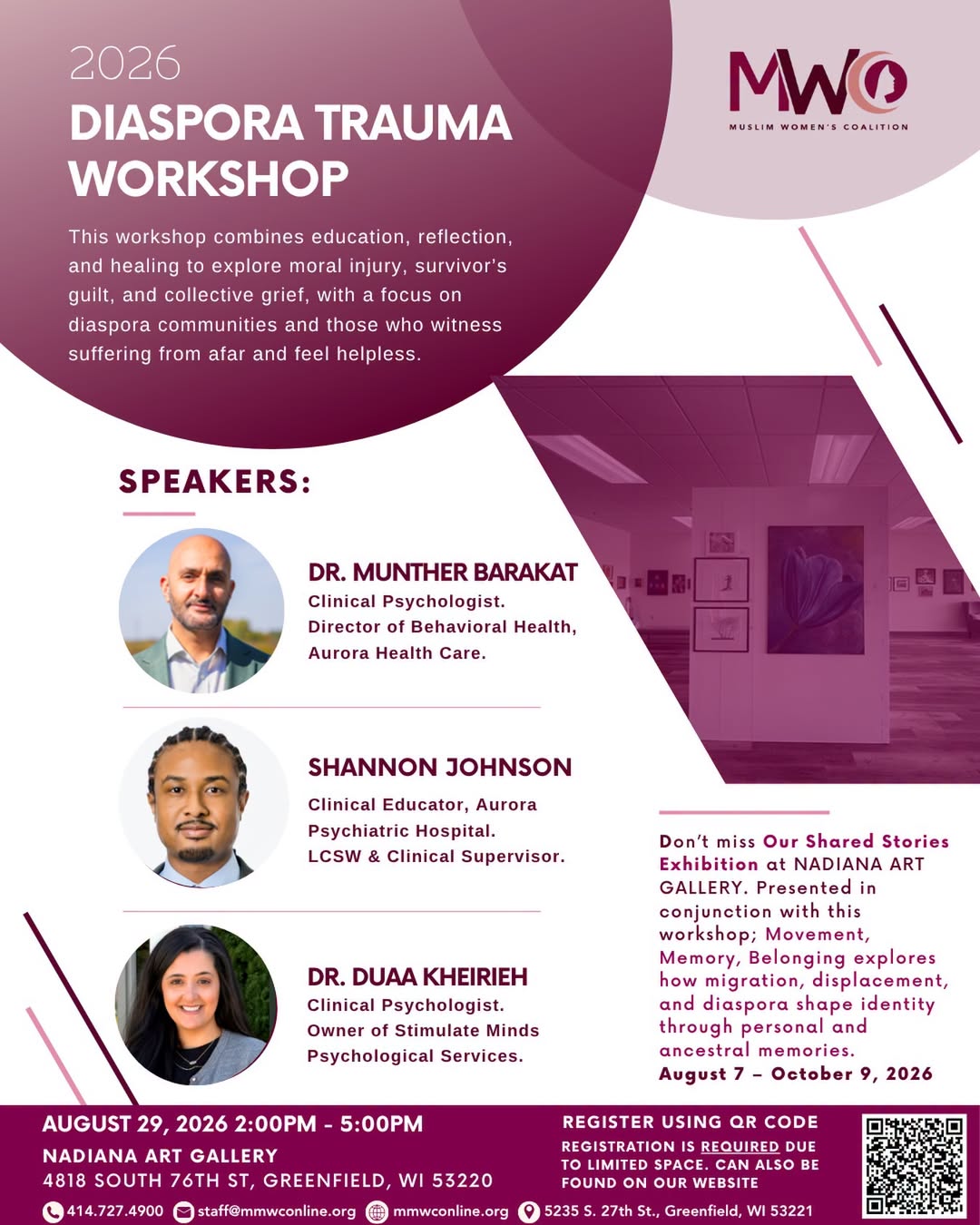
MWC’s Diaspora Trauma Workshop will be held from 2 – 5 p.m. at Nadiana Art Gallery, 4818 S. 76th St., Greenfield. It includes educational presentations on aspects of diaspora trauma and healing by mental health professionals and a discussion with an artist, poets and a musician from diaspora communities.
It is presented in collaboration with Nadiana Art Gallery and Fanana Banana’s collaborative exhibit Our Shared Stories, which explores how migration, displacement and diaspora shape identity through personal and ancestral memories. Following the workshop, attendees are encouraged to explore the exhibit.
The event is free and open to the public. Registration is required. Register here.
What to expect
In an interview with the Wisconsin Muslim Journal, Dr. Barakat provided an overview of the Diaspora Trauma workshop and backgrounds of the presenters.
It will take an educational approach and the broad view to consider “everything that falls under ‘diaspora trauma,’ then break it down,” he said. “The aim is to better understand others and to do that we need to address the concept of cultural humility.
“To better understand others, we have to break through our biases and understand that we’re all biased,” he explained. “The presentation is for everyone—people in diaspora communities and those who are not, with focuses on both education and healing.
“You don’t have to be a therapist or psychologist or work in a mental health field to benefit from it,” he added. “It is for anybody who wants to engage in cultural humility to reduce the impact of prejudice, unconscious biases and false interpretations of other individuals’ behaviors. Everyone can benefit from that.
“Another topic we will address is media literacy—how the media is very impactful in shaping our perceptions and framing. Regarding their coverage of diaspora communities, “the media is either biased, as it has been with Gaza or it is neglectful, as in its coverage of the Sudanese or the Congolese. Both are harmful.”
After discussion of what diaspora trauma is, the discussion will turn to coping and collective healing, he said. “We will look at how people can engage in behaviors that’ll help them heal. The arts are part of that, whether it be poetry or music or painting.”
The workshop will end with a panel of artists, poets and a musician from diaspora communities. “They will talk about how they use their medium to help them cope.”
Who are the presenters?
Talks will be given by three mental health professionals:
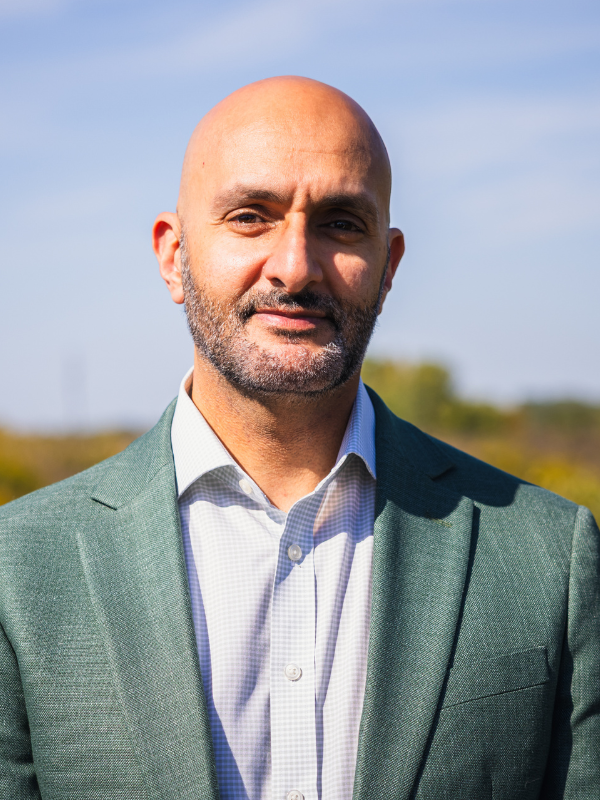
Munther Barakat, Psy.D., director of Behavioral Health, Aurora Health Care
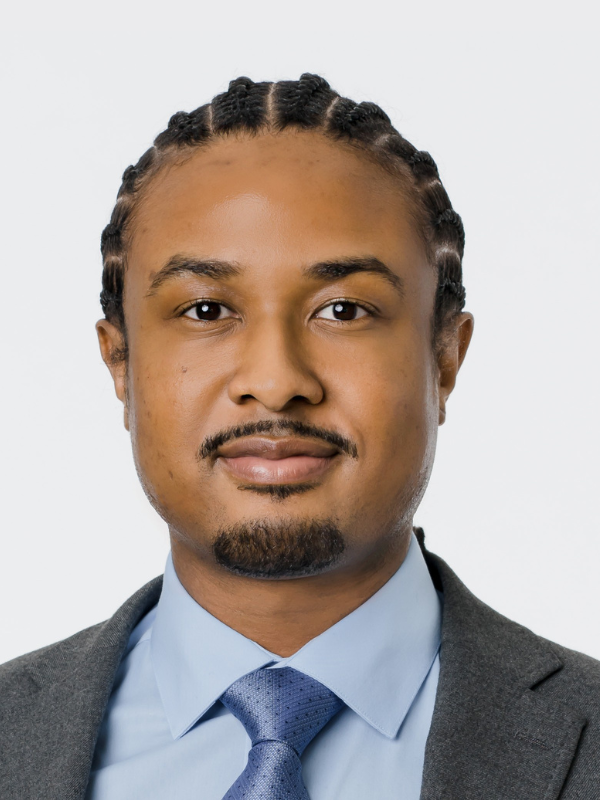
Shannon Johnson, LCSW, clinical educator, Aurora Psychiatric Hospital
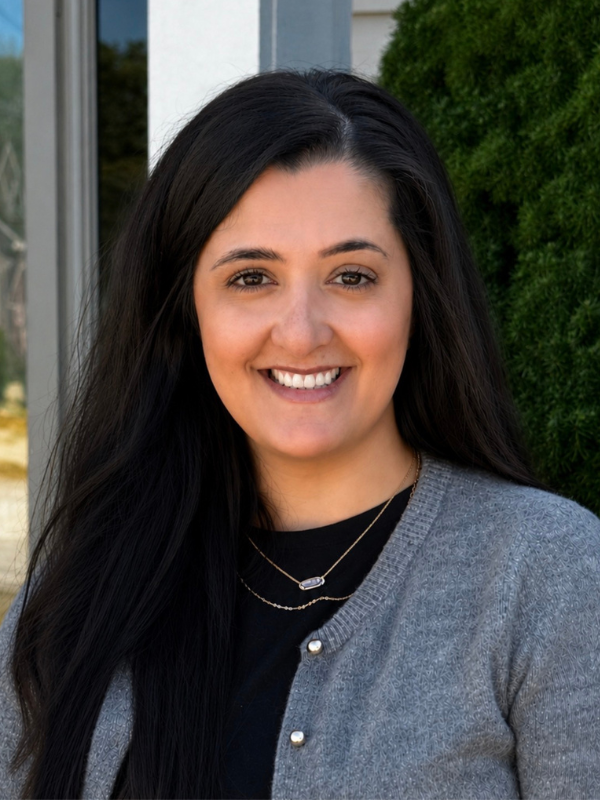
Dr. Duaa Kheirieh, Psy.D., owner of Stimulate Minds Psychological Services
Dr. Munther Barakat serves as director of Behavioral Health at Aurora Health Care. A clinical psychologist with over two decades of experience, Dr. Barakat specializes in cognitive behavioral therapy and culturally competent care, focusing on accessible, evidence-based treatment for diverse communities.
Dr. Duaa Kheirieh is the owner of Stimulate Minds Psychological Services and a clinical psychologist with nearly a decade of experience. Dr. Kheirieh provides evidence-based treatment using Dialectical Behavior Therapy (DBT), psychodynamic therapy, and other evidence-based approaches, and has extensive experience conducting comprehensive psychological assessments for children, adolescents, and adults.
Shannon Johnson, LCSW, is a clinical educator at Aurora Psychiatric Hospital with over a decade of experience in behavioral health. His clinical expertise includes trauma-informed care, substance use counseling and youth-focused treatment. In addition to his educator role, Johnson serves as a clinical supervisor for emerging mental health professionals.
The artist panel includes: poets Sawsan Rizeq, a Palestinian American poet and educator, and Tahany Azzab, an Egyptian American poet. Amal Azzam, a Palestinian American, will speak as an interdisciplinary artist and cultural organizer whose work explores identity, belonging, cultural memory and the experience of being Palestinian and Arab American. Rounding out the panel of artists is Yaman Othman, whose stage name is Y.M.N.
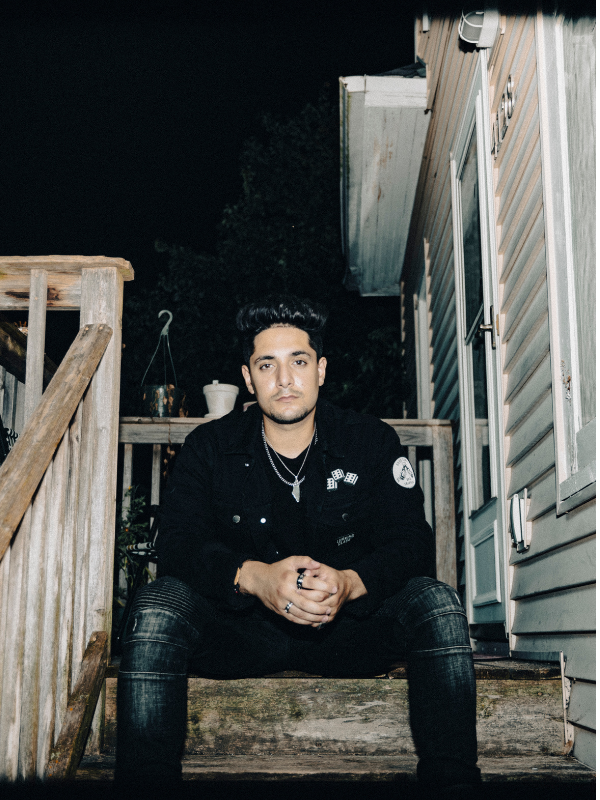
Poet and activist Yaman Othman
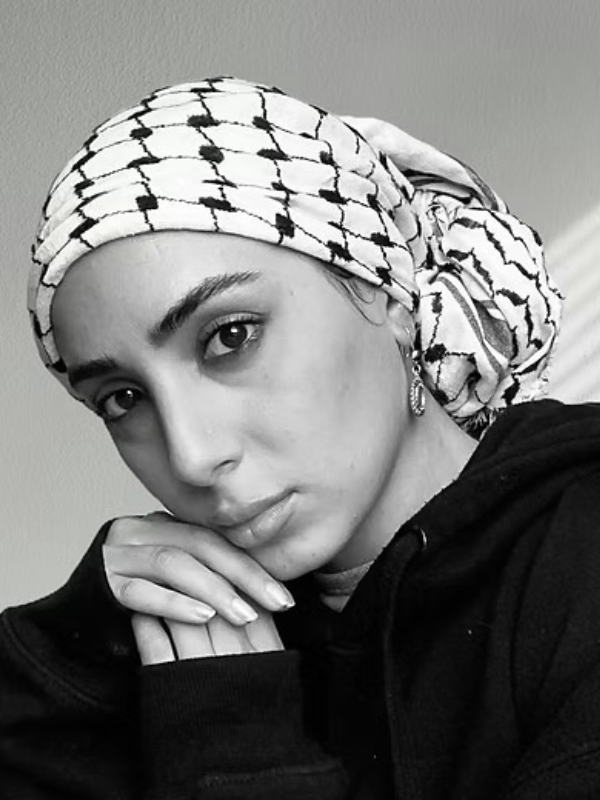
Artist Amal Azzam
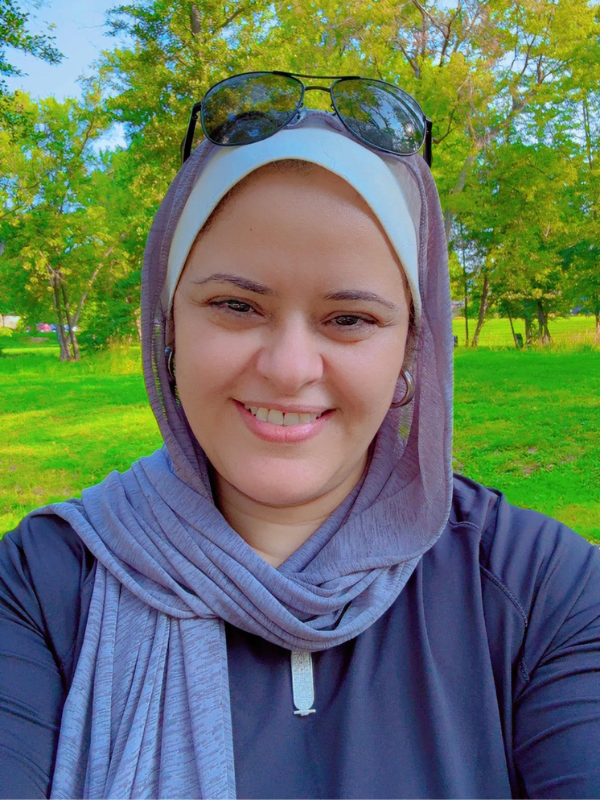
Poet Tahany Azzab
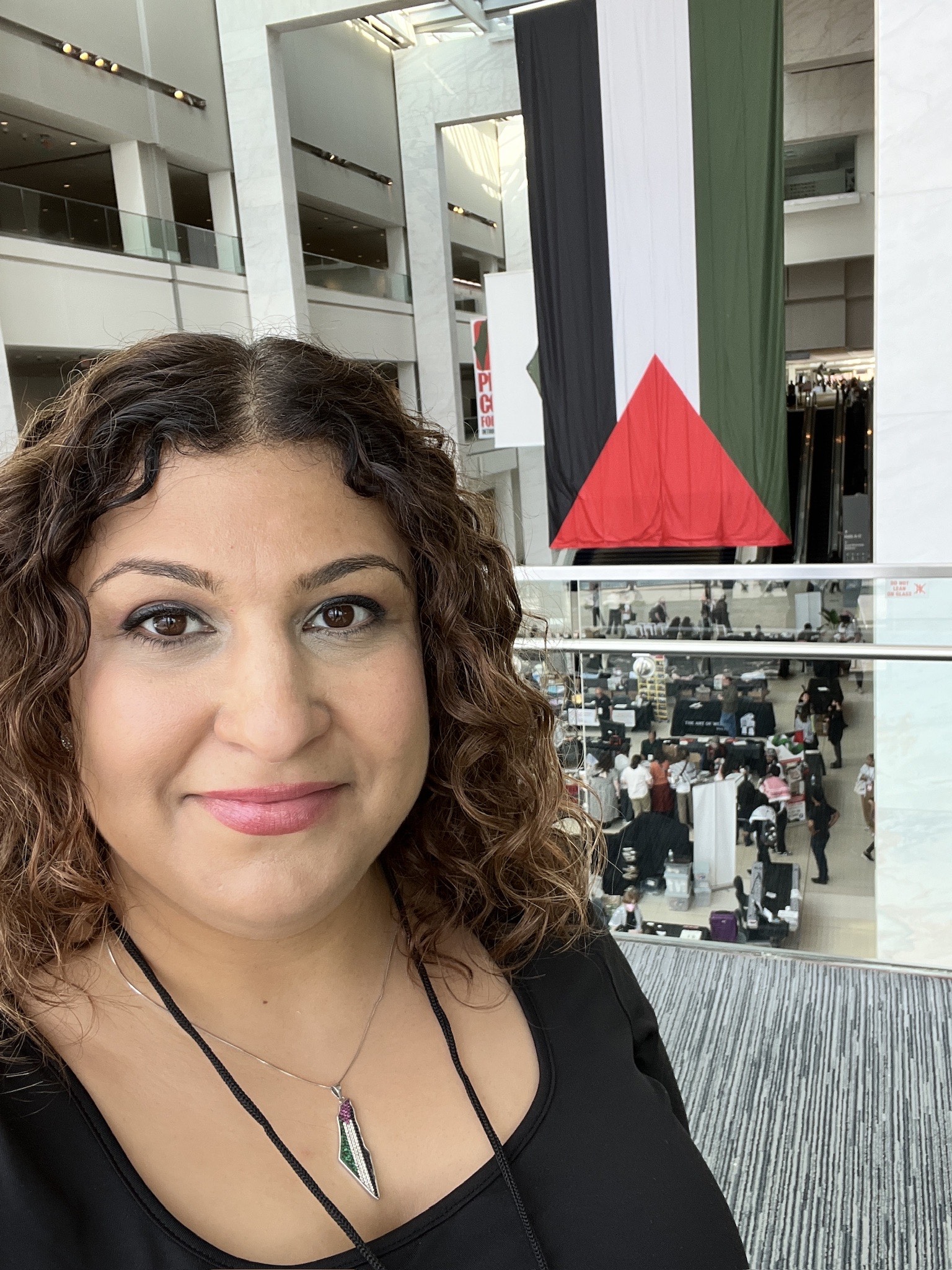
Poet Sawsan Rizeq