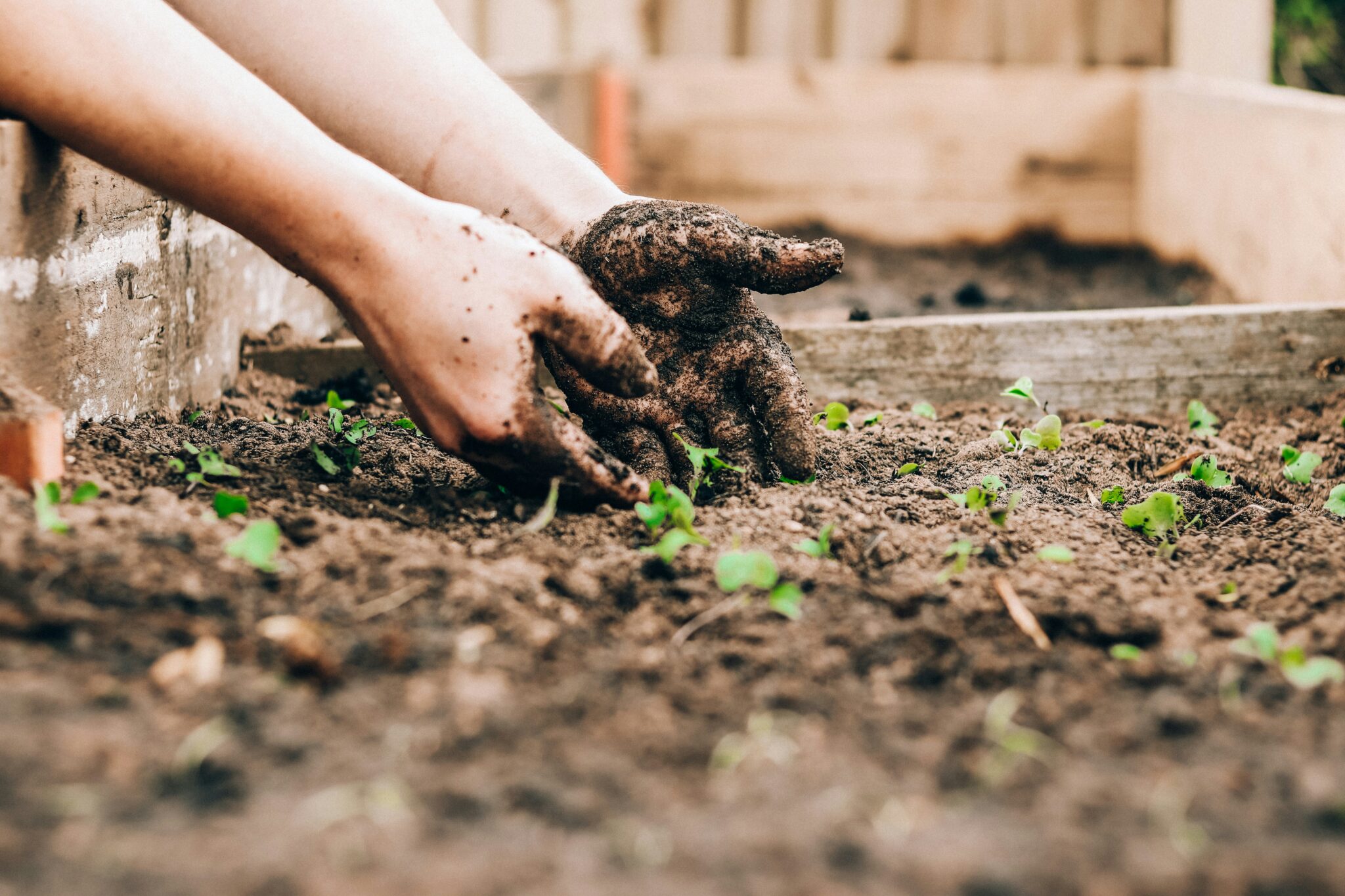
Muslims are entrusted with taking care of the Earth, and there are small habits they can form to make a difference every day. One of those habits is composting.
Compost is a mixture of ingredients used as plant fertilizer to improve soil’s physical, chemical, and biological properties. It is commonly prepared by decomposing plant and food waste, recycling organic materials, and manure. The resulting mixture is rich in plant nutrients and beneficial organisms such as bacteria, protozoa, nematodes, and fungi.
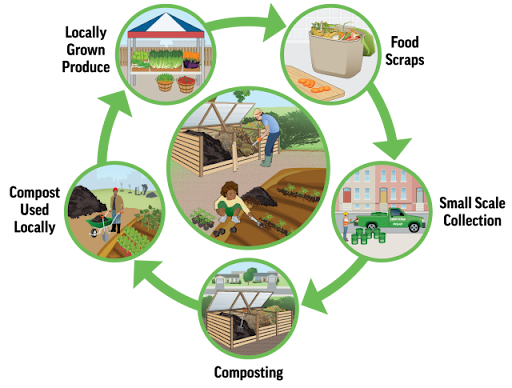
Composting is an act of stewardship of the Earth as ordained by God. It might seem complicated, but it is the single easiest step to making homes eco-friendly. It cuts down on household waste and leaves lush, rich soil in its wake. It is nature’s way of recycling — turning food scraps and yard waste into dark, healthy soil that helps plants thrive.
Composting, in a way, observes the circle of life: eating life, transforming it, and returning it to the earth — exactly the way God designed it. The Quran states, “Indeed, Allah is the One Who causes seeds and fruit stones to sprout. He brings forth the living from the dead and the dead from the living. That is Allah! How can you then be deluded from the truth?” (6:95).
Everything is reused, and what remains of one life becomes the means for the next. Composting is simply the limited way we get to play a part: feeding food scraps to the soil, letting the sun, rain, and Allah’s plan do the rest.

A Prophetic Practice
The term “composting” is modern, but the practices of Prophet Muhammad (salla Allahu ‘alayhi wa sallam) and the early Muslims were inherently sustainable . The use of manure, date pits, and other organic materials for fertilizing land was a common practice in 7th century Arabia and reviving dead land was considered a communal priority. Jabir ibn Abdullah reported that the Prophet said, “Whoever revives a barren land will be rewarded for it. Whatever is eaten from it in good health, he will be rewarded for it” (Musnad Aḥmad 23578; Sunan Abi Dawud 3073; Tirmidhi 1379). Using compost was a primary way of reviving depleted soils and turning them into fertile, productive land — an act that is highly encouraged and rewarded.
Composting also reflects key Islamic principles such as stewardship (Khalifa), conservation, avoidance of waste (Israf), and creating continuous benefits (Sadaqah Jariyah). It is not a stand-alone practice but rather an essential part of sustainable agriculture in the time of the Prophet and today.
One of Islamic civilization’s great accomplishments was the systematization of agricultural knowledge. Scholars compiled and advanced Greek, Persian, and Nabatean traditions by writing detailed manuals. 12th century agriculturist Ibn al-Awwam’s Kitab al-Filaha discussed making fertilizers from manure, dung, ashes, and lime-rich clay. He also detailed how to mix and age materials — a clear precursor to modern composting. It is reported that Muslims in Spain became experts in fertilizers, transforming fields that once produced one crop per year into land capable of producing three or more crops in rotation.
The History of Composting
Ancient farmers discovered that animal manure and plant waste enriched soil, as documented by the Akkadians around 2300 BCE. This practice was also embraced by the Greeks, Romans, Chinese, and Indigenous Americans. Even before the Akkadians, the utility of compost and fertilizer is referenced in both the Talmud and the Bible.
In early America, George Washington spent significant time experimenting with manure formulas before settling on a mixture of animal waste and plant material that he composted in a purpose-built repository. Thomas Jefferson also recognized that healthy soil helps plants resist insects and disease.
The Benefits of Composting
Cutting food waste. Food waste is an environmental burden, and processing it is costly. According to the Environmental Protection Agency (EPA), the average cost to landfill municipal waste in the United States was about $62.63 as of 2024. The U.S. discards more food than any other country in the world: nearly 60 million tons — 120 billion pounds — every year, sending two-thirds to landfills. Food is the single largest component taking up space inside US landfills, making up 22% of municipal solid waste. All told, the amount of food wasted in America has an approximate value of nearly $218 billion – the equivalent of 130 billion meals.
Reducing methane emissions. Landfills are the third-largest source of human-generated methane in the U.S. While some landfills capture gas, many escape into the atmosphere. Only about 6% of food waste is composted (“Just 5% of America’s food waste is composted. Which states are getting it done?” News Daytona Beach, Oct. 21, 2024).
Creating green cities. San Francisco launched large-scale composting in 1996 and now diverts over 80% of its waste, avoiding more than 90,000 metric tons of carbon emissions annually — equivalent to 20,000 passenger vehicles (“Zero Waste San Francisco: A Food Systems Approach to Waste Management, Global Alliance for the Future of Food,” Aug. 21, 2019).
Conserving water. According to a U.S. Geological Survey report, agriculture uses a substantial amount of ground and surface water in the United States. Irrigation accounted for 47% of the nation’s total freshwater withdrawals between 2010 and 2020. Each 1% increase in organic matter in arable soil allows the land to hold an additional 20,000 gallons of water per acre .
Conserving food. Food waste makes up 22% of landfill material in the U.S., worth nearly $218 billion — equivalent to 130 billion meals. Most of it produces methane when landfilled (“The Environmental Impacts of U.S. Food Waste,” April 1, 2025, U.S. Environmental Protection Agency).
Composting at Home or in the Community
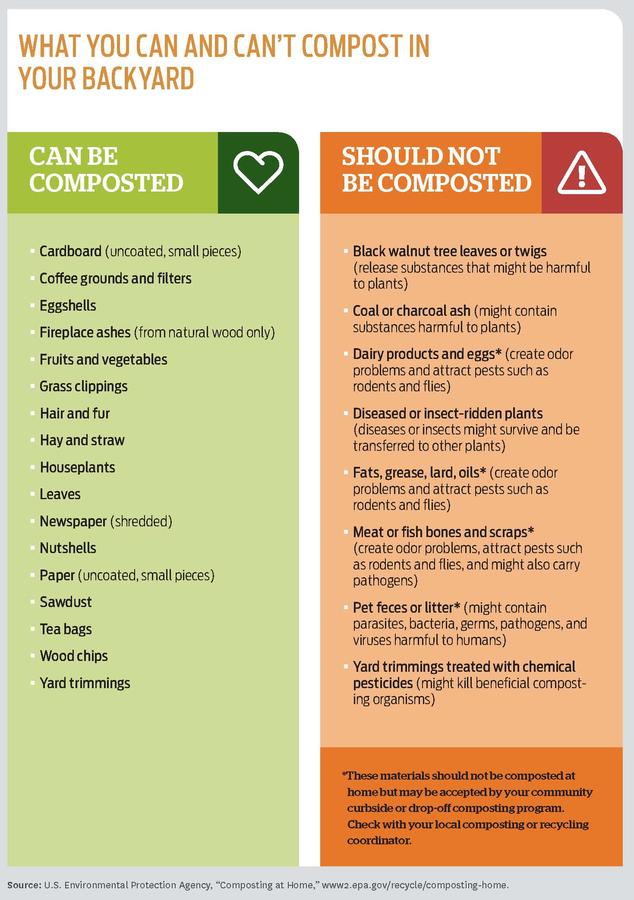
Composting can be done indoors or outdoors. This process can be as complicated or as simple as you would like. The best way to compost at home depends on several factors:
- The availability of space
- The amount of organic waste you produce
- The kind of organic waste you produce (kitchen and/or yard waste)
- The amount of time you have to spend on the composting process
Remember, composting is not an exact science. To figure out the best way to compost in your environment will take some time and experimentation. It is a biological process, so results may vary each time even if the method is not changed at all. Eventually, the compost pile will break down no matter what. The more time one spends with it, the more is learned.
It may be worthwhile to explore community composting at your local mosque or Islamic center. This offers additional unique benefits as it is a flexible model able to adapt to a community’s needs and resources such as available space, volume of organic materials collected, local sustainability goals, and availability of volunteers to undertake the long-term responsibility.
You can also visit epa.gov/recycle/composting-home and utilize other online resources to learn more.
Through the Green Ramadan campaign, the ISNA Green Initiative has been urging Muslim communities and individuals to adopt eco-friendly practices since 2014 as part of our commitment to our faith. Last year, the initiative promoted a plastic-free Ramadan.
This Ramadan, we are promoting “LET’S COMPOST — A Spiritual Practice of Environmental Stewardship” following the five principles outlined in Türkiye’s Zero Waste Encyclopedia: Refuse, Reduce, Reuse, Recycle, and Rot (Compost).
This ISNA Green Initiative Team is Huda Alkaff, Saffet Catovic, Nina Firman, Uzma Mirza, and S. Masroor Shah (Chair).
By ISNA Green Initiative Team of Huda Alkaff, Saffet Catovic, Nina Firman, Uzma Mirza, and S. Masroor Shah (Chair).











![15 Things You Didn’t Know About Makkah and the Ka’bah [Part 1]](https://wisconsinmuslimjournal.org/wp-content/uploads/2026/03/AdobeStock_87517185-scaled-e1774211732813-150x150.jpeg)