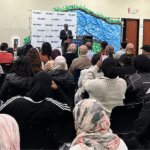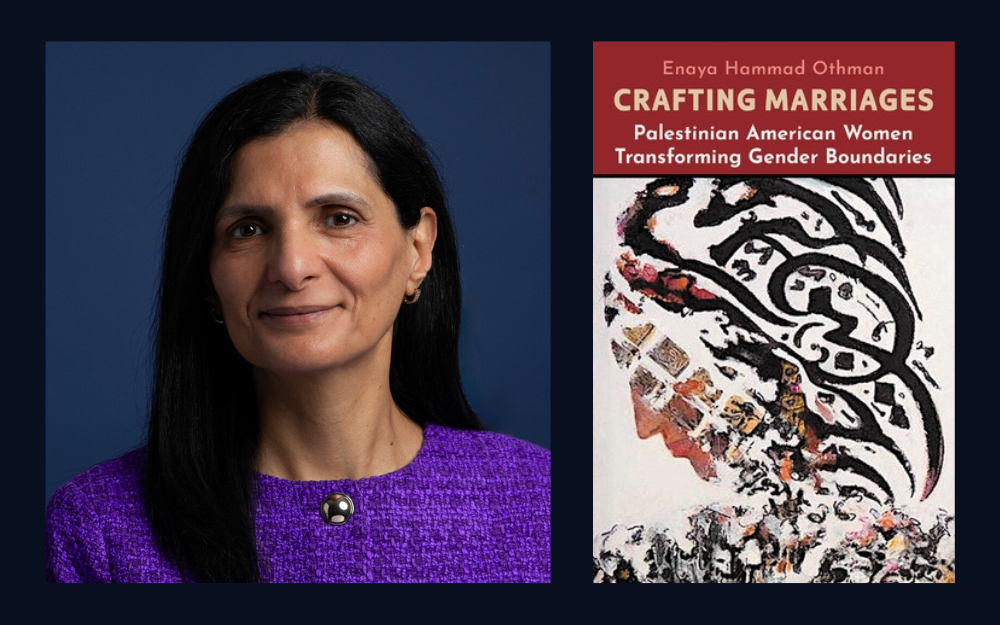
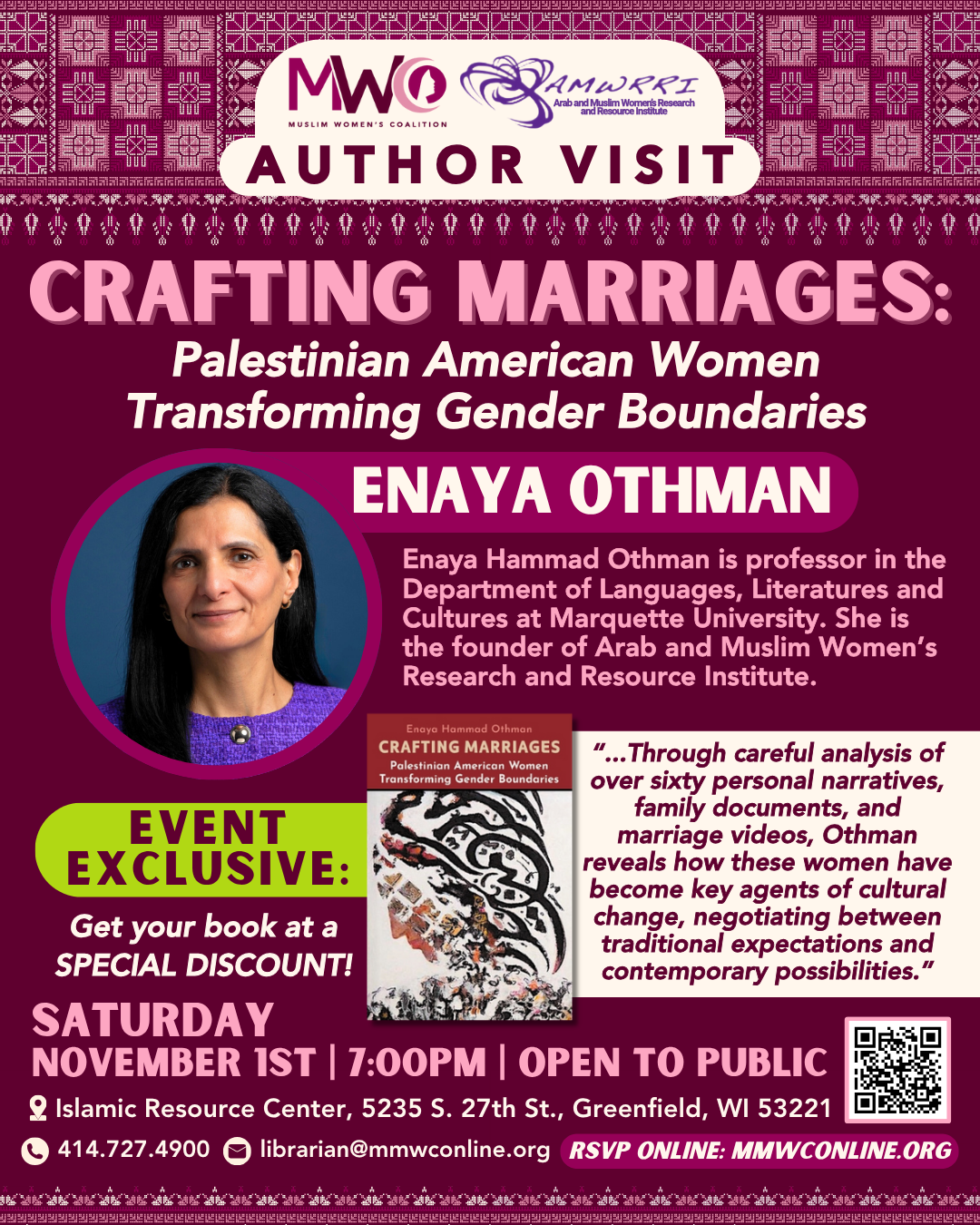
The Islamic Resource Center, 5235 S. 27th St. Greenfield, will host Enaya Othman, Ph.D., Saturday at 7 p.m. for the launch of her new book, Crafting Marriages: Palestinian American Women Transforming Gender Boundaries.
“As an immigrant from Al-Bireh, Palestine, I have been listening, observing, and experiencing the dynamics informing identity formation and marriage decisions of the Palestinian American community in Milwaukee … for more than thirty years,” Marquette University Professor Enaya Othman writes in her new book, Crafting Marriages: Palestinian American Women Transforming Gender Boundaries.
Enaya Hammad Othman, Ph.D., founder of the Arab and Muslim Women’s Research and Resource Institute (AMWRRI), historian and Marquette University professor of Arabic languages and cultures, is a prolific and respected scholar whose work explores migration, women’s experiences and cultural encounters within Arab and Muslim American communities in Milwaukee and across the diaspora. A member of Greater Milwaukee’s Arab, Palestinian and Muslim communities herself, she’s conducted much of her research here.
The launch of Crafting Marriages will be held Saturday, 7-9 p.m., at the Islamic Resource Center, 5235 S. 27th St., Greenfield. The IRC will host a discussion with Dr. Othman for the general public. The event is free and all are welcomed. Register here.
Research based on Palestinian American women’s stories
Dr. Othman founded AMWRRI, a nonprofit organization, in 2009. It uses oral history, digital storytelling and public scholarship to document Arab and Muslim communities in the diaspora and amplify their voices. For her research, Dr. Othman draws on AMWRRI’s Oral History Project, with its oral histories of first, second and third generation Arab and Muslim immigrants, largely from the Milwaukee area.
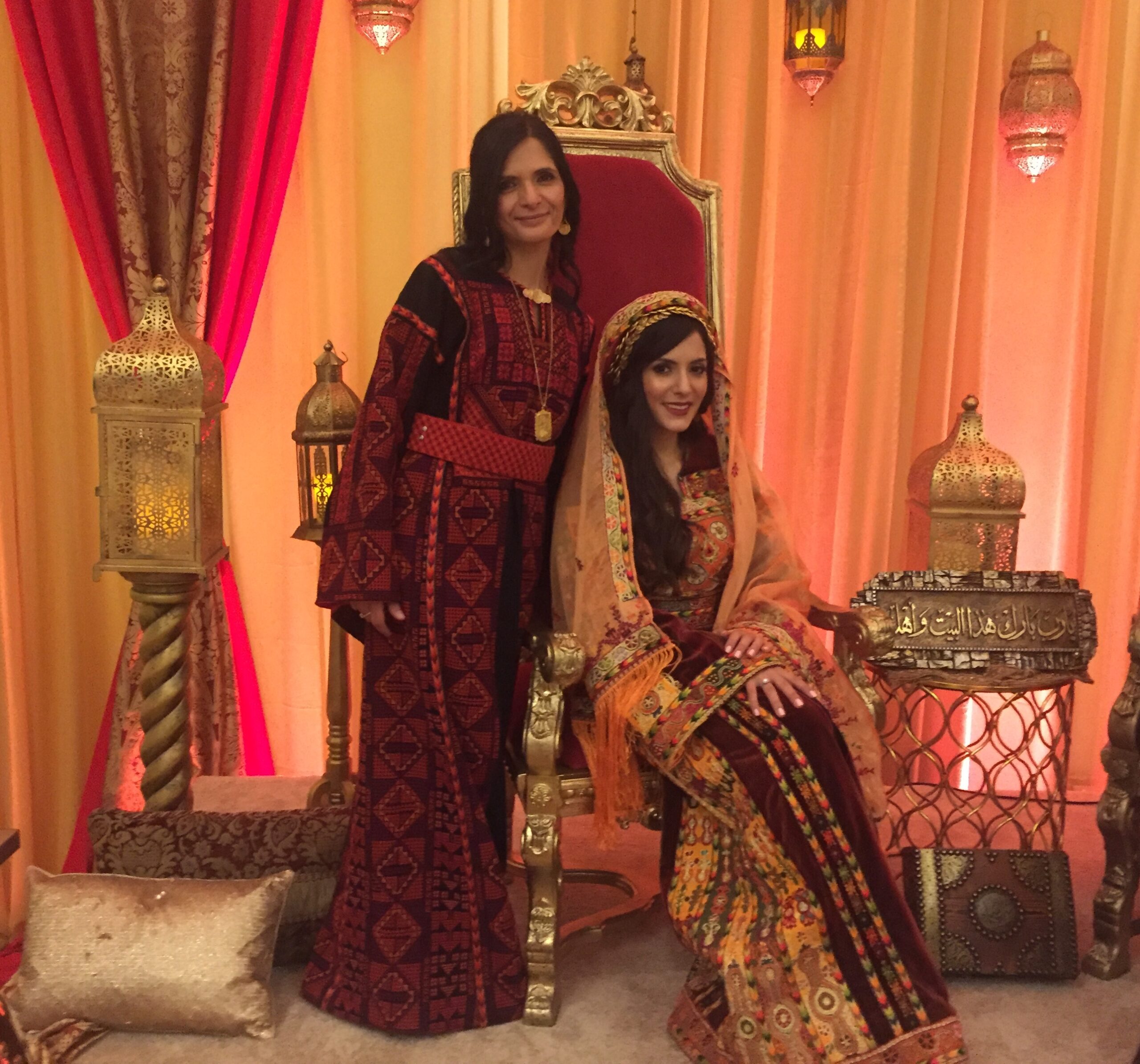
Marquette University Professor Enaya Othman (left) and her daughter Leean Othman (right) wear traditional Palestinian thobs at Leean’s wedding.
Publisher Syracuse University Press calls her new book “a richly detailed ethnographic study of marriage patterns among Palestinian American women from the 1950s to the 2020s.”
Through careful analysis of over 60 personal narratives, family documents and marriage videos, Othman examines how Palestinian American women have become key agents of culture change, negotiating between traditional expectations and contemporary possibilities.
“Crafting Marriages is a foundational and long-awaited contribution to the social sciences, the humanities and anyone interested in gaining a nuanced understanding of gender and family in this community,” wrote Nadine Naber, Ph.D., a well-known scholar and professor in the Gender and Women’s Studies Program, the Global Asian Studies Program and the Department of Anthropology at the University of Illinois at Chicago.
“It challenges the official narratives about Palestinians, Palestinian women, Arab women and Muslim women, and gives voice to stories that have too often been told about us, not by us,” said Dr. Othman in an interview this week with the Wisconsin Muslim Journal. “Like the oral history archive I’m building through my organization, it draws on the women’s own words and my experiences within this community over the past 35 years.”
A preview with Dr. Othman
In a recent interview, Dr. Othman talked about her research and shared highlights from her new book, Crafting Marriages: Palestinian American Women Transforming Gender Boundaries, published this month by Syracuse University Press.
Here’s the Q & A:
How are you feeling about your book launch Saturday at the IRC?
I want to thank Janan (MWC founder Janan Najeeb) and the Muslim Women’s Coalition for hosting this event, and not only hosting it. We have collaborated together many times. When I was preparing this book, I sat with Janan and talked with her about it. We exchanged conversations. Janan and MWC are part of the story I tell. We are building this history together.
Who can benefit from this research?
My main goal has always been to document our stories as part of both America’s and Milwaukee’s history. I hope this book contributes to broader conversations in academia about identity, gender and social transformation.
It is important for the fields of Arab American studies, Palestinian studies, gender studies and American history.
But I also want to speak directly to women—Arab, Muslim and Palestinian women—to help them reflect on their multi-layered identities and how these identities connect with the communities they live in.
At the same time, it challenges the Western and white feminist narratives that often see us as lacking agency or in need of saving. It shows how Palestinian American women have, in every decade, built strategies and negotiated within their families and communities to recreate and transform their lives.
What inspired you to pursue it?
In addition to recording our history, one of the goals of our Oral History Project is to document the community needs and think of ways to address them. Through my engagement with women in the community, especially Palestinian women, they’ve shared their aspirations around marriage and what they look for in a partner.
Some women spoke about the complexities of choosing a marriage partner. While most expressed a strong wish to marry within the Palestinian community, others shared experiences of marrying outside it—sometimes to someone from another Muslim background or a convert—and how those choices were received. A few described feeling their decisions were not fully accepted, even as they remained deeply connected to their culture and community.
Many of them eventually said to me, ‘Why don’t you write about this?’
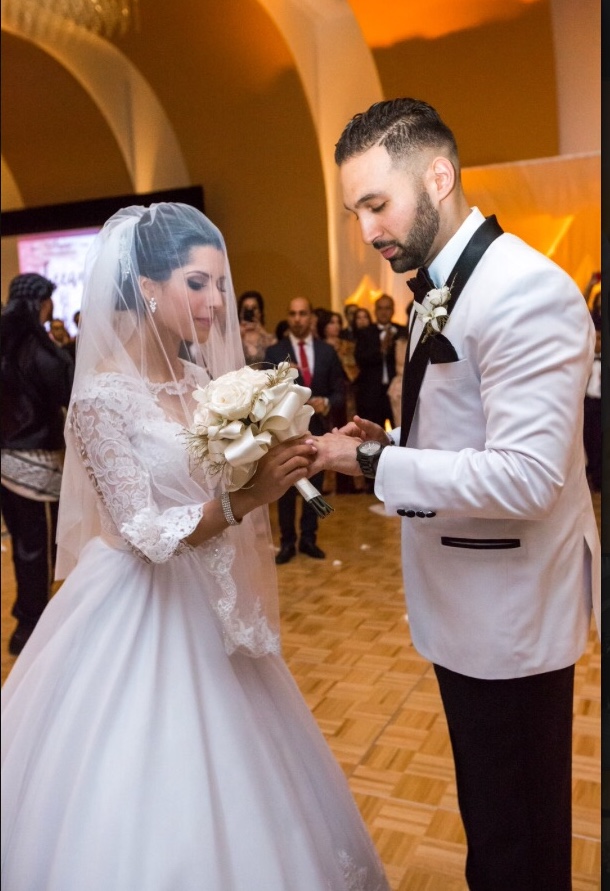
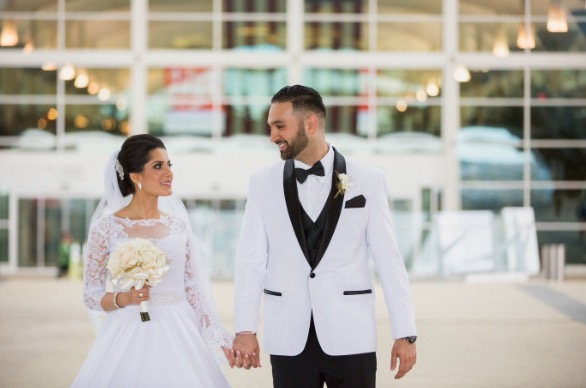
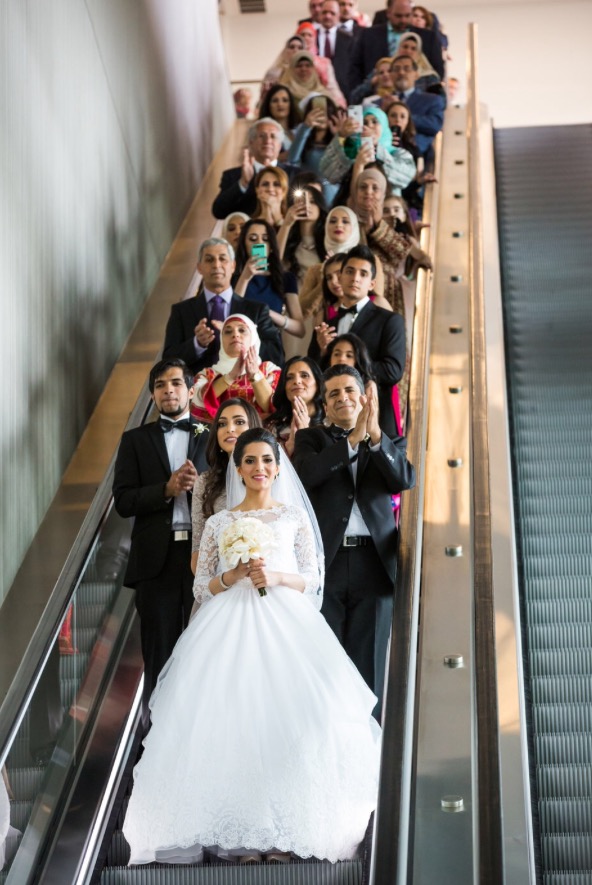
In 2016, Dr. Othman’s daugher Leean married a Palestinian man whose family, like Dr. Othman’s, is originally from Al Bireh.
What did you learn in working on this research and writing this book?
I learned so much from the women’s personal stories—the challenges they faced and the negotiation strategies they developed. They reminded me of what I often tell my students: ‘Don’t generalize.’ One person’s story or theme may reflect one experience, but it can’t be applied to another family or to the whole community. The complexity of lived experiences resists easy conclusions.
I discovered that the ways women have negotiated marriage traditions across three generations are deeply interwoven with larger histories of nationalism, displacement, statelessness, occupation, migration, Islamophobia and discrimination against Arabs, Muslims and Palestinians.
There are also transnational influences, such as Arabism and Islamic revivalisms. I use the plural ‘revivalisms’ because these movements took different shapes in different societies, yet all have influenced life in Milwaukee as people from many parts of the world made this city their home.
How have Palestinian American women’s marriages changed?
I found clear transformations in marriage practices between the early immigrant generation—those who arrived beginning in the 1950s—and the second and third generations, sometimes even within the same household. The older sister may have married someone from the same Palestinian village or a relative, while the younger sister’s story might look very different. So, you can’t simply say the first generation was one way and the next was another. Yet over time, the changes become very visible.
Since the 2000s, more women have married outside their national group. Still, I found that most Palestinian American women continue to look first for a Palestinian partner who meets their expectations and values. This reflects what it means to be a displaced population—maintaining a deep sense of connection to heritage. Even when they marry outside the community, many women keep Palestinian wedding rituals and traditions alive, weaving continuity through change.
What are you working on now?
I was invited by Cambridge University Press to propose a book based on my research about Palestinian women’s resistance to colonialism through dress. The working title is Resistance through Threading Fashion: Transnational Reproduction of Palestinian Cultural Clothing.