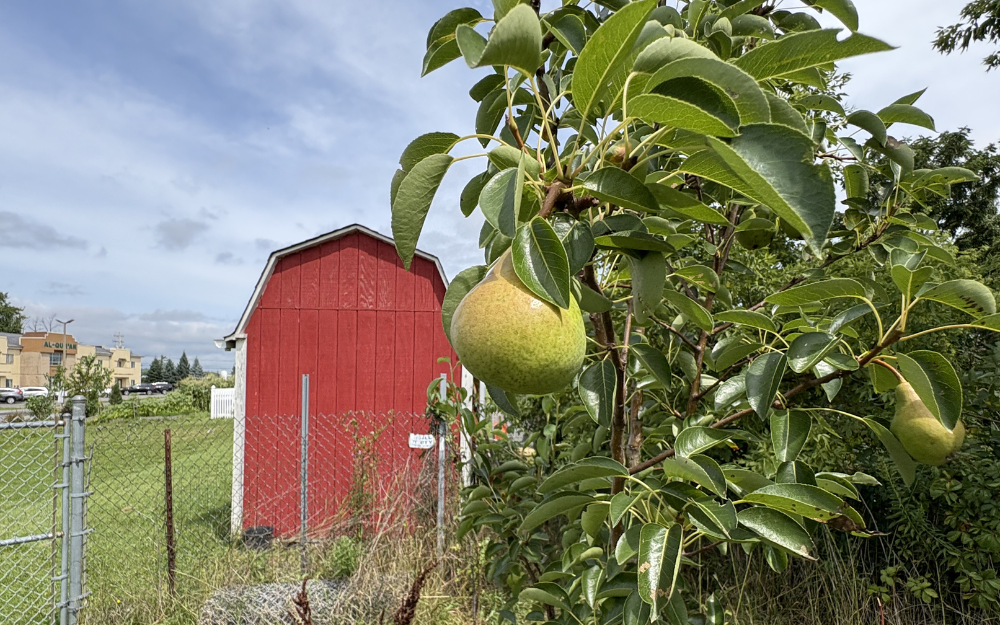
Photo by Cherrie Hanson
Masjid Al Quran hosts an Earth Day celebration Sunday, April 26, on its farm, with tree and flower planting, a water photo contest and lecture by ecologist Huda Alkaff of Wisconsin Green Muslims.
A growing group of environmentally minded Muslims in Greater Milwaukee are educating themselves to live sustainably and be better stewards of God’s creation. Several traveled to California to take a rigorous, two-week Permaculture Design Certificate course at Zaytuna College, an Islamic liberal arts college in Berkeley.
Two of them, Omar Mallick of Brookfield and Luqman Bahi of Milwaukee, recently launched a book club to continue learning and share what they learn with others. It is open to all who want to learn about the principles of permaculture design and related topics. Muslims and non-Muslims from across Milwaukee and its suburbs participate.
Permaculture design promotes an approach to land management that minimizes negative environmental impacts. It addresses agriculture, development and other issues with a holistic system based on learnings from indigenous people and science.
The Permaculture Book Club meets this Friday at 5 p.m. in Brookfield to discuss The Serviceberry by New York Times bestselling author Robin Wall Kimmerer. Her book offers an alternative to capitalism by exploring the gift economy.
For more information, the location or to join the Permaculture Book Club, email co-founder Omar Mallick at omarmallick@gmail.com.
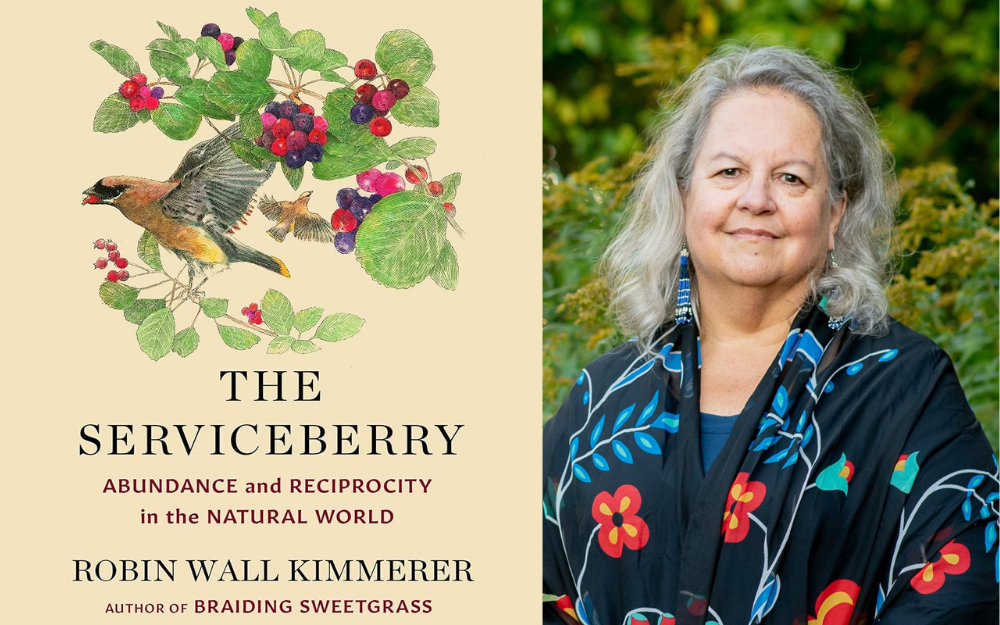
The Permaculture Book Club will discuss “The Serviceberry” by best-selling author Robin Wall Kimmerer.
Starting the Permaculture Book Club
Omar Mallick of Brookfield completed the Permaculture Design Certificate course at Zaytuna College in 2019. In the process, he developed a long list of recommended books on this topic.
“The list casts a wide net,” Mallick said, ranging in topics from economics to agriculture to history to philosophy to science and sociology. “The common thread is the importance of being a producer rather than just a consumer,” he said.
“I told my friend Luqman (Bahi), who took this course more recently, ‘We ought to start a book club,’” said Mallick, a board member at Masjid Al Quran in Milwaukee.
“The book club allows for robust discussions with like-minded people, which allows for an environment for me to learn more and also be challenged,” he said. “The topic is important because it touches on many different issues that we should be more mindful of. What are our roles in society? What’s our relationship to nature? Where does our food come from? How do we design efficient gardens and projects while focusing on lowering waste and increasing sustainability? That’s to name a few.”
Mallick and Bahi reached out to friends and invited them to join. Some of them had also attended the Permaculture Design Certificate course. They created a WhatsApp group, where they suggest books and choose meeting dates.
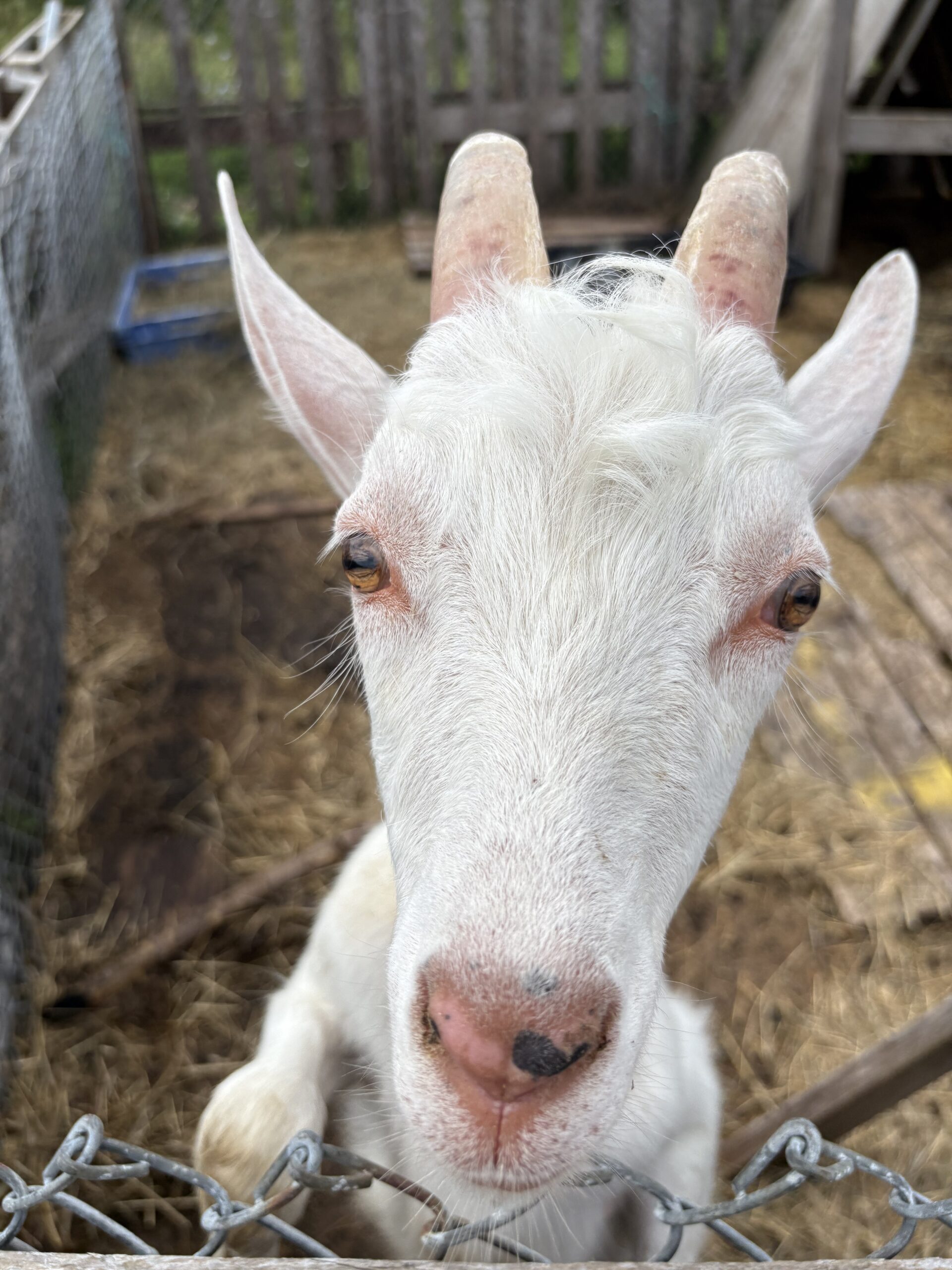
Masjid Al Quran keeps goats as part of its educational program for children and youth.
Joining the Book Club
About 10 people joined in the initial meetings before Ramadan. They finished their first book over several meetings—environmental activist Wendell Berry’s The Unsettling of America (1977). Berry argues that agribusiness has destroyed American land, rural communities and spiritual health. He advocates for a return to sustainable, local, family-based farming and a culture of stewardship rather than profit-driven production.
Several couples joined the group, including Fatima Badwan and Ali Shana of Brookfield, who had both completed the Permaculture Design Certificate course.
“Permaculture is a new way of thinking that is a return to a lost way of thinking that was vital to previous generations living in harmony with nature,” Badwan said. “It is a wonderful topic to be able to explore with others.”
The commitment of the participants attracted Shana to the group. “I was interested because I knew I would be with folks who want to implement the lessons provided in a shared list of books that really speaks to my values.
“Permaculture is important because it allows folks to be self-sustaining. It’s very useful to know how to optimize the water and flora native to the climate you live in. Permaculture lets you put a lot of work in up front to do much less work over time—maximize yield and increase biodiversity.”
Burhan Clark of Milwaukee, president of the Milwaukee Islamic Dawah Center, noted, “Like a lot of things, my interest in permaculture began when I had kids. I wanted us to have a better understanding of the world and not just be passive consumers.
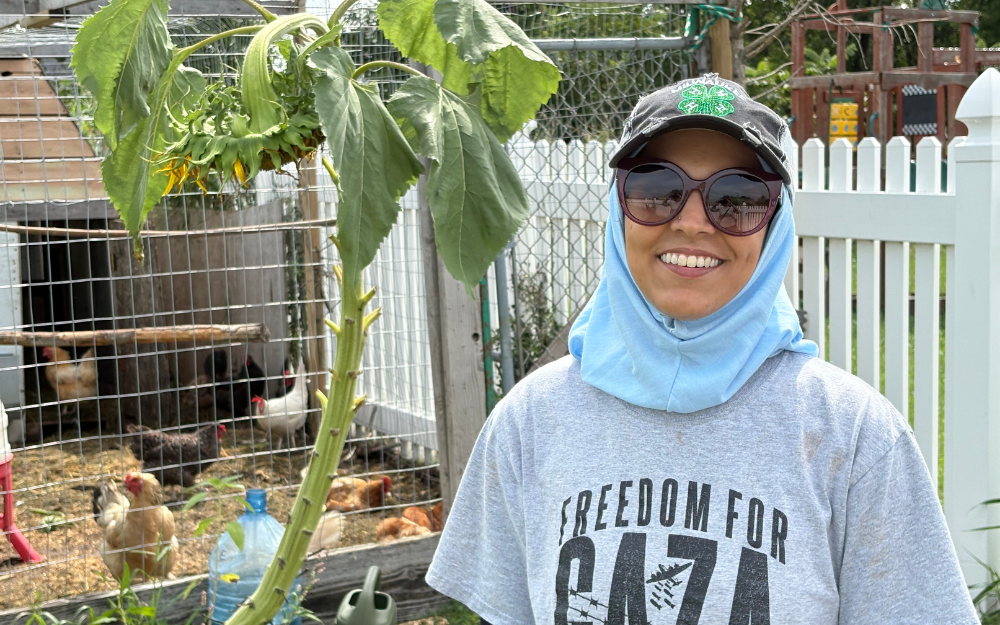
Fatima Badwan, agriculture educator and volunteer at Masjid Al Quran farm, completed the Permaculture Design Certificate course and joined the Permaculture Book Club.
“How we feed ourselves and long-term sustainability of our food systems is foundational to our lives, even if we don’t all see it,” he said. “And the book club’s discussions always encompass broader topics like values, economics, social structure and technology. It’s a great lens to look at what we are doing in our lives and community.
“The Permaculture Book Club is a place where I can learn new things,” he continued. “It pushes me to read more intentionally and gives me a chance to interact with people of varying opinions. I’ve gotten to know people better, and meet others with unique perspectives.”
When Mallick mentioned the book club to his friend Coe Douglas, “I was in,” Douglas said. “Omar and I talk about books a lot. The book club feels like an extension of much of what we talk about already.
“It is also a perfect space to discuss ideas, expand learning, spark curiosity and feed the imagination,” Douglas said. “It is also a tremendous opportunity to unplug, connect with our growing book club community and explore ideas with others.”
Applying the lessons
Some book club members joined with applications of its lessons in mind. Others are there to learn how to apply the principles of permaculture in their lives.
“This was also a great way to think about what ideas my wife and I could incorporate into the summer/winter camps at Masjid Al Quran,” Shana said. Badwan and Shana work with the Masjid Al Quran’s hands-on programs for children and youth that teach them to care for farm animals, tend an organic vegetable garden, plant and harvest fruit trees and develop self-sustaining farm practices.
“I think developing an ecological literacy is an important supplement to what has become an emerging backyard rewilding project,” said Douglas. “Our yard is certified as a National Wildlife Federation Backyard Habitat. This includes two pollinator gardens, a pond and a commitment to native perennial plants throughout.”
What distinguishes this book club from others is the importance of the topic, participants say. “We are—all of us—collectively in the midst of great ecological uncertainty,” Douglas said. “We take for granted that our planet will continue to provide for us. But as we see systems collapse, climate change, forever chemicals in our rain and soil, food systems challenges, data centers and so much more, more than ever knowing what we can do and gaining knowledge about solutions and opportunities gives us agency and empowers action.
“We can change this story, act regeneratively and become stewards of more resilient futures for everyone.”
More Earth Day News: Masjid Al Quran’s Earth Day Celebration
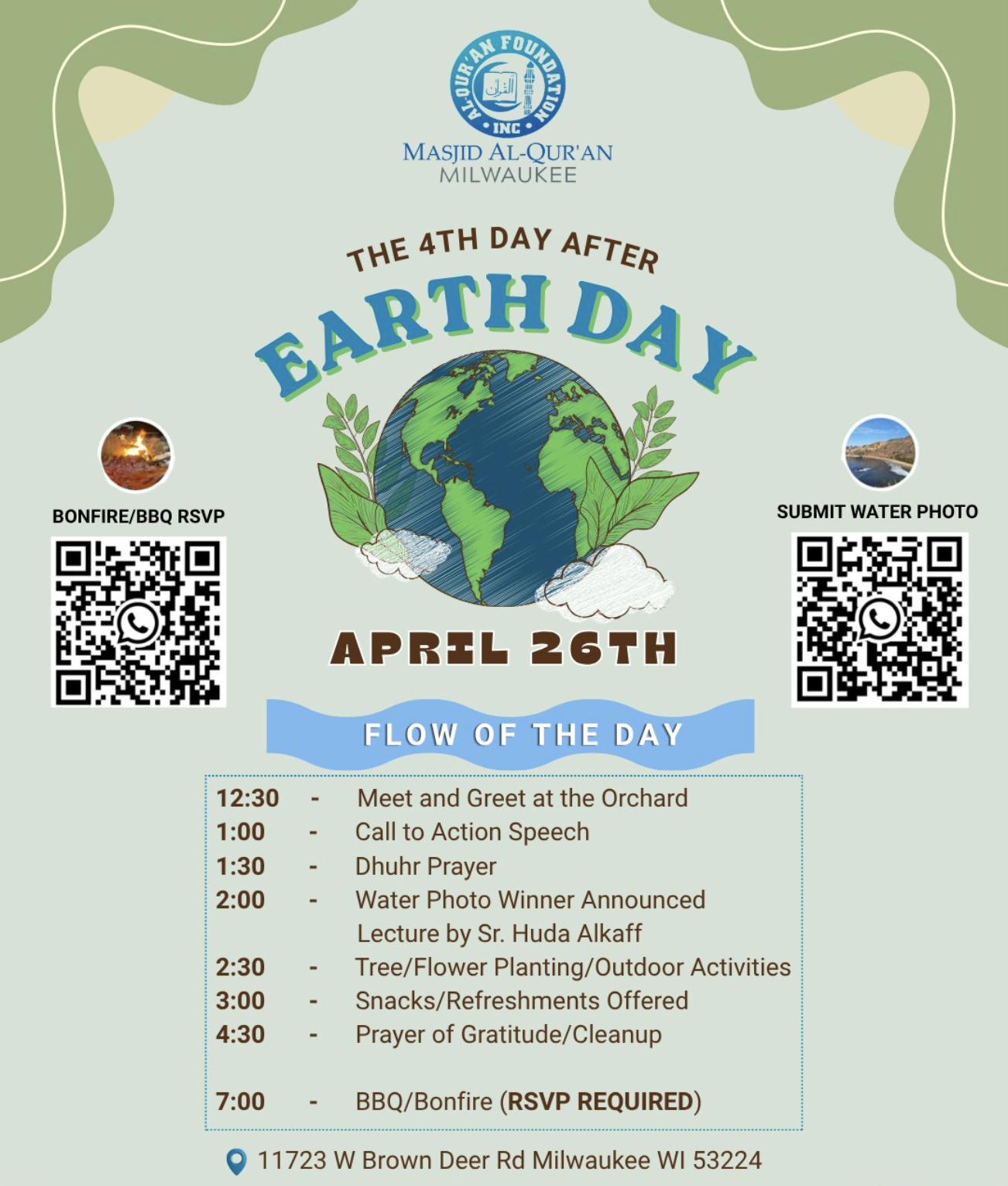
Masjid Al Quran, 11723 W. Brown Deer Road, Milwaukee, will host Water Stewardship – Protecting our Most Precious Resource, an Earth Day Celebration Sunday, April 26, that promises to be fun and educational.
It includes tree and flower planting, the announcement of the “Water Photo Contest” award winner, a lecture on protecting the purity of local waters by ecologist Huda Alkaff, and a BBQ and a bonfire.
Everyone is welcome to this free public event. Registration is required for those staying for the BBQ to ensure there is enough food for everyone.
It begins at 12:30 p.m. with a meet-and-greet. The educational program runs from 1-2:30 p.m., followed by tree planting, refreshments and prayer.
A BBQ and bonfire begin at 7 p.m.