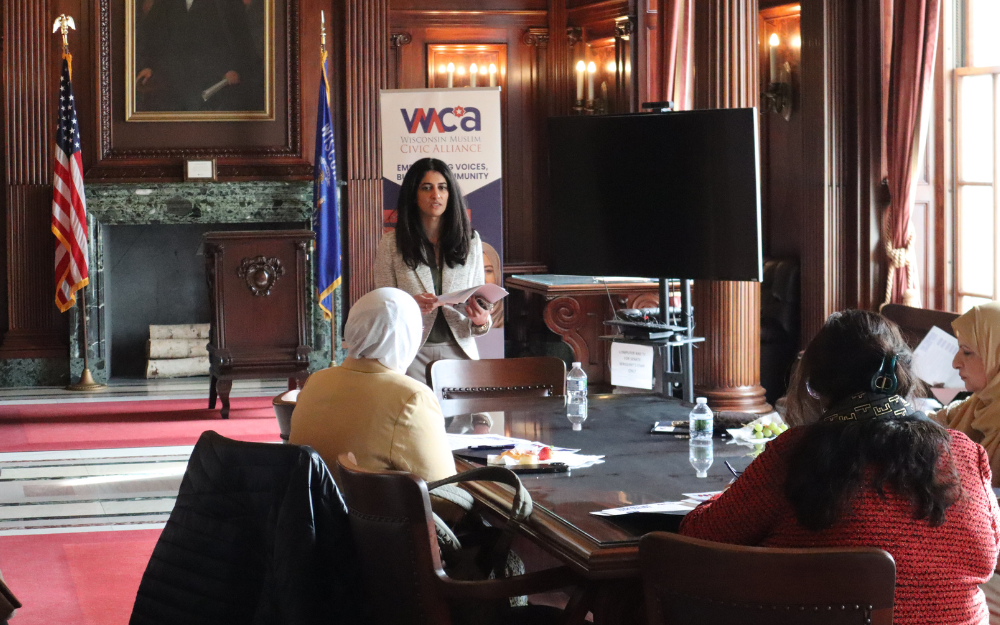
Photo by Hamza Zuberi
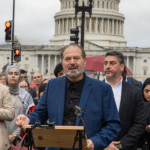
Wisconsin Muslim Civic Alliance policy lead Fatima Malik, shown at the Wisconsin State Capitol on Advocacy Day 2025, will be a guest presenter at the Muslim Women’s Coalition’s May Networking Brunch on Friday, May 29.
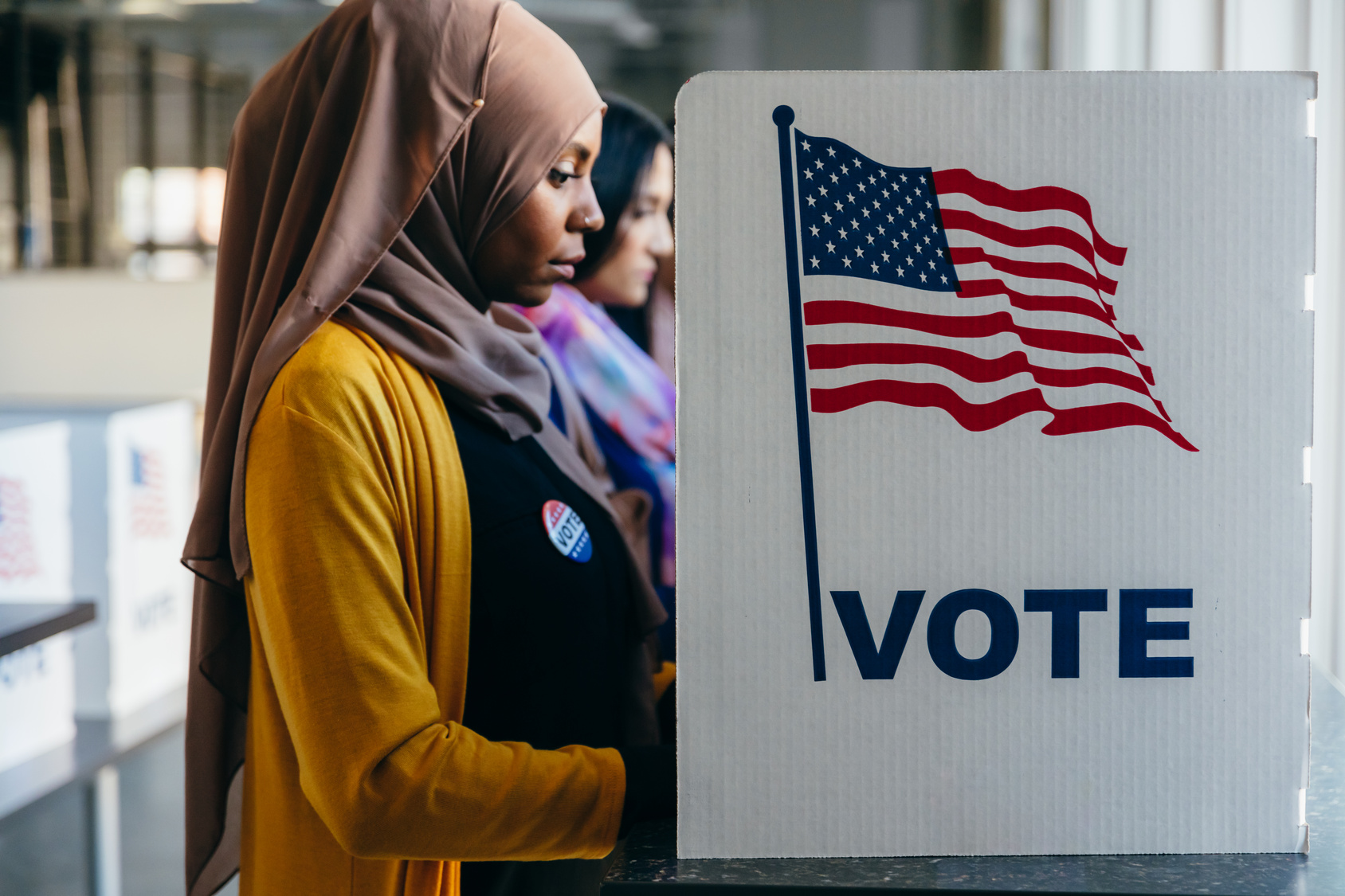
With Wisconsin campaigns for August and November elections in full-swing, Wisconsin Muslim Civic Alliance and Wisconsin Muslim Civic Foundation are ramping up efforts to engage Wisconsin’s 70,000-plus Muslims in this election cycle.
The governor’s seat is in play. After eight years in office, Gov. Tony Evers announced he will not seek re-election, leaving the field wide open for the first time since 2010. More than half a dozen well-known Democratic contenders are in the race. The Aug. 11 primary will determine the Democratic nominee. U.S. Rep. Tom Tiffany is the only prominent candidate running to represent the Republicans.
And this is the “first state election in more than a decade in which there is a viable possibility that Democrats will gain majorities in at least one of the two legislative houses,” wrote Alan Borsuk, long-time Milwaukee Journal Sentinel education reporter and now a senior fellow in law and public policy at Marquette University, in an MJS article published today.
“Everyone needs to be engaged in every single election and on every issue,” said Fauzia Qureshi, who serves as both WMCA’s and WMCF’s executive director. “If we are not at the table, decisions will be made without our input and our voices won’t be heard.”
These statewide elections matter because those elected “will have a huge impact on issues that matter to the Muslim community,” Qureshi said. “Freedom of speech and immigration are at the top of the list.”
Statewide townhalls for Wisconsin Muslims
In the lead-up to the elections, WMCA and WMCF are hosting Community Town Halls across the state.
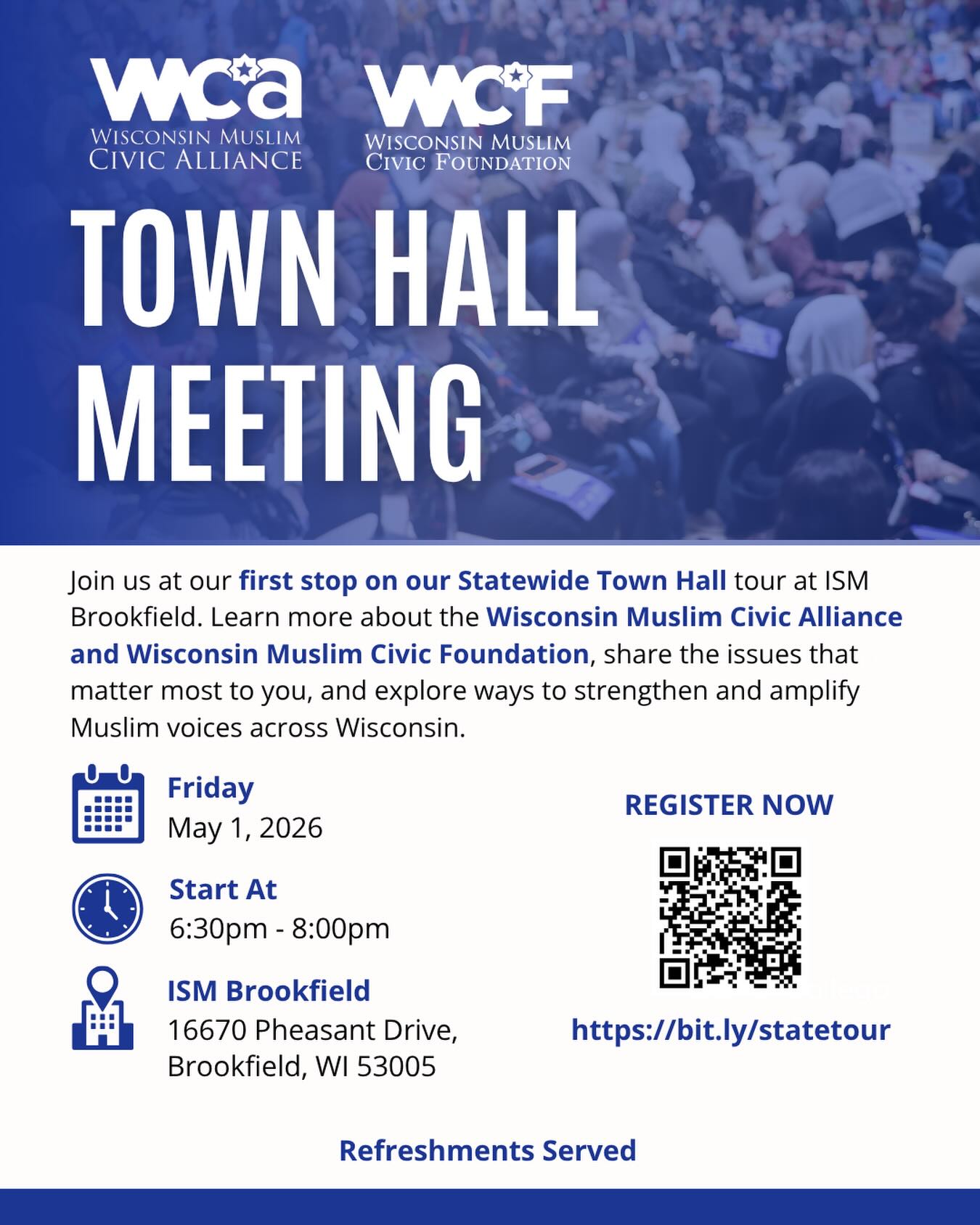
Click on flyer to register.
“Many of Wisconsin’s more than 70,000 Muslims are eager to engage, but haven’t always had structured pathways,” Qureshi said. “Our role is to bridge that gap between community and civic life.”
The goal is to establish chapters across Wisconsin, she said. “We want to find leads across the state—in Madison, Appleton, the Fox Valley, Green Bay, Barron, Altoona, Janesville, Racine—this isn’t a finite list. We want to make sure they know who we are and we want to learn who they are as well.”
The Brookfield Community Town Hall this evening, 6:30 – 8 p.m., is at the Islamic Society of Milwaukee-Brookfield, 16670 Pheasant Drive. Attendees will learn about WMCA and WMCF, and how they can get involved. They’re also invited to identify issues that matter to them. Register here.
“Our town halls are about creating accessible, welcoming spaces where community members can ask questions and be heard,” Qureshi said. “Sometimes politicians come to speak with us, but that’s not what it is all about. It’s about community voices shaping the conversation.”
Common goals, separate roles
“We also want the community to know how WMCA and WMCF work to build a civically engaged, informed and empowered Muslim community in Wisconsin,” Qureshi said. “Part of that process is to make sure that our community across the state is well informed about who we are and that we’re the organization that can help make sure they are more informed and civically engaged.
“The main difference between WMCA and WMCF is their roles,” she explained. “WMCA is about advocacy, legislative engagement, endorsements, voter engagement and more. It can make endorsements and lobby.
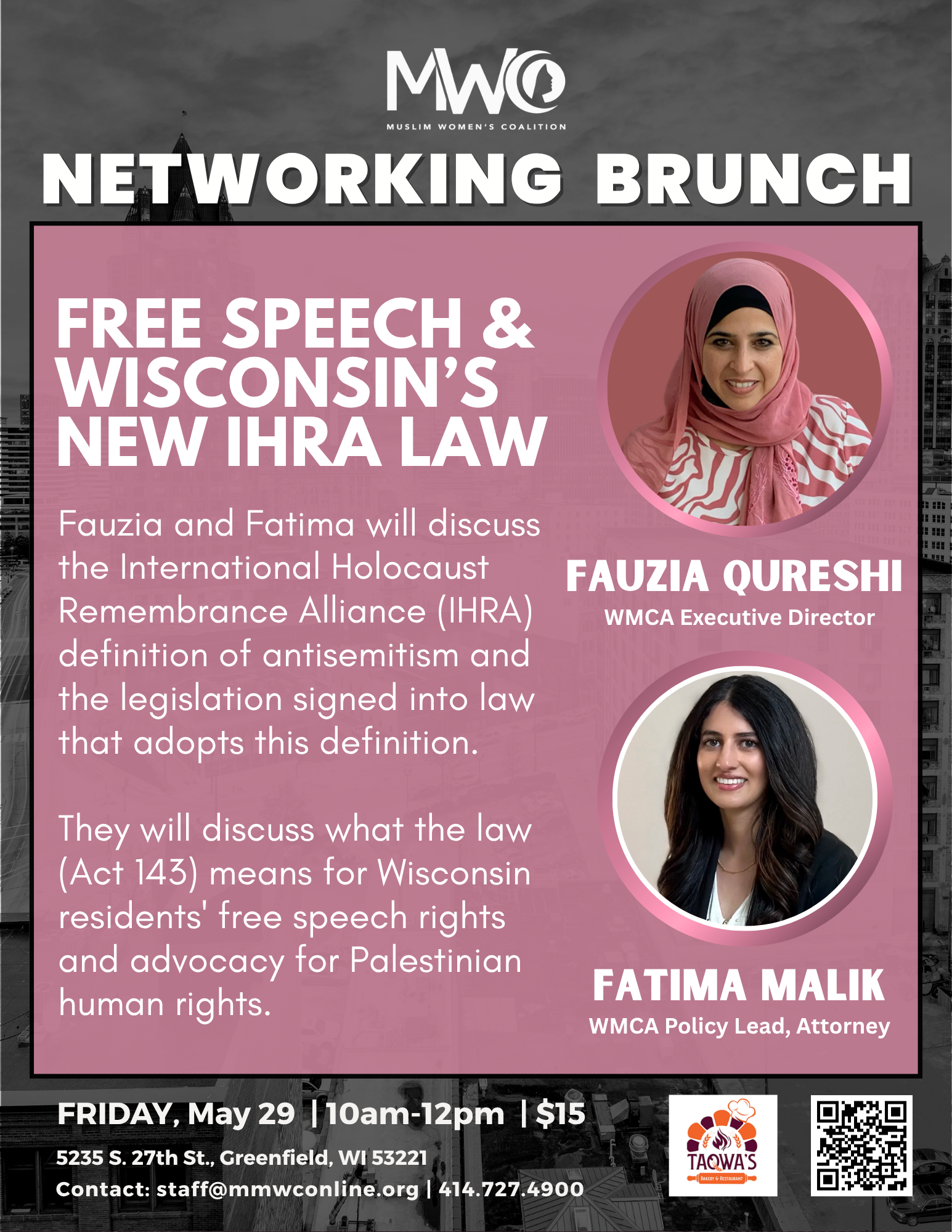
Click on flyer to register.
WMCA works to empower, educate and organize Wisconsin’s Muslim community “to ensure Muslim voices are represented in decisions that shape our communities and our future,” its website states. Founded in 2019 by Janan Najeeb of Mequon, the organization uses advocacy, education and coalition-building “to protect civil rights, expand civic participation and ensure Muslim voices are represented in decisions that shape our communities and our future.”
WMCF does education and research, she said. Its research helps guide the development of policies. For example, in a survey of Wisconsin’s Muslims, “we saw the Eid as a real issue. Without it being recognized, it is hard for Muslims to take off work or for Muslim children to stay home from school,” Qureshi noted. “It is also an issue community members have raised.
WMCA took that finding and created a policy to recognize the holiday. WMCA helped it gain bipartisan support. It didn’t get to the floor last session, but it will be back, she said.
WMCF also creates educational programs about Muslim culture and heritage that are shared with Muslims and non-Muslims. “We want to make sure there is deep understanding between Muslims and the rest of the community, and that Wisconsin Muslims are visible, connected and confident about shaping our collective future.”
Muslim Women’s Coalition Networking Brunch offers a deep dive
The Muslim Women’s Coalition’s Networking Brunch is where Muslims and citizens of other faiths discuss topics of common interest. It meets from 10 a.m. to noon on the last Friday of each month.
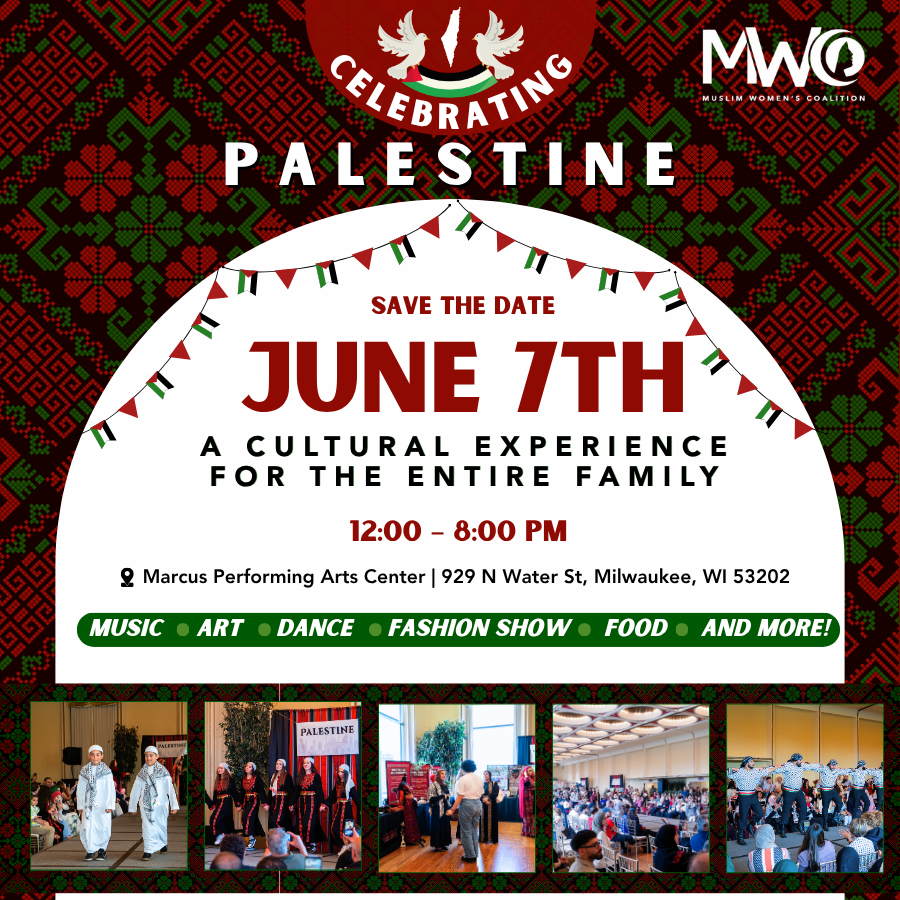
For the May 29th brunch, Qureshi and Attorney Fatima Malik, WMCA’s policy lead, will “do a deep dive” into the new Wisconsin law defining antisemitism, signed by Gov. Evers in March. Their presentation, Palestine, Free Speech and Wisconsin’s New IHRA Law, discusses the adoption of the International Holocaust Remembrance Alliance definition of antisemitism and what it means for Wisconsin residents’ free speech rights and advocacy for Palestinian human rights.
That Gov. Tony Evers did not use his veto power to reject it was a great disappointment to the Muslim community and shows how important it is to have a governor who understands the issues of the Muslim community, she said.
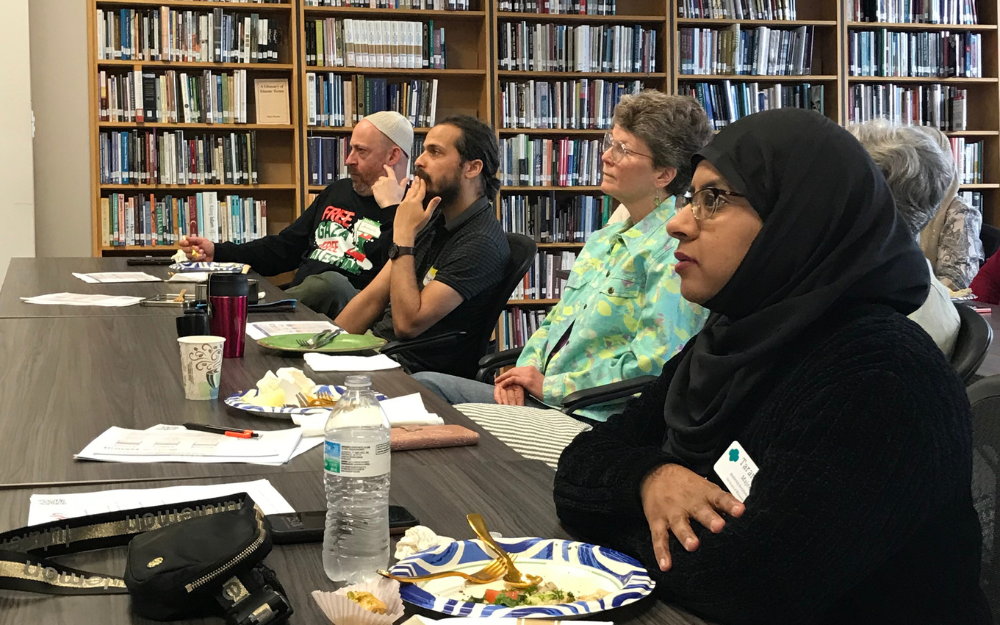
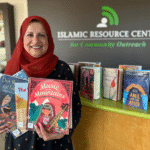
The Muslim Women’s Coalition’s monthly Networking Brunch at the Islamic Resource Center offers people a chance to make new connections, share a meal and learn about an interesting topic.
How to stay engaged
“There are so many ways to be engaged in your community’s civic life,” Qureshi said. “It will be different for every person.”
Here are some suggestions to get started:
- Inform yourself about your community, its leadership and the issues it faces.
- Vote in every election.
- Follow WMCA and WMCF on social media for information about issues and opportunities.
- Attend a Common Council meeting in your community.
- Volunteer to serve on a committee.
- Watch for WMCA’s endorsement of candidates. (WMCA is currently surveying candidates in races around the state to get their views on issues of importance to the state’s Muslim community. When survey responses come in, WMCA’s team will put them through a three-stage review process, after which it will release its endorsements in statewide races and local races across the state.
- Consider WMCA’s leadership training for community members who want to take on leadership roles, whether in local government, an organization,or a board.