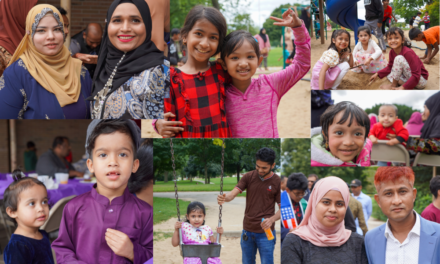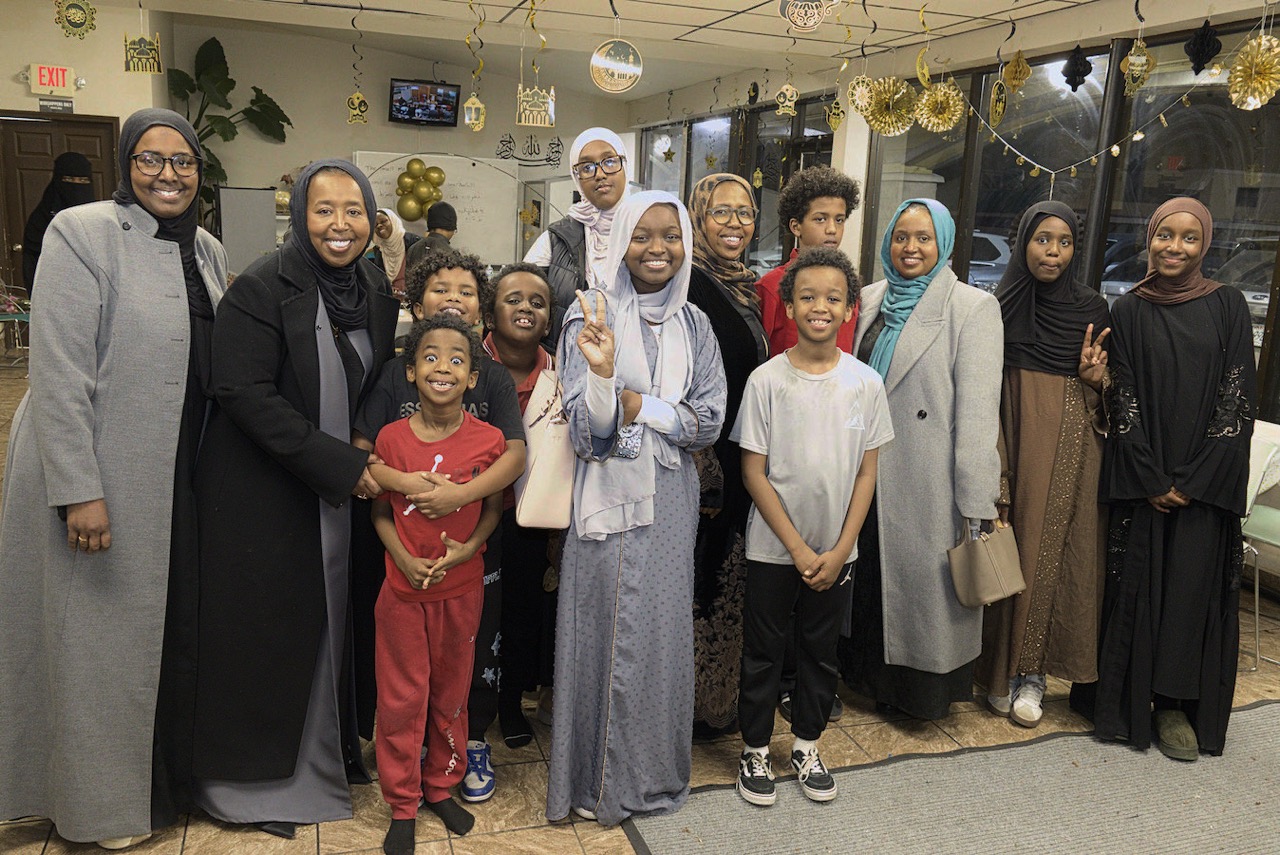
Members of the Abdi family gather for a photo at the Milwaukee Islamic Dawah Center’s “Honoring the Black Muslim Family’s Legacy” event. Pictured here are (back row) Sahra Ali; Ubah Abdi; Abdirahman, Selwa and Kadija Abdi; Suhayb Osman; Umalkhayr, Asma and Adna Abdi; and (front row) Suleyman Abdi, Safia Osman and Muad Abdi.
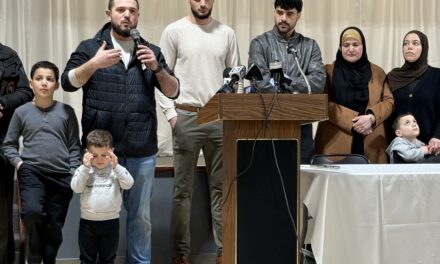
Milwaukee Islamic Dawah Center buzzed at sunset Friday. Hundreds of people moved through every space. Some came for iftar (the breaking of the day’s fast), maghrib and isha daily prayers, a wedding, Taraweeh prayers (prayed during Ramadan) and a special event to conclude Black History Month, Honoring the Black Muslim Family’s Legacy.
Volunteers served community members, filling their plates with fried catfish, shrimp and grits, collard greens and sweet potatoes from NOLA Café, a new restaurant by notable Milwaukee chef Gregory Johnson. A bride and groom posed for photos with their wedding cake.
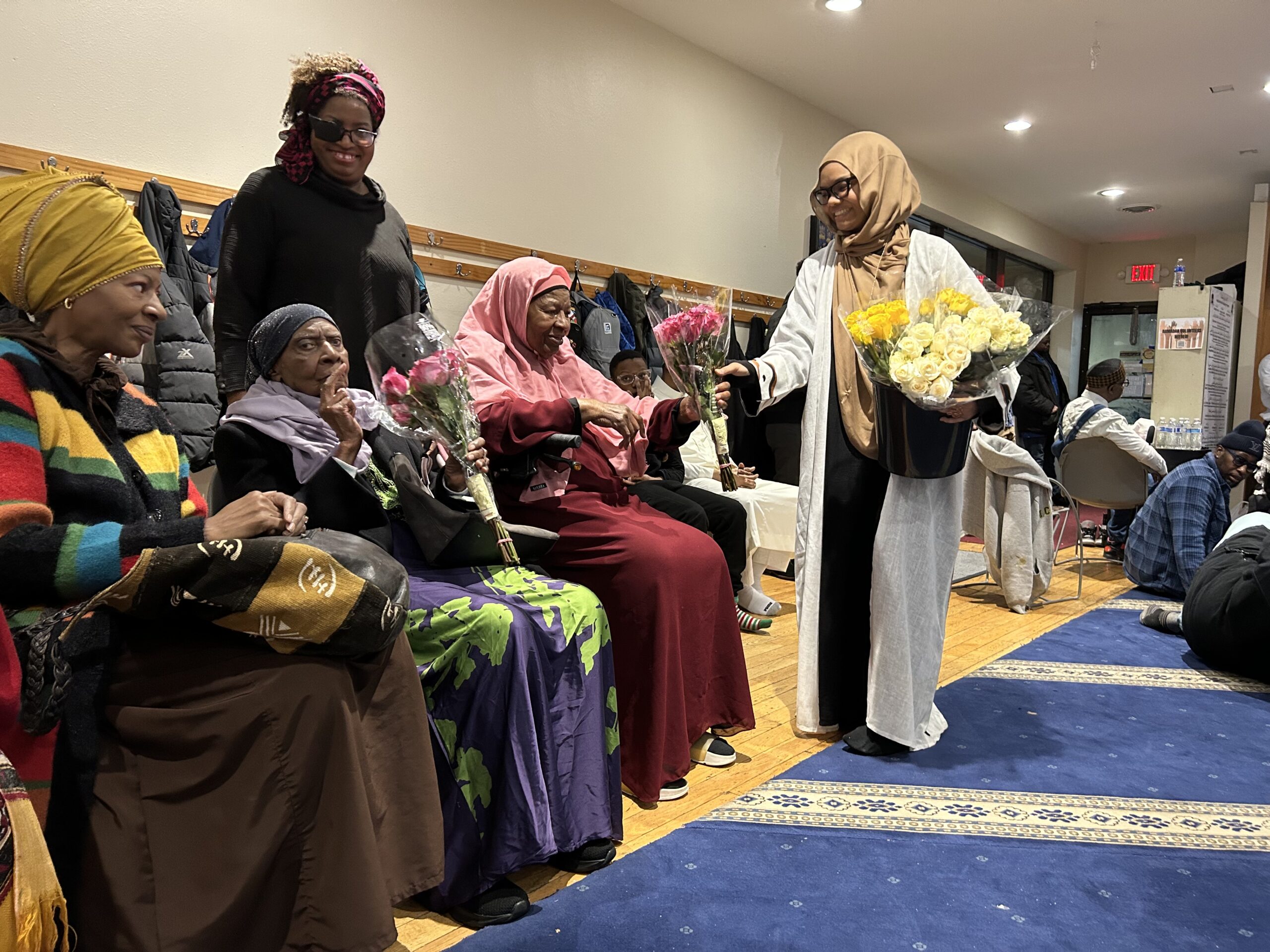
Hadiyyah Clark (right) presents flowers to Lathita Ahmad, who was honored for her role as a role model for decades of service to those in need.
“We talk about the importance of the Dawah Center as a place for community,” said board president Burhan Clark, as he introduced the celebration of Black Muslim family legacy. “And it is. But our strength comes from knowing each other.”
“When I was young, my father and mother would drag us to the masjid and keep us there late, cleaning up after programs and doing other things. We learned so much from the association with other Muslim families. Tonight, we celebrate them as integral parts of our lives.”
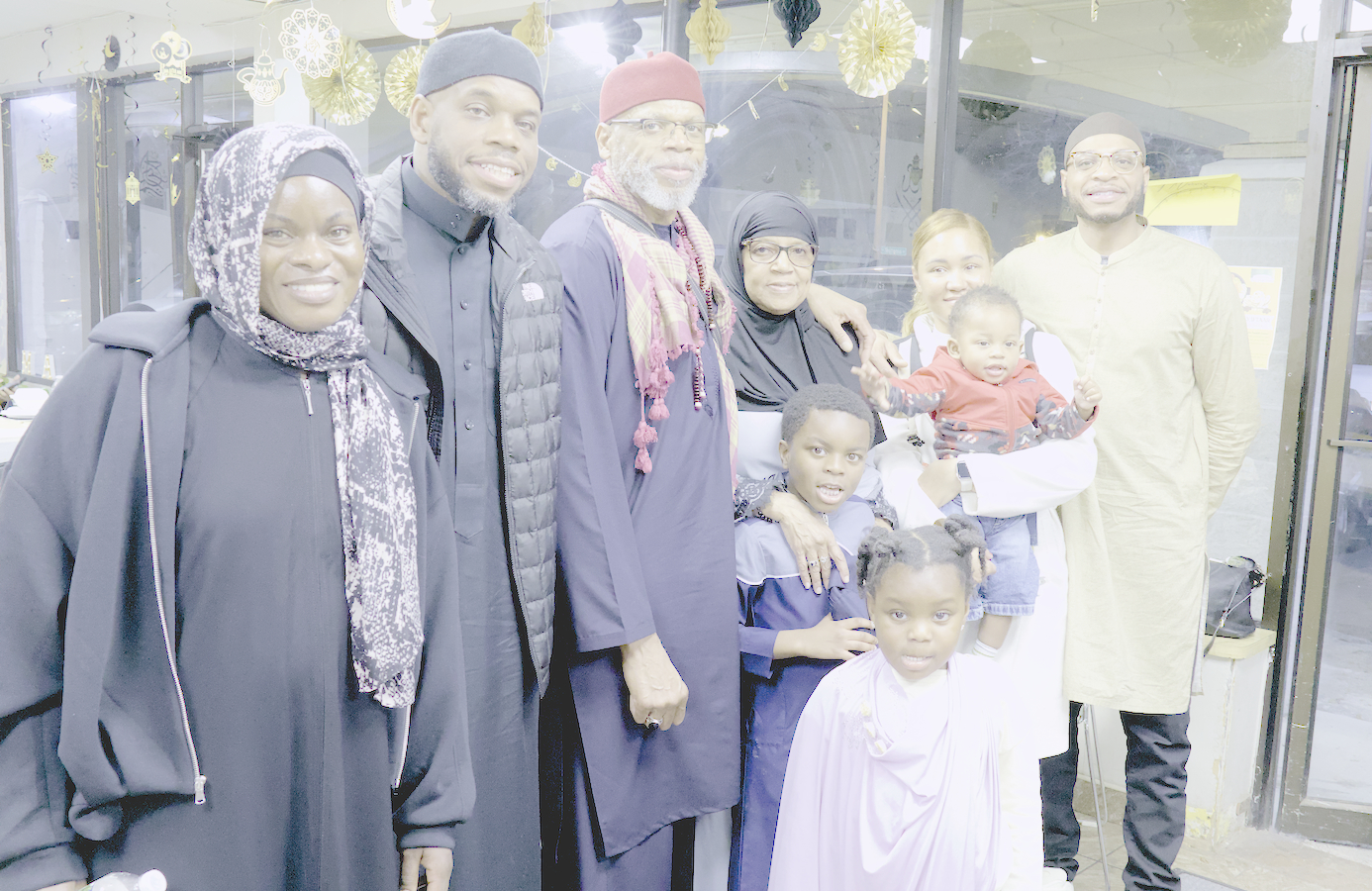
Larry and Laura Rhodes (center) stand in front of two of their grandchildren, Tahir and Zara. They are flanked by their son Kareem and his wife Amirah and son Na’im and his wife Erin, who is holding their son, Kairo.
In a night filled with expressions of appreciation, the Dawah Center recognized four families (Abdi, Simmons, Muhammad and Rhodes). They represented the many families who built and nurtured the Dawah Center community, which began with ties between families who prayed in each other’s homes in the 1970s and 80s.
Six community elders were also honored—Lathita Ahmad, Hanan Yassin, Shakura Wade, Talibah Hanif, Muhammad Abdullah and Abdallah Clark.
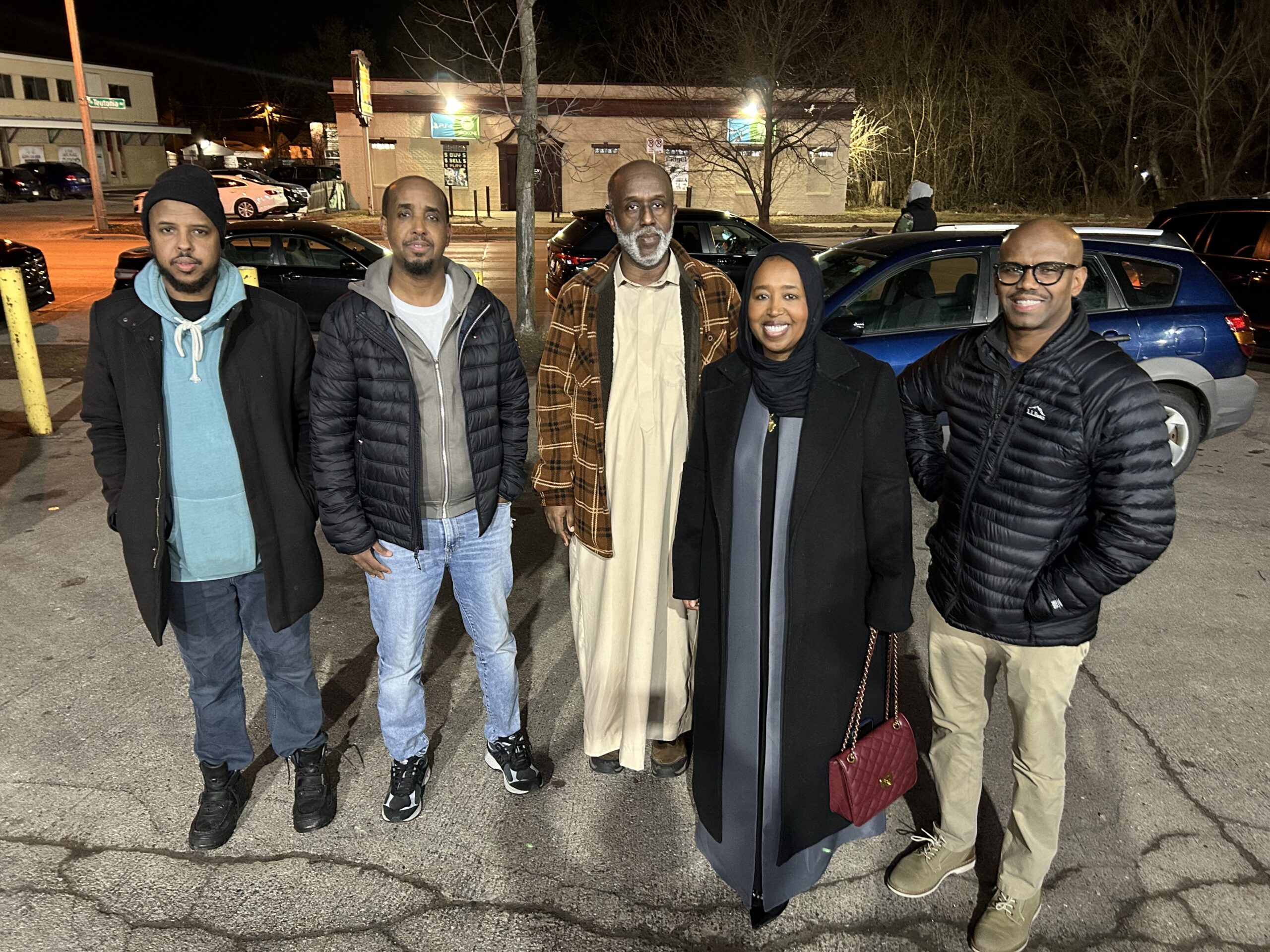
(Left to right) Mohamed Muse, Mohamed Abdi, Omar Abdi, Ubah Abdi and Said Osman stop for a photo after celebrating Black Muslim families Friday at the Milwaukee Islamic Dawah Center.
Why celebrate Black Muslim families?
When reviewing a list of books for Black History Month, Hadiyyah Clark noticed a lot of books on slavery. “Africans and African Americans have a history that is much older and broader than just slavery,” she said. As organizer of the Dawah Center’s Black History Month event, she decided she “wanted to showcase who we are now and who we will be in the future.”
The best way to do that, Clark thought, would be “to shine a light on the pillar families in this community who helped build and sustain the Milwaukee Islamic Dawah Center, Milwaukee and beyond.” She also decided it would be important to recognize some of the elders in the community. “Many of the elders we would want to recognize are deceased. I really want to celebrate those with us now, while we can give them flowers.”
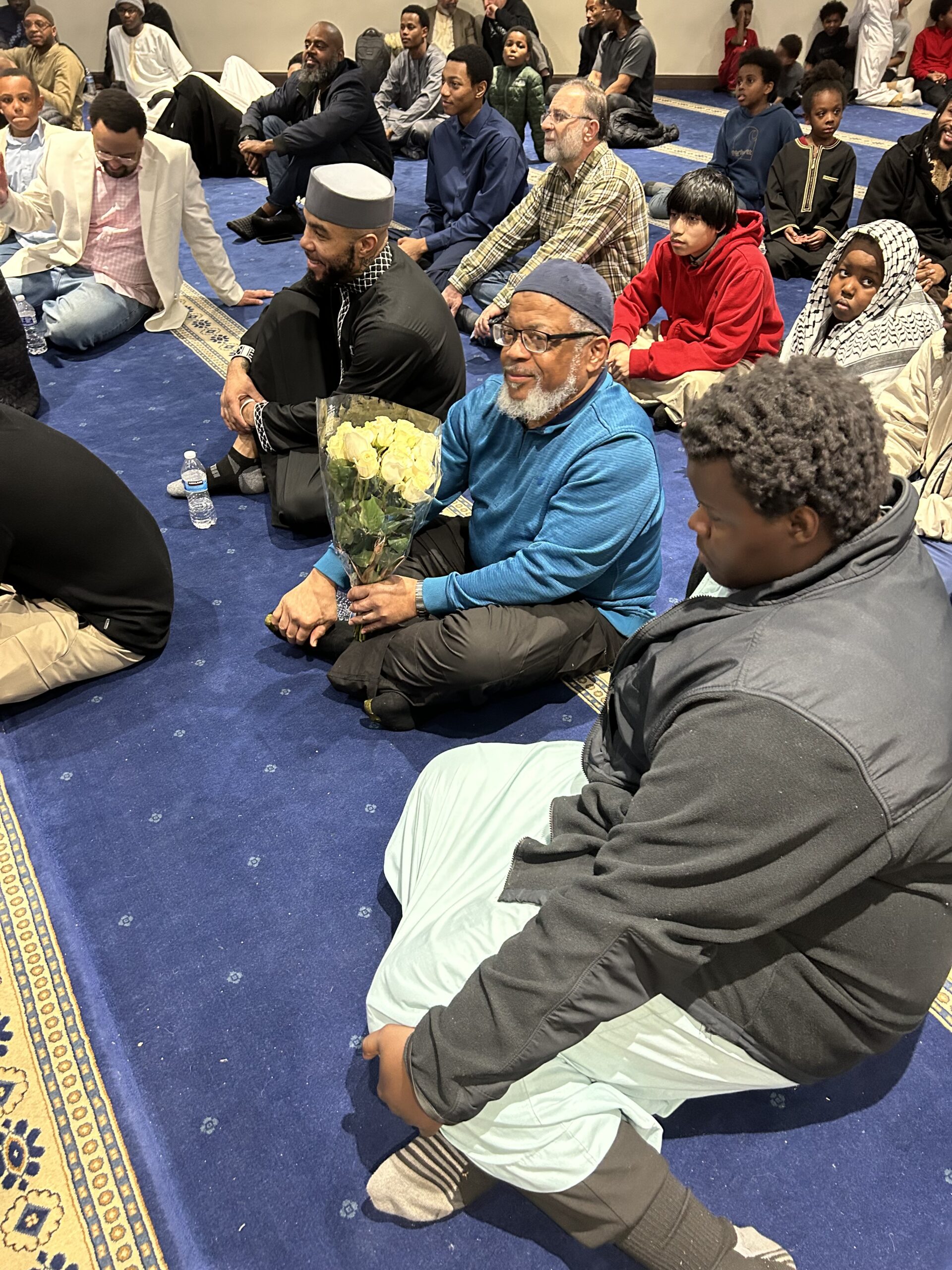
Abdallah Clark received flowers for his “consistent” role in Milwaukee’s Muslim community. Clark has been a community leader since the 1970s, said Dr. Waheed Ahmed, the first president of the Islamic Society of Milwaukee. Clark participated in a Quran study group at the University of Wisconsin-Milwaukee that became the core group that gave birth to the Islamic Society of Milwaukee, Dr. Ahmed said.
“I have my challenges with the idea of Black History Month and its limits,” Burhan Clark said. “We’re reminded of the same three people every year.” Some in the congregation laughed in agreement. Likewise, “there are so many families we would love to bring up here. These recognized tonight are not all of the people we want to honor.”
“It’s important to think about our past and also about succession,” he added, “about our youth and nurturing our young talents who are concerned with the Muslim community and want to help build on what we have.”
Imam Mohamad Camara shared thoughts about the importance of families in the Islamic tradition. Islam operates not just at the individual level but also at the family level, he explained. “It is a family religion,” he said. He gave the example of Ibrahim, who was willing to sacrifice his son in obedience to God. “We know from the reaction of his son that he was on the same page … And the mother? She was also submissive to Allah.” They all trusted God and he blessed them and their progeny, he said.
“Not only will Allah bring them peace and love in this (time), but in each following year, they will be blessed even more. And it all starts with coming to the masjid together.”
Recognizing four families
Event organizers invited a representative of each honored family to speak. Here are their comments, paraphrased for length:
Ubah Abdi:
When we moved here from Somalia, everything felt different — culture, Deen (religion), food and even the climate. Through all of this, our mother held us together, close to our religion and culture. As a single parent in a completely new environment, she carried the responsibility with strength, patience and trust in Allah. She worked tirelessly to make sure we remained connected to our religion and proud of who we are.
The Dawah Center became a place where we truly felt at home. It gave us comfort during a time of uncertainty and made the adjustment easier. It was somewhere we could go regularly — to pray, reflect and feel grounded. We met members of the community who welcomed us warmly and made us feel that we belonged.
It’s where our children learned their religion there and built friendships, where our marriages were held, where we celebrated the Eid, where we were able to take part in helping others. A special thank you to Shaykh Zakariye, Brother Will and Shaykh Ayuub and sister Waheeda (may Allah have mercy on them), as well as the countless others who have supported, guided, and welcomed us. Your efforts have made a lasting impact on our family.
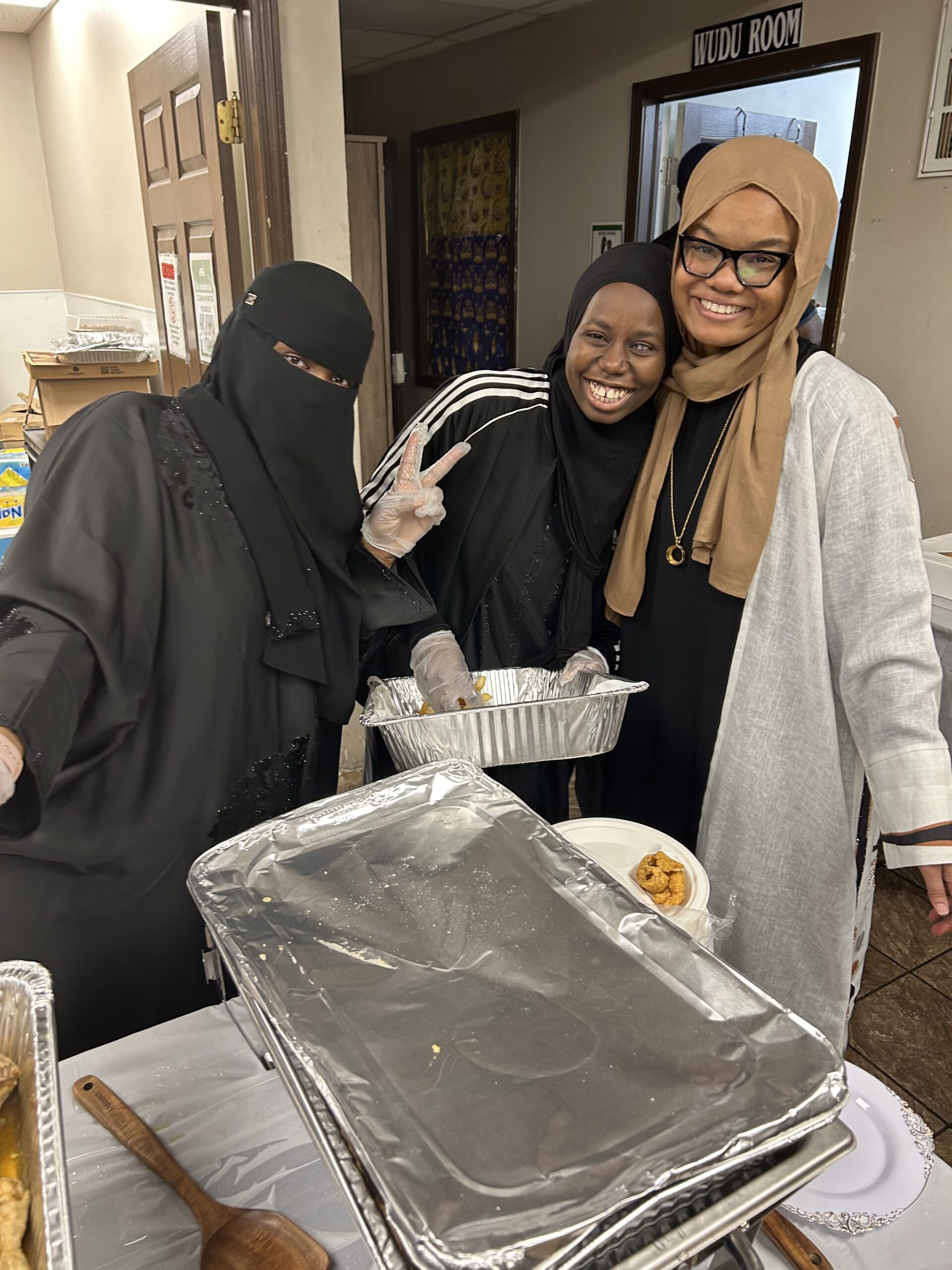
Volunteers Mu’mina Ahmed and Halima Mohamed with event organizer Hadiyyah Clark
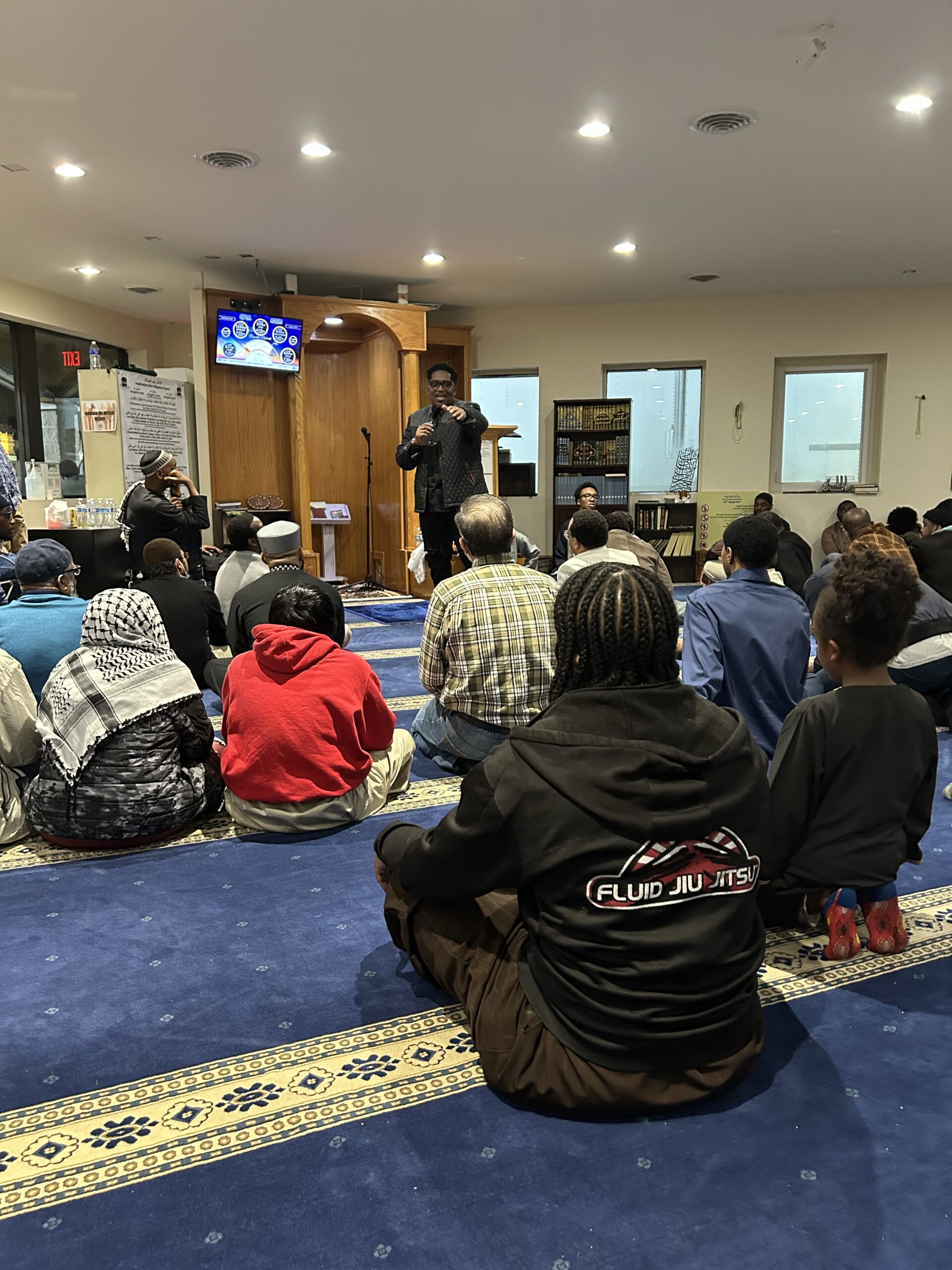
Jamil Muhammad represented his family, a Dawah Center Black Muslim Legacy Family.
Janice Simmons:
Our search for community and Islamic knowledge started with world religion classes at the University of Wisconsin and friendships with members of the Muslim Student Association and the Islamic Society of Milwaukee. We were in search of spiritual knowledge and converted.
Our relationship with the Dawah Center started in a dental office on North Hopkins before this current building, which was originally a Subway Sandwich Shop and a beauty salon. Sister Waheedah moved her counseling practice there. The new space was a blessing as sisters got a space of our own.
We joined a community that practices service and we acquired many lasting relationships. Over the years, our family has volunteered with the Dawah Center, with the food pantry, gardening, prepping and serving meals. We pray the future members of this community also find blessings in their journey of being connected to the Muslim community.
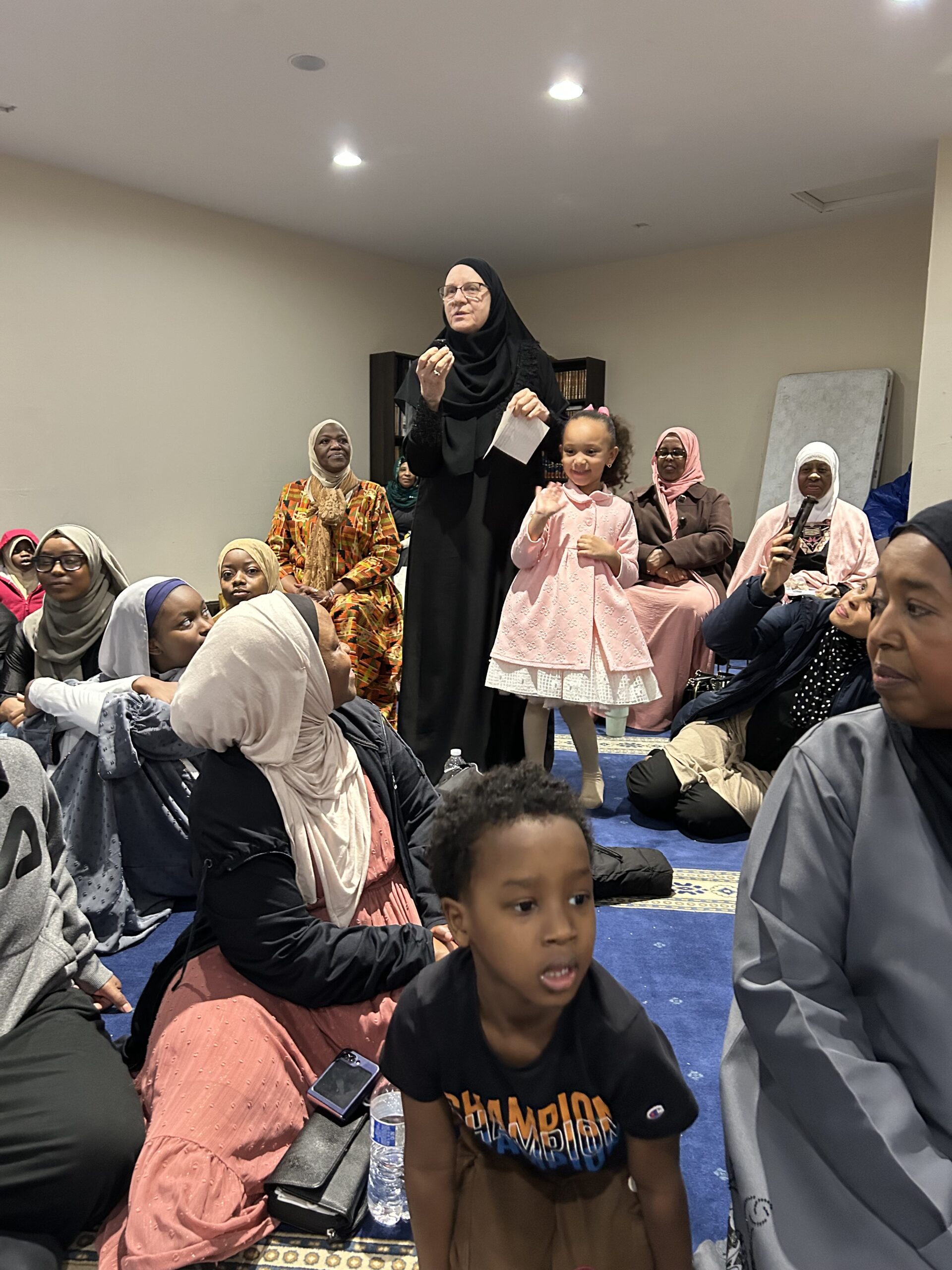
Janice Simmons speaks about becoming part of the Dawah Center community. The Dawah Center honoed Simmons family as a Black Muslim Legacy Family.
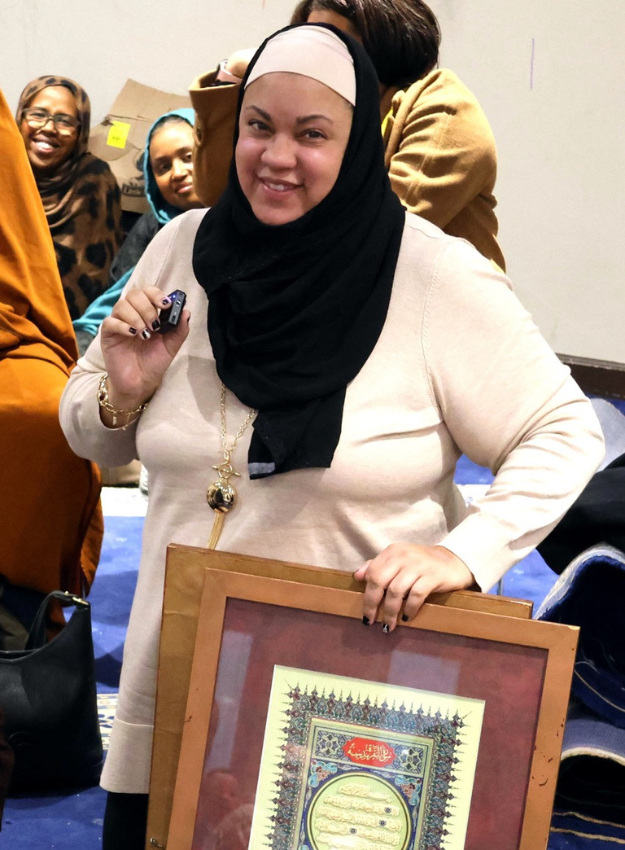
On behalf of her family, Sacha Simmons presents the Dawah Center with two plaques displaying verses from the Quran.
Jamil Muhammad:
I have a confession. When I saw the flier for this event, I thought, ‘No, that’s not us.’ Then I found out it actually was.
We first came to Milwaukee in 1984. I remember the days Sister Janice talked about in the dentist office, then coming over here to the Subway Restaurant and all those times.
I talked with my mom and asked her about the question of what we want our legacy to be. She said she wants us to live up to the name of being Muslim and to keep those qualities. She feels she has done that with her children, inshallah, so she feels her legacy was fulfilled.
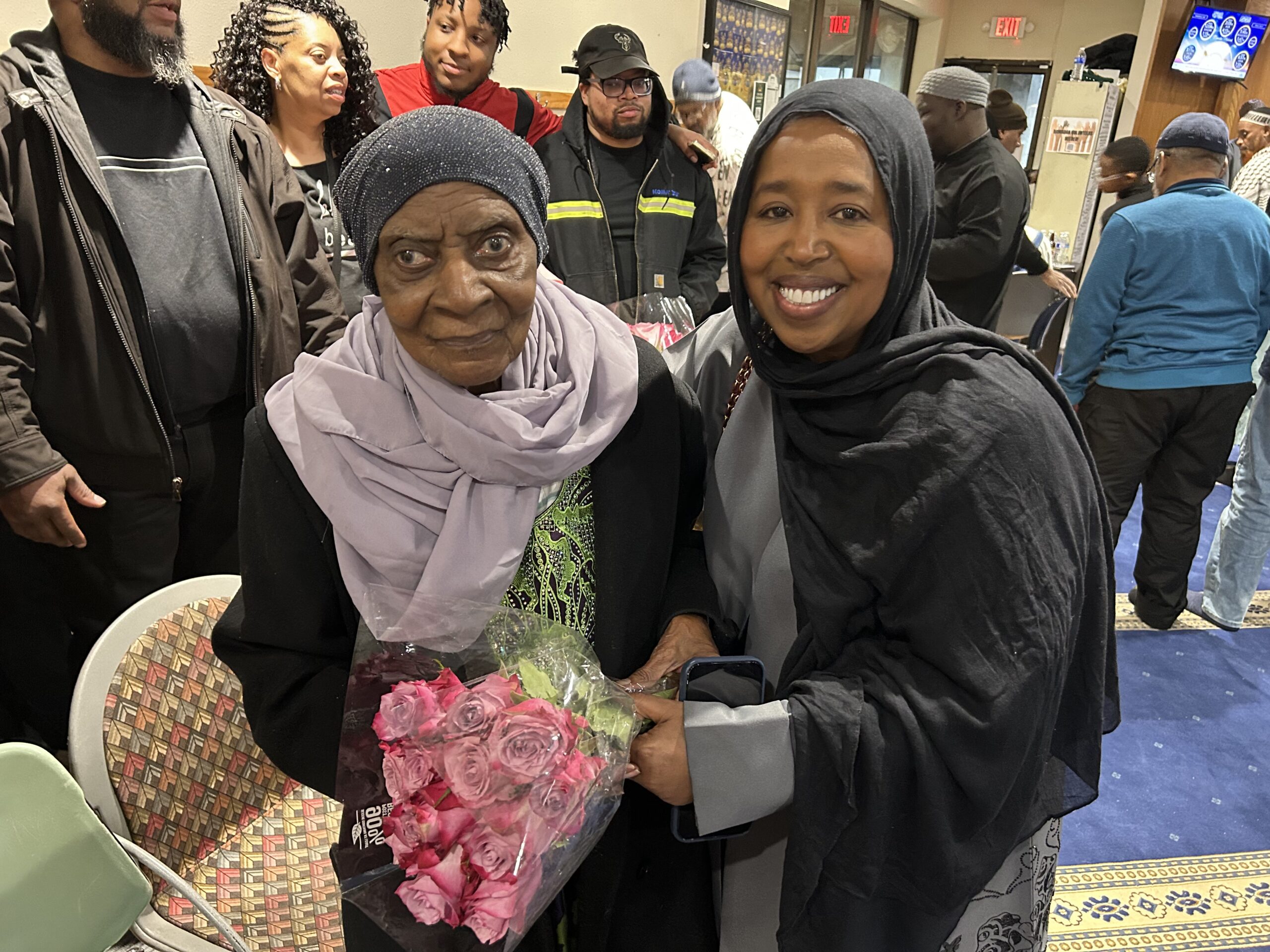
Honoree Hanan Yasin (left) receives a hug from community member Ubah Abdi. Sister Yasin will be 98 this month.
Larry Rhodes:
The four generations of our family history as Black Muslims in Milwaukee started with my beloved parents who proclaimed back in 1955, the year that I was born, ‘La ilahailla Muhammadan rasulullah’ (There is no god but Allah and Muhammad is the Messenger of Allah). Though their understanding of Islam was obscured by the teachings of Elijah Muhammad, the founder of the Nation of Islam, the teachings of Warth Deen Muhammad, his son, brought the true meaning of Islam to them.
By my side in this journey are my beautiful wife of 45 years, Laura; our sons Kareem and Na’im, and their wives Amirah and Erin; our daughter Le’Cole and her husband Muhammad, and our six grandchildren. When I look at them, I see trust, responsibility and Amanah (integrity).
In the 1990s, I began writing intentionally—not for fame, not for recognition—but so that my offspring would be able to see for themselves, and help others see, the importance and practicality of Islam in everyday life. My prayer is that my children and grandchildren will continue this written legacy—adding their reflections, experiences and insights—so that the light of the Qur’an and the Sunnah remain alive in our lineage and benefits others. If our family can be remembered as a family that tried—imperfectly, but sincerely—to live by the Book of Allah and the example of His beloved Messenger, then I will consider that a success.
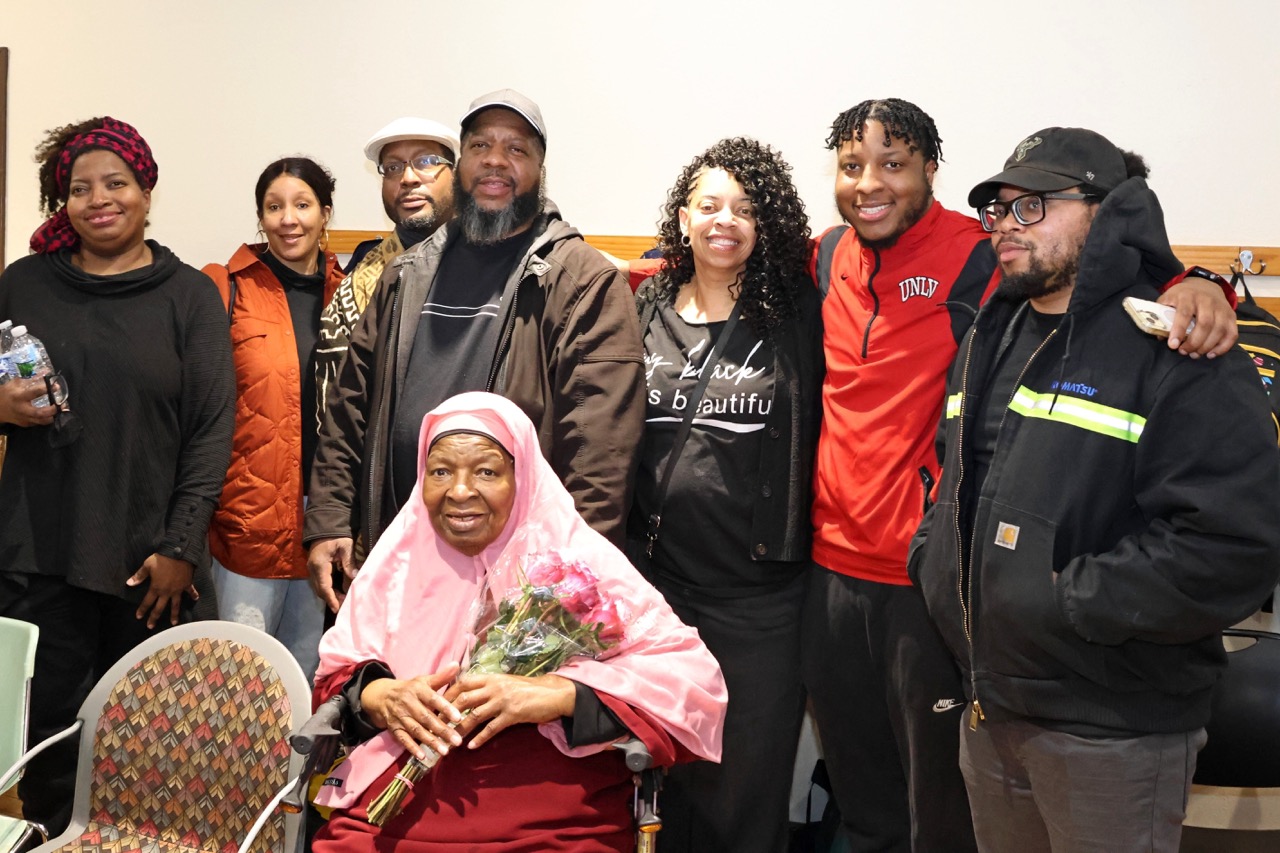
Honoree Lathita Ahmad (front) is surrounded by family members, celebrating her legacy.
Honoring elders
Flowers were given to community elders whose lives continue to impact the Dawah community. Burhan Clark commented on each as Hadiyyah Clark distributed flowers to each of them.
Lathita Ahmad, who played “an important role in the Dawah Center’s service” to the needy; Hanan Yassin, “a longtime member and integral part of the community” and Shakura Wade, “thank you for your professionalism and always being around.”
Talibah Hanif, who is “consistently committed to helping the masjid with whatever is needed and to whom we are very thankful,” and Muhammad Abdullah, “whose wisdom has always been a huge benefit to the brothers.”
And Abdallah Clark, “my father, whose consistency in being part of the masjid is something we want to recognize.”
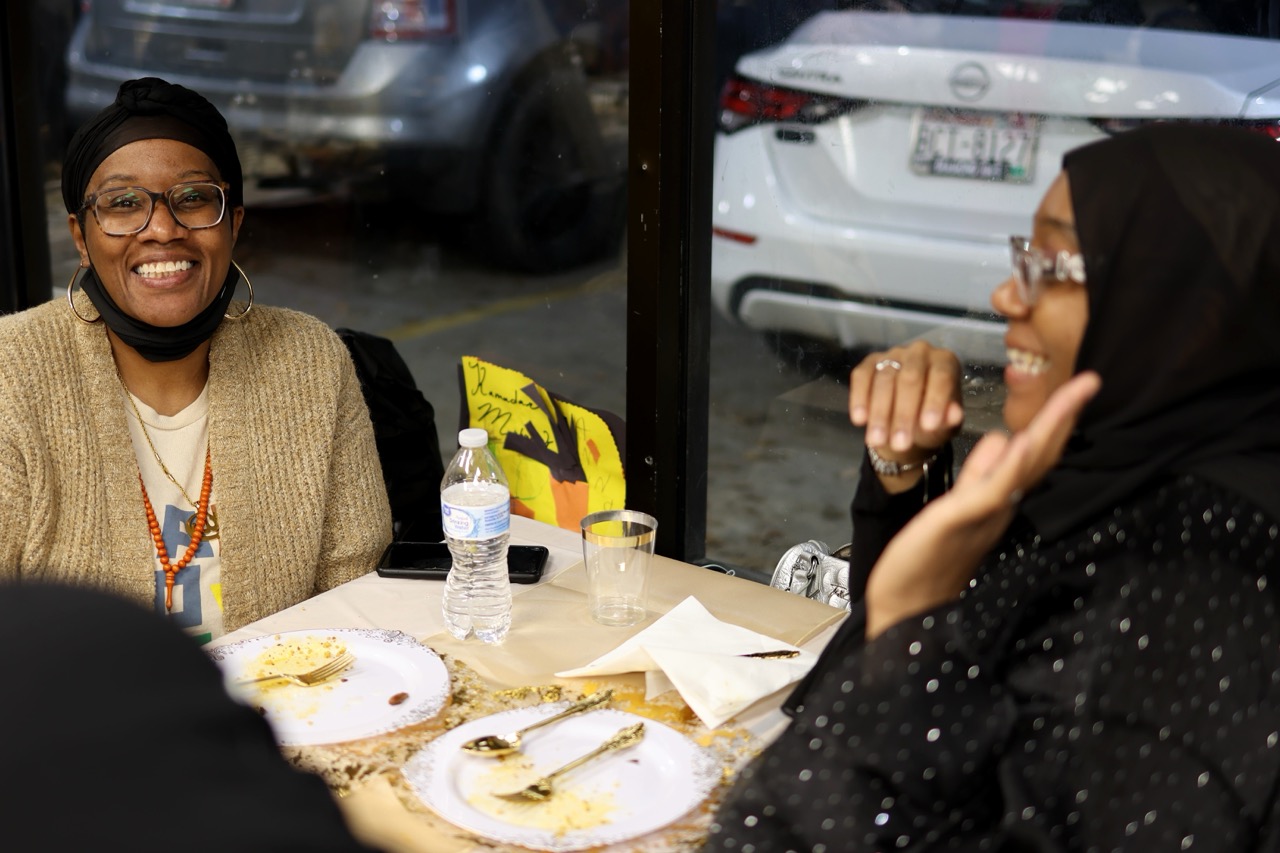
Sisters Kameelah and Haseenah Muhammad are members of the Muhammad family, which is being honored by the Dawah Center.
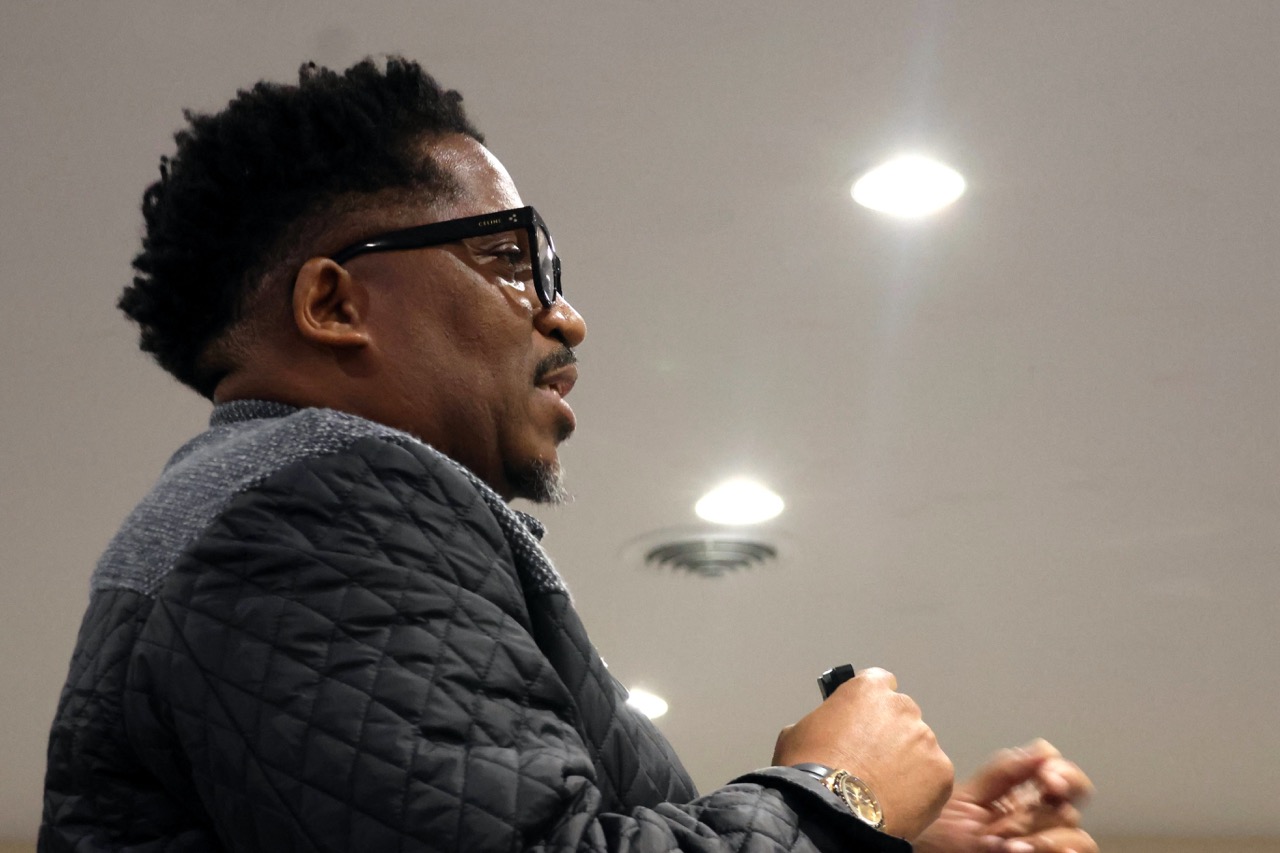
Jamil Muhammad’s family was honored as a Black Muslim Legacy Family at the Dawah Center.
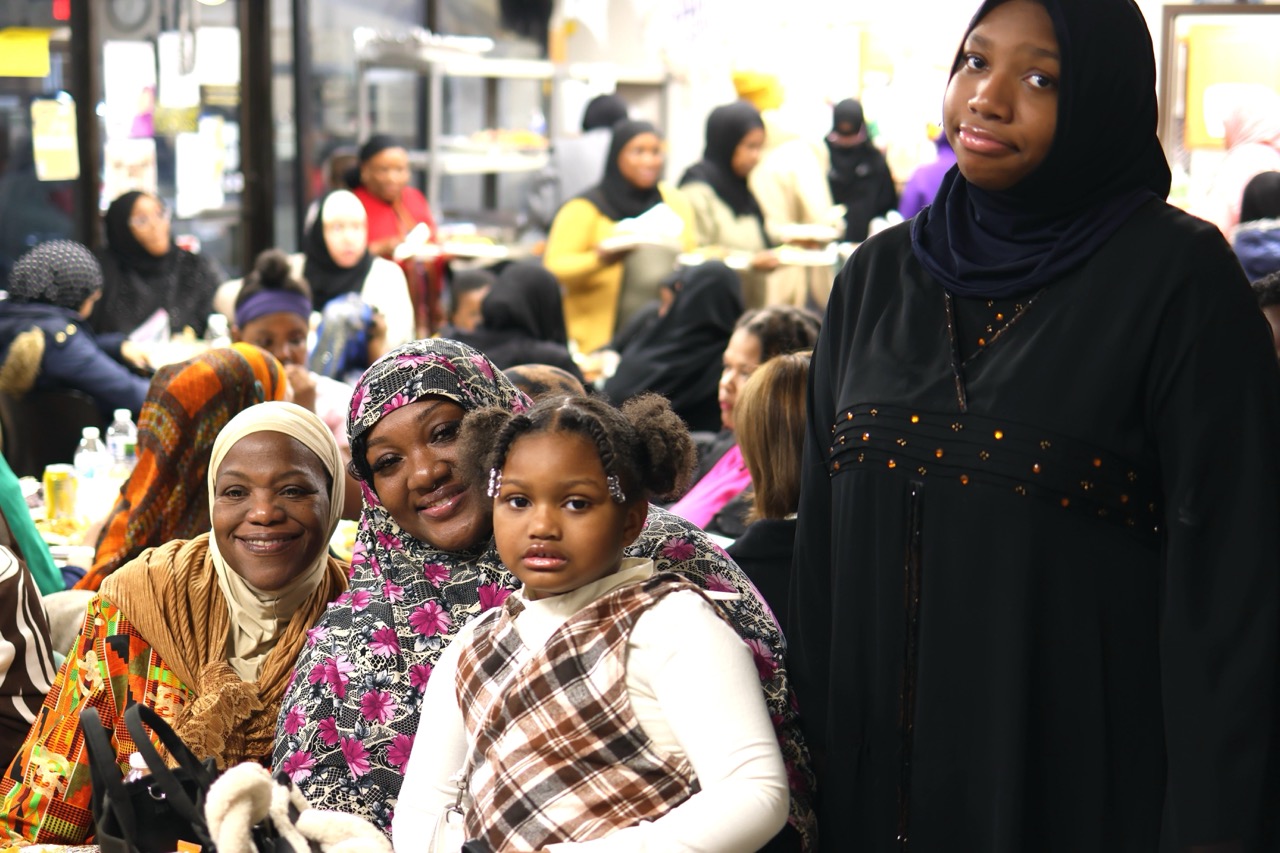
(Left to right) Shakura (Laine) Wade sits with her daughter Amber Jones and Jones’ daughters, Wade’s granddaughters.
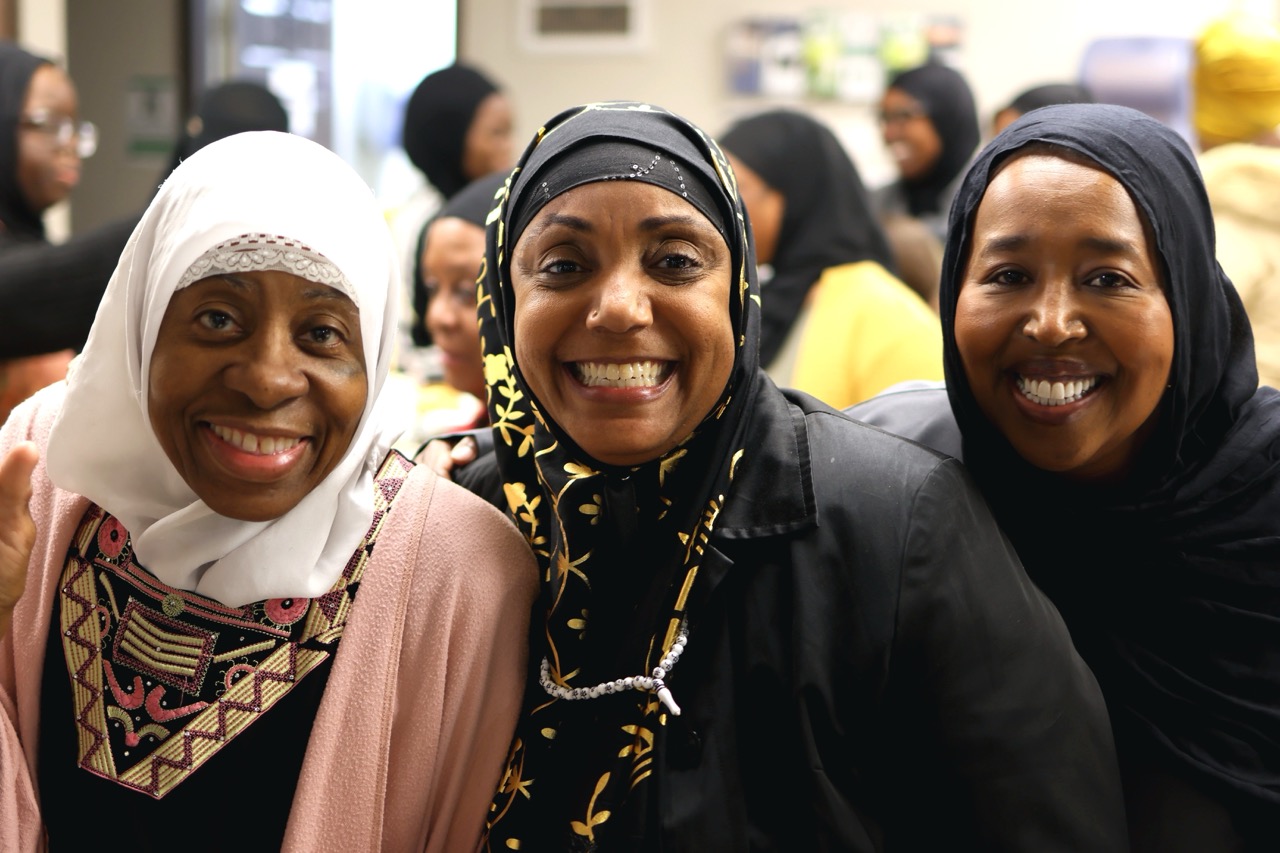
(Left to right) Honoree Talibah Hanif, Destiny Abney (daughter of the late Muneerah Harris, who started the Dawah Center’s clothing drive) and Ubah Abdi, whose family was chosen as a Black Muslim Legacy Family.
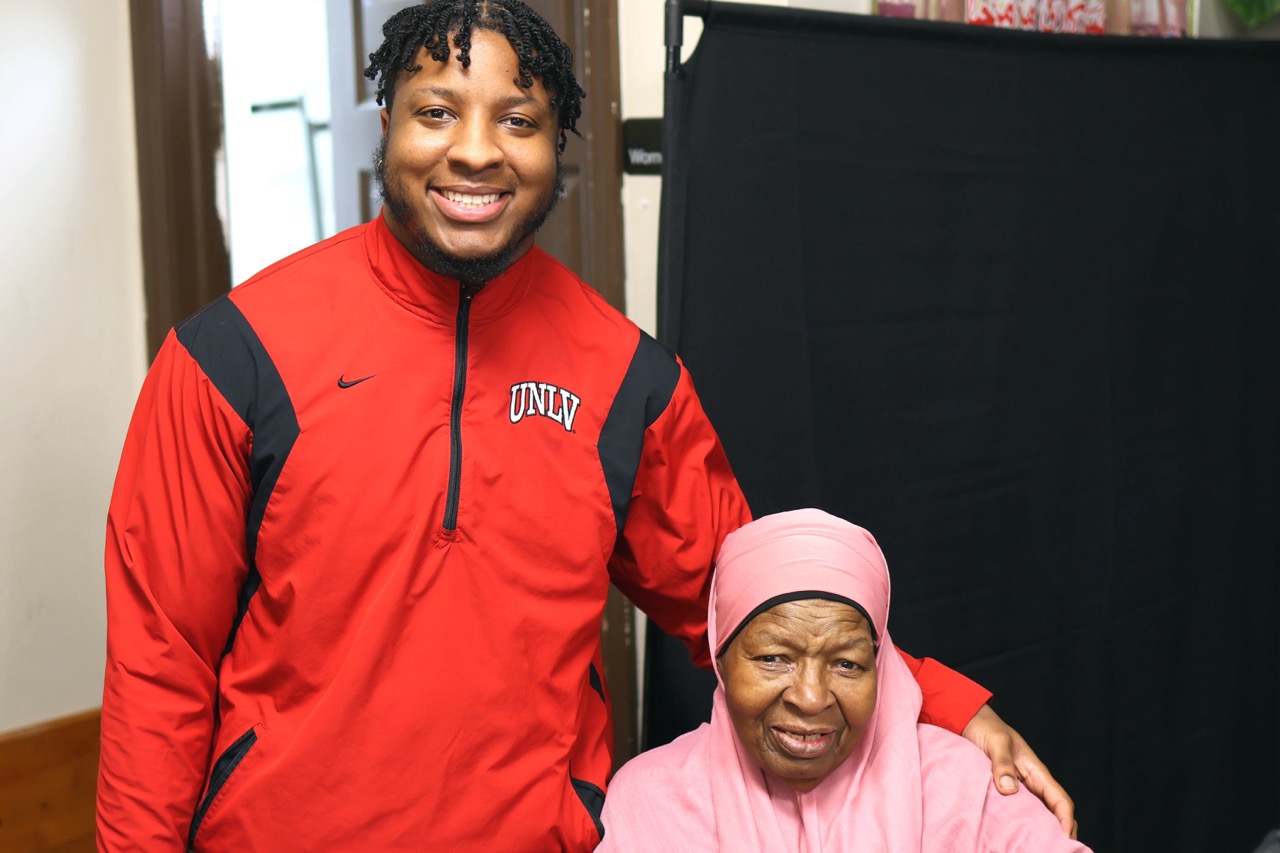
Keion Ahmad congratulates his grandmother, Honoree Lathita Ahmad.
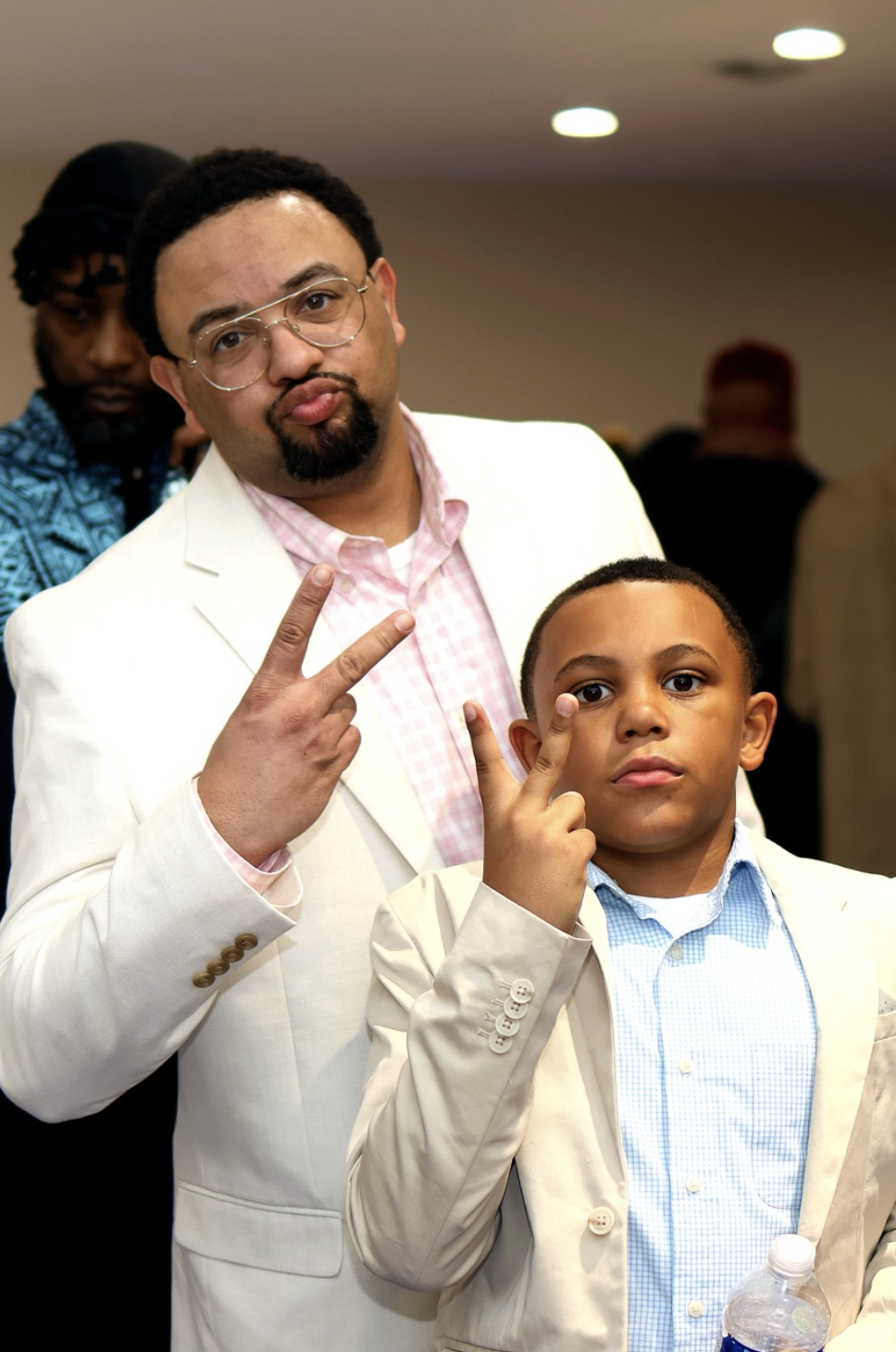
Ishmael Simmons and his son Maximus
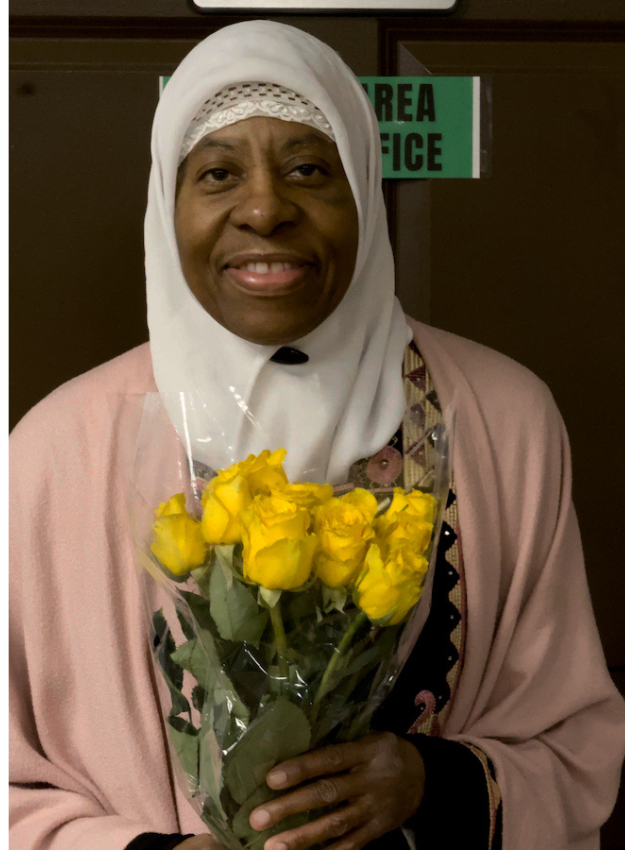
Honoree Talibah Hanif
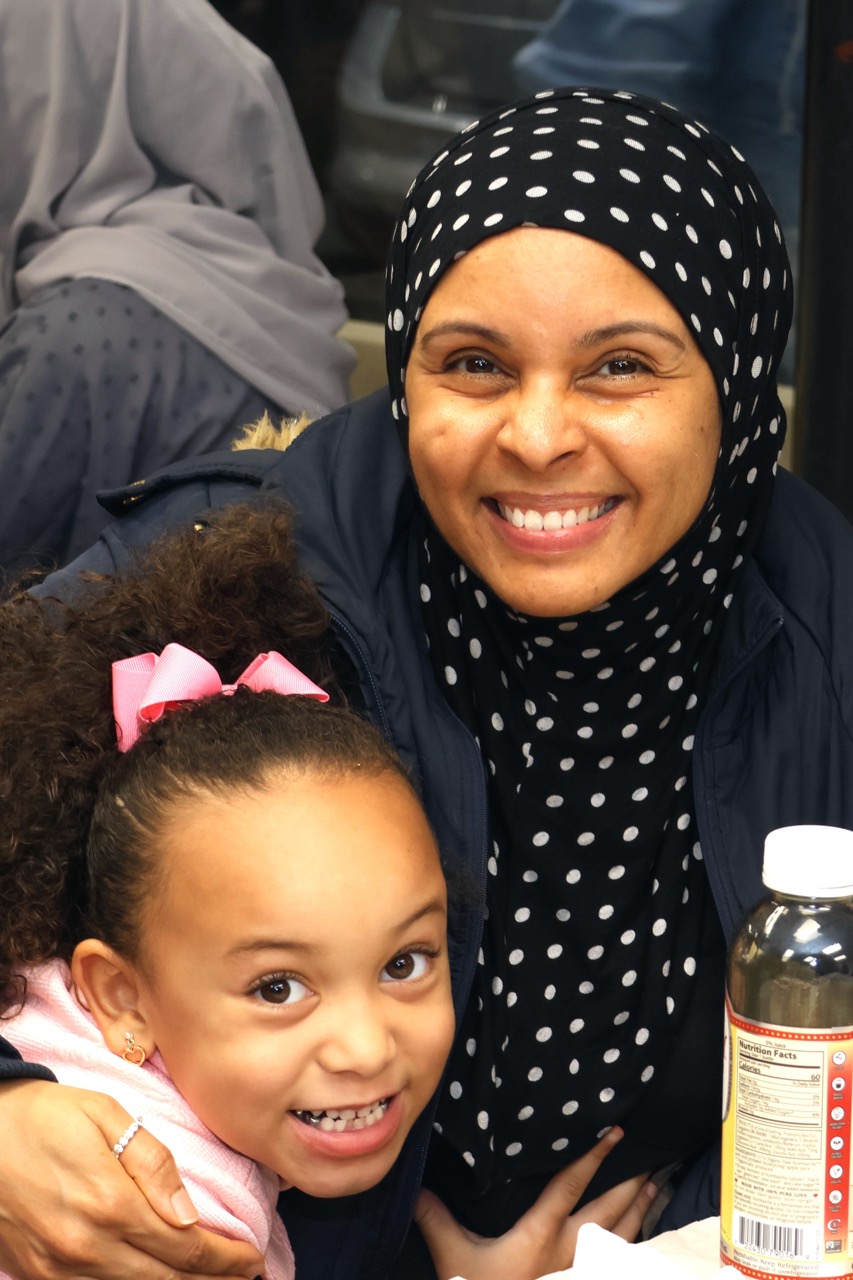
Nubian Simmons and her niece Nyla-Rose are members of an honored legacy family.
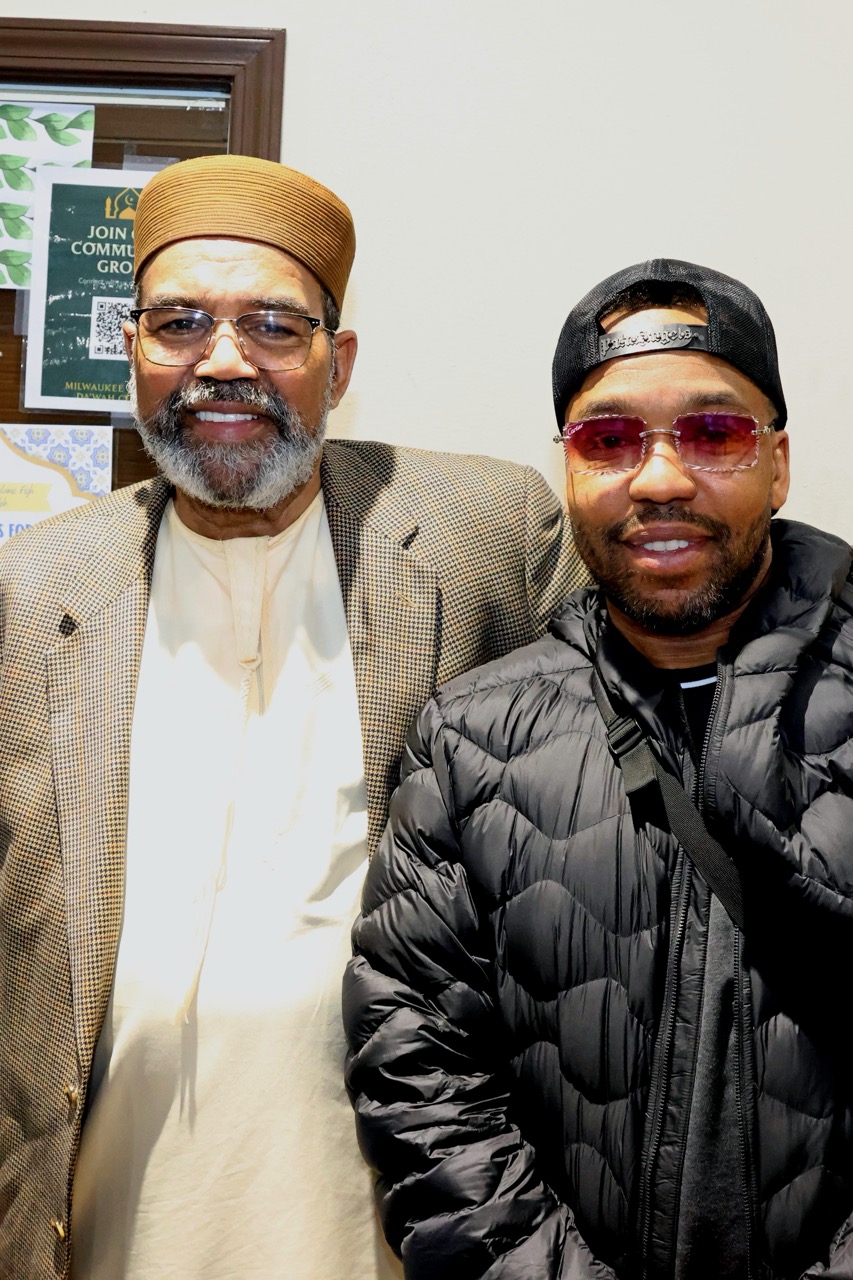
Honoree Muhammad Abdullah and his son Wali
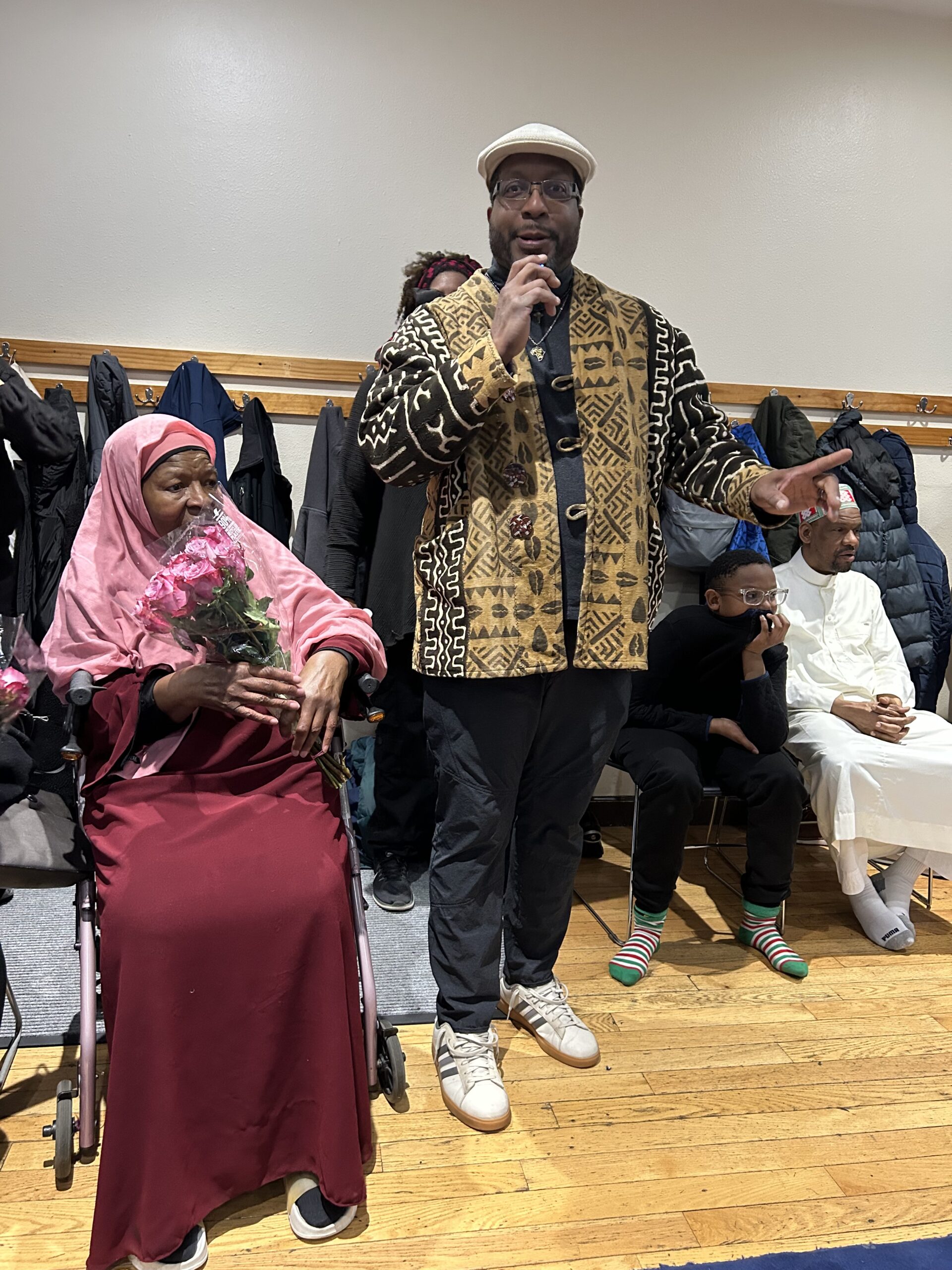
Lathita Ahmad’s son Bilal recounts details about her work for the needy.
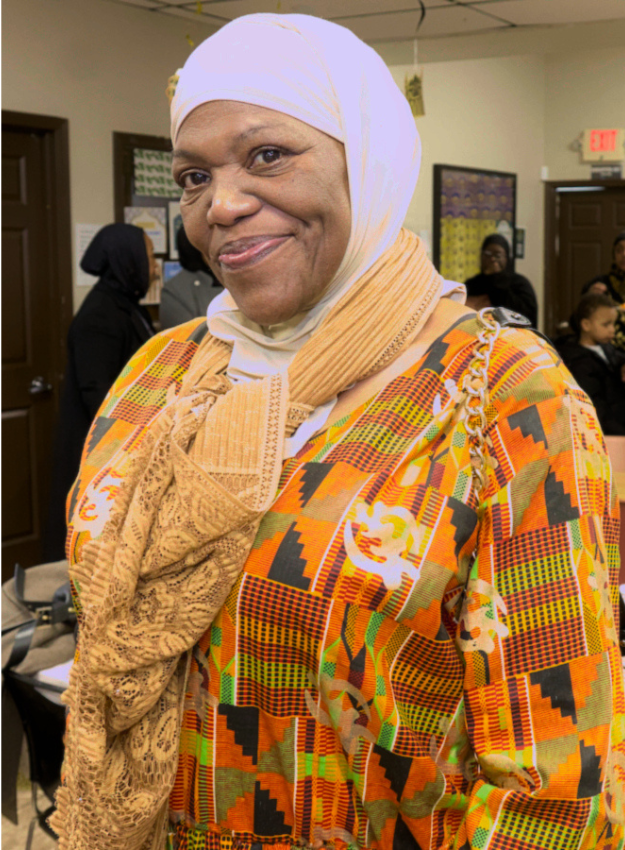
Honoree Shukura Wade